When you need a tool that adapts quickly to different sizes and shapes, water pump pliers deliver reliable grip and leverage.
These versatile pliers are essential for various tasks, especially in plumbing. Their adjustable jaws let you handle pipes, nuts, and fittings with ease.
Understanding how water pump pliers work—and why their design is so practical—can make a significant difference in your projects.
Up next, you’ll see how to adjust and use them properly for the best results.
What Are Water Pump Pliers?
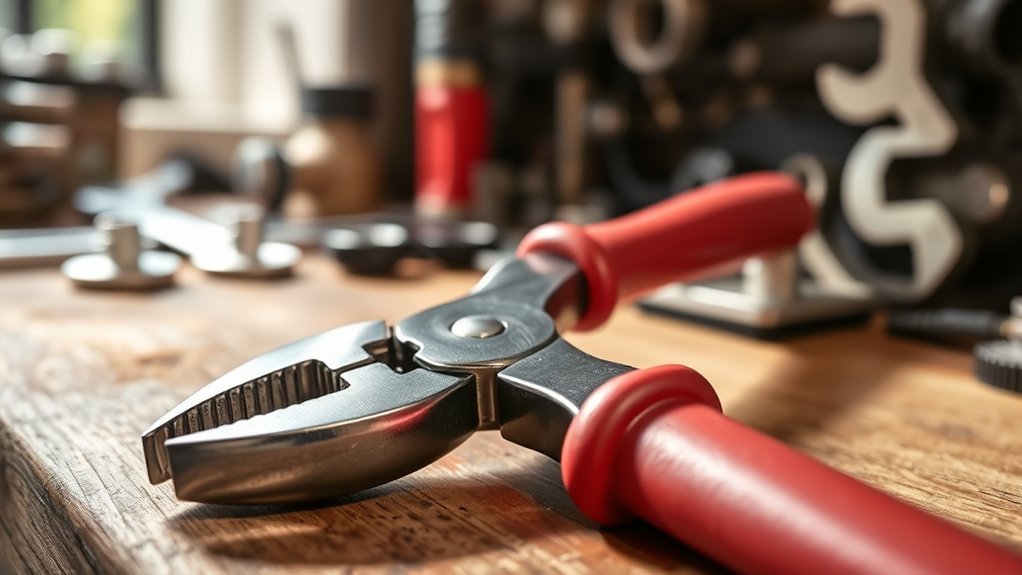
Water pump pliers are adjustable hand tools designed to grip and turn objects of various sizes, especially pipes and fittings. Their design evolved from early pliers types in the water pump history, where mechanics required versatile tools for plumbing tasks.
Unlike fixed-jaw pliers, water pump pliers feature a slip-joint mechanism that allows you to adjust the jaw width quickly, accommodating different diameters. The serrated jaws provide a secure grip on round or irregular surfaces, essential when working with metal or plastic pipes.
Understanding the distinctions between water pump pliers and other pliers types, such as needle-nose or locking pliers, helps you select the right tool for plumbing or mechanical applications. Their robust construction and adjustability make them indispensable in your toolkit.
How to Adjust and Use Water Pump Pliers Safely
Although adjusting water pump pliers is straightforward, doing so correctly guarantees ideal grip and safety. First, release the locking mechanism and slide the jaws to the approximate size of the object.
Use the adjusting technique by aligning the teeth for a firm grip without over-tightening, which can damage the tool or workpiece. Always observe safety precautions: wear gloves, verify stable footing, and keep fingers clear of pinch points. Use controlled pressure to prevent slips.
| Step | Action | Emotion |
|---|---|---|
| 1. Adjustment | Align jaws precisely | Confidence |
| 2. Grip | Secure without force | Control |
| 3. Operation | Apply steady pressure | Assurance |
Common Ways to Use Water Pump Pliers at Home
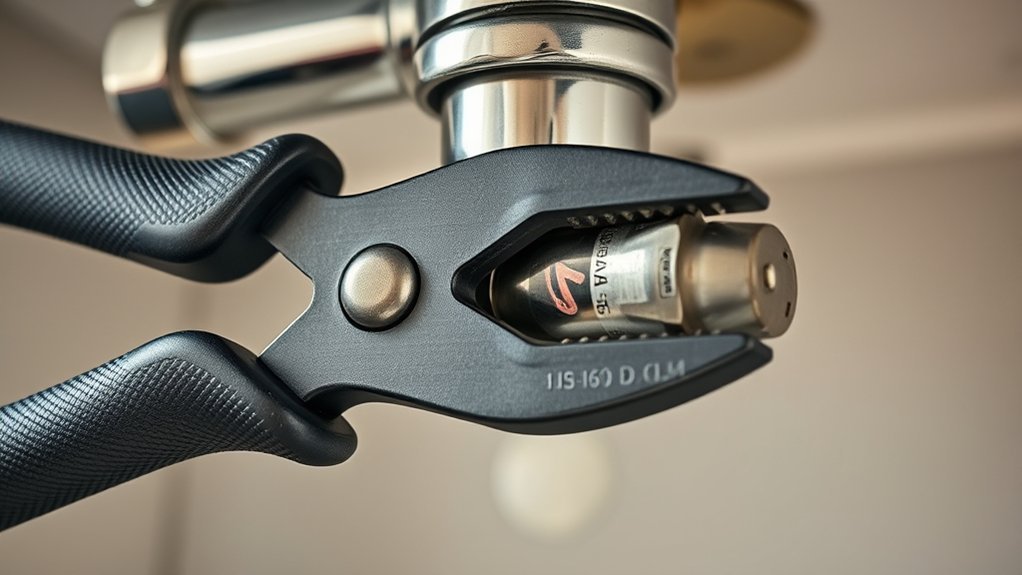
You’ll often use water pump pliers for plumbing tasks like tightening or loosening pipes and fittings. Their adjustable jaws provide a secure grip on various shapes and sizes, making them ideal for turning nuts or bolts in tight spaces.
Mastering these basic applications will help you handle common household repairs efficiently.
Plumbing and Pipe Adjustments
Several common plumbing tasks require precise adjustments to pipes and fittings, making water pump pliers an essential tool in your home toolkit. When handling plumbing repairs, these pliers allow you to securely grip and adjust pipe fittings without damaging them. Their adjustable jaws fit various diameters, providing control and leverage.
| Task | Application Detail |
|---|---|
| Tightening pipe fittings | Guarantees leak-free joints |
| Loosening old fittings | Avoids pipe damage during removal |
| Adjusting compression nuts | Secures connections in tight spaces |
| Aligning pipes | Facilitates proper fitting alignment |
| Holding pipes steady | Stabilizes during soldering or gluing |
Using water pump pliers for these steps improves accuracy and efficiency in your plumbing repairs.
Gripping and Turning Objects
Mastering pipe adjustments with water pump pliers naturally leads to exploring their versatility in gripping and turning various objects around the home. You’ll find that applying proper gripping techniques is essential for securing irregularly shaped items, such as nuts, bolts, or even rounded fasteners.
Adjust the jaw width to match the object size, then position the pliers for maximum contact and leverage. The turning mechanics rely on the tool’s adjustable pivot, allowing you to apply controlled torque without slipping.
This design excels when you need to loosen or tighten components in tight spaces where standard wrenches can’t reach. By understanding these principles, you’ll handle diverse household tasks efficiently, from assembling furniture to repairing appliances, without damaging surfaces or compromising grip strength.
How to Choose the Right Water Pump Pliers
How do you determine which water pump pliers best suit your needs? Start by analyzing your typical usage scenarios. Are you working with plumbing, automotive repairs, or general maintenance? This helps narrow down the necessary size and jaw design.
Next, focus on the following criteria:
- Jaw Capacity and Adjustment: Confirm the pliers offer a wide jaw opening and smooth adjustment mechanism to handle various pipe diameters.
- Material and Build Quality: Opt for durable, corrosion-resistant materials to guarantee longevity and reliable grip.
- Choosing Brands: Select reputable brands known for precision engineering and robust construction, confirming consistent performance.
Key Features That Make Water Pump Pliers Different
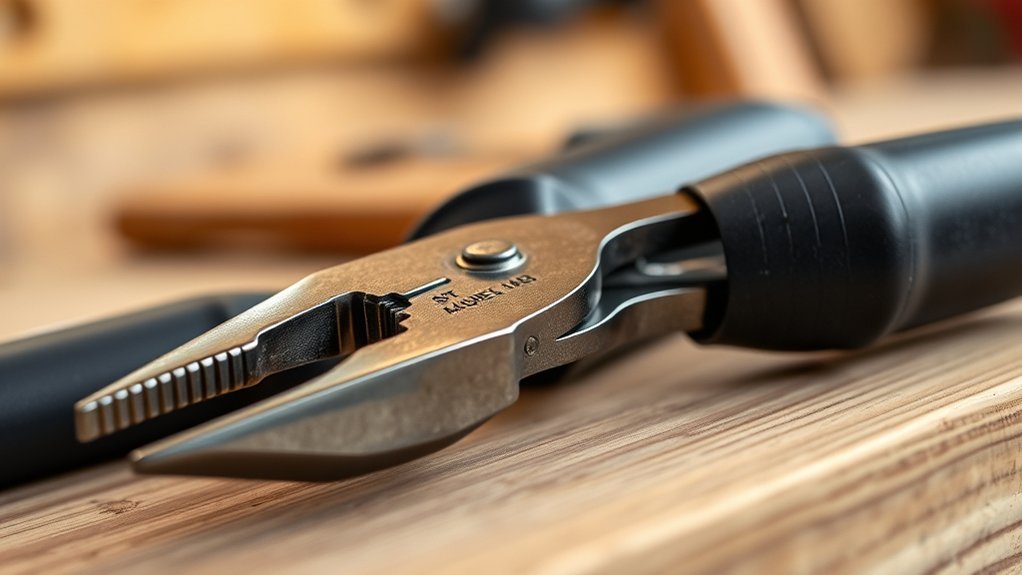
After identifying the right water pump pliers for your tasks, understanding what sets them apart from other gripping tools will enhance your efficiency. Their design innovations include adjustable jaws that accommodate a wide range of sizes, allowing you to grip pipes, nuts, and irregular shapes securely.
The slip joint mechanism lets you quickly alter the jaw width, saving time during workflow. Ergonomic features play an essential role; cushioned handles reduce hand fatigue and improve grip stability, enabling you to apply consistent pressure without discomfort.
Additionally, the angled head design provides better access in tight spaces, increasing your leverage and control. These combined technical attributes make water pump pliers indispensable for plumbing and mechanical work, delivering precision and versatility unmatched by standard pliers.
Tips to Maintain and Extend Your Pliers’ Life
Even though water pump pliers are built for durability, regular maintenance is essential to keep them functioning effectively and extend their lifespan. You can guarantee peak performance by following these steps:
- Regular cleaning: After each use, wipe off dirt, grease, and moisture to prevent corrosion and buildup that can impair the jaws and adjustment mechanism.
- Proper storage: Store your pliers in a dry environment, ideally in a toolbox or hanging rack, to avoid exposure to humidity and accidental damage.
- Lubrication: Apply a light machine oil to the pivot joint periodically to maintain smooth operation and prevent rust.
Conclusion
Now that you’ve grasped the mechanics and uses of water pump pliers, you hold the key to releasing stubborn pipes and securing tight fittings with ease. Like a master locksmith wields a versatile tool, you can adjust and apply these pliers precisely, ensuring every grip is firm and every turn controlled.
Keep them well-maintained, and they’ll be your dependable partner in tackling plumbing challenges. With water pump pliers, even the toughest jobs become smooth, efficient solutions that save time and effort.