Is Danish oil best for kitchen worktops? You’ll love how Danish oil brings out your kitchen worktops’ natural grain and warm glow while creating a moisture-resistant barrier against everyday spills.
It’s practical and adds subtle sheen, but it needs regular upkeep to avoid stickiness and wear.
Though it offers moderate heat resistance, using trivets is wise to protect your wood.
If you want both beauty and function, Danish oil is a charming choice—there’s more to uncover about its care and alternatives.
What Makes Danish Oil Popular for Kitchen Worktops?
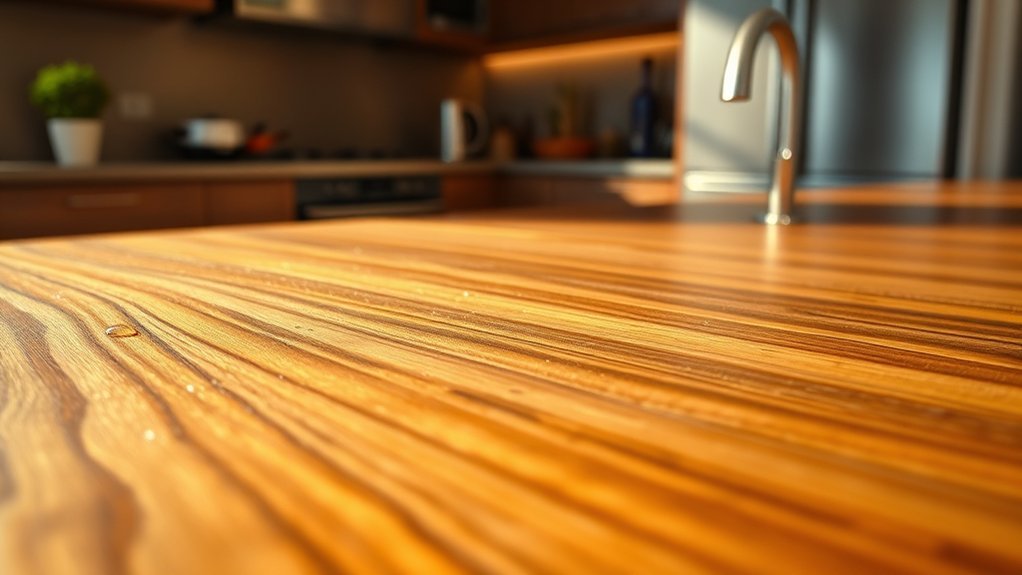
Danish oil’s appeal for kitchen worktops lies in its perfect balance of protection and natural beauty. When you apply Danish oil, it enhances the wood’s grain and color without masking its character, elevating your kitchen aesthetics with a warm, inviting glow.
One of the key Danish oil benefits is how it penetrates deep into the wood, nourishing it and highlighting natural textures. This not only boosts the visual appeal but also keeps the surface feeling smooth and tactile.
You’ll appreciate how it brings out subtle nuances in different wood types, making your worktop a centerpiece of natural elegance. Its ease of application and quick drying time mean you can refresh your kitchen’s look without hassle, blending practicality with refined style effortlessly.
How Danish Oil Protects Kitchen Worktops
You’ll appreciate how Danish oil seeps deeply to create a moisture-resistant barrier, guarding your kitchen worktops from daily spills. It also enriches the wood’s natural grain, bringing out subtle textures and warm hues that brighten your space.
Over time, this finish provides lasting protection, keeping your surfaces both beautiful and durable.
Moisture Resistance Benefits
While kitchen worktops constantly face exposure to water and spills, applying Danish oil creates a protective barrier that greatly enhances moisture resistance. This oil soaks deeply into the wood fibers, reducing moisture absorption and preventing water from seeping beneath the surface.
By doing so, it helps maintain the wood’s integrity and longevity, guarding against warping or swelling caused by prolonged dampness. You’ll notice that treated surfaces repel water more effectively, making cleanup quicker and easier.
This means your kitchen worktop stays both beautiful and functional, even in a busy cooking environment. Danish oil’s subtle sheen also preserves the natural warmth of the wood without creating a plastic-like coating, offering practical protection while maintaining an elegant, authentic look.
Enhancing Wood Grain
Beyond moisture protection, oiling your kitchen worktop brings out the natural beauty of the wood grain, giving it depth and character. Danish oil’s superior oil absorption gently seeps into the wood, enhancing its texture without leaving a heavy surface film.
This wood grain enhancement highlights the unique patterns and subtle color variations, making each worktop truly one-of-a-kind. When you treat your worktop with Danish oil, you’ll notice:
- Richer, warmer hues that accentuate natural knots and swirls
- A soft, satin sheen that complements modern and rustic kitchens alike
- Visible grain patterns that add tactile interest and invite touch
Long-Term Surface Protection
Though kitchen worktops face constant wear and tear, Danish oil offers a resilient shield that preserves both form and function over time. When you apply Danish oil, it penetrates deeply into the wood fibers, strengthening from within and enhancing the surface’s resistance to moisture, stains, and heat.
This treatment boosts long term durability, meaning your worktop won’t just look beautiful now. It’ll maintain its integrity and charm for years. The oil’s natural composition allows the wood to breathe, preventing cracking or peeling often caused by synthetic finishes.
How Well Does Danish Oil Hold Up to Heat and Moisture?
When you choose Danish oil for your kitchen worktop, you want to know how it handles everyday challenges like heat and moisture. Its natural composition offers moderate heat resistance, but placing hot pans directly on the surface isn’t ideal.
Moisture protection is decent, yet regular maintenance is key to keeping your wood beautiful and resilient.
Heat Resistance Properties
Because kitchen worktops often face spills, heat, and humidity, you’ll want a finish that stands up to these challenges without losing its charm. Danish oil offers moderate heat resistance, but it’s not invincible. After proper oil application, the wood absorbs the oil, creating a subtle protective barrier that softens the impact of everyday heat.
However, placing hot pots or pans directly on the surface can cause discoloration or dullness over time.
Imagine:
- A steaming kettle left momentarily on the counter
- Warm plates resting briefly after dinner
- The glow of sunlight warming the wood surface
While Danish oil enhances the wood’s natural beauty and provides some heat resistance, using trivets is essential to maintain its look. Proper reapplication keeps the protection intact and your worktop radiant.
Moisture Protection Effectiveness
Even if Danish oil doesn’t create a fully waterproof seal, it still offers a subtle shield against moisture that’s perfect for kitchen worktops. When applied properly, it penetrates the wood grain, reducing moisture absorption without masking the natural texture and warmth you love.
This controlled water resistance helps prevent water spots and mild spills from causing damage, maintaining the worktop’s aesthetic appeal. However, you should know Danish oil isn’t a complete barrier. Prolonged exposure to standing water can still lead to swelling or discoloration.
Regular maintenance, like reapplying oil and wiping surfaces dry promptly, enhances its protective qualities. So, if you want a practical yet beautiful finish that balances natural wood charm with moderate moisture protection, Danish oil is a thoughtful choice for your kitchen.
Drawbacks of Danish Oil for Kitchen Worktops

Although Danish oil enhances the natural grain of wood beautifully, it has some limitations that might affect its suitability for kitchen worktops. Durability concerns arise because Danish oil forms a thin protective layer, making the surface more vulnerable to scratches, heat, and stains.
Danish oil highlights wood grain but offers limited protection against scratches, heat, and stains on kitchen worktops.
Application challenges also exist; achieving an even, lasting finish requires multiple coats and careful timing, which can be time-consuming and tricky.
You might notice:
- Slightly sticky or tacky surfaces if not fully cured
- Frequent reapplication needed to maintain protection
- Sensitivity to acidic or oily spills causing discoloration
If you want a worktop that balances warmth with resilience, keep these practical drawbacks in mind when considering Danish oil for your kitchen.
Comparing Danish Oil With Other Kitchen Worktop Finishes
While Danish oil brings out the wood’s natural beauty, its vulnerabilities might lead you to explore other finishes for your kitchen worktop. Danish oil alternatives like polyurethane, lacquer, or wax offer varied protection levels and aesthetics.
Polyurethane provides a hard, durable surface resistant to water and stains, ideal for high-traffic kitchen worktop materials. Lacquer gives a smooth, glossy finish but may require professional application. Wax enhances the tactile feel and warmth but demands frequent maintenance.
Compared to these, Danish oil soaks deep, highlighting grain without creating a thick layer, preserving a natural, matte look but with less surface protection. When choosing, consider how each finish aligns with your kitchen’s style, usage patterns, and maintenance willingness to guarantee your worktop remains both beautiful and functional.
How to Apply Danish Oil on Kitchen Worktops Correctly

Applying Danish oil to your kitchen worktops requires careful preparation and technique to enhance the wood’s natural grain while guaranteeing lasting protection. Start by sanding the surface smoothly to open the wood pores, promoting even oil absorption.
Proper sanding is essential before applying Danish oil to reveal the wood’s beauty and ensure lasting protection.
Use a lint-free cloth or brush for the application, following these practical application techniques:
- Apply thin, even coats along the grain to avoid blotches.
- Let the oil soak in for 15-20 minutes, then wipe off excess to prevent sticky residue.
- Repeat the process 2-3 times for deeper penetration and a rich finish.
This method guarantees the oil penetrates deeply, strengthening the wood and highlighting its texture. By mastering these steps, you’ll achieve a beautifully nourished and durable kitchen worktop that’s both functional and visually appealing.
Maintenance Tips for Danish Oil Kitchen Worktops
To keep your Danish oil kitchen worktops looking vibrant and protected, regular maintenance is key. Paying attention to maintenance frequency guarantees your wood stays nourished and resistant to moisture. Oil replenishment should be done every 6 to 12 months, depending on wear and exposure.
Here’s a simple guide to maintain your worktops:
| Task | Frequency |
|---|---|
| Clean with mild soap | Weekly |
| Inspect for dryness | Monthly |
| Oil replenishment | Every 6-12 months |
| Light sanding | Every 1-2 years |
Choosing the Best Finish: When to Skip Danish Oil
Maintaining your Danish oil worktops keeps their natural beauty glowing, but there are times when another finish might suit your kitchen better. If you’re aiming for maximum kitchen worktop longevity or need a finish that withstands heavy moisture, consider Danish oil alternatives.
For instance, when you want:
- A satin or glossy surface that resists scratches and stains
- A waterproof barrier for areas prone to spills and steam
- A finish that requires less frequent reapplication and offers tougher protection
These practical needs may lead you to skip Danish oil in favor of varnishes or specialized sealants. Choosing the right finish guarantees your worktops remain not only stunning but durable, matching your kitchen’s unique demands and lifestyle.
Expert Tips for Long-Lasting Kitchen Worktops
Although natural wood demands care, you’ll find that a few expert tips can keep your kitchen worktops looking pristine for years. Start by regularly applying Danish oil or a suitable wood care product to maintain the finish and protect against moisture.
Avoid placing hot pots directly on the surface to prevent heat damage, and always use cutting boards to shield the wood from scratches. In your kitchen design, incorporate subtle under-counter lighting to highlight the wood’s grain and warmth, enhancing its natural beauty.
Clean spills immediately with a damp cloth, never letting liquids sit. Periodically sand lightly before re-oiling to refresh the surface. By integrating these practical steps, you’ll preserve both the function and aesthetic appeal of your wooden worktops, ensuring they remain a stunning focal point in your kitchen design.
Frequently Asked Questions
Is Danish Oil Food Safe for Direct Contact With Food?
Danish oil isn’t fully food safe for direct contact, so you shouldn’t rely on it alone to guarantee kitchen hygiene.
For flawless food safety, apply a proper food-grade finish, creating a smooth, hygienic surface you’ll trust daily.
Can Danish Oil Be Used on Other Kitchen Surfaces Besides Wood?
Like trying to fit a square peg in a round hole, Danish oil isn’t ideal for non-wood surfaces. For other kitchen surfaces, you’ll want Danish oil alternatives that suit materials like stone, laminate, or metal better.
How Long Does Danish Oil Take to Fully Cure on Worktops?
Danish oil’s curing process typically takes 24-72 hours, depending on humidity and temperature. For best results, apply thin coats and let each dry fully.
Lightly sand between applications to enhance smoothness and durability on your worktops.
Does Danish Oil Darken the Wood Color Permanently?
Oh, don’t worry. Danish Oil does enjoy giving your wood color a permanent, subtle tan after oil application. It deepens tones gracefully, enhancing grain beauty.
Can Danish Oil Be Reapplied Over Old Finishes Without Stripping?
You can reapply Danish Oil over old finishes if they’re compatible and properly prepared. Light sanding enhances adhesion, ensuring smooth reapplication. Mastering these reapplication techniques preserves your wood’s beauty and extends its protective finish effortlessly.
Conclusion
When it comes to kitchen worktops, Danish oil can be a trusty friend, offering a warm, natural glow while sealing out moisture and everyday spills. But remember, it’s not a superhero—heat and heavy wear can wear it down.
If you want your worktop to age gracefully, treat it like a cherished piece of art: nourish it regularly and handle with care. Sometimes, choosing a tougher finish is the wiser brushstroke for your kitchen’s masterpiece.
In conclusion, while Danish oil provides a beautiful finish, it may not always be the best choice for kitchen worktops that face heavy use. Weighing its benefits and limitations will help you decide if Danish oil is best for kitchen worktops in your home.