If you’re planning to bring pliers on a plane, you’ll want to know exactly what’s allowed and what’s not.
The Transportation Security Administration (TSA) has specific rules about the size and type of tools you can carry.
Understanding these guidelines can prevent delays or confiscations at security checkpoints.
But do all pliers qualify, and where should you pack them to avoid hassle?
There’s more to evaluate before you zip up your bag.
Can You Bring Pliers on a Plane? TSA’s Quick Answer
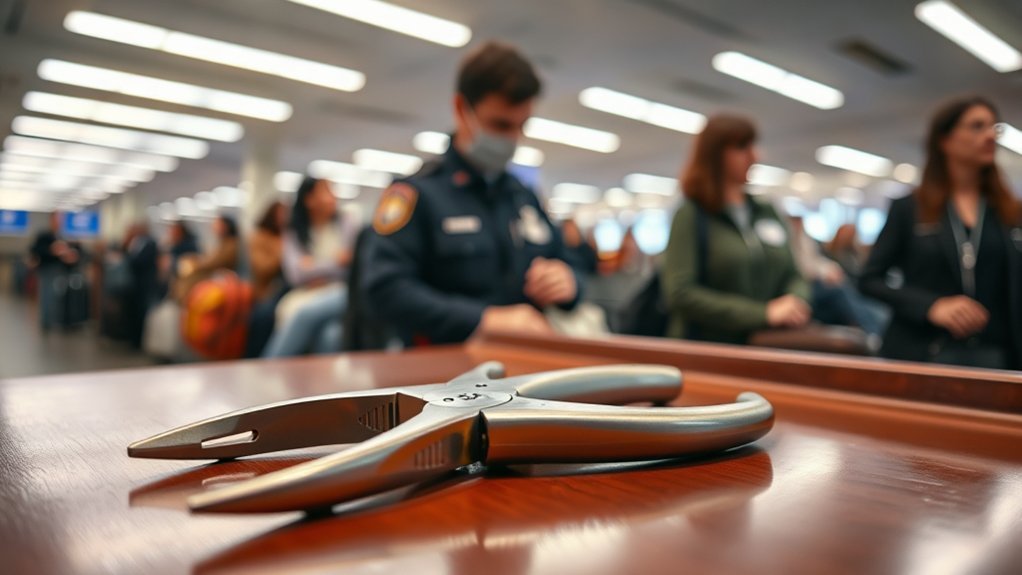
Wondering if you can bring pliers on a plane? According to TSA regulations, you’re generally allowed to carry pliers in your carry-on or checked luggage. They consider pliers a common travel essential, especially for minor repairs or personal use.
However, TSA strictly evaluates tools based on size and potential security risks, so it’s vital to follow their guidelines precisely. Before packing, remember that even though pliers are permitted, improper handling or unusual size might lead to additional screening or confiscation.
To avoid delays, pack your pliers securely and make sure they’re easily accessible for inspection. Staying informed about TSA regulations helps you include necessary travel essentials without risking confiscation or travel disruptions.
TSA Size and Type Rules for Pliers on Planes
While TSA generally permits pliers in both carry-on and checked bags, size and type restrictions play a significant role in what’s allowed aboard. You need to evaluate plier types carefully; small, standard pliers typically meet TSA guidelines, but tools with sharp edges or blades integrated may be prohibited.
Airline regulations focus on guaranteeing tools don’t pose a safety risk, so the length of the pliers matters. Usually, those under 7 inches are acceptable. Additionally, multi-tools containing pliers combined with knives or scissors might face stricter scrutiny.
Before packing, verify the specific airline regulations alongside TSA rules, as some carriers impose tighter limits. By adhering to size and type restrictions, you’ll avoid delays and guarantee your pliers travel without issue.
Are Pliers Allowed in Carry-On and Checked Bags?
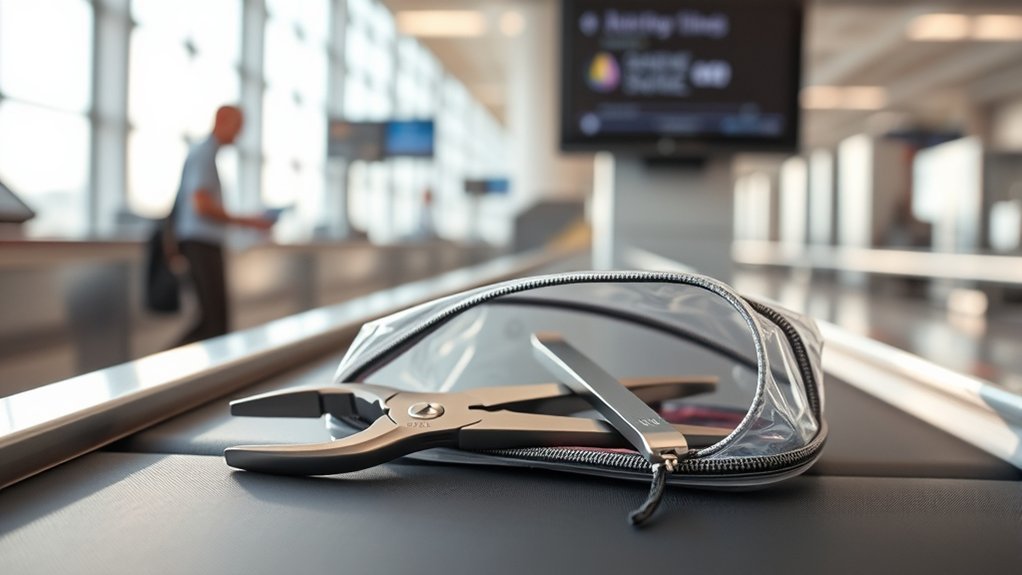
Although TSA permits pliers in both carry-on and checked bags, you must be aware of specific restrictions that apply to each. Pliers regulations require that any tool exceeding 7 inches in length is prohibited in carry-on luggage due to airport security concerns.
If your pliers are under this size, you can bring them through the security checkpoint, but be prepared for additional screening. For checked bags, there’s more flexibility. Pliers of any size are generally allowed without issue. However, you should make certain they’re properly secured to prevent injury to baggage handlers and inspectors.
Understanding these pliers regulations helps you avoid delays and confiscations at airport security. Always check the latest TSA guidelines before traveling, as rules can change based on security assessments.
How to Pack Pliers Safely for Air Travel
To pack pliers safely for air travel, start by cleaning and drying them thoroughly to prevent rust and damage. Use effective packing techniques to maintain travel safety and avoid issues during security checks. Follow these steps:
- Wrap the pliers’ jaws with electrical or duct tape to cover sharp edges.
- Place the wrapped pliers in a hard case or protective pouch to avoid damage.
- Secure the case within your checked luggage, not your carry-on, unless TSA permits.
- Position the case among soft clothing to cushion impacts during transit.
These packing techniques guarantee your pliers stay intact and comply with regulations, minimizing risks to your belongings and other passengers. Prioritize travel safety by preparing your tools properly before your trip.
What Happens If TSA Finds Pliers in Your Bag?
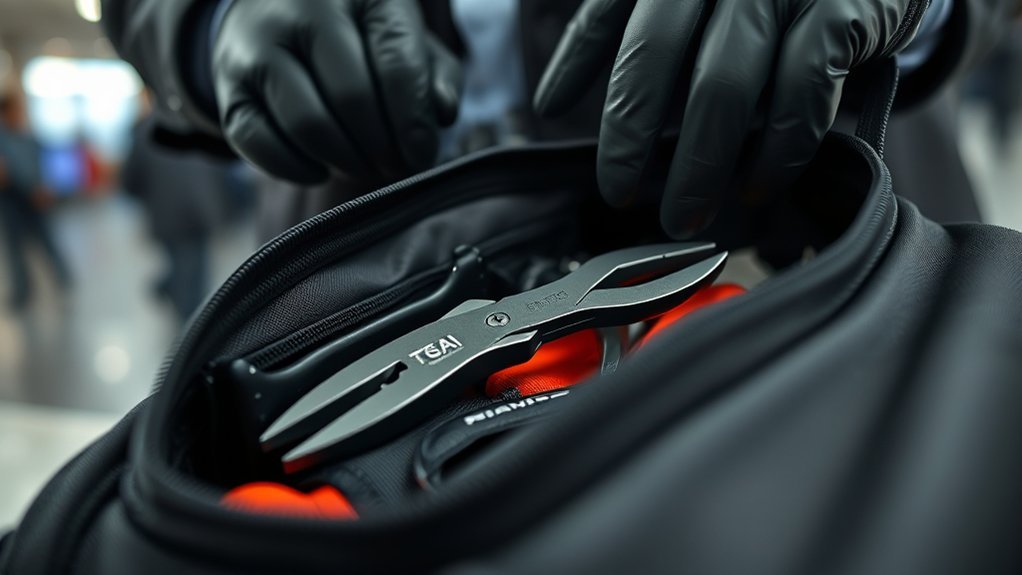
Properly packing your pliers reduces the chance of complications, but if TSA uncovers them during screening, you’ll face specific procedures. TSA regulations classify certain tools as prohibited items in carry-on bags, including pliers exceeding length limits or sharp edges.
If found, agents may:
| TSA Action | Description |
|---|---|
| Confiscation | Pliers deemed prohibited are taken away. |
| Secondary Screening | Additional inspection of your belongings. |
| Approval for Checked | Pliers allowed only in checked luggage. |
You must comply with TSA’s instructions to avoid delays. Failure to declare or improperly pack pliers can cause confiscation or missed flights.
Understanding TSA regulations guarantees you handle pliers in line with security protocols and avoid unnecessary hassle at the checkpoint.
Tips for Traveling With Pliers Without Airport Hassles
Traveling with pliers can be smooth if you follow three essential tips: choose the right type, pack them correctly, and know TSA rules. To avoid airport hassles, keep these travel tips and packing essentials in mind:
- Select small, non-locking pliers; larger or locking models may be restricted.
- Pack pliers in checked luggage when possible, as carry-on allowances vary.
- If carrying in your carry-on, place them in a clear, accessible pouch for TSA inspection.
- Review the latest TSA guidelines before traveling since rules can change.
Conclusion
You can bring pliers on a plane, but knowing the rules keeps you ahead of the game. Keep pliers under 7 inches in your carry-on for smoother screening; larger ones belong in checked bags. Always pack them securely to avoid surprises at security.
By following these guidelines and checking your airline’s policies, you’ll prevent delays and keep your tools safe. Remember, a little preparation goes a long way when traveling with pliers. Ultimately, understanding the regulations about bringing pliers on a plane ensures a hassle-free journey.