Just like a carpenter relies on a hammer, understanding what are pliers used for is essential for many tasks around the home or workshop.
Whether you’re twisting wires, tightening a pipe, or bending metal, pliers offer the grip and leverage you need.
But not all pliers are made equal, and knowing their specific uses can save you time and frustration.
Let’s explore how these tools can make your projects easier and more precise.
What Are the Main Types of Pliers and Their Uses?
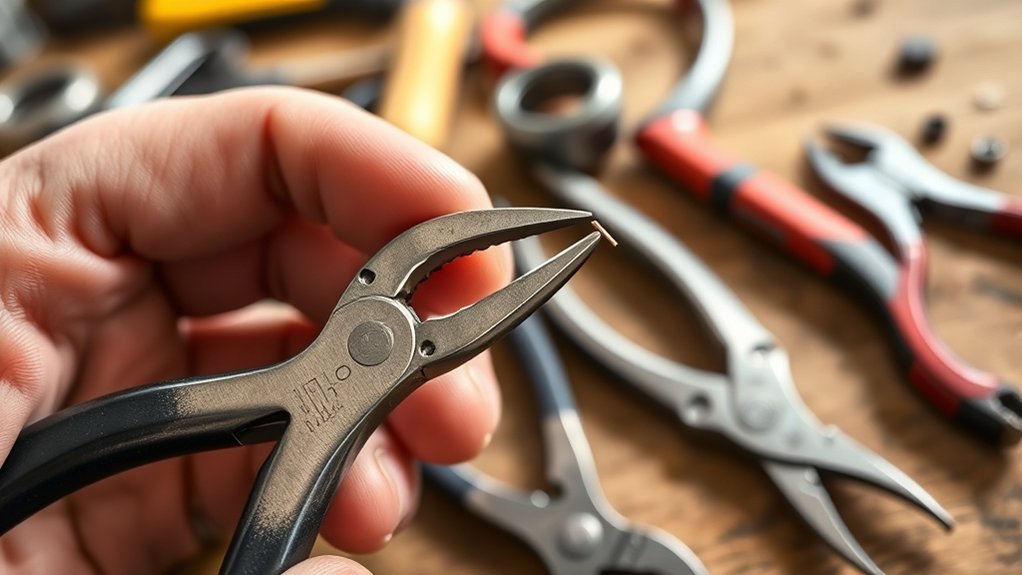
Pliers come in various types, each designed for specific tasks you’ll encounter in repairs or projects. The slip joint pliers are versatile, featuring an adjustable pivot that lets you widen the jaw to grip different sized objects firmly. You’ll use these for general gripping and turning tasks.
Needle nose pliers have long, slender jaws that reach into tight spots, perfect for bending wire or holding small components. They’re essential for electronics or jewelry work.
Both these types offer precise control, but their design suits different jobs: slip joint for adjustable gripping and needle nose for precision in confined spaces. Knowing which type to pick helps you handle tasks efficiently without damaging materials or tools.
How to Use Pliers for Gripping, Bending, and Cutting
When you need to grip, bend, or cut materials, using the right technique with your pliers makes all the difference. For effective gripping, position the jaws firmly around the object, guaranteeing you apply pressure evenly to avoid slipping. Use your fingers to control the grip, not just your wrist, for better stability.
When bending, use slow, steady force with proper bending methods. Place the material between the jaws and pivot the handles carefully to achieve the desired angle without damaging the item.
For cutting, align the cutting edges with the material, squeeze the handles smoothly, and avoid twisting motions that can dull blades. Mastering these gripping techniques and bending methods guarantees you use your pliers efficiently and safely every time.
Pliers for Electrical and Plumbing Projects
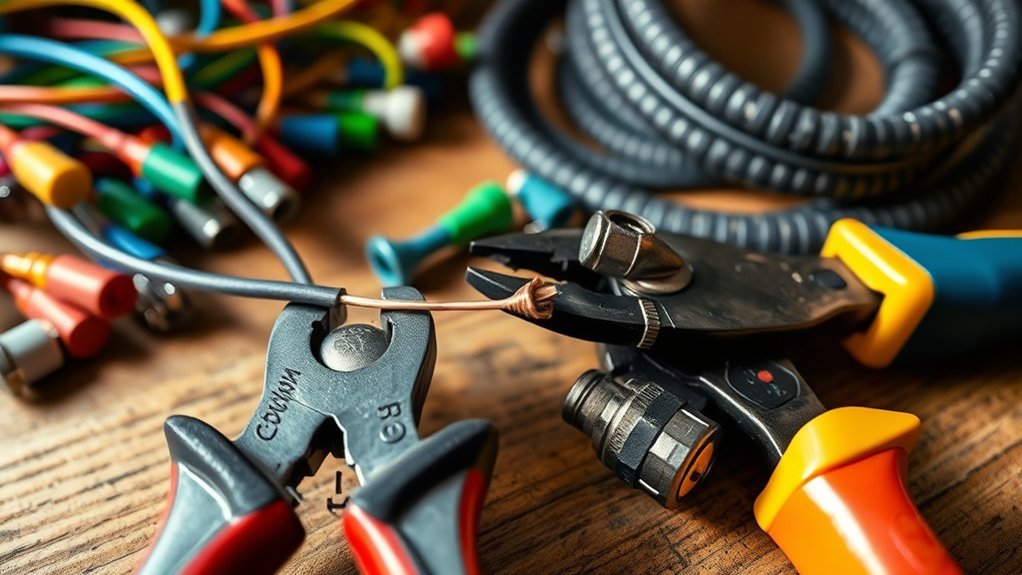
Mastering proper gripping, bending, and cutting techniques sets you up for success in more specialized tasks like electrical and plumbing projects. When working with electrical wiring, you’ll rely on pliers equipped with wire strippers to safely remove insulation without damaging the wire.
These pliers also help in bending and twisting wires for secure connections. For plumbing repairs, use slip-joint or groove-joint pliers to grip pipes and fittings firmly. Their adjustable jaws let you handle various sizes without slipping, making tightening or loosening connections easier.
Always choose pliers designed for the task to avoid damaging materials or injuring yourself. By selecting the right pliers and applying precise techniques, you’ll complete electrical and plumbing repairs efficiently and safely.
Pliers in Crafting and DIY Repairs
Versatility is key in crafting and DIY repairs, where you’ll often need to grip, bend, or cut materials with precision. Pliers become essential tools in these situations, allowing you to manipulate wires, small metal pieces, or delicate components without damaging them.
When working on various crafting techniques, needle-nose pliers help you reach tight spots and bend wire cleanly, while cutting pliers let you trim excess material efficiently. For DIY projects involving assembling or disassembling parts, slip-joint pliers offer adjustable gripping power, accommodating different sizes.
Using the right pliers guarantees you maintain control and accuracy, making your crafting or repair work smoother and more professional. By integrating pliers into your toolkit, you enhance your ability to tackle a broad range of tasks effectively.
Tips for Choosing the Right Pliers
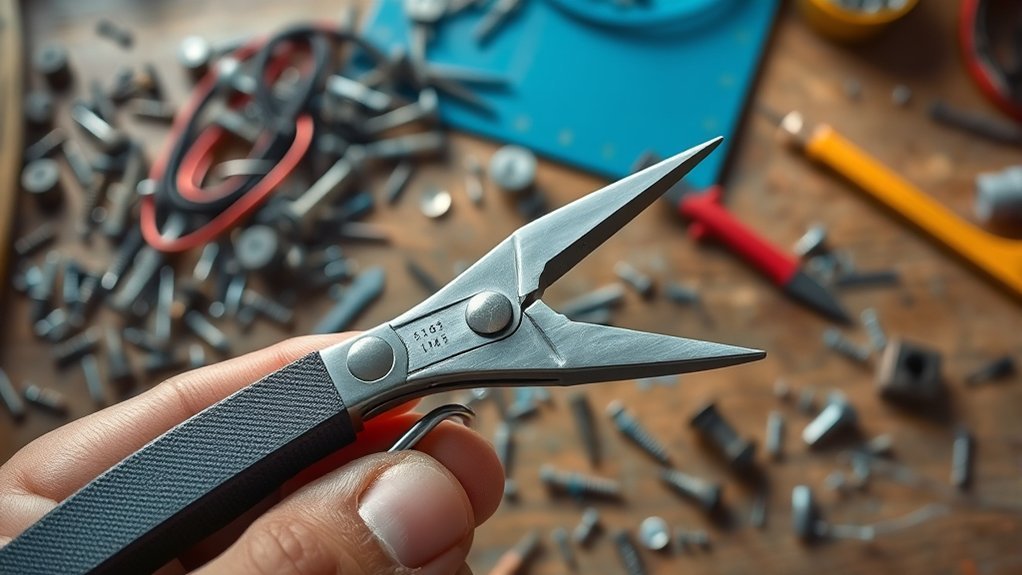
Pliers come in many shapes and sizes, each designed for specific tasks, so picking the right type can make your work easier and more efficient. First, consider the task: needle-nose pliers are great for precision work, while slip-joint pliers offer versatility.
Choosing the right pliers type boosts efficiency—needle-nose for precision, slip-joint for versatility.
Check the pliers materials. High-quality steel resists rust and guarantees durability. Look for ergonomic handles that provide a comfortable grip, reducing hand fatigue.
Don’t overlook pliers maintenance. Models with corrosion-resistant coatings require less upkeep. Also, test the joint action; smooth movement means better control.
Avoid cheap tools that wear out quickly, increasing your workload. By focusing on task suitability, materials, and maintenance needs, you’ll select pliers that last and perform well, saving you time and effort on every job.
Conclusion
Just like a skilled artist needs the right brush, you need the right pliers to shape, grip, or cut with precision. Whether you’re twisting wires, tightening pipes, or crafting small details, choosing the correct type makes all the difference.
Keep your toolbox ready with versatile pliers, and you’ll handle any project confidently and efficiently—turning tough tasks into smooth, controlled movements. Using the right pliers ensures your work is accurate and effective, just like a painter brings a vision to life on canvas.
In conclusion, understanding what are pliers used for helps you select the perfect tool for every job, making your work easier and more precise.