You might expect all pliers to cost about the same, yet their prices vary widely depending on factors like material, design, and brand reputation.
How much is pliers really depends on whether you need basic tools for occasional use or specialized ones for professional projects.
The price range can be surprising, especially when you consider the different types of pliers available.
Understanding what influences these costs can help you choose the right pair without overspending or compromising on quality.
Let’s explore what really determines the price of pliers and what to look for when making a purchase.
Factors That Affect Pliers’ Price
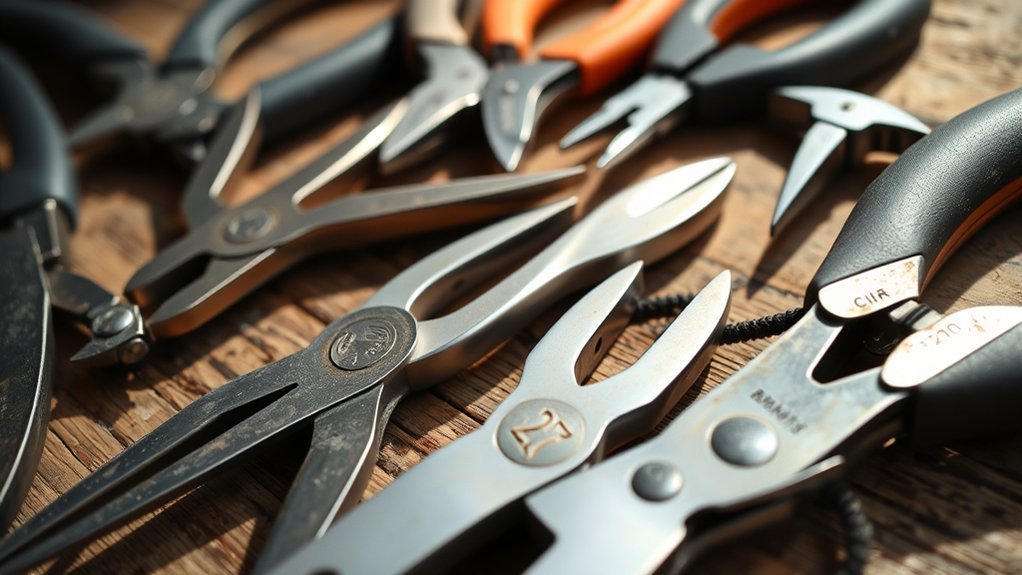
Although pliers might seem straightforward, several key factors influence their price, and understanding these can help you make an informed purchase. First, the variety of pliers types greatly impacts cost; specialized designs like locking pliers or needle-nose pliers often carry higher prices due to complexity and intended use.
Material quality, such as high-grade steel or corrosion-resistant coatings, also affects durability and price. Additionally, pliers brands play a vital role. Established manufacturers tend to charge more, reflecting superior craftsmanship, warranties, and performance reliability.
Ergonomic features, joint design, and manufacturing origin further influence pricing. By analyzing these aspects—pliers types, material, brand reputation, and design—you’ll better evaluate which tools offer the best value for your specific needs without overspending on unnecessary features.
Cost of Basic Pliers
Basic pliers typically range from $5 to $20, depending on factors like material quality and brand. When considering the cost of basic pliers, you should conduct a price comparison to find the best value for your needs.
Lower-priced models often use standard steel and basic grips, while higher-priced ones may feature alloy steel and ergonomic handles. Here are key considerations:
- Material: Higher-grade steel increases durability and price.
- Brand reputation: Established brands may charge more due to reliability.
- Design features: Enhanced grip materials or rust-resistant coatings add to cost.
Comparing Standard and Specialty Pliers Prices
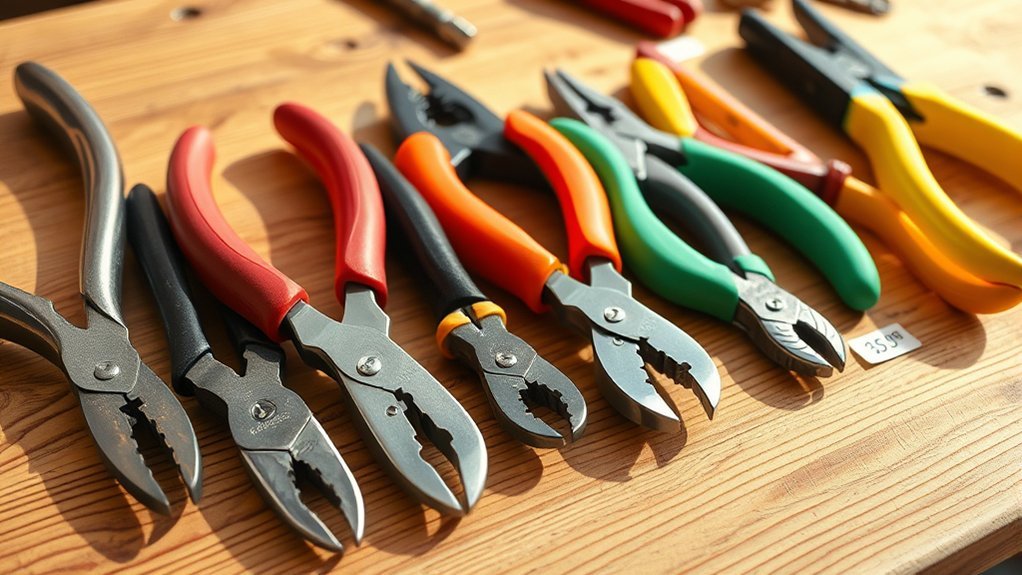
When you compare standard pliers to specialty pliers, you’ll notice a significant difference in price driven by their specific functions and design complexities. Standard pliers, like slip-joint or needle-nose types, generally cost less because they serve broad, general purposes.
Specialty pliers, such as plumbing pliers, are engineered with unique jaw shapes and enhanced grip surfaces to handle pipe fittings, which increases manufacturing costs. Cutting pliers, designed for precise wire or cable cutting, incorporate hardened steel blades, adding to their price due to material and heat-treatment requirements.
These added features and specialized construction directly affect the cost. So, when choosing between standard and specialty pliers, you’ll find that the price reflects their intended application, durability, and the technical specifications necessary for specialized tasks.
Ideal Price Ranges for DIY Pliers
Finding the right pair of DIY pliers typically involves balancing functionality with cost, and most users will find quality options between $10 and $40. This price range covers various pliers types suited for common DIY projects, offering durable materials and ergonomic designs without overspending.
Quality DIY pliers balance functionality and cost, with great options available between $10 and $40.
When selecting pliers within this range, consider:
- Material quality: Look for heat-treated steel or alloy for durability.
- Grip comfort: Ergonomic handles reduce hand fatigue during extended use.
- Versatility: Multi-purpose pliers types like combination or needle-nose support diverse tasks.
Sticking to this budget guarantees you get reliable tools for home repairs, crafting, or light electrical work. Expensive features like specialized coatings or premium brands may not be necessary for standard DIY needs.
Focus on function and durability to maximize value within your ideal price range.
Professional-Grade Pliers: When to Pay More
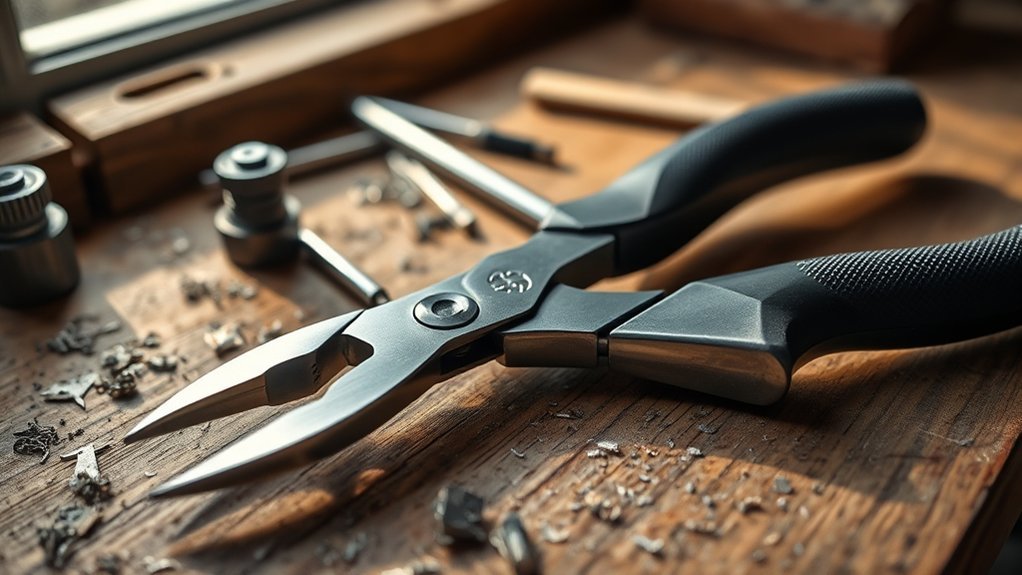
When you choose professional-grade pliers, you’re investing in superior durability and high-quality materials like forged steel for long-term reliability. These tools often include specialized features such as ergonomic grips, precision cutting edges, and corrosion-resistant coatings that enhance performance.
Understanding these design elements helps you decide when paying more results in better efficiency and tool lifespan.
Durability And Material Quality
Three key factors determine the durability and material quality of professional-grade pliers: the type of steel used, heat treatment processes, and ergonomic design. You should focus on pliers made from high-carbon or chromium-vanadium steel, as these materials offer superior material strength and corrosion resistance.
Proper heat treatment enhances hardness and toughness, preventing deformation under stress. Additionally, ergonomic design reduces user fatigue but also influences durability by minimizing stress points.
Material Strength: Guarantees pliers withstand repeated use without bending or breaking.
Corrosion Resistance: Protects against rust and extends tool lifespan in harsh environments.
Heat Treatment: Optimizes hardness and flexibility, critical for sustained performance.
Selecting pliers with these qualities assures reliable, long-lasting tools worth your investment.
Specialized Features And Design
Although basic pliers can handle general tasks, professional-grade models incorporate specialized features and design elements that justify a higher price point. You’ll find ergonomic design that reduces hand fatigue during prolonged use.
Precision tips allow for delicate manipulation in tight spaces, enhancing control and accuracy. Additionally, enhanced joint mechanisms improve durability and smooth operation.
| Feature | Benefit | Application |
|---|---|---|
| Ergonomic design | Minimizes user fatigue | Extended use in workshops |
| Precision tips | Enables fine, detailed work | Electronics and jewelry repair |
| Enhanced joints | Increases tool longevity | Heavy-duty industrial tasks |
| Non-slip grips | Improves handling safety | Wet or oily environments |
Investing in these features means you get reliability and performance tailored to professional demands.
Where to Buy Pliers for Less
Several reliable sources offer pliers at competitive prices, allowing you to balance cost and quality effectively. When searching for affordable options, consider these avenues:
Cheap online retailers: Platforms like Amazon and eBay provide extensive selections with user reviews, helping you gauge durability and performance before purchase.
Local hardware stores: Visiting these stores lets you physically inspect the pliers’ build quality and ergonomics, ensuring you get a tool suited to your needs.
Wholesale suppliers: Buying in bulk or during sales events through wholesalers can reduce per-unit costs, especially for professional use or large projects.
Each option blends accessibility, price, and product assurance differently. By evaluating these sources, you can secure pliers that meet technical requirements without overspending.
Spotting Good Value Pliers by Price
Understanding the price range of pliers helps you identify tools that deliver solid performance without unnecessary expense. When conducting a value assessment, focus on the materials used, such as chrome vanadium steel for durability and corrosion resistance.
Pay attention to the joint quality; smooth operation indicates precision engineering. Use price comparison across reputable brands to gauge whether a plier’s cost matches its features.
Avoid overpaying for brand names when similar technical specifications are available at a lower price. Conversely, extremely cheap pliers often compromise on metal hardness and grip ergonomics, reducing lifespan and user comfort.
How to Save Money on Quality Pliers
After learning how to assess plier quality by price and materials, you can focus on methods to reduce costs without sacrificing durability or performance. To find budget friendly options, consider these strategies:
Compare brands and models: Evaluate feature sets and material specs to identify tools offering the best value for your needs. Sometimes lesser-known brands provide robust pliers at lower prices.
Buy multipurpose sets: Bundling can lower the cost per tool and guarantees versatility, reducing the need for specialized, expensive pliers.
Apply plier maintenance tips: Regular cleaning, lubrication, and proper storage extend tool life, minimizing replacement frequency and overall expenses.
Conclusion
When weighing whether to whip out your wallet, watch for warranties, workmanship, and wear resistance—these factors form the foundation for finding fair-priced, functional pliers. Whether you’re a DIY devotee or a professional pro, prioritizing purpose prevents purchasing poor products.
By balancing brand benefits, build quality, and budget boundaries, you’ll secure sturdy, smart tools without sacrificing savings. Savvy shoppers steer clear of splurging on superficial specs and instead select strength and style that stand the test of time.
In the end, knowing how much is pliers worth depends on these key factors. Focus on durability and design to ensure you get the best value for your money.