Using a hammer isn’t just about swinging wildly—it’s about controlled force and technique. When using a hammer, you’ll want to grip the handle just right, position your body for balance, and strike with precision to get the job done efficiently and safely.
Mastering these basics can save you time and prevent injury. But there’s more to know before you pick up that tool again.
How to Hold and Position a Hammer for Safe, Effective Strikes
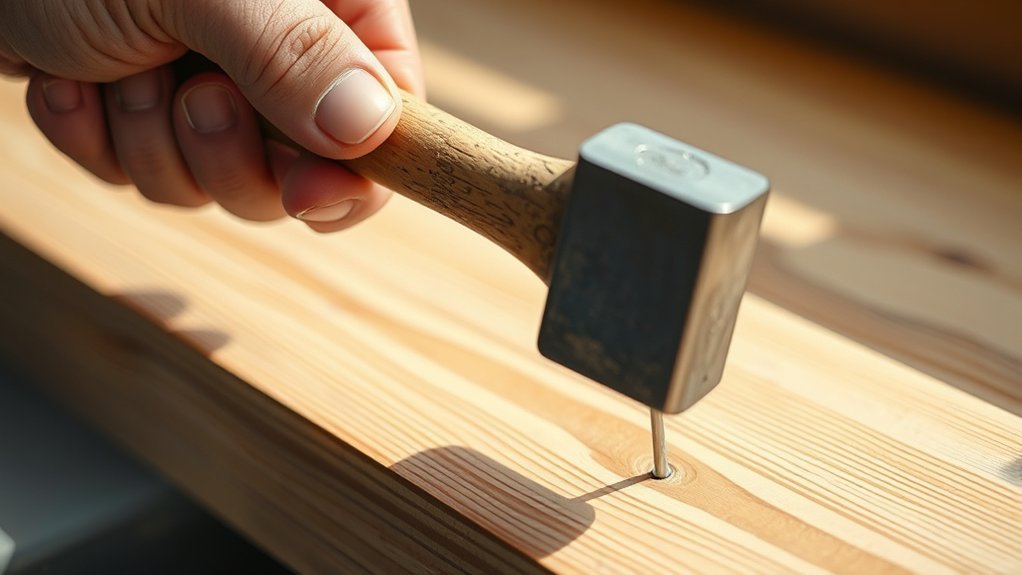
How should you hold a hammer to deliver safe, effective strikes? Start by gripping the handle firmly but not too tight. Your grip technique should allow control without causing tension.
Position your hand near the end of the handle for better leverage. Ensure your wrist alignment is straight, avoiding any awkward angles that could strain your wrist or reduce power.
Keep your thumb wrapped around the handle, securing your hold. Your forearm and wrist should create a natural line, which helps transfer energy directly to the hammerhead.
Avoid holding the hammer too close to the head, as this reduces impact and control. Proper grip technique and wrist alignment lay the foundation for safe, precise hammering, minimizing injury risk and maximizing effectiveness.
How to Swing and Strike for Maximum Control
When you swing a hammer, controlling your motion is key to accuracy and safety. Focus on grip strength by holding the handle firmly but not too tight. This prevents fatigue and improves control.
Next, position your feet shoulder-width apart to maintain stance balance. Use a smooth, controlled swing, letting the hammer’s weight do the work rather than forcing the motion.
| Element | Purpose | Tip |
|---|---|---|
| Grip Strength | Control and fatigue reduction | Hold handle near the end |
| Stance Balance | Stability and power | Feet shoulder-width apart |
| Swing Motion | Accuracy and impact | Use wrist and elbow, not arm |
Mastering these basics will maximize your hammer’s effectiveness.
Avoid These Common Hammering Mistakes
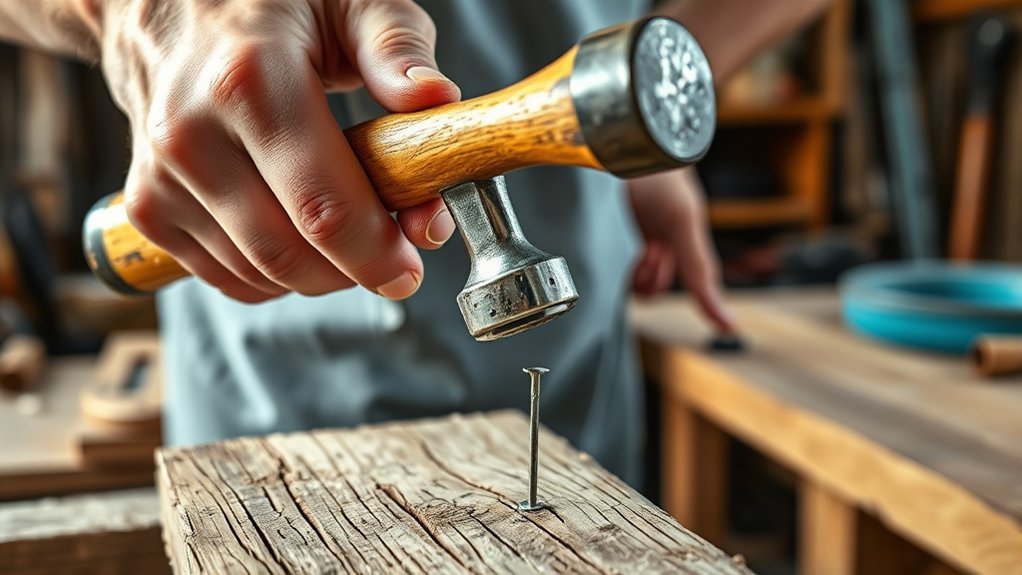
Now that you’ve got a solid grip, stance, and swing technique, it’s important to steer clear of common hammering mistakes that can undermine your effectiveness or cause injury. Avoid a lack of grip by holding the hammer firmly but not too tight; a loose hold reduces control, while an overly tight grip tires your hand quickly.
Always check nail alignment before striking. Misaligned nails can bend, damaging your work and wasting effort. Strike the nail squarely to prevent slipping or glancing blows, which increase the risk of injury.
Don’t swing wildly. Maintain a controlled motion to ensure accuracy and safety. Lastly, never use a hammer with a damaged handle or head, as this compromises stability and increases accident risk. Following these tips keeps your hammering efficient and safe.
How to Choose the Right Hammer for Your Project
Which hammer suits your project best depends on the task at hand. Start by choosing material. Steel heads offer durability, while fiberglass handles reduce vibration.
Next, assess weight balance. A well-balanced hammer feels comfortable and reduces fatigue during extended use. Focus on handling grip. Opt for a non-slip, ergonomic grip that fits your hand size to maintain control and prevent accidents.
Consider head design carefully. A claw hammer is great for general carpentry, while a ball-peen hammer suits metalwork. For delicate tasks, a smaller, lighter hammer prevents damage, whereas heavier hammers deliver more force.
Hammer Maintenance and Safety Tips
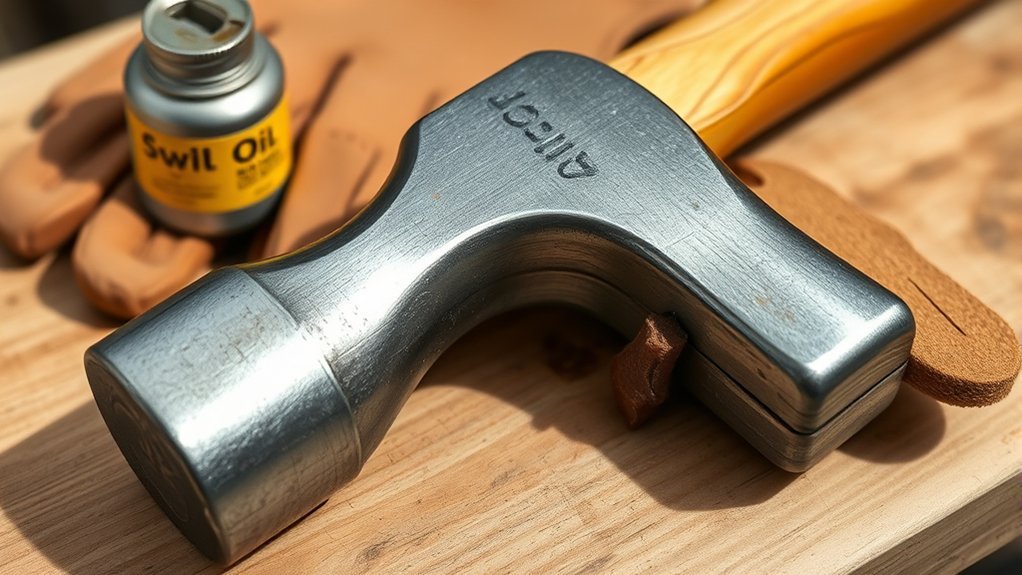
Choosing the right hammer is only part of the job; maintaining it properly ensures it stays reliable and safe to use. Start by regularly inspecting the hammer for cracks or loose parts that could compromise hammer durability.
Tighten or replace any worn components immediately to prevent accidents. Clean the hammer after each use to remove dirt and debris, which can degrade grip comfort and tool performance over time.
Store your hammer in a dry place to avoid rusting. When using your hammer, always wear safety glasses and ensure your grip is firm but comfortable to reduce hand fatigue and improve control.
Frequently Asked Questions
Can I Use a Hammer on Metal Surfaces?
Yes, you can use a hammer on metal surfaces, but ensure the hammer type suits the metal’s hardness. For metal surface compatibility, use a ball-peen or rubber mallet to avoid damage and achieve effective results.
What Types of Nails Work Best With a Hammer?
You’ll want to focus on nail selection. Common nails work well for wood, finishing nails suit trim, and roofing nails fit shingles. Maintain a firm hammer grip to drive nails efficiently and avoid bent or misaligned nails.
How Do I Remove a Bent Nail With a Hammer?
You pry, you lever, you slide. Use removal techniques that respect nail geometry: position the claw under the bent nail’s head, apply steady leverage, and pull straight to avoid damaging the wood or breaking the nail further.
Can a Hammer Be Used for Demolition Work?
Yes, you can use a hammer for demolition work, but you should apply proper demolition techniques and always follow safety considerations. Wear protective gear and work carefully to avoid injury or damaging surrounding structures.
What Is the History of the Hammer Tool?
You’ll find the hammer’s history tied to metallurgy’s dawn, evolving as metalworking advanced. Hammer mythology, like Thor’s Mjölnir, shows its symbolic power.
Understanding this helps you appreciate its practical and cultural significance.
Conclusion
Now that you know how to wield your hammer like a pro, don’t go flailing wildly like it’s a medieval battle. Grip it firmly near the end, swing with your wrist and elbow—not your entire body—and let the hammer’s weight do the heavy lifting. Avoid the rookie mistakes that’ll have you missing nails or smashing thumbs.
Choose the right hammer, keep it in good shape, and wear safety glasses—because looking like a DIY disaster isn’t a good look. Mastering these basics will make your projects smoother and safer.
Remember, the key to success lies in how you use a hammer effectively every time.