If you’re dealing with hammer toes, you’ll want to start by focusing on targeted stretches and exercises that improve joint mobility and tendon flexibility. Straightening hammer toes often begins with these gentle movements to help realign the toes and reduce discomfort.
Choosing the right footwear also plays a critical role in reducing pressure and preventing further deformity. Shoes with a wide toe box and good support can make a significant difference in managing symptoms.
While conservative methods often help, there are specific situations where orthotics or medical interventions become necessary. Understanding these options can guide you toward the most effective approach for your condition.
Simple Exercises to Straighten Hammer Toes at Home

Several targeted exercises can help you straighten hammer toes by strengthening and stretching the affected muscles and tendons. Simple stretches are essential; for example, manually pulling your toes upward helps lengthen the contracted tendons.
Toe curls, where you grip a towel with your toes and pull it toward you, actively engage and strengthen the flexor muscles. Another effective toe exercise involves placing marbles on the floor and picking them up one by one with your toes, improving dexterity and muscle control.
Consistently performing these exercises enhances joint mobility and reduces deformity progression. You should do these simple stretches and toe exercises daily to increase their efficacy and gradually restore proper toe alignment.
The Best Shoes to Prevent and Relieve Hammer Toe Pain
Choosing the right shoes plays an essential role in preventing and alleviating hammer toe pain by reducing pressure on the affected joints and providing adequate support. To select the best shoes for prevention and relief, consider these factors:
- Wide Toe Box: Ensures proper toe alignment and accommodates toe spreaders benefits by allowing toes to move freely.
- Low Heels: Minimize pressure on the forefoot, reducing joint stress.
- Flexible Soles: Promote natural foot movement without forcing toes into a cramped position.
- Cushioned Insoles: Absorb shock and provide comfort, preventing irritation of hammer toes.
When Orthotics Can Help Straighten Hammer Toes
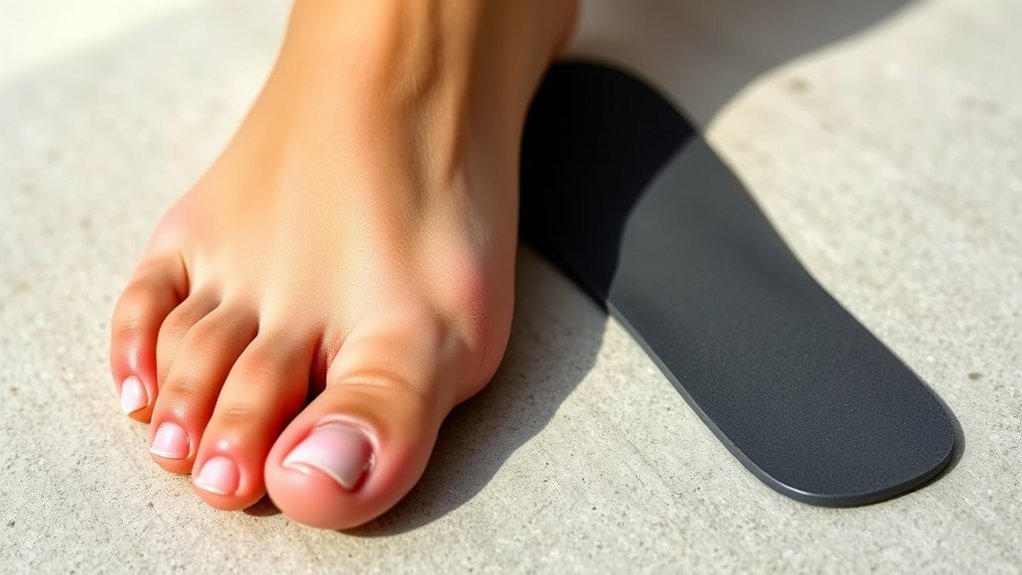
While selecting proper footwear helps reduce hammer toe pain, it may not fully correct the deformity. Orthotics can play a crucial role when conservative measures alone fall short. Custom insoles provide targeted support, redistributing pressure away from the affected toes and realigning foot mechanics.
Their orthotics effectiveness depends on the severity and flexibility of your hammer toes. If your toes remain flexible, custom insoles can help maintain proper toe alignment and prevent progression. Additionally, orthotics reduce abnormal stress on ligaments and tendons, promoting muscle balance around the toe joints.
However, in rigid or advanced deformities, orthotics may offer limited correction but still improve comfort. Consulting a podiatrist for a precise assessment ensures you receive orthotics tailored to your foot’s unique structure, maximizing treatment outcomes.
Medical Treatments for Severe Hammer Toes: Surgery and Beyond
When conservative treatments fail, you may need surgical intervention to correct severe hammer toes. Procedures often involve tendon release, joint resection, or fusion to restore toe alignment.
Postoperative care, including immobilization and physical therapy, is crucial for optimal recovery and function.
Surgical Procedures Overview
Surgical procedures provide definitive correction for severe hammer toes that no longer respond to conservative treatments. When you opt for surgery, your surgeon will select the best technique based on deformity severity, joint stiffness, and underlying causes.
Common surgical procedures include:
- Tendon release or transfer: Adjusts imbalanced tendons to restore toe alignment.
- Bone resection: Removes part of the bone to straighten the toe.
- Arthrodesis: Fuses joints to maintain a corrected position in rigid deformities.
- Osteotomy: Cuts and realigns bones for more precise correction.
Each procedure aims to correct deformity while preserving function and minimizing complications. Your surgeon will discuss which surgical procedure suits your condition best.
Postoperative Care Strategies
How do you ensure optimal recovery after hammer toe surgery? Effective postoperative care is critical. Initially, you must keep the surgical site elevated and apply ice to minimize swelling.
Strictly follow your surgeon’s instructions regarding wound care to prevent infection. Weight-bearing activities should be limited and gradually reintroduced based on your recovery milestones.
Use prescribed orthotic devices or splints to maintain proper toe alignment during healing. Pain management with medication is important but should be monitored closely.
Physical therapy exercises may be recommended to restore mobility and strengthen surrounding muscles once initial healing occurs. Regular follow-up appointments allow your medical team to evaluate progress and adjust care plans accordingly.
Adhering to these postoperative care strategies optimizes functional outcomes and reduces complication risks after hammer toe surgery.
What Causes Hammer Toes and the Risks of Ignoring Them
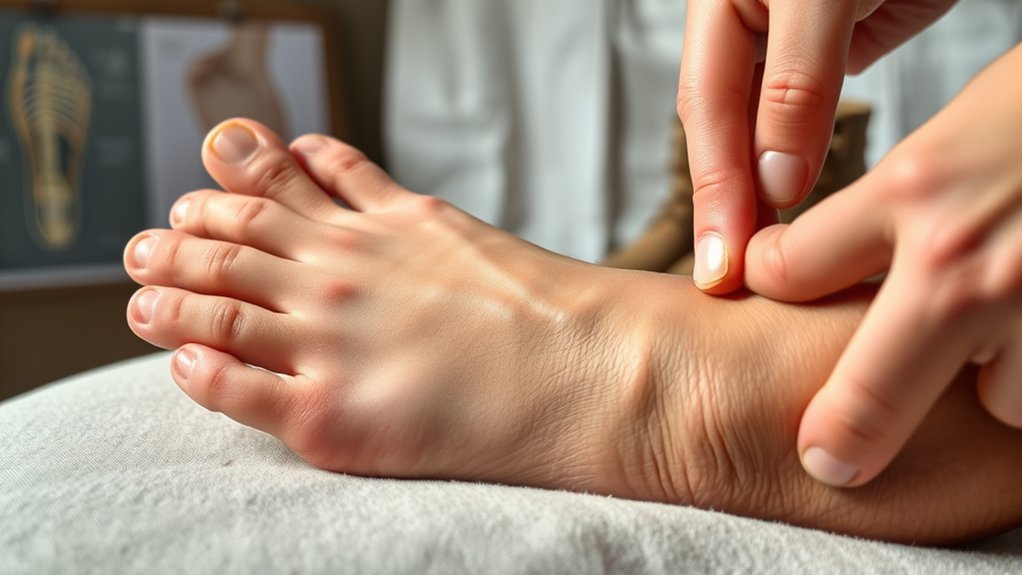
You develop hammer toes primarily due to muscle imbalances, ill-fitting footwear, or underlying medical conditions like arthritis.
Ignoring them can lead to pain, deformity, and difficulty walking, increasing the risk of ulcers or infections. Addressing the issue early prevents worsening complications and improves treatment outcomes.
Common Causes Explained
Hammer toes develop when the muscles and tendons around your toe joints become imbalanced, causing the toes to bend abnormally downward. Understanding the common causes and risk factors can help you address the issue early.
- Improper Footwear: Shoes that are too tight or have high heels force your toes into a cramped position, increasing strain on tendons.
- Muscle Imbalance: Weak or overly tight muscles disrupt joint alignment, leading to abnormal toe posture.
- Trauma or Injury: Previous toe injuries can alter tendon function, contributing to deformity.
- Underlying Conditions: Neuromuscular disorders and arthritis increase your susceptibility to hammer toes by affecting muscle control and joint integrity.
Recognizing these key risk factors enables you to take proactive steps to prevent worsening deformity.
Potential Health Complications
Ignoring the factors that contribute to toe deformities can lead to serious health complications. When hammer toes progress untreated, you face possible risks such as chronic pain, inflammation, and the development of corns or calluses due to abnormal pressure on the toe joints.
These issues can impair your mobility and gait, increasing the likelihood of falls or other injuries. Furthermore, the deformity may cause joint stiffness and muscle imbalance, which can worsen over time.
If you have diabetes or peripheral neuropathy, the risks intensify, as ulcers and infections may develop from persistent friction and open sores. These long term complications can severely affect your foot’s structural integrity, necessitating more invasive interventions later. Understanding these risks highlights the importance of addressing hammer toes promptly.
Importance of Early Treatment
Although toe deformities develop gradually, early treatment is essential to prevent irreversible joint damage and persistent pain. Early detection allows you to address the underlying causes of hammer toes before the deformity becomes rigid and unresponsive to conservative measures.
Ignoring symptoms can lead to complications that impair your mobility and footwear compatibility.
Consider these critical points:
- Early detection enables non-invasive interventions like orthotic devices.
- Timely treatment improves footwear compatibility, reducing pressure and discomfort.
- Delayed care increases the risk of joint stiffness and deformity progression.
- Untreated hammer toes can cause calluses, ulcers, and infections.
How to Prevent Hammer Toes From Returning
Why do hammer toes often reoccur even after treatment? Recurrence usually stems from unresolved biomechanical issues affecting toe articulation and adherence to prevention myths. To prevent hammer toes from returning, you must maintain proper foot mechanics and avoid restrictive footwear.
| Prevention Strategy | Explanation |
|---|---|
| Regular Toe Stretching | Enhances joint mobility and articulation |
| Proper Footwear Selection | Avoids pressure causing deformities |
| Addressing Underlying Causes | Corrects biomechanical imbalances |
Ignoring these aspects perpetuates deformity. You should also debunk prevention myths, such as believing surgery alone suffices. Instead, combine treatment with consistent preventative measures to maintain toe alignment and function, minimizing recurrence risk effectively.
Frequently Asked Questions
Can Hammer Toes Affect Balance or Walking Gait?
Yes, hammer toe can affect your balance impact by altering foot mechanics. It changes your walking gait, causing instability and increasing fall risk.
Addressing the deformity helps restore proper balance and improves gait efficiency.
Are Hammer Toes Hereditary or Purely Lifestyle-Related?
You should know hammer toes result from both hereditary factors and lifestyle influences. Genetic predispositions affect your foot structure, while habits like ill-fitting shoes or repetitive strain contribute, making it a multifactorial condition requiring thorough evaluation.
How Long Does Recovery Take After Hammer Toe Surgery?
You’ll typically recover from hammer toe surgery within 6 to 8 weeks, allowing gradual weight-bearing and mobility. Like moonlit workouts, consistency matters.
Avoid tofu canapés during recovery to reduce inflammation and promote healing.
Can Hammer Toes Cause Complications During Pregnancy?
You won’t experience catastrophic issues, but hammer toe pregnancy can worsen toe alignment due to swelling and pressure changes. Proper footwear and monitoring help prevent complications, ensuring your toes stay as stable and aligned as possible.
Do Hammer Toes Increase the Risk of Foot Infections?
Yes, hammer toes can increase your toe infection risk due to skin breakdown and pressure points. If you don’t address foot pain progression, it may lead to ulcers or infections, especially with poor circulation or diabetes.
Conclusion
If you’re among the 35% of adults affected by hammer toes, taking action is essential to avoid worsening pain and mobility issues. Regular stretching, proper footwear, and targeted exercises can markedly improve your toe alignment and comfort. Don’t ignore early signs—addressing hammer toes promptly reduces the need for invasive surgery.
By combining conservative care with professional advice, you can regain function and prevent recurrence. This approach helps keep your feet healthy and pain-free. Remember, consistent effort is key when you want to straighten hammer toes effectively.