When you face concrete, you quickly realize it’s tougher than wood or metal to drill through. Do you need a hammer drill for concrete? This question is common among DIYers and professionals alike.
You might wonder if your regular drill will cut it or if you need a hammer drill’s impact action to break through efficiently. Using the wrong tool can slow you down and wear out bits faster.
Understanding when and why to choose a hammer drill can save you time and effort on your project.
Why Is Concrete Harder to Drill Than Wood or Metal?
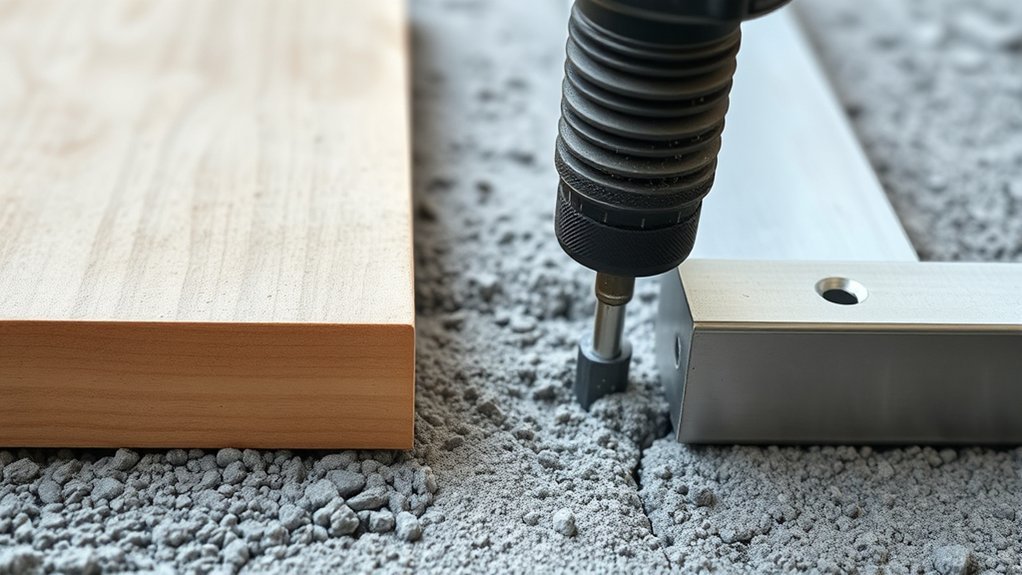
Why does concrete resist drilling more than wood or metal? You’ll find it’s due to its unique concrete properties. Unlike wood’s fibrous texture or metal’s crystalline structure, concrete is a composite material made of cement, sand, gravel, and hardened water.
This composition creates a dense, abrasive surface that wears down standard drill bits quickly. When you consider two word discussion ideas like “material hardness” and “abrasive resistance,” concrete ranks higher, demanding more power and specialized tools.
Its heterogeneous nature causes uneven resistance during drilling, making it tougher to penetrate. Understanding these concrete properties helps you appreciate why regular drills struggle, as they’re designed for softer or more uniform materials. You’ll need to adapt your approach to tackle concrete effectively.
When Should You Grab a Hammer Drill for Concrete?
When do you need to reach for a hammer drill instead of a regular one? The answer lies in the material density and project demands. Hammer drills excel when you’re drilling into concrete, masonry, or other dense materials where standard drills falter.
Two word discussion ideas like “impact force” and “material hardness” highlight the subtopic relevance, emphasizing the hammer drill’s percussive action that breaks concrete fibers efficiently. If you’re installing anchors, rebar, or conduits in concrete walls or floors, grabbing a hammer drill ensures faster, cleaner holes with less wear on the bit and drill.
For tasks involving softer materials or light-duty work, it’s unnecessary. Understanding when to choose a hammer drill streamlines your workflow and prevents tool misuse, maximizing both performance and lifespan.
Can You Use a Regular Drill on Concrete?
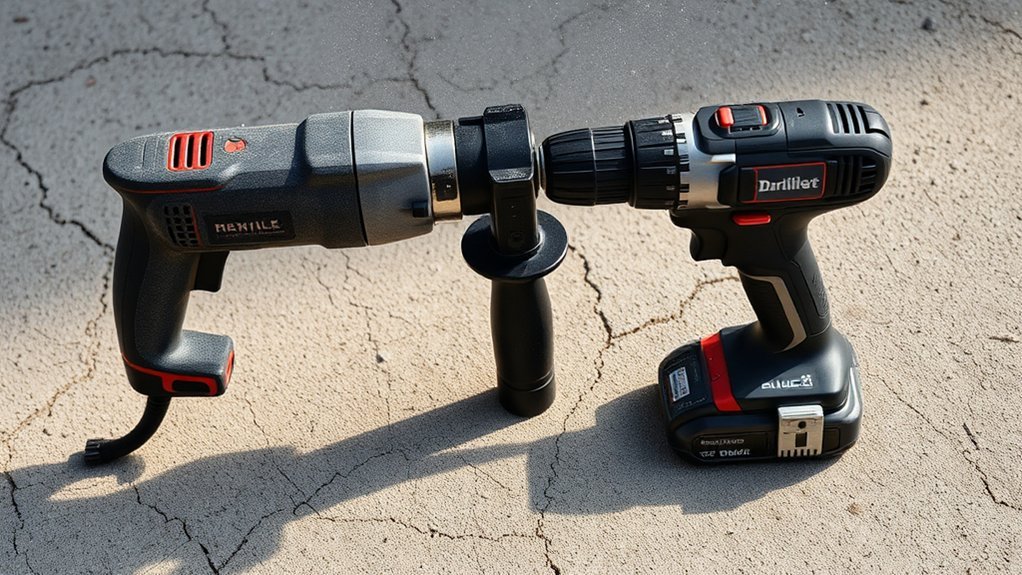
How effective is a regular drill on concrete? Regular drills can handle light-duty concrete tasks like small holes or anchor installations, but they lack the impact action needed for dense concrete.
Using one may compromise concrete aesthetics due to inefficient dust management and slower drilling, which increases heat and wear on bits.
| Aspect | Regular Drill |
|---|---|
| Drilling Speed | Slow |
| Bit Wear | High |
| Dust Management | Poor, more dust dispersal |
| Concrete Finish | Prone to chipping, affecting aesthetics |
If you prioritize clean holes and maintaining concrete aesthetics, a regular drill won’t suffice. For better dust management and efficiency, consider tools designed specifically for concrete work.
How Does a Hammer Drill Work for Concrete?
While regular drills struggle with dense concrete due to slow speed and high bit wear, hammer drills deliver the necessary impact force to penetrate hard surfaces efficiently. To understand how to drill concrete effectively, you need to grasp what hammer action is: it’s a rapid, pulsating force that mimics a hammer striking the bit while it rotates.
This dual motion, rotational and percussive, breaks up the concrete as the bit advances, reducing resistance. When you engage hammer action, the drill’s internal mechanism uses two ridged discs that slide against each other, creating rapid impacts.
This allows you to drill into concrete faster and with less effort compared to standard drills. Mastering this process ensures proper hole formation without overheating or excessive bit wear.
Best Drill Bits for Concrete and Hammer Drills
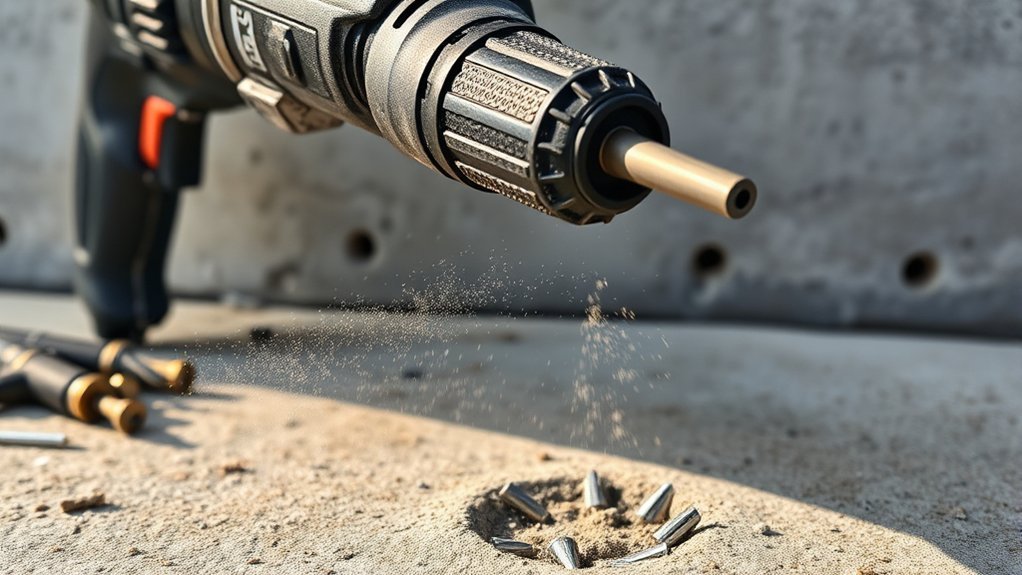
Which drill bits deliver the best performance when working with concrete and hammer drills? You want to choose carbide-tipped masonry bits, as their hardness and durability handle concrete’s abrasiveness effectively.
When you compare hammer drill brands, note that many recommend specific bits optimized for their models, enhancing compatibility and longevity.
Drill bit coatings like titanium nitride or diamond grit improve heat resistance and reduce wear, extending bit life during demanding tasks. Uncoated bits wear out faster and aren’t ideal for heavy-duty concrete drilling.
Also, pay attention to flute design; efficient dust removal prevents bit binding and overheating. Selecting the right bit coating and design, aligned with your hammer drill brand, ensures efficient drilling and maximizes tool performance on concrete surfaces.
How to Use a Hammer Drill Safely and Effectively
When operating a hammer drill on concrete, ensuring safety and efficiency starts with understanding the tool’s functions and limitations. You must wear appropriate safety gear, including goggles, gloves, and hearing protection, to prevent injuries.
Follow these steps to use your hammer drill effectively:
- Secure your workpiece and select the correct drill bit designed for concrete.
- Start drilling at a low speed to establish a guide hole before increasing speed and hammer action.
- Apply steady, moderate pressure; avoid forcing the drill to prevent bit damage and user fatigue.
- Follow maintenance tips by regularly cleaning vents and lubricating moving parts to prolong tool life and maintain performance.
Adhering to these guidelines ensures safe, precise drilling and optimal hammer drill operation.
Alternatives to Hammer Drills for Light Concrete Jobs
For light concrete tasks, you can rely on a cordless drill equipped with a masonry bit to achieve adequate results without a hammer function. Rotary hammers offer a powerful alternative but may be overkill for smaller jobs.
Additionally, impact drivers can handle certain fastening applications, though they’re not designed for drilling into concrete.
Cordless Drill With Masonry Bit
How can you efficiently tackle light concrete tasks without a hammer drill? Using a cordless drill equipped with a masonry bit offers a practical alternative for minor jobs. This setup delivers sufficient torque and control for drilling small holes or installing anchors in concrete.
To optimize your results:
- Select a high-quality masonry bit designed for concrete to ensure durability and effective cutting.
- Use a cordless drill with adjustable speed settings to maintain control and prevent bit overheating.
- Apply steady, moderate pressure to avoid damaging the bit or the drill’s motor.
- Clear debris frequently to maintain drilling efficiency and bit longevity.
While not ideal for heavy-duty work, a cordless drill with a masonry bit handles light concrete tasks efficiently and conveniently.
Rotary Hammer Alternatives
If a cordless drill with a masonry bit isn’t powerful enough for your concrete tasks, rotary hammer alternatives can offer effective solutions without the bulk or expense of a full hammer drill. You can consider lightweight masonry tools such as SDS-plus rotary hammers with reduced impact energy or specialized demolition hammers designed for light-duty work.
These options deliver efficient hammering action while maintaining portability and ease of use. Additionally, pneumatic or electric chipping hammers provide controlled power for small-scale concrete removal or surface preparation.
When selecting rotary hammer alternatives, focus on tool weight, impact energy, and bit compatibility to ensure they meet your specific job requirements. These solutions bridge the gap between standard drills and heavy-duty hammer drills, making them ideal for light concrete jobs without overinvesting in large equipment.
Impact Driver Applications
Why choose an impact driver for light concrete tasks? An impact driver offers a compact, efficient alternative to hammer drills when dealing with softer concrete or smaller jobs. It delivers rotational force with concussive impacts, enabling you to drive fasteners without excessive concrete dust or over-exertion.
Consider these key applications for an impact driver on light concrete:
- Installing concrete screws or anchors with minimal drilling depth.
- Driving masonry fasteners where precision outweighs power.
- Tasks generating less concrete dust, reducing cleanup and health risks.
- Situations requiring a lightweight tool for extended use.
While it won’t replace a hammer drill for heavy-duty chiseling or deep holes, an impact driver handles lighter concrete work efficiently, minimizing wear and managing dust better.
Frequently Asked Questions
How Much Does a Hammer Drill for Concrete Typically Cost?
You’ll typically spend $100 to $300 on a hammer drill, balancing hammer drill relevance with concrete economics. Investing wisely ensures efficient drilling performance without overspending, optimizing both tool durability and your project’s budget constraints.
Can a Hammer Drill Be Used for Drilling Into Brick or Stone?
Yes, you can use a hammer drill for brick or stone. Just ensure proper drill bit selection for material hardness and implement dust management techniques to maintain visibility and tool longevity during drilling operations.
What Maintenance Is Required to Keep a Hammer Drill in Good Condition?
You don’t need a shrine, just a strict maintenance schedule. Clean debris, check blade compatibility, lubricate moving parts, and tighten screws.
Neglect this, and your hammer drill’s performance will crumble faster than unreinforced concrete.
Are Cordless Hammer Drills as Effective as Corded Models for Concrete?
Cordless hammer drills match corded power for most concrete tasks but depend heavily on battery life. For extended or heavy-duty jobs, corded models offer consistent performance without battery limitations, ensuring reliable, uninterrupted operation.
What Safety Gear Is Recommended When Using a Hammer Drill on Concrete?
You should always wear safety glasses, a dust mask, a hard hat, and gloves when using a hammer drill on concrete. These protect your eyes, lungs, head, and hands from debris, dust, and impact hazards.
Conclusion
Think of concrete as a fortress—tough and unyielding. A regular drill is like a key that struggles to turn in hardened locks, while a hammer drill acts as a battering ram, combining force and precision to break through efficiently.
For light taps, a regular drill might suffice, but when you face concrete’s true resistance, wield the hammer drill to save time, reduce wear, and assure your work stands strong and secure.
In conclusion, if you want to tackle concrete with ease and effectiveness, using a hammer drill for concrete is essential.