When you enter a courtroom, you might notice a small wooden hammer resting before the judge—this tool is called a judge’s hammer, more commonly known as a gavel. It’s more than just a symbol; it serves specific functions that maintain order and signal authority.
Understanding why this particular mallet holds such significance reveals much about courtroom procedures and legal tradition. This sets the stage for a deeper look at its origins and purposes.
What Is a Judge’s Hammer Called?
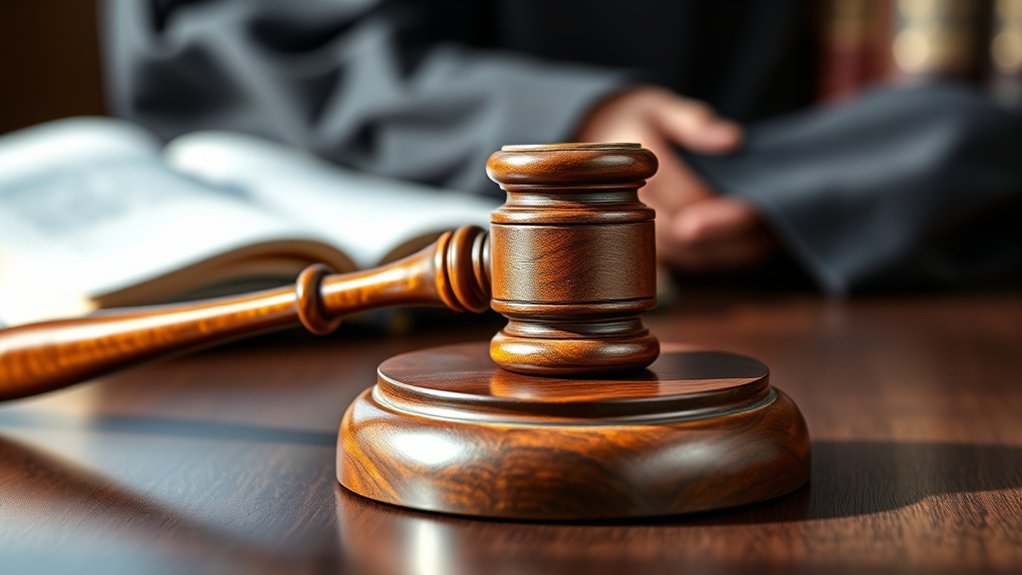
What exactly do you call the hammer a judge uses in court? It’s known as a gavel, a small mallet symbolizing authority and order.
Understanding courtroom etiquette, you’ll recognize the gavel’s role in commanding attention and signaling rulings. This tool is not merely functional; its design reflects meticulous gavel craftsmanship.
The gavel commands attention and signals rulings, embodying both function and meticulous craftsmanship in courtroom tradition.
Typically made from hardwoods like walnut or oak, the gavel is carved for optimal balance and sound. Judges rely on its sharp, definitive knock to maintain decorum.
When you see a judge raise and strike it, you witness a centuries-old tradition underscoring judicial authority. Appreciating the gavel’s name and construction enhances your grasp of courtroom etiquette and the symbolic weight judges carry during proceedings.
Why Do Judges Use a Gavel in Courtrooms?
When you see a judge use a gavel, you’re witnessing a symbol of their authority and control over the courtroom. The gavel helps maintain order by signaling when proceedings begin, pause, or end.
It also upholds courtroom tradition and formality, reinforcing the seriousness of legal matters.
Symbolism Of Authority
The gavel embodies the judge’s authority, serving as a powerful symbol within the courtroom. When you see a judge wield this tool, you recognize its role in upholding justice and facilitating conflict resolution. Its presence transcends mere functionality, acting as ceremonial iconography that conveys respect for the legal process.
- It visually asserts the judge’s role as the final arbiter, reminding all parties of legal authority.
- The gavel’s sound marks significant moments, reinforcing the gravity of judicial decisions.
- Its traditional use connects modern courts to longstanding legal traditions, enhancing legitimacy.
Maintaining Courtroom Order
Beyond symbolizing authority, a judge’s gavel plays a practical role in maintaining order within the courtroom. When proceedings become tense or disruptive, you’ll see the judge tap the gavel decisively to regain control.
This action cuts through noise and signals that decorum must be restored immediately. In a drawn out courtroom session, where emotions can escalate, the gavel’s sharp sound helps reestablish focus and respect for the legal process.
While often part of a ceremonial ritual at the session’s opening or closing, the gavel’s primary function remains operational, ensuring proceedings run smoothly and efficiently. By using the gavel, the judge asserts control without raising their voice, facilitating an environment conducive to fair and orderly justice.
Tradition And Formality
Although you might focus on its functional role, a judge’s gavel also embodies deep tradition and formality within the courtroom. You’ll find that its presence reinforces the solemnity of legal proceedings and the respect due to the judicial process. The gavel’s use aligns closely with ceremonial language, underscoring the gravity of each decision made.
Consider these key reasons why judges use a gavel:
- It symbolizes authority and the enduring tradition and formality of the judiciary.
- It signals transitions during proceedings, maintaining decorum through clear, respectful communication.
- It complements ceremonial language, marking official moments such as the opening and closing of court sessions.
Understanding these aspects helps you appreciate the gavel’s role beyond mere functionality.
How the Judge’s Gavel Came to Be
How did the judge’s gavel become the symbol of courtroom authority? You’ll find its origins rooted in maintaining decorum in chambers and upholding ceremonial precedence. Early judicial settings sought a clear, audible method to command attention and signal transitions during proceedings.
The gavel’s use evolved from similar instruments employed in meetings and auctions, where orderly conduct was essential. By adopting this tool, judges established a tangible symbol that enforces respect and structure.
As you observe, the gavel’s presence underscores the solemnity of the court, reflecting centuries of tradition designed to preserve formal conduct. Understanding this history clarifies why the gavel is more than a mere hammer; it’s a transition emblem reinforcing decorum and ceremonial precedence within judicial chambers.
Why the Gavel Represents Authority and Order
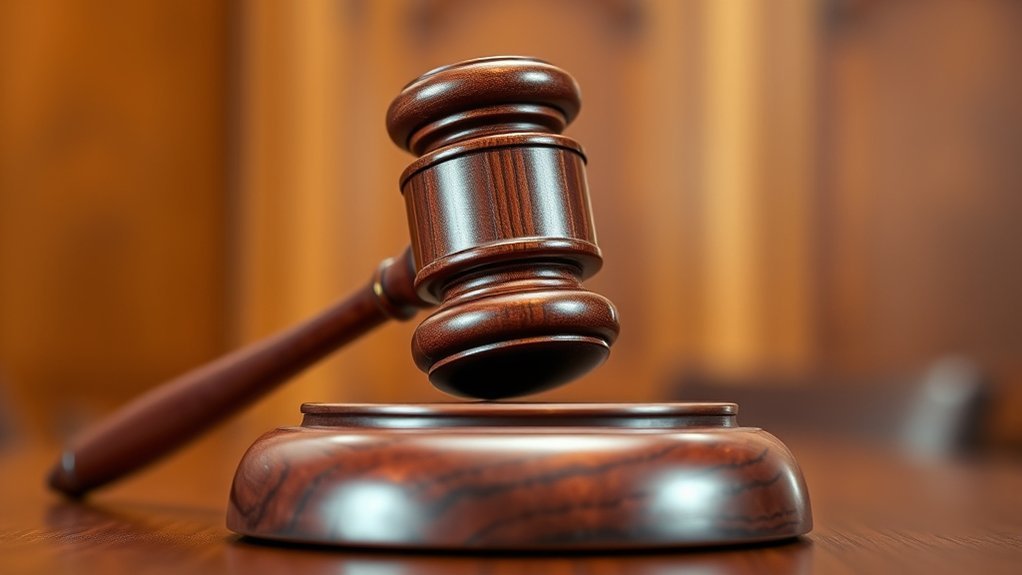
You recognize the gavel as a powerful symbol of authority that commands respect and signals control in the courtroom. It functions as a tool to maintain order, ensuring proceedings proceed with discipline and clarity.
Understanding its role highlights why the gavel remains indispensable in judicial settings.
Symbolism Behind The Gavel
Authority commands respect and order demands clarity in any judicial setting, which is why the gavel has become an enduring symbol of both. When you see a gavel, you recognize its power stems not only from its use but from what it represents:
1. Gavel Materials
Crafted from hardwoods like walnut or maple, the gavel’s solid construction symbolizes strength and durability, reinforcing the weight of judicial authority.
2. Ceremonial Strikes
Each strike punctuates decisions, signaling control and finality, reminding you that order must be maintained.
3. Visual Representation
The gavel embodies impartiality and fairness, crucial values you expect in any courtroom or formal assembly.
Understanding these elements helps you appreciate why the gavel remains a potent emblem of authority and order.
Gavel’s Role In Court
The gavel’s symbolism extends beyond mere representation; it functions as a practical tool that enforces order and signals decisions within the courtroom. When you see a judge wield the gavel, you recognize their authority to maintain strict courtroom decorum.
By striking the gavel, the judge commands attention, ensuring all parties observe court etiquette essential for a fair and efficient proceeding. This act immediately quiets disruptions, facilitating an environment where legal matters proceed without interruption.
The gavel’s role underscores the judge’s pivotal responsibility to uphold respect and discipline, reinforcing the solemnity of the judicial process. In doing so, you appreciate how this simple instrument embodies both authority and order, integral to the integrity and smooth operation of any court session.
Types of Judge’s Gavels and Their Purposes
How do different types of judge’s gavels serve distinct functions within the courtroom? While their debatable legitimacy in legal authority persists, gavels carry significant ceremonial symbolism. You’ll find various types designed for specific purposes:
1. Standard Wooden Gavel
This classic, often hardwood, gavel symbolizes authority and order, primarily used to call the court to attention or adjourn sessions.
2. Ceremonial Gavel
Larger and more ornate, it highlights ceremonial occasions, emphasizing tradition over practical use.
3. Sound Block Gavel
Paired with a sound block, this type enhances the impact sound, ensuring clear auditory signals during proceedings.
Understanding these types helps you appreciate how gavels, despite their debated legal necessity, fulfill essential symbolic and procedural roles in courtrooms worldwide.
How Judges Use Gavels in Court
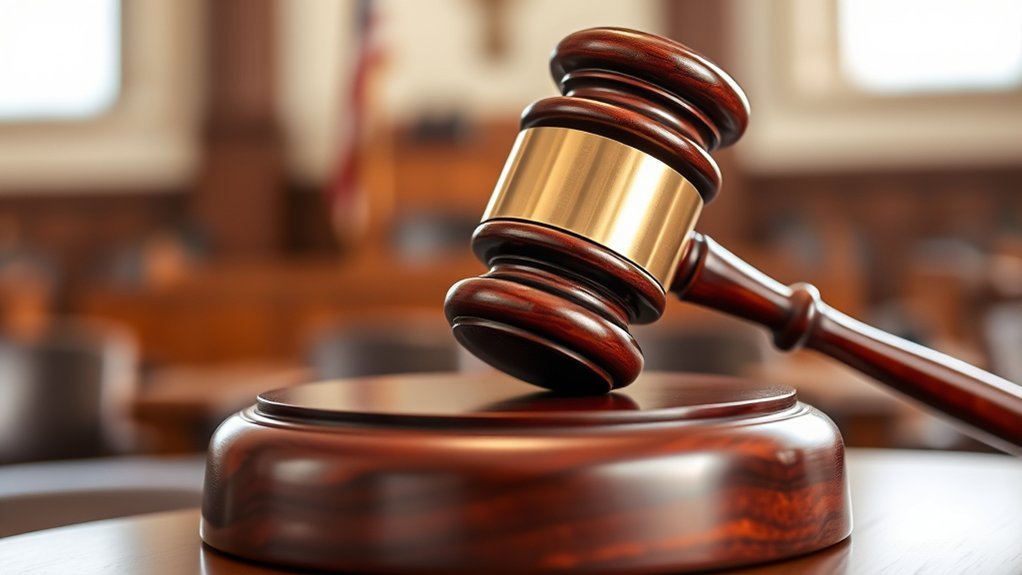
Judges wield gavels to maintain order and signal key moments during court proceedings. When you observe a courtroom, you’ll notice these wooden mallets are used in strict adherence to legal protocol.
You’ll see judges tap the gavel firmly on a sound block to command attention or restore silence when discussions become disruptive. Additionally, you’ll recognize its use to punctuate rulings, formally marking the start or end of a session.
The sound produced by the wooden mallet serves as an unmistakable cue, underscoring the authority of the court. By following this practice, you ensure the courtroom operates efficiently and respectfully.
Understanding this application highlights the gavel’s role beyond symbolism, integrating it as an essential tool within judicial procedures.
Frequently Asked Questions
Can Lawyers Use Gavels During Trials?
You can’t use gavels during trials, as they’re reserved for judges within legal tradition. Gavels serve as ceremonial tools symbolizing authority and order, so lawyers must adhere to courtroom protocols without wielding these instruments.
Are Gavels Used in Courts Outside the United States?
You’ll find gavels rarely used outside the United States; many countries prioritize courtroom etiquette without them. They view gavels primarily as ceremonial objects rather than essential tools in judicial proceedings, maintaining decorum differently.
What Materials Are Gavels Typically Made From?
Gavels are typically made from hardwoods like walnut or oak, blending materials and tradition. Their design and symbolism reflect authority and order, reinforcing the solemnity of judicial proceedings through durable, polished craftsmanship.
How Much Does an Official Judge’s Gavel Cost?
You’ll find official judges’ gavels typically cost between $50 and $200, reflecting their importance in judges’ matters and gavel symbolism.
Prices vary by material quality and craftsmanship, underscoring the gavel’s authoritative role in court proceedings.
Can a Judge’s Gavel Be Personalized or Engraved?
You can indeed request personalized engraving on ceremonial gavels, adding significant uniqueness and formality. This customization enhances their symbolic value, making gavels not only functional but also distinguished tokens reflecting judicial authority and tradition.
Conclusion
When you grasp a judge’s gavel, you’re holding more than wood—you’re wielding a symbol of order and authority. Like a conductor’s baton, it orchestrates the courtroom’s rhythm, commanding silence and respect with each decisive tap. Understanding its history and purpose sharpens your appreciation for the gavel’s role in justice.
So, next time you see it strike, recognize the weight it carries in guiding fairness and upholding the law’s dignity. This powerful tool, known as a judge’s hammer or gavel, embodies the authority and finality of the judicial process.