Water hammer is not just an annoying noise; it can be dangerous and cause serious damage to your plumbing system. When valves close too quickly or pumps shut down abruptly, pressure surges travel through your pipes.
These sudden shocks put stress on joints and supports, which can lead to cracks or bursts over time. Understanding how and why water hammer occurs is essential to protecting your home’s plumbing integrity.
By addressing water hammer issues early, you can prevent costly repairs and maintain a safe, reliable plumbing system.
What Is Water Hammer and How Does It Happen?
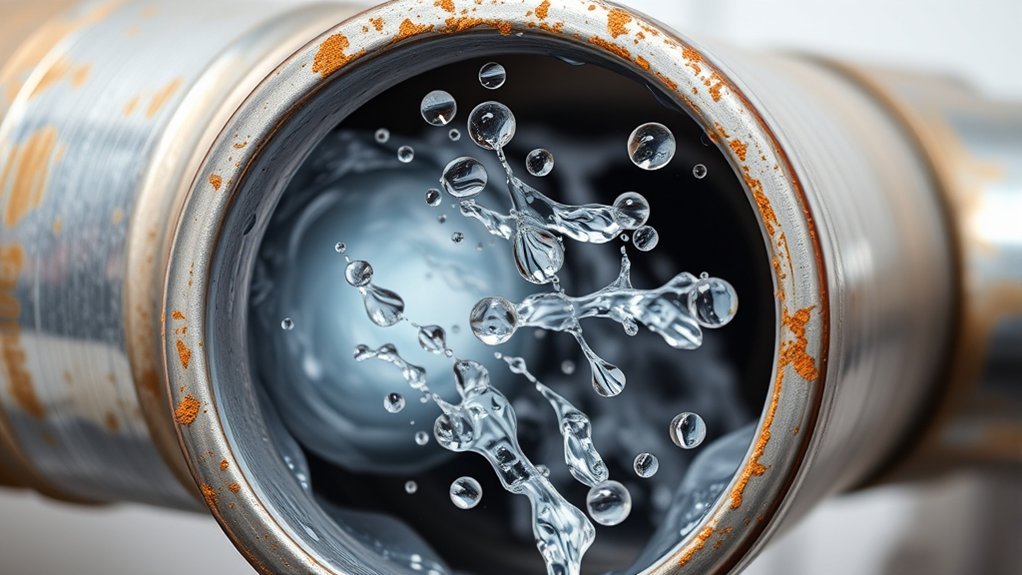
How does water hammer occur, and why should you care? In water distribution systems, water hammer happens when you suddenly shut off a valve or stop a pump, causing a rapid change in flow velocity.
This abrupt halt creates a pressure surge, known as hydraulic shock, that travels through the pipes at the speed of sound in water. You need to understand this because the pressure spike can strain or damage plumbing components, valves, and fittings.
When you operate the system, the momentum of moving water forces a wave of high pressure to propagate, potentially leading to pipe deformation or failure. Recognizing the mechanics of water hammer helps you design safer systems and implement preventive measures, ensuring reliable water distribution without risking costly damage.
Why Does Water Hammer Cause Loud Banging Noises?
When you suddenly stop water flow in a pipe, it generates a pressure wave that travels rapidly through the system. This sudden pressure surge causes the pipe walls to vibrate intensely.
Those vibrations are what produce the loud banging noises you hear during water hammer events.
Sudden Water Flow Stops
Why do water hammer events produce such loud banging noises? When water flow stops suddenly, the kinetic energy in the moving water has nowhere to go, causing a rapid pressure spike. This abrupt halt creates a shock wave that travels through the pipes, resulting in the loud banging you hear.
You can find parallels in non plumbing topics, like when a fast-moving train abruptly brakes, generating a similar shock impact. Historical anecdotes reveal that early steam engines experienced analogous water hammer effects, highlighting the phenomenon’s broader mechanical relevance.
Understanding that sudden flow stops cause these pressure surges helps you appreciate why the noise isn’t just a plumbing nuisance but a mechanical response to fluid dynamics and momentum changes within the system.
Pressure Wave Formation
The sudden stop in water flow generates a rapid pressure surge that propagates through the pipe as a pressure wave. This wave travels at sonic speeds, reflecting off pipe fittings and valves, causing the characteristic loud banging noises.
In non pressurized systems, this pressure wave is particularly abrupt due to the absence of cushioning air pockets. Thermal expansion can exacerbate pressure wave intensity by increasing fluid velocity, thus amplifying the surge when flow halts suddenly.
| Factor | Impact on Pressure Wave |
|---|---|
| Flow velocity | Directly proportional to wave strength |
| System pressurization | Non pressurized systems experience sharper surges |
| Thermal expansion | Raises fluid velocity, intensifying pressure fluctuations |
Understanding these factors clarifies why water hammer produces such disruptive sounds.
Pipe Vibration Causes Noise
How does water hammer create such loud banging noises? When water abruptly stops or changes direction, it generates a high-pressure shock wave that travels through the pipe. This sudden surge causes the pipe walls to vibrate rapidly.
The vibrations amplify when the pipe is poorly supported or made from materials that resonate easily, producing the characteristic loud banging sounds. It’s important to note that attributing these noises to an irrelevant topic, like typical flow turbulence, misses the point; the noise specifically arises from transient pressure dynamics, not unrelated concepts such as pipe material aging.
Understanding this distinction helps you focus on practical solutions, such as installing air chambers or water hammer arrestors, to dampen pipe vibrations and reduce noise effectively.
How to Detect Water Hammer Early in Your Home
When should you start paying attention to the signs of water hammer in your home? Early water hammer detection relies on monitoring your plumbing system for sudden pressure spikes and unusual vibrations. You should routinely inspect pipe joints, valves, and fixtures for any abnormal movement or noise during water shutoff.
Installing pressure gauges or water hammer arrestors can provide early warning by registering pressure surges that precede visible damage. Additionally, listen for brief knocking sounds in pipes when you quickly close faucets or valves; these acoustic signals are critical indicators for early detection.
Signs You Should Worry About Water Hammer Damage
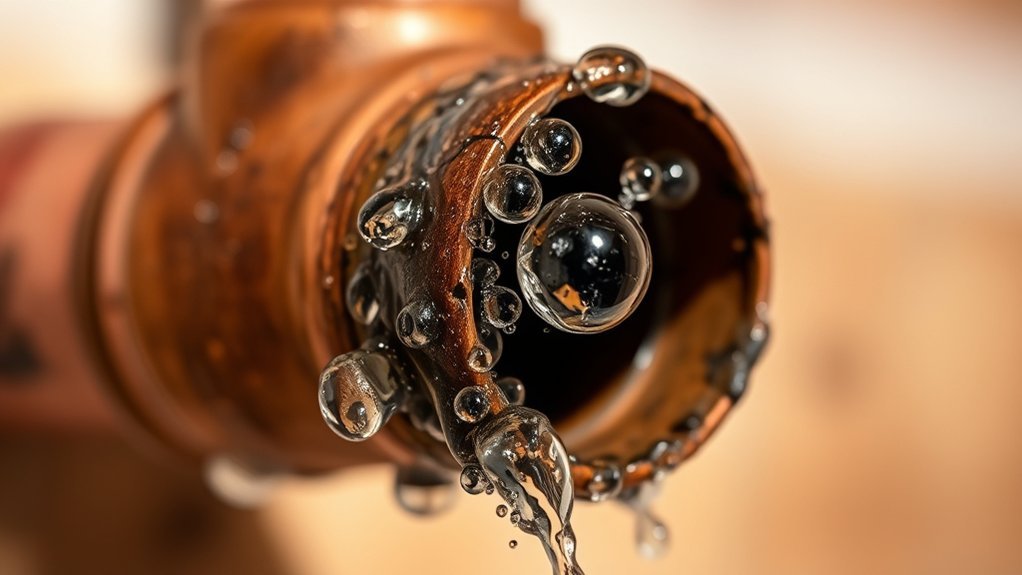
You should pay close attention if you hear loud banging noises when shutting off faucets or valves, as this indicates pressure surges from water hammer.
Inspect your pipes regularly for visible signs of damage, such as dents, cracks, or loosened fittings. These symptoms suggest that water hammer is causing structural stress and requires immediate action.
Loud Banging Noises
Why do loud banging noises demand your immediate attention in plumbing systems? These sounds indicate water hammer, a hydraulic shock caused by sudden valve closures. When water momentum abruptly halts, pressure surges generate intense forces that produce banging noises.
Ignoring these is not an unrelated topic or an off topic discussion; it’s a critical sign of potential damage. The noise reveals stress on pipes, fittings, and fixtures, risking leaks or ruptures. You must assess and address these noises promptly to prevent progressive deterioration and costly repairs.
While the sound itself is alarming, its underlying cause signifies mechanical strain that compromises system integrity. Therefore, loud banging noises are a precise diagnostic cue demanding swift intervention to safeguard your plumbing infrastructure.
Visible Pipe Damage
How can you recognize visible signs that water hammer has compromised your plumbing? Look for dents, cracks, or bulges on pipes, especially near joints and supports, which indicate repeated pressure surges. Corrosion or discoloration may also signal stress from water hammer impacts.
Don’t confuse these with an irrelevant topic, such as normal aging wear or unrelated issue like poor installation, which require separate assessment. Pay attention to loose or misaligned pipes, as these can result from water hammer’s mechanical forces.
If you notice pipe movement during valve closures, that’s a warning sign. Ignoring visible damage can lead to leaks or bursts, causing costly repairs. You should promptly inspect and address any observable pipe deformities to prevent escalation of water hammer damage in your plumbing system.
Can Water Hammer Damage Your Pipes?
Water hammer exerts sudden, intense pressure surges within pipes when fluid flow abruptly stops or changes direction. You need to understand that these pressure spikes can exceed the pipe’s design limits, leading to structural stress.
Over time, repeated water hammer events may cause fatigue, resulting in cracks, joint failures, or even bursts. While some might consider discussing unrelated issues like pipe insulation or water quality an irrelevant topic or a random tangent, focusing on water hammer’s mechanical impacts is essential.
Ignoring these pressure transients can compromise the integrity of your plumbing system, increasing maintenance costs and potential hazards. Consequently, it’s essential to address water hammer proactively through proper system design, pressure relief mechanisms, or dampening devices to mitigate potential damage to your pipes.
Does Water Hammer Affect Different Pipe Types Differently?
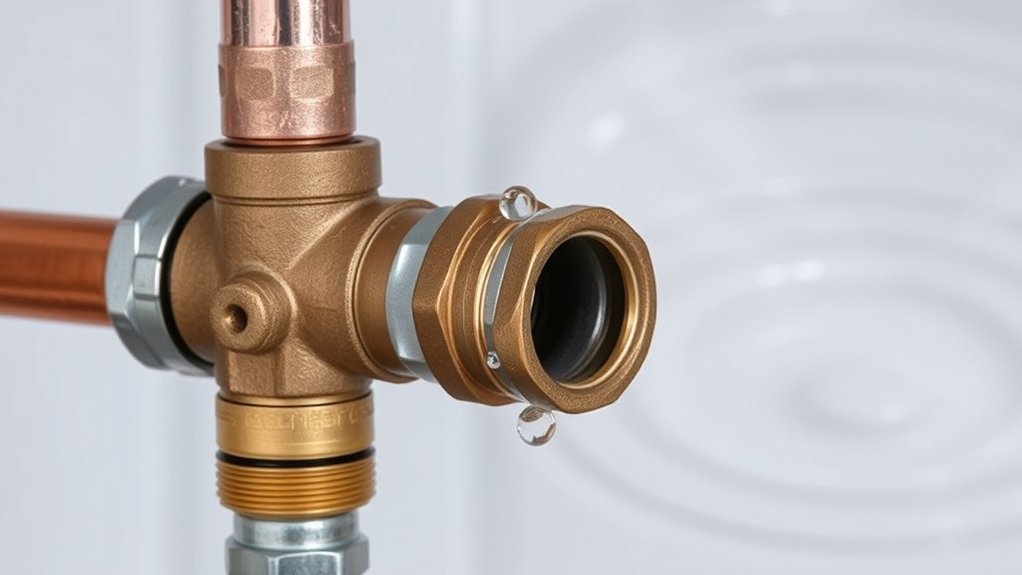
You’ll find that water hammer impacts metal and plastic pipes differently due to their distinct material properties. Metal pipes generally withstand pressure surges better because of their thickness and rigidity, while plastic pipes may flex or deform under similar conditions.
Understanding these variations helps you assess the durability and risk factors specific to each pipe type.
Material Impact On Water Hammer
Why does the type of pipe material matter when dealing with water hammer? The answer lies in each material’s elasticity and density, which influence pressure wave propagation and energy absorption. Different materials respond variably to sudden fluid momentum changes, affecting vibration amplitude and system stress.
For example, rigid materials transmit shock waves more directly, increasing risk of damage, while flexible materials can dampen these impacts, reducing peak forces. When analyzing water hammer, you must consider these material properties carefully, as they are fundamental to system design and mitigation strategies.
Avoid conflating this with unrelated topic areas like pipe diameter or flow velocity, which are valid two word discussion ideas but do not directly address material impact. Focusing precisely on material characteristics helps you predict and control water hammer effects effectively.
Metal Versus Plastic Pipes
How do metal and plastic pipes respond differently to water hammer forces? Metal pipes, due to their rigidity and higher modulus of elasticity, transmit water hammer shocks more directly, resulting in louder noise and greater stress on joints.
Plastic pipes, being more flexible, absorb and dissipate these pressure surges better, reducing the peak force and noise. However, this flexibility can complicate leak detection, as slight deformations may mask small leaks.
Additionally, selecting appropriate insulation materials is crucial for both pipe types to prevent condensation and noise amplification caused by water hammer. While metal pipes often require heavier insulation to dampen vibrations, plastic pipes benefit from materials that maintain flexibility without compromising structural integrity.
Understanding these distinctions helps you optimize your system’s response to water hammer and improve maintenance strategies.
Pipe Thickness And Durability
To what extent does pipe thickness influence a system’s resilience to water hammer? Thicker pipes generally withstand transient pressure surges better because their increased wall strength reduces deformation and fatigue risk. However, you shouldn’t treat thickness as the sole factor; material properties and joint integrity also play crucial roles.
For instance, a thick but brittle pipe may fail sooner than a thinner, more ductile one. While some might consider unrelated topics like pipe color or external coatings, these are random considerations with negligible impact on durability against water hammer.
Therefore, when assessing pipe vulnerability, focus on wall thickness combined with the pipe’s mechanical characteristics rather than extraneous factors. Ultimately, optimizing thickness enhances durability but must be balanced with material choice and installation quality for effective water hammer mitigation.
Simple Fixes to Prevent Water Hammer Damage
Where can you start when addressing water hammer issues? Begin by installing water hammer arrestors near valves prone to sudden closure. These devices absorb the shock wave, much like how moonlight shadows soften the harsh outlines of strawberry fields at night.
Next, secure loose pipes with clamps or brackets to reduce vibration and noise. You should also consider adjusting your system’s water pressure; excessive pressure exacerbates hammer effects. Implementing slow-closing valves can further minimize abrupt flow changes.
Regularly inspect and maintain air chambers, ensuring they’re not waterlogged, as they act as cushions against pressure spikes. By methodically applying these fixes, you’ll significantly reduce the risk of damage and extend your plumbing system’s lifespan without the need for complex overhauls or professional intervention.
When Should You Call a Plumber for Water Hammer Issues?
When do you need professional help for water hammer issues? If you notice persistent banging noises or see visible pipe damage, call a plumber immediately. These signs indicate pressure surges that simple DIY fixes can’t fully resolve.
A professional evaluates your plumbing system, identifying underlying causes such as loose pipes or faulty valves. They implement precise solutions, improving water conservation by preventing leaks linked to water hammer damage.
Additionally, addressing these issues enhances energy efficiency by optimizing water flow and reducing pump strain. Don’t wait for structural damage or increased utility costs—seek expert advice when two word discussion ideas like “pipe stress” or “pressure spikes” arise.
Timely intervention prevents costly repairs and preserves your home’s plumbing integrity.
How to Protect Your Home From Water Hammer Problems
Ignoring early signs of water hammer can lead to extensive damage, but you don’t have to wait for a professional intervention to start protecting your plumbing system. First, securely fasten pipes using appropriate clamps and brackets to minimize movement and reduce shock waves.
Next, install water hammer arrestors near quick-closing valves to absorb pressure surges and prevent irreversible damage to your pipes and fixtures. Regularly inspect your plumbing for loose connections or corrosion that could exacerbate hammer effects.
Additionally, be aware that water hammer can cause vibrations affecting electrical components near plumbing, creating potential electrical hazards. Avoid placing electrical outlets or devices close to vulnerable pipe sections.
Preventing Water Hammer: Long-Term Solutions for Your Plumbing
Although short-term fixes can reduce immediate water hammer effects, implementing long-term solutions guarantees sustained protection for your plumbing system. To effectively prevent water hammer, you must integrate devices like air chambers, water hammer arrestors, and pressure-reducing valves. Avoiding unrelated topic or off topic discussion ensures focus on actionable strategies.
Here’s a comparative overview:
| Solution | Function | Maintenance Frequency |
|---|---|---|
| Air Chambers | Absorb shock waves | Low (periodic draining) |
| Water Hammer Arrestors | Cushion sudden pressure changes | Moderate (inspection) |
| Pressure-Reducing Valves | Regulate water pressure | Low (annual check) |
Frequently Asked Questions
Can Water Hammer Affect My Home’s Water Pressure?
Yes, water hammer can cause pressure fluctuation in your home’s plumbing, leading to pipe noise and potential damage.
You’ll notice sudden spikes in pressure that stress pipes, affecting overall water pressure stability and system longevity.
Is Water Hammer Dangerous for Appliances Like Washing Machines?
Yes, water hammer can threaten washing machine safety by causing excessive pipe stress. You should install dampening devices to absorb shock and prevent pipe damage. This will extend your appliance’s lifespan through effective pipe stress dampening techniques.
Does Water Hammer Occur More in Hot or Cold Water Lines?
Water hammer occurs more frequently in cold water lines because cold water is denser and moves slower, causing pressure surges.
However, hot water lines can also experience it due to thermal expansion and valve closures, but less often.
Can Water Hammer Cause Mold or Water Leaks in Walls?
Can sudden water pressure spikes and pipe noise really damage your home? Yes, they can cause joints to loosen, leading to leaks inside walls.
Over time, this moisture may encourage mold growth, threatening structural integrity and health.
Are Water Hammer Arrestors Expensive to Install?
Installing pressure rated arrestors isn’t overly expensive, especially as cost effective retrofits. You’ll find the materials and labor reasonable, making them a practical investment to protect your plumbing system from water hammer damage efficiently.
Conclusion
Water hammer might seem like just a noisy nuisance, but it quietly puts your plumbing under stress that can lead to costly repairs over time. By recognizing early signs and applying simple fixes, you can ease this hydraulic tension before it strains your pipes and fittings.
Staying proactive helps maintain your system’s integrity, ensuring your home runs smoothly without unexpected disruptions. Don’t let these pressure surges sneak up on your plumbing’s health. Understanding that water hammer is dangerous can motivate timely action to protect your plumbing system.