Hammer toes often start as a minor discomfort but can progress into significant pain and deformity if left untreated. Managing hammer toes early is crucial to prevent worsening symptoms and complications.
You can take active steps to relieve this condition through specific stretches and exercises designed to relax and strengthen the foot’s muscles. Additionally, selecting appropriate footwear plays a vital role in managing symptoms.
Understanding these approaches will help you address hammer toes effectively before they worsen. Taking prompt action can improve foot health and overall comfort.
Stretching and Exercising Hammer Toes for Relief
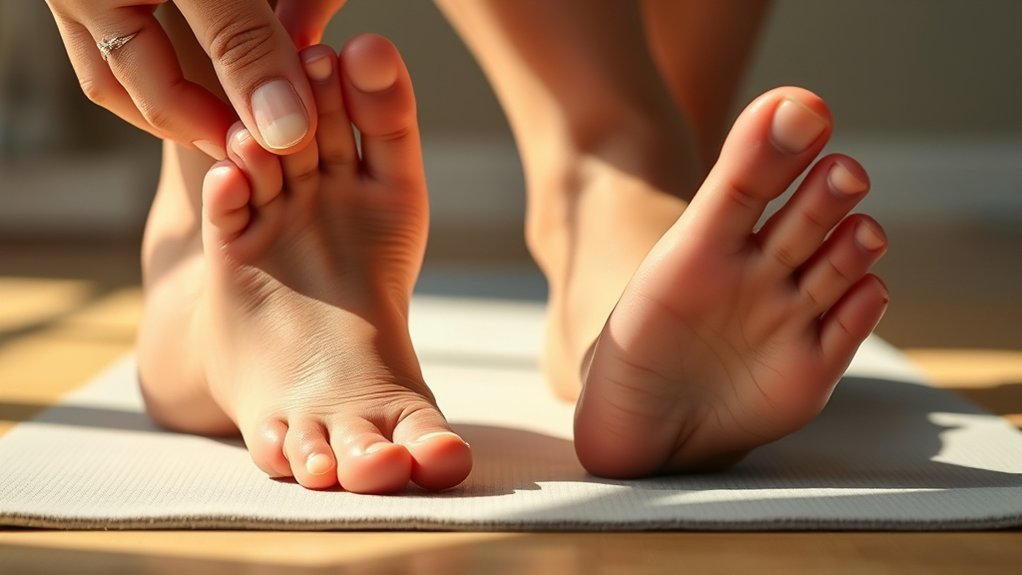
How can you effectively alleviate the discomfort caused by hammer toes? Incorporating specific stretching routines and toe exercises can substantially reduce pain and improve flexibility.
Begin with gentle toe stretches: use your fingers to carefully extend each toe, holding for 15 seconds to relax contracted muscles. Follow this with towel curls. Place a small towel on the floor and use your toes to scrunch it toward you, strengthening intrinsic foot muscles.
Start with gentle toe stretches and towel curls to relax muscles and strengthen foot muscles effectively.
Additionally, practice toe taps by lifting and lowering your toes repeatedly, enhancing range of motion. Consistency is key; performing these exercises daily prevents stiffness and maintains joint mobility.
Integrating targeted stretching routines and toe exercises into your routine supports structural alignment and can delay or reduce the need for surgical intervention.
Causes and Symptoms of Hammer Toes
While stretching and exercises can alleviate hammer toe discomfort, understanding the underlying causes and recognizing early symptoms helps you address the condition more effectively. The causes overview highlights that hammer toes result primarily from muscle imbalance, nerve damage, or structural deformities. Identifying symptoms indicators early ensures timely intervention.
Key causes and symptoms indicators include:
- Prolonged muscle imbalance causing joint contracture and toe curling.
- Nerve damage leading to muscle weakness and abnormal toe positioning.
- Symptoms such as pain during walking, visible toe deformity, and corns on the affected joints.
Choosing the Right Shoes for Hammer Toes
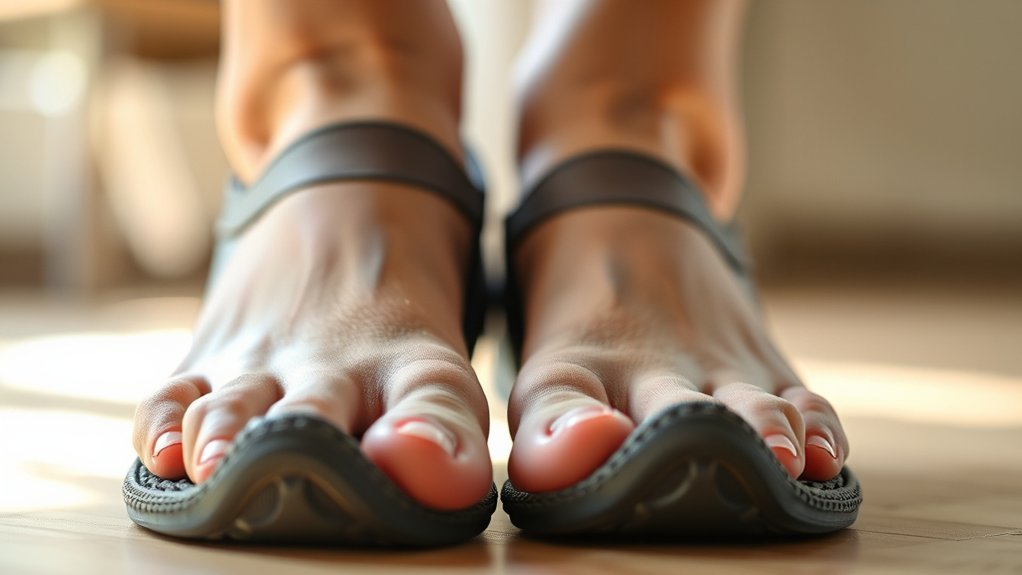
Why does choosing the right shoes matter when managing hammer toes? Proper shoe fits directly influence toe positioning and comfort. Shoes that are too tight or narrow exacerbate the deformity and cause additional pain.
Choosing the right shoes is crucial for managing hammer toes and preventing increased pain and deformity.
Focus on two word discussion ideas such as “wide toe-box” and “soft uppers” to ensure adequate space for your toes. Look for footwear that reduces pressure by incorporating toe padding or cushioned insoles to protect against friction and irritation.
Avoid high heels and pointed toe designs, as they force toes into unnatural positions. When buying shoes, try them on later in the day when feet are swollen to guarantee an accurate fit.
Prioritizing these elements helps prevent worsening of hammer toes and promotes better daily comfort.
Orthotics and Supports for Hammer Toes
Because hammer toes often result from muscle imbalances and joint stress, orthotics and supports play an essential role in correcting alignment and alleviating discomfort. You can enhance orthotics effectiveness by selecting devices tailored to your foot’s specific needs. Toe correcting splints are pivotal in realigning the affected toes and preventing progression.
Here are three key orthotic supports to consider:
1. Custom Foot Orthotics
Designed to redistribute pressure and support the arch, reducing stress on toe joints.
2. Toe Correcting Splints
These devices realign hammer toes, improving joint positioning and minimizing pain.
3. Cushioned Insoles
They provide shock absorption, decreasing friction and irritation around toe deformities.
Utilizing these supports consistently can significantly improve symptoms and slow hammer toe progression.
When to See a Doctor About Hammer Toes
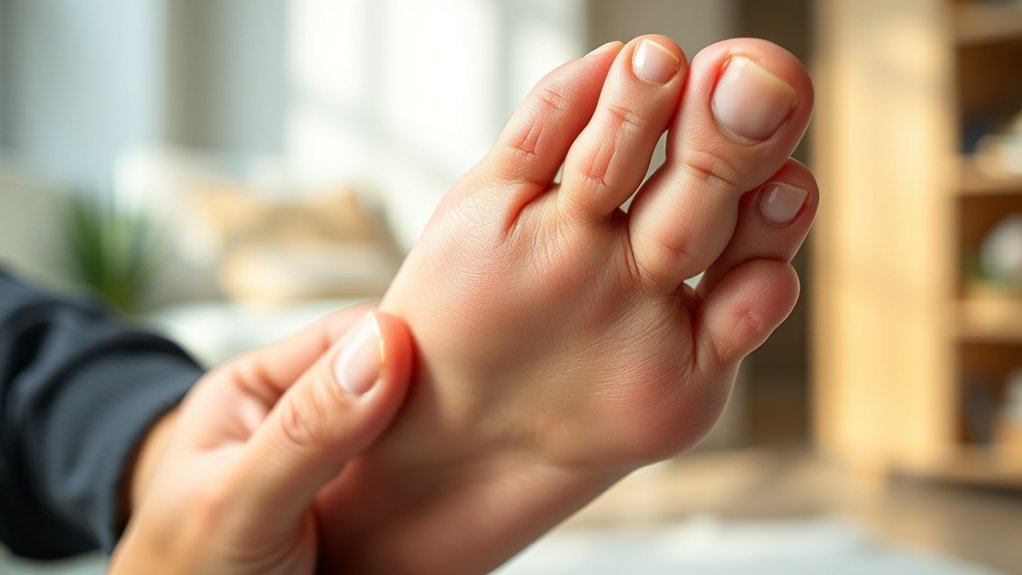
Orthotic supports can manage hammer toe symptoms effectively, but there are instances when professional evaluation becomes necessary. You should know when to seek care to prevent complications.
Red flags to watch include persistent pain that interferes with daily activities, visible deformity worsening despite conservative treatment, skin ulcers or infections around the affected toes, and numbness or tingling indicating nerve involvement.
If your hammer toe becomes rigid and unresponsive to orthotics, it’s time to consult a specialist. Delaying care can lead to joint damage requiring surgical intervention.
A podiatrist or orthopedic surgeon can assess severity, recommend advanced treatments, and tailor a management plan. Prompt assessment ensures optimum outcomes and prevents progression of deformity or secondary complications.
Frequently Asked Questions
Can Hammer Toes Be Permanently Corrected Without Surgery?
You can’t permanently correct hammer toes without surgery, but non surgical alternatives like splints, exercises, and orthotics can manage symptoms.
Surgical options offer definitive correction by realigning or removing deformities for lasting results.
What Dietary Changes Help Improve Hammer Toe Symptoms?
Sure, just eat magical food and poof hammer toes vanish! In reality, dietary changes rich in anti-inflammatory nutrients, vitamins C and E, and omega-3 fatty acids support foot health nutrition, reducing discomfort and improving tissue repair effectively.
Are There Specific Medications That Relieve Hammer Toe Pain?
You can use medication options like NSAIDs or acetaminophen to provide effective pain relief for hammer toe discomfort. These reduce inflammation and alleviate pain, helping you manage symptoms without surgery or invasive treatments.
How Does Aging Affect the Development of Hammer Toes?
Aging effects weaken muscles and ligaments, increasing your risk of toe deformities like hammer toes. Reduced joint flexibility and cumulative wear contribute, so you’ll likely experience more structural foot changes as you grow older.
Can Physical Therapy Prevent Hammer Toes From Worsening?
Yes, physical therapy can prevent hammer toes from worsening by strengthening toe muscles and improving joint flexibility.
Combined with shoe modification that reduces pressure, it effectively slows progression and alleviates discomfort during daily activities.
Conclusion
You don’t have to accept the discomfort of hammer toes as your new normal. By consistently stretching, exercising, and selecting footwear that respects your toes’ natural shape, you can gently ease tension and improve function.
Adding orthotics or supports offers additional relief, but if pain lingers or changes appear, don’t hesitate to consult a specialist. Taking these proactive steps helps you move toward healthier, more comfortable feet without drastic measures.
With patience and care, you can effectively get rid of hammer toes and enjoy greater foot comfort.