A hammer curl is more than just a simple arm movement; it’s a strategic lift that shifts how you develop strength and muscle definition. By using a neutral grip, you engage not only your biceps but also key forearm muscles, reducing strain on your wrists.
Mastering this technique can transform your arm workouts, but there’s more to it than just lifting weights. Understanding the precise form and benefits will take your progress to the next level.
What Are Hammer Curls and Which Muscles Do They Target
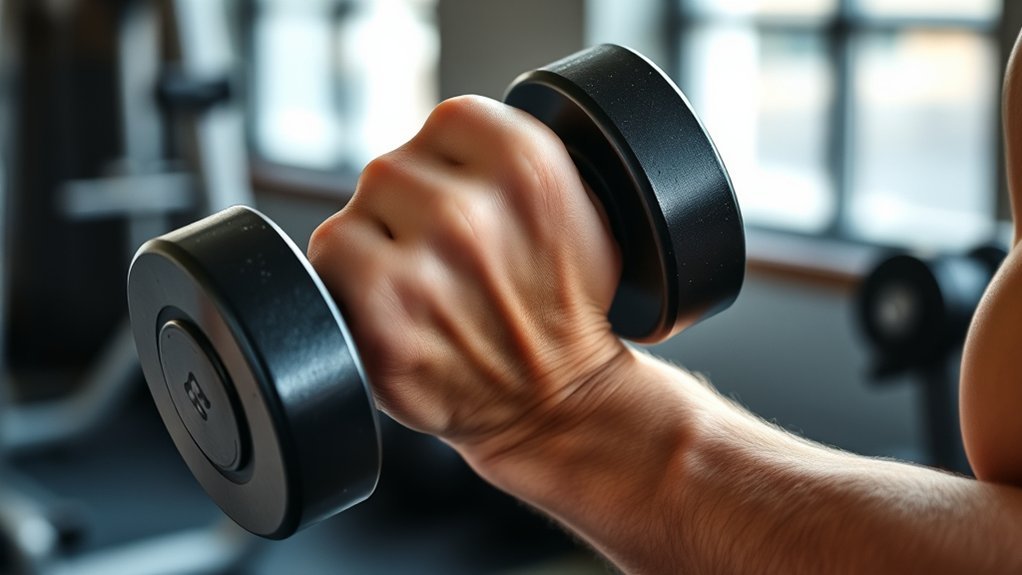
What exactly are hammer curls, and why should you include them in your workout? Hammer curls are a variation of the traditional bicep curl where you hold the dumbbells with a neutral grip, palms facing each other.
Hammer curls are a bicep curl variation using a neutral grip with palms facing each other.
This grip variation changes the hammer curl anatomy by targeting not only the biceps brachii but also the brachialis and brachioradialis muscles. These muscles play a crucial role in arm strength and thickness.
When you perform hammer curls, you engage these muscles more effectively than with standard curls, which focus mainly on the biceps brachii. By incorporating hammer curls into your routine, you’re addressing muscle groups that support elbow flexion and wrist stability.
This makes hammer curls a powerful, functional exercise to enhance your upper-arm strength and overall arm development.
How Hammer Curls Build Stronger, More Defined Arms
Hammer curls activate key muscles in your arms, giving you targeted strength gains. They also boost your grip strength, which translates to better performance in other lifts.
Targeted Muscle Activation
How exactly do hammer curls enhance your arm strength and definition? They optimize targeted activation of key muscles, primarily the brachialis and brachioradialis. By maintaining a neutral grip throughout the movement, hammer curls engage these muscles more effectively than traditional curls.
The unique grip mechanics minimize stress on your wrists and shift the workload, allowing you to recruit muscle fibers that standard curls often neglect. This focused stimulation promotes balanced muscle growth, leading to stronger, more sculpted arms.
When you perform hammer curls with proper form, you maximize muscle recruitment and improve overall arm aesthetics. Incorporate hammer curls into your routine consistently, and you’ll notice enhanced muscle tone and strength, thanks to their precise targeting and efficient grip mechanics.
Enhanced Grip Strength
Why does your grip strength matter so much when building stronger, more defined arms? Because a powerful grip directly improves your ability to lift heavier weights and perform more reps.
Hammer curls are key here. They use a hammer grip that naturally increases forearm engagement. This grip forces your forearm muscles to work harder, boosting strength and endurance.
When you consistently perform hammer curls, you develop not only your biceps but also the muscles responsible for gripping. This dual activation enhances overall arm power, making everyday tasks and other lifts easier.
Improved Arm Definition
Sculpting stronger, more defined arms starts with targeting the right muscles effectively, and hammer curls do just that. By focusing on both the brachialis and brachioradialis muscles, hammer curls enhance overall arm definition, giving your arms a fuller, more sculpted look.
When you incorporate hammer curls into your routine, you’ll notice improvements in muscle symmetry and size that traditional curls might miss.
To maximize these benefits, focus on controlled movements to engage muscles fully, consistent progression in weight or reps, and proper form to avoid injury and ensure targeted activation.
These two word discussion ideas, “muscle engagement” and “progressive overload,” are key to unlocking improved arm definition. Stay disciplined, and your efforts will translate into stronger, more visually impressive arms.
How to Do a Hammer Curl With Proper Form
Mastering the hammer curl starts with maintaining a strong, controlled form throughout the movement. Begin by standing tall, feet shoulder-width apart, holding a dumbbell in each hand with a neutral grip, palms facing your body. This grip mechanics position targets the brachialis muscle, a key part of hammer curl anatomy that enhances arm thickness.
Keep your elbows close to your torso and avoid swinging. Slowly curl the weights upward, focusing on squeezing your biceps and brachialis at the top. Lower the dumbbells with control, resisting the urge to drop them quickly.
Keep your core engaged and your back straight to maximize effectiveness and prevent injury. By mastering this form, you’ll build impressive arm strength and definition with every rep.
Common Hammer Curl Mistakes to Avoid
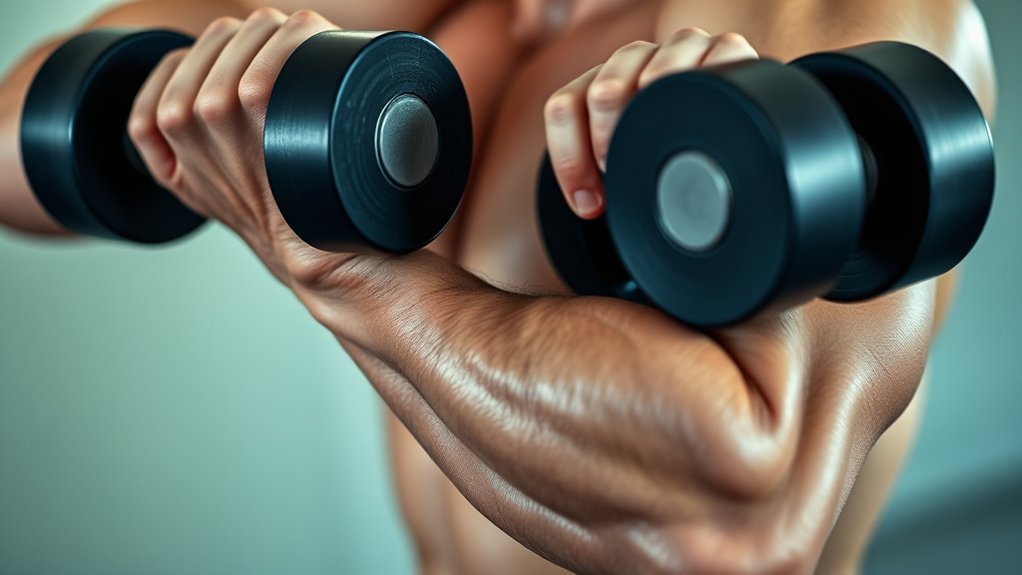
You need to keep your wrists straight and steady to avoid strain during hammer curls. Don’t rely on swinging your body or using excessive momentum. That cheats your muscles and increases injury risk. Focus on controlled, deliberate movements to get the most from every rep.
Incorrect Wrist Position
How should you position your wrists during hammer curls to maximize effectiveness and prevent injury? Avoiding an incorrect wrist position is essential for proper grip mechanics and muscle engagement. Your wrists should stay neutral, not bent forward or backward, throughout the movement.
This alignment protects your joints and ensures the focus remains on your biceps and forearms.
Keep these points in mind to maintain correct wrist positioning:
- Hold the dumbbells with a firm, neutral grip, thumbs pointing up.
- Resist the urge to curl your wrists inward or outward during lifts.
- Maintain wrist stability by engaging your forearm muscles throughout each repetition.
Using Excessive Momentum
Why rush through hammer curls when controlled movement yields better results? Using excessive momentum to lift the weights only cheats your muscles out of the overload they need to grow.
When you rely on momentum, you risk a form breakdown that diminishes the exercise’s effectiveness and increases injury risk. Instead, focus on slow, deliberate reps that engage your biceps and forearms fully.
Avoid swinging your body or jerking the weights upward; these habits compromise your control and reduce tension on the muscles. Keep your movements steady and intentional to maximize muscle activation and strength gains.
Hammer Curls vs. Traditional Curls: Which Is Better?
Choosing between hammer curls and traditional curls depends on your specific fitness goals and the muscle groups you want to target. Hammer curls emphasize the brachialis and brachioradialis, helping develop forearm strength and improving grip mechanics.
Traditional curls primarily focus on the biceps brachii, impacting shoulder anatomy differently by engaging the front deltoids more.
Consider these points to decide which suits you best:
- Hammer curls enhance functional strength due to their neutral grip.
- Traditional curls isolate the biceps better for muscle size and definition.
- Your shoulder anatomy and any discomfort should guide your choice.
You can’t go wrong choosing either, but aligning your workout with your goals and body mechanics ensures maximum gains and injury prevention. Stay consistent and listen to your body!
Variations of Hammer Curls to Challenge Your Arms
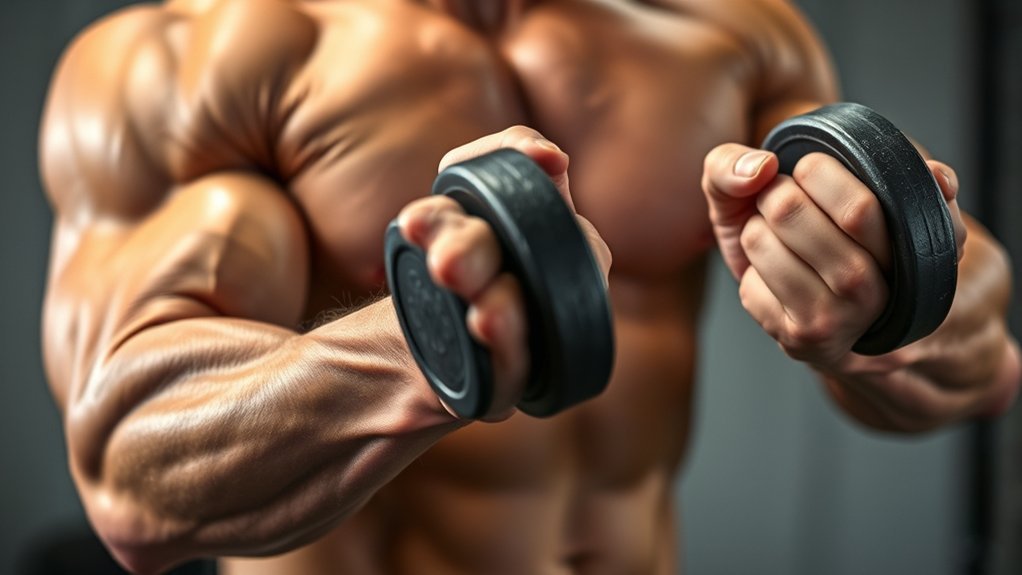
Now that you understand the benefits of hammer curls compared to traditional curls, it’s time to push your arm workouts further by exploring variations that target your muscles differently. Try alternating hammer curls to improve coordination and balance, or incorporate rope hammer curls using cable machines to engage your forearms more intensely.
You can also experiment with cross-body hammer curls to emphasize the brachialis muscle, enhancing hammer curl aesthetics with a fuller arm look. Don’t hesitate to leverage gym partnerships; collaborating with trainers or workout buddies can introduce new techniques and keep your routine fresh.
How to Incorporate Hammer Curls Into Your Workout Routine
Where should hammer curls fit into your workout routine to maximize their benefits? You want to prioritize them early in your arm workout or pair them with compound movements for balanced strength development. This approach promotes arm symmetry and supports injury prevention by evenly strengthening muscles.
Incorporate hammer curls by:
- Adding them after warm-ups to activate forearms and biceps.
- Using them as a superset with tricep exercises to maintain workout intensity.
- Integrating them twice weekly, allowing recovery for muscle growth and joint health.
Stick to controlled form and avoid rushing reps. This ensures you target muscles effectively without risking injury. By consistently including hammer curls, you’ll build balanced arm strength that supports overall performance and reduces imbalances, helping you stay strong and resilient.
When to Up Your Hammer Curl Weight or Reps
How do you know when it’s time to increase your hammer curl weight or reps? The key is tracking your hammer curl progressions closely. When you can complete your current rep schemes with perfect form and minimal fatigue, it’s a clear signal to challenge yourself more.
Start by adding weight incrementally, just enough to make the last few reps tough but doable. Alternatively, increase reps within your existing weight range to build endurance before upping the load.
Listen to your body and avoid plateauing by regularly adjusting your training variables. Consistent progression ensures continuous muscle growth and strength gains.
Frequently Asked Questions
Can Hammer Curls Help Improve Grip Strength?
Yes, hammer curls boost your grip enhancement by targeting forearm hypertrophy. When you consistently perform them, you actively strengthen your forearms and improve your grip, empowering you to lift heavier and perform better in various activities.
Are Hammer Curls Safe for People With Wrist Injuries?
You can think of hammer curls as a gentle wave, not a crashing storm if you maintain safe form. With careful technique, you’ll reduce injury risk and protect your wrists, making these curls a smart choice for recovery.
What Equipment Is Best for Hammer Curls at Home?
The best at home equipment for hammer curls includes dumbbells or resistance bands, offering alternative grip training. You’ll build strength effectively, stay motivated, and keep your wrists safe with these versatile, accessible tools. Keep pushing!
How Do Hammer Curls Affect Forearm Size?
Imagine your forearms sculpting like iron chains; hammer curls ignite forearm hypertrophy by maximizing grip activation.
You’ll build strength and size efficiently, transforming your forearms into powerful tools that dominate every lift and grip challenge.
Can Hammer Curls Be Combined With Other Arm Exercises?
Yes, you can combine hammer curl variations with other arm exercises for powerful combination workouts. This approach boosts muscle growth, prevents plateaus, and keeps your routine challenging.
Stay consistent, push hard, and watch your arms transform.
Conclusion
Now that you’ve opened the hammer curl’s secret, wield it like Thor’s mighty hammer—controlled, precise, and powerful. Keep your form strict, avoid common pitfalls, and let your arms tell the story of strength and resilience.
Whether you’re starting out or pushing limits, hammer curls build more than muscle—they forge confidence. So grip those weights, stay consistent, and watch your arms transform into legends of power and endurance.
Your journey to stronger arms starts now with the hammer curl.