Did you know hammer sharks can crush prey with jaws exerting over 300 pounds of force? Hammer sharks mainly eat hard-shelled crustaceans and mollusks, as well as small fishes. Their unique head shape enhances sensory abilities, helping them detect hidden prey on the ocean floor.
But what specific strategies do they use to hunt, and how does their diet shift across different habitats and seasons? Understanding these aspects reveals how hammer sharks adapt to their environment and maintain their role in the marine ecosystem.
What Do Hammer Sharks Eat in the Wild?
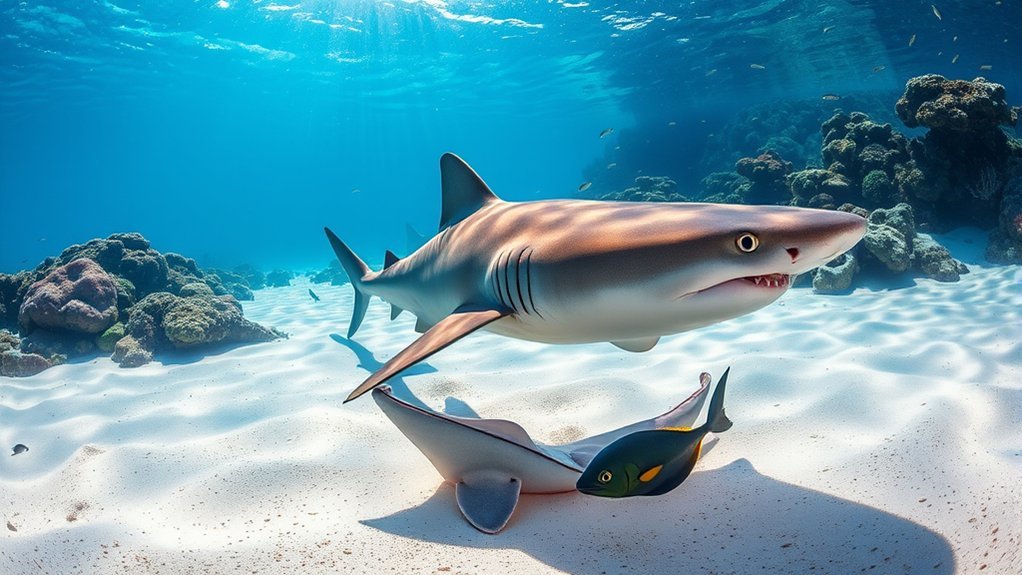
How do hammer sharks find and consume their prey in their natural habitat? Hammer sharks display notable diet variability, adapting their feeding habits based on prey availability. You’ll observe that they primarily target benthic organisms such as crustaceans, mollusks, and small fish.
These sharks actively forage along the sea floor, using their sensory adaptations to detect prey buried in sediment. They grasp and crush hard-shelled prey with their strong jaws and specialized teeth. You’ll also find that hammer sharks occasionally consume cephalopods and other invertebrates, reflecting their opportunistic feeding behavior.
Their diet variability is essential for survival in fluctuating environments, allowing them to exploit diverse food sources efficiently. Overall, hammer sharks maintain a balanced trophic role by adjusting their diet according to ecological conditions.
How Hammer Sharks Use Their Heads to Find Food
Why do hammer sharks have such uniquely shaped heads, and what role do these structures play in locating food? Their cephalofoil enhances sensory hunting by increasing the surface area for electroreceptors and olfactory organs, enabling precise head detection of prey.
When you observe a hammer shark, you’ll notice its wide head allows it to scan larger areas of the seabed efficiently.
Three key functions of the hammerhead’s head include:
- Enhanced electroreception: Detects electrical signals emitted by hidden prey.
- Improved olfaction: Widens the distance between nostrils, allowing better scent gradient detection.
- Precise maneuvering: Allows the shark to pin prey against the ocean floor.
Together, these adaptations optimize how hammer sharks find food through sophisticated sensory hunting techniques.
Common Prey in the Hammer Shark Diet
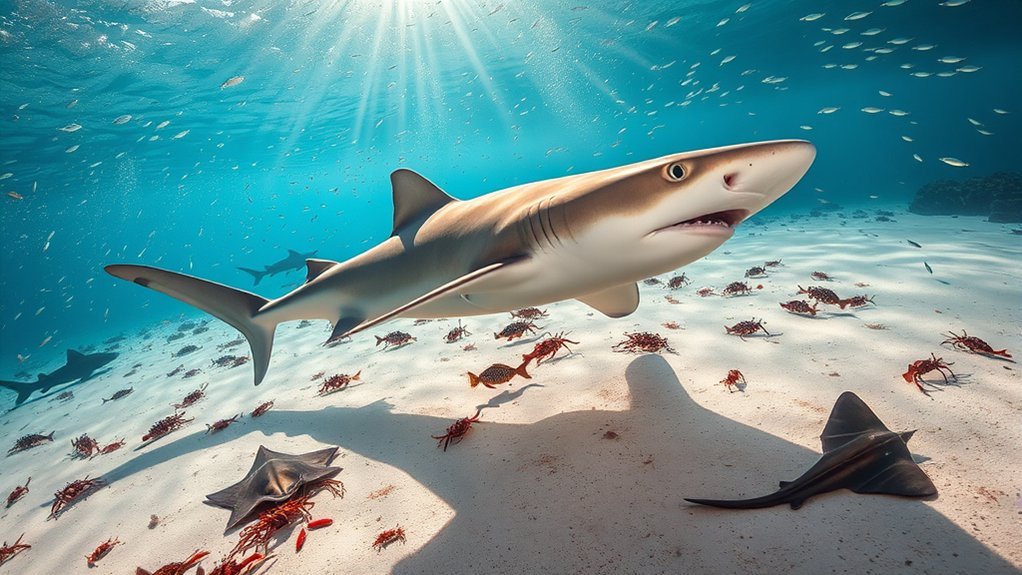
The specialized head of the hammer shark navigating enhances its ability to locate prey, but understanding what it actually eats reveals how these adaptations serve its dietary needs. You’ll find that hammer sharks primarily consume a variety of benthic organisms, including crustaceans, cephalopods, and small bony fish.
These prey items exhibit diverse morphology, ranging from hard-shelled crabs to softer-bodied squid, requiring the shark to adapt its feeding mechanics accordingly. Interestingly, hammer sharks also occasionally consume toxic prey, such as certain venomous fish species, which suggests a tolerance or selective avoidance strategy.
This varied diet reflects the hammer shark’s ecological role as an opportunistic predator, exploiting prey types that optimize energy intake while navigating potential risks associated with toxic prey morphology.
How Hammer Sharks Hunt and Capture Prey
Where do hammer sharks focus their attention when hunting? They primarily use their uniquely shaped cephalofoil to enhance sensory perception, enabling precise detection of prey. Their wide-set eyes provide a broad visual field, while electroreceptors along the head detect electrical signals emitted by prey.
When you observe a hammer shark hunting, note these three critical steps:
- Sensory scanning: The shark sweeps its head close to the substrate to locate hidden prey using electroreceptors.
- Target approach: It maneuvers skillfully to align its body for an effective strike.
- Prey capture: Using rapid jaw closure, it seizes prey with sharp teeth, avoiding irrelevant factors like prey coloration or tooth wear that do not influence hunting efficiency.
This methodical approach optimizes hammer sharks’ ability to detect and capture diverse prey.
How Hammer Shark Diets Differ by Species
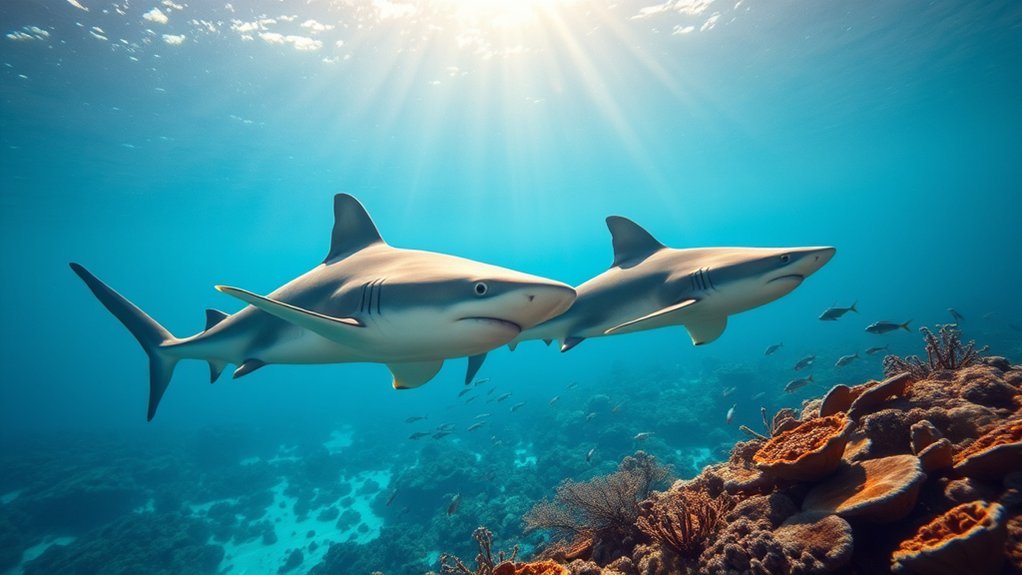
How do hammer shark diets vary across different species? You’ll find that distinct hammer shark species exhibit unique feeding preferences driven by their specific hammer shark adaptation.
For example, the scalloped hammerhead primarily consumes small fish and cephalopods, using its wide head to detect prey hidden in sediment. In contrast, the bonnethead shark, a smaller species, favors crustaceans and mollusks, reflecting adaptations in its jaw structure.
When comparing hammer shark vs. tiger shark diets, you’ll notice hammer sharks focus more on bottom-dwelling prey, whereas tiger sharks have a broader, opportunistic diet including larger fish and marine mammals. Understanding these dietary distinctions highlights how evolutionary adaptations tailor feeding strategies, enabling each hammer shark species to exploit different ecological niches effectively.
Seasonal and Regional Changes in Hammer Shark Diet
Why do hammer shark diets shift throughout the year and across different regions? Seasonal shifts and regional variations in prey availability primarily drive these changes. As you study hammer sharks, you’ll notice their diet adapts based on environmental conditions and prey migration patterns.
Key factors influencing these dietary changes include:
- Seasonal abundance of specific prey species, such as crustaceans or fish, which fluctuate with breeding or migration cycles.
- Regional habitat differences, where diverse ecosystems offer varying prey types like benthic invertebrates or pelagic fish.
- Water temperature and currents affecting prey distribution, prompting hammer sharks to adjust feeding strategies accordingly.
Understanding these seasonal and regional dynamics helps clarify how hammer sharks optimize their foraging efficiency across diverse marine environments.
How Feeding Habits Influence Hammer Shark Behavior
The shifts in hammer shark diets throughout seasons and regions directly impact their behavioral patterns, particularly in feeding strategies and movement. When you observe hammer sharks, you’ll notice they adjust their hunting techniques based on prey availability, which challenges common habitat misconceptions that suggest static behaviors.
Their unique feeding mechanics, including the wide-set eyes and cephalofoil shape, allow precise detection and manipulation of prey, influencing how they approach different environments. As prey types vary, hammer sharks modify their foraging range and activity times, optimizing energy expenditure.
Understanding these behavioral adjustments helps clarify that hammer sharks are adaptable predators, not restricted by fixed habitats. This adaptability in feeding habits ultimately shapes their daily behavior, movement patterns, and interaction with their ecosystem.
The Role of Hammer Sharks in Marine Food Chains
Where do hammer sharks fit within the complex marine food web? As mid-level predators, they occupy a vital role, balancing populations of various species despite some aspects of their diet remaining unclear prey. Their migratory patterns influence regional ecosystem dynamics by shifting predation pressure.
You should understand these key points about their ecological role:
- Hammer sharks regulate prey populations, including fish and invertebrates, maintaining biodiversity.
- Their feeding on unclear prey items suggests a flexible diet, allowing adaptation to varying prey availability.
- Migratory patterns enable them to connect distant marine habitats, facilitating energy transfer across ecosystems.
Threats to Hammer Shark Food and Survival
You face significant challenges when habitat destruction reduces the availability of the hammer shark’s prey, disrupting their feeding patterns. Overfishing further diminishes key food sources, directly impacting their survival rates.
Understanding these threats is essential to evaluating the hammer shark’s ecological stability.
Habitat Destruction Effects
How does habitat destruction impact hammer sharks’ ability to find food and survive? Habitat loss and pollution impact the delicate ecosystems where hammer sharks hunt. When you consider the effects, several critical factors emerge:
- Coral reef degradation reduces prey availability, disrupting the food chain.
- Coastal development causes sedimentation, smothering benthic habitats essential for hammer shark foraging.
- Chemical pollutants accumulate in water, affecting the health of both hammer sharks and their prey species.
These factors collectively diminish the abundance and diversity of prey, forcing hammer sharks to expend more energy searching for food. As their habitats degrade, you’ll notice a decline in hammer shark populations due to nutritional stress and weakened health.
Understanding these habitat destruction effects is vital for developing strategies to protect hammer sharks and maintain ecosystem balance.
Overfishing Impact
Why does overfishing pose a significant threat to hammer sharks’ food sources and survival? Overfishing reduces populations of key prey species, such as small fish and cephalopods, which are critical components of hammer sharks’ feeding ecology.
When these prey populations decline, hammer sharks face diminished food availability, directly impacting their growth, reproduction, and overall health. Additionally, overfishing disrupts the marine food web balance, causing shifts that can further limit hammer sharks’ access to optimal prey.
You should understand that hammer sharks rely on diverse prey assemblages within coastal and continental shelf habitats, making them particularly vulnerable to localized overexploitation. Consequently, overfishing threatens both hammer sharks’ sustenance and their long-term survival, underscoring the need for sustainable fisheries management to preserve these sharks’ ecological niche.
Frequently Asked Questions
How Long Do Hammer Sharks Live in Captivity?
You’ll find hammer sharks live up to 20 years in captivity. Avoid two word ideas about subtopic not relevant, like unrelated facts on coral reefs. Stay focused without off topic discussion for precise, scientific understanding.
What Is the Average Size of a Hammer Shark?
You’ll find hammer sharks grow roughly 3 to 4 meters long, like oceanic torpedoes. Their hammer shark diet influences their size, as hammer shark prey like crabs and fish provide essential energy for reaching this average length.
Are Hammer Sharks Dangerous to Humans?
Hammer sharks aren’t dangerous to humans, as they rarely attack.
How often do hammer sharks attack humans? Extremely seldom, typically only when provoked or threatened, making encounters generally safe and non-aggressive.
How Do Hammer Sharks Reproduce?
You’ll find hammer sharks reproduce ovoviviparously, where embryos develop inside eggs within the mother. Their habitat preferences influence breeding behaviors, often selecting shallow coastal areas to guarantee offspring survival and maximize reproductive success.
What Habitats Do Hammer Sharks Prefer?
You’ll find hammer sharks thriving where coastal waters meet coral reefs, their habitat preferences shaped by warm, shallow environments. Their environmental requirements include clean, oxygen-rich waters, supporting their hunting and reproductive behaviors effectively within these ecosystems.
Conclusion
You might think hammer sharks feast like oceanic kings, crushing every crustacean and mollusk in their path with unstoppable jaws and cephalofoil precision. Yet, their diet constantly shifts with prey availability, season, and habitat, revealing a finely tuned adaptability rather than dominance.
Understanding these complex feeding dynamics shows you how crucial hammer sharks are in marine ecosystems—and how fragile their survival becomes when their food sources face threats from environmental change and human impact.
This adaptability in what hammer sharks eat highlights their important role in maintaining the balance of ocean life.