If you don’t act quickly, water hammer can feel like a demolition crew inside your walls. Water hammer occurs when a sudden change in water flow causes a shockwave that rattles your pipes and fixtures. You’ll want to start by securing loose pipes and installing water hammer arrestors near fast-closing valves.
But that’s just the beginning—there are precise adjustments and checks you need to make to pressure levels and valve conditions before the problem truly disappears. Understanding these steps can save your plumbing system from serious damage. Taking prompt and proper action is key to protecting your home from costly repairs.
What Causes Water Hammer and Its Effects
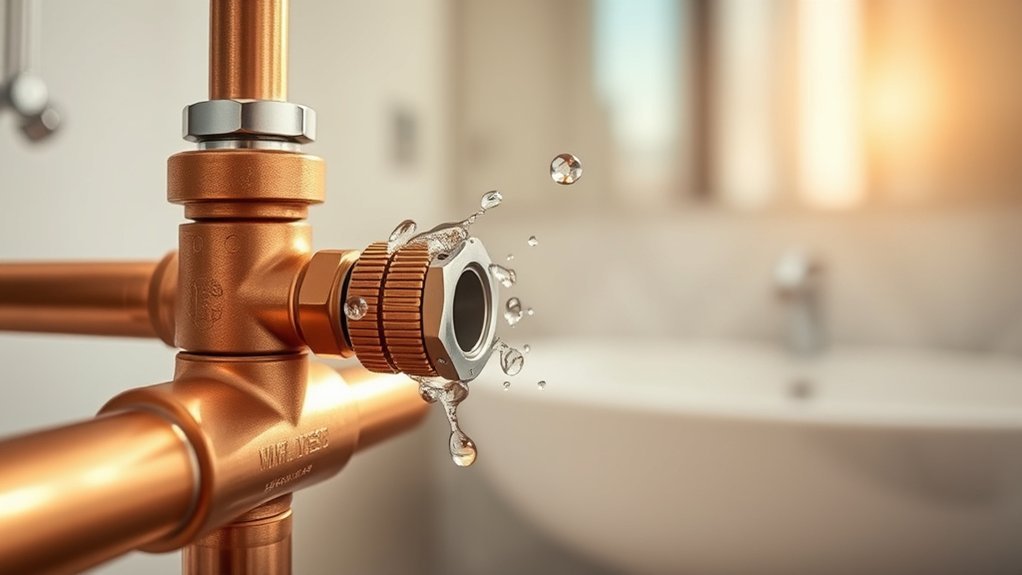
Why does water hammer occur, and what impact does it have on your plumbing system? Water hammer results from sudden changes in pressure dynamics within your pipes when a valve closes quickly, causing a shockwave. This causes pipes to bang or vibrate forcefully, potentially damaging joints and fixtures.
The causes overview includes rapid valve closure, high water velocity, and insufficient air chambers or arrestors that normally absorb pressure spikes. Understanding these pressure dynamics is crucial because repeated shocks can weaken pipe integrity, leading to leaks or bursts.
You need to recognize that water hammer isn’t just noise; it’s a sign of harmful pressure fluctuations that compromise your plumbing’s functionality and longevity. Addressing these causes early prevents costly repairs and maintains system reliability.
Simple DIY Fixes to Stop Water Hammer Noise
Recognizing the causes and risks of water hammer is the first step toward resolving the issue effectively. To implement simple DIY fixes, start by securing any loose pipes that cause pipe rattling, using pipe clamps or straps to minimize vibration and noise.
Next, consider installing water hammer arrestors at critical points to absorb shock and reduce abrupt pressure changes. Performing a pressure reset can also help; shut off the main water supply, open all faucets to drain the system, then close faucets and restore water flow slowly.
This process stabilizes internal pressure and reduces hammering. Lastly, check for faulty or worn washers in valves and replace them to prevent sudden water stoppage. These targeted actions address water hammer noise efficiently without complex plumbing adjustments.
When and How to Adjust Plumbing Pressure
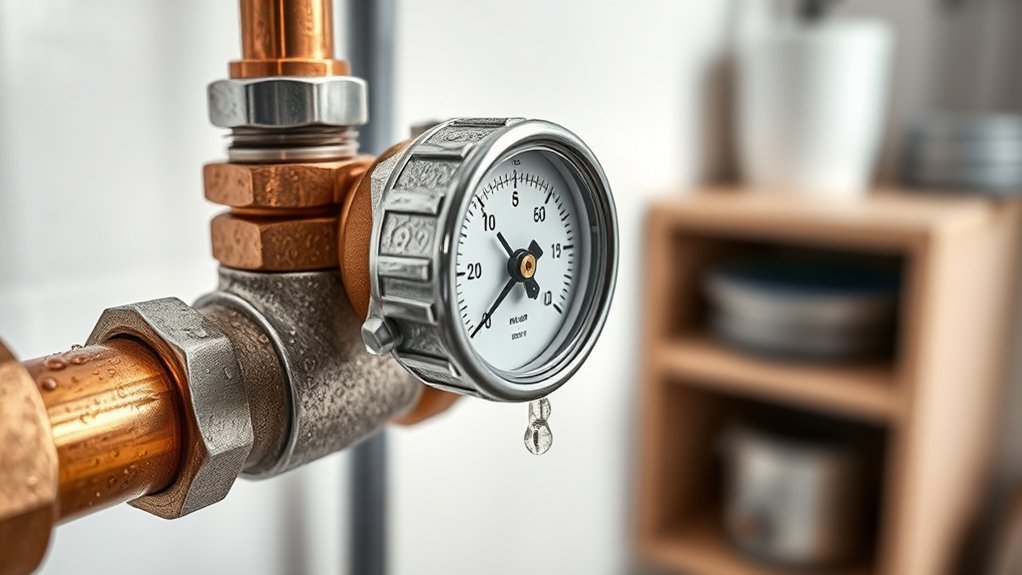
How do you determine when plumbing pressure needs adjustment to prevent water hammer? You should act when you notice inconsistent pressure or excessive pipe movement causing the characteristic banging noise. High water pressure often triggers water hammer by forcing rapid valve closure, leading to shock waves in the pipes.
To adjust pressure effectively:
Use a pressure gauge to measure system pressure; ideal range is 40-60 psi.
Identify inconsistent pressure fluctuations linked to water hammer events.
Adjust or install a pressure-reducing valve (PRV) to stabilize pressure.
Inspect and secure loose pipes to minimize movement during pressure surges.
Installing Water Hammer Arrestors: A Simple Guide
Where should you install water hammer arrestors to effectively eliminate pipe noise and prevent damage? You’ll want to place arrestors as close as possible to the quick-closing valves causing the shock, such as dishwashers, washing machines, or solenoid valves.
When installing arrestors, secure them on the supply line near these fixtures, ensuring compatibility with your pipe material, whether copper, PEX, or CPVC. This simple guide emphasizes tight connections and correct orientation to maximize effectiveness.
Use a wrench to tighten fittings without over-torquing, preventing leaks. After installation, test the system by running the appliances to confirm the noise and pressure shock have been eliminated.
Signs You Need Professional Help With Water Hammer
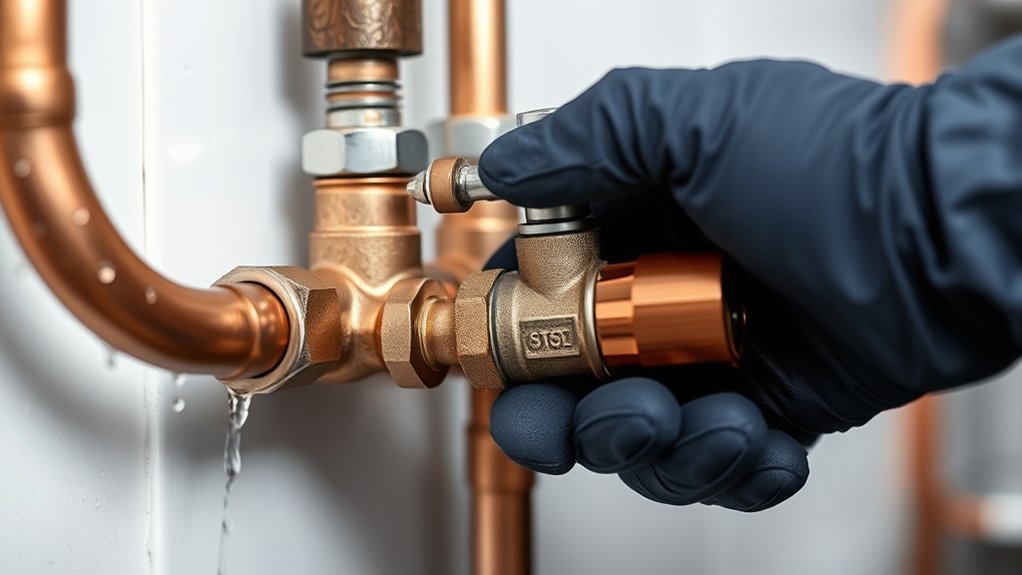
When does water hammer become more than just an annoying noise? You need professional help when it signals potential damage or complex plumbing issues beyond simple DIY fixes.
Don’t dismiss persistent banging as an unrelated topic or random rumor; it can indicate serious problems. Watch for these signs:
- Frequent loud knocking sounds when valves close abruptly
- Visible pipe vibrations or movement during water flow changes
- Sudden leaks or drips near pipe joints or fixtures
- Pressure fluctuations causing inconsistent water delivery
If you notice any of these, call a licensed plumber. They’ll diagnose hidden risks like worn air chambers or faulty arrestors and implement precise solutions, preventing costly damage and ensuring system longevity.
Ignoring symptoms only worsens the problem.
Frequently Asked Questions
Can Water Hammer Damage Appliances Over Time?
Yes, water hammer fatigue can cause appliance vibration that damages internal components over time.
You’ll notice increased wear and eventual failure if you don’t address the pressure surges causing these damaging vibrations promptly and effectively.
Is Water Hammer Common in All Types of Plumbing Materials?
Is water hammer common across plumbing materials? Yes, it occurs in metal and plastic pipes alike, causing appliance damage and reducing water heater lifespan.
You’ll need proper mitigation to protect your system effectively from these impacts.
How Does Water Hammer Affect Water Heater Lifespan?
Like a ticking time bomb, water hammer shortens your water heater lifespan by causing appliance damage through intense pressure surges. These shocks strain internal components, accelerating wear and risking premature failure.
This demands prompt attention to protect your investment.
Are There Specific Times of Day Water Hammer Is Worse?
Yes, water hammer often worsens during peak usage times of day, like mornings and evenings. Seasonal effects, such as temperature changes, can also influence water pressure fluctuations, intensifying water hammer during colder months.
Can Water Hammer Cause Leaks in Hidden Pipes?
Yes, water hammer can cause hidden pipe leaks by generating shock waves that stress joints and fittings, leading to concealed pipe damage.
You should inspect these areas promptly to prevent further deterioration and costly repairs.
Conclusion
Water hammer affects up to 50% of households with fast-closing valves, causing noisy pipes and potential damage. By securing loose pipes, installing water hammer arrestors, and maintaining pressure between 40–60 psi, you can effectively reduce this issue.
If noise persists, replacing worn washers or adding a pressure-reducing valve helps. Always ensure proper installation and connections—don’t hesitate to consult a professional for severe cases.
To protect your plumbing system and avoid costly repairs, it is essential to address water hammer promptly and effectively.