When you hear a smooth, flowing guitar solo, chances are hammer-ons are part of the technique creating that seamless sound. Hammer-ons are a fundamental part of how to hammer in guitar, allowing for fluid transitions between notes without the need to pick each one individually.
You’ll want to place your finger just behind the fret and press down firmly without re-picking the string. It might feel tricky at first, but with the right approach, you can develop clean, expressive hammer-ons that add life to your playing.
Let’s explore how to get started and master this essential skill.
What Is a Hammer-On and Why Use It
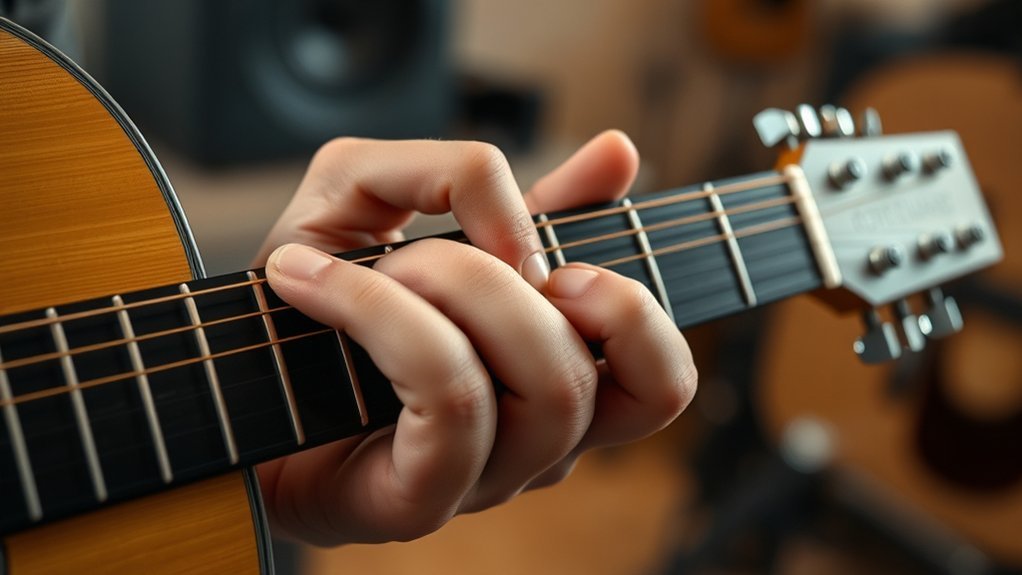
Although hammer-ons might seem tricky at first, they’re a simple technique that can add smoothness and speed to your guitar playing. The hammer technique involves sharply bringing a finger down onto a fret to sound a note without picking it again.
This lets you connect notes fluidly, creating a more legato, expressive sound. When you use proper guitar ergonomics, keeping your wrist relaxed and fingers curved, you’ll perform hammer-ons with greater ease and accuracy.
Good ergonomics reduce tension and help your fingers move quickly and precisely. Understanding what a hammer-on is and why it’s useful sets the foundation for improving your lead playing and rhythm work.
Mastering this technique will open up new ways to articulate your music and make your playing feel more dynamic.
How to Play a Basic Hammer-On
To play a basic hammer-on, place your finger firmly on the fretboard right after picking the first note. Focus on timing your finger movement so the second note sounds smooth and connected.
Keeping a steady rhythm will help your hammer-on blend naturally into your playing.
Finger Placement Techniques
Mastering finger placement is essential for executing a clean and effective hammer-on. Begin by positioning your finger just behind the fret, close to the metal bar, without touching it. This placement ensures a clear note without buzzing.
Use the adjacent technique by hammering onto the fret right next to the one you’re holding, which helps maintain smooth transitions. Pay attention to guitar ergonomics: keep your wrist relaxed and fingers curved naturally. This reduces tension and improves control.
When you hammer on, strike the string firmly with your fingertip, not the pad, to produce a strong, clear sound. Practicing these finger placement techniques consistently will build precision and fluidity, laying a solid foundation for mastering more complex hammer-ons.
Timing and Rhythm
Timing plays an essential role when you perform a hammer-on, as it guarantees the note sounds smooth and connected. To master it, focus on hand syncopation, coordinating your fretting hand with your picking hand to avoid awkward rhythm offsets.
Practice slowly, ensuring each hammer-on lands exactly on time with the beat.
Use this table to guide your timing practice:
| Beat Count | Action | Note Sound |
|---|---|---|
| 1 | Pick string | Clear pluck |
| 2 | Hammer-on finger | Smooth transition |
| 3 | Sustain note | Connected tone |
Finger Positioning Tips for Hammer-Ons
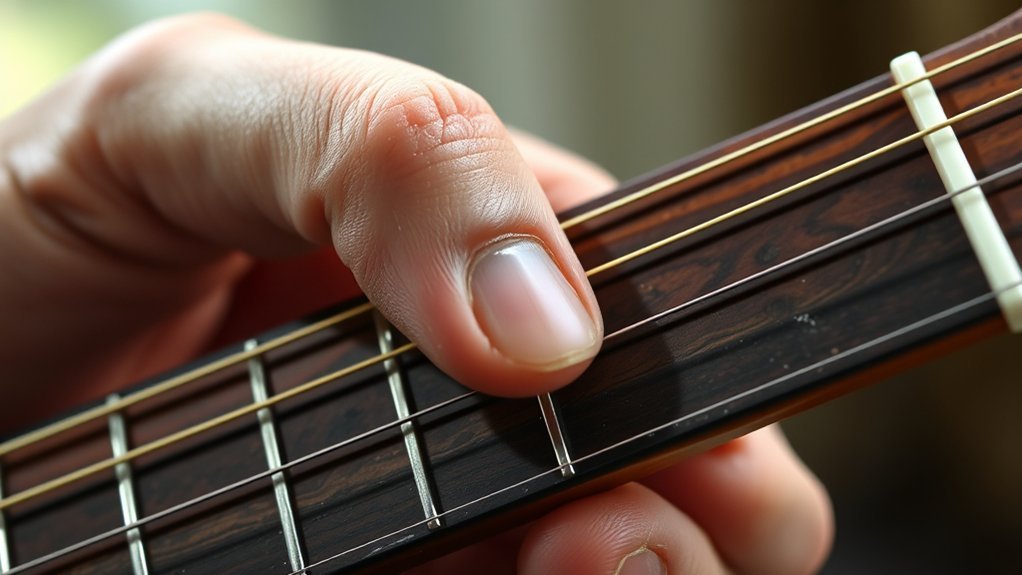
How do you position your fingers for the cleanest hammer-ons? Start by keeping your fingers curved and close to the fretboard, almost like you’re preparing for hammer painting. This ensures your fingertip presses down sharply and firmly on the string, avoiding any unwanted buzzing or string tuzzling.
Place your finger just behind the fret, not on it, to get the clearest tone. When you hammer-on, use a quick, controlled motion from your wrist and finger joints rather than swinging your whole arm. Keep your other fingers relaxed to avoid unnecessary tension.
Practicing this finger positioning will help you execute hammer-ons smoothly and with precision, making your playing sound clean and professional every time.
When to Use Hammer-Ons
Once you’ve got your finger positioning down for clean hammer-ons, it’s important to know when to apply them in your playing. Using hammer-ons effectively depends on your timing accuracy and the musical context.
Here are three key moments to use hammer-ons:
- Enhance Smoothness: Use hammer-ons to create a fluid, legato sound, avoiding the choppy attack of picking every note.
- Add Expressiveness: Combine hammer-ons with string bending to add emotional nuance and dynamics to your solos or riffs.
- Increase Speed: When playing fast passages, hammer-ons help you maintain speed without overwhelming your picking hand.
Practice Tips for Hammer-Ons
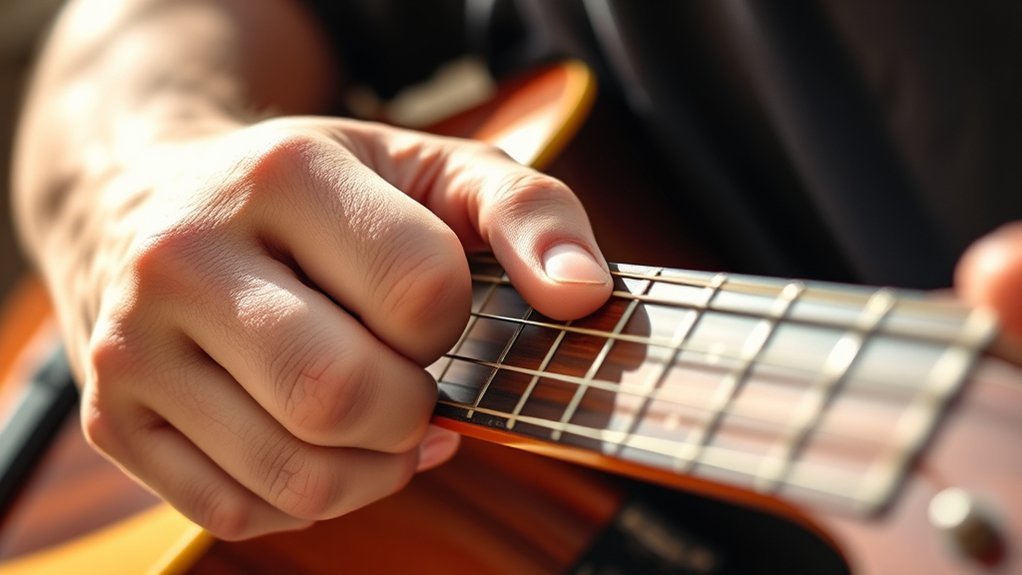
To improve your hammer-ons, focus first on building finger strength with slow, controlled movements. Pay close attention to timing, making sure each note rings clearly and fits smoothly within the rhythm.
Practicing regularly with precision will help you master this technique faster.
Finger Strength Development
Developing finger strength is essential for executing clean and powerful hammer-ons. Understanding your hand anatomy helps you target the right muscles, while finger proprioception, your awareness of finger position and movement, improves control.
To build strength effectively, try these steps:
- Slow hammer-ons: Focus on pressing firmly and accurately, feeling each finger’s movement and contact with the fretboard.
- Isometric holds: Press down on a fret and hold for 5-10 seconds. This strengthens finger muscles without movement, enhancing endurance.
- Finger independence exercises: Practice lifting and hammering fingers individually to improve proprioception and reduce tension.
Practice patiently and consistently. Over time, these drills will increase your finger strength, enabling smoother and more confident hammer-ons.
Timing and Precision
Building finger strength sets the foundation, but nailing the timing and precision of your hammer-ons brings your playing to life. Start by practicing hammer-ons slowly with a metronome to develop consistent timing.
Set a comfortable tempo and focus on striking each note cleanly, ensuring your finger lands firmly on the fret. Maintaining tuning stability is crucial; check your guitar’s tuning regularly to avoid misleading feedback.
As you improve, gradually increase the metronome speed while keeping accuracy intact. Pay attention to the clarity of each note—no buzzing or muting.
Common Hammer-On Mistakes
Although hammer-ons might seem straightforward, many guitarists struggle with common mistakes that can hinder their sound and technique. Addressing these early will improve your playing noticeably.
- Poor Finger Tapping Technique: Avoid merely resting your finger on the fretboard. Instead, use a deliberate, strong tap to create a clear note without relying on finger strength alone.
- Ignoring Pedal Terminology Concepts: Understanding terms like “attack” and “sustain” helps you control your hammer-ons dynamically, making them sound more expressive.
- Inconsistent Pressure and Timing: Applying uneven pressure or mistimed hammer-ons leads to muffled notes or awkward rhythms. Practice slowly to develop a smooth, even motion.
Advanced Hammer-On Techniques: Combining Pull-Offs and Slides
How can you make your hammer-ons sound more dynamic and fluid? Start by combining pull-offs and slides with your hammer-ons. This technique adds smooth transitions and complexity to your playing.
Begin on a note, hammer on to a higher fret, then pull off back to the original note, and immediately slide to a nearby fret. Practicing this sequence enhances your control and timing, essential for rhythm guitar and metal chords.
Focus on clean finger movements to avoid unwanted noise. Use this method to connect notes seamlessly, giving your riffs a polished, professional feel.
Incorporate these combinations gradually into your practice, and you’ll notice your playing becomes more expressive and versatile without sacrificing precision or speed.
How Hammer-Ons Add Expression and Feel
Why do hammer-ons make your guitar playing more expressive? They let you create smoother, more fluid transitions between notes, adding emotion and nuance without picking every tone.
When using hammer-ons, keep these points in mind:
- Dynamics Control: Adjust your finger strength for softer or louder notes, shaping the phrase’s emotional impact.
- Hammer On Etiquette: Avoid overusing hammer-ons; use them tastefully to enhance, not clutter, your playing.
- Gear Considerations: Choose strings and pickups that respond well to finger techniques, ensuring clarity and sustain.
Exercises to Strengthen Your Hammer-On Technique
To strengthen your hammer-on technique, start with finger independence drills that help each finger press down cleanly and confidently. Focus on building speed gradually, ensuring accuracy before increasing tempo.
This steady approach will improve control and make your hammer-ons sound smooth and clear.
Finger Independence Drills
When will you notice a real difference in your hammer-on technique? It starts when your hand technique and finger coordination improve, allowing each finger to strike precisely and independently. Finger independence drills are key to this progress.
Try these exercises:
- Hammer on each finger to the fretboard one at a time, focusing on clean sound without pulling other fingers.
- Practice hammer-ons using various finger combinations (index to middle, middle to ring, etc.) to build coordination.
- Slow down and isolate problem fingers, repeating hammer-ons until they feel natural and controlled.
These drills strengthen your fingers’ ability to move independently while maintaining proper hand posture. Be patient. Consistent practice here sets a strong foundation for smoother, more fluid hammer-ons.
Gradual Speed Building
A steady increase in speed is essential for mastering hammer-ons without sacrificing accuracy. Begin by practicing slow, deliberate hammer-ons, focusing on clean sound and finger placement. Use a metronome to guide your timing and gradually raise the tempo as you gain confidence.
This techniques overview helps build muscle memory while ensuring control. Pay attention to gear considerations: a guitar with low action and properly set-up strings makes hammer-ons easier and smoother.
As you progress, incorporate varied patterns and string combinations to challenge your fingers and improve flexibility. Remember, rushing too quickly can lead to sloppy execution, so increase speed only when your technique is solid.
Consistent, mindful practice will strengthen your hammer-on skills effectively over time.
Applying Hammer-Ons in Rock, Blues, and Jazz
Hammer-ons add fluidity and expression to your playing, making them essential techniques in rock, blues, and jazz. When applying hammer-ons, focus on these key points:
- In rock, use hammer palm muting to control string resonance while adding aggressive hammer-ons on riffs.
- In blues, blend hammer-ons with a pedal tone to create a smooth, soulful vibe that connects notes seamlessly.
- In jazz, apply hammer-ons subtly to emphasize chord tones and add melodic interest without overwhelming the harmony.
Practice each style slowly and listen carefully to how hammer-ons enhance your phrasing. Remember, the goal is to make transitions between notes sound natural and expressive. Mastering these techniques will deepen your musicality and versatility across genres.
Frequently Asked Questions
Can Hammer-Ons Damage My Guitar Strings?
You won’t damage your guitar strings using the hammer technique if you control string tension and strike firmly but gently. Overly aggressive hammer-ons can cause wear, so practice patience to keep your strings in good shape.
Which Guitar Brands Are Best for Hammer-On Techniques?
You’ll find brands like Fender and Ibanez excel at supporting hammer technique due to their balanced string tension, which enhances playability. These guitars help you execute smooth hammer-ons without excessive finger strain or string damage.
How Do Hammer-Ons Differ on Acoustic vs. Electric Guitars?
You’ll find hammer-ons technique sounds smoother on electric guitars due to their pickups and lower action. On acoustic, the dynamics rely more on finger strength and string resonance, giving a brighter, more percussive effect overall.
Are Hammer-Ons Easier on Nylon or Steel Strings?
Like a knight wielding a sword, you’ll find hammer ons easier on nylon strings due to lower string tension. This affects your hammer ons interpretation, letting you play smoothly without extra finger pressure or strain.
What Gear Settings Enhance Hammer-On Sounds?
You’ll want a gear tone with moderate gain and slight compression to enhance hammer-ons. Focus on your technique grip, keeping it firm but relaxed to ensure clarity. Adjust your amp’s midrange for a warm, punchy sound that stands out.
Conclusion
Mastering hammer-ons transforms your playing from stiff and mechanical to fluid and expressive. While the basic technique feels simple, combining it with pull-offs and slides adds depth and emotion to your sound.
With steady practice and patience, you’ll move from hesitant taps to confident, smooth transitions that breathe life into every note. Keep your fingers relaxed, stay rhythmic, and watch your guitar sing with a new, dynamic voice.
Incorporating hammer-ons into your playing will elevate your skills and bring a fresh, vibrant energy to your guitar performance.