When you install a water hammer arrestor, placement is vital to effectively reduce pressure surges and protect your plumbing. A properly installed water hammer arrestor helps prevent the loud banging noises caused by sudden valve closures.
You’ll want to position it as close as possible to quick-closing valves—typically within 12 inches—to absorb shocks right where they start. This means focusing on appliances like washing machines, dishwashers, and toilets.
But knowing exactly where and how to install these devices can make all the difference in preventing damage and ensuring longevity. Proper installation ensures your plumbing system stays quiet and durable over time.
What Is a Water Hammer Arrestor and Why It Matters
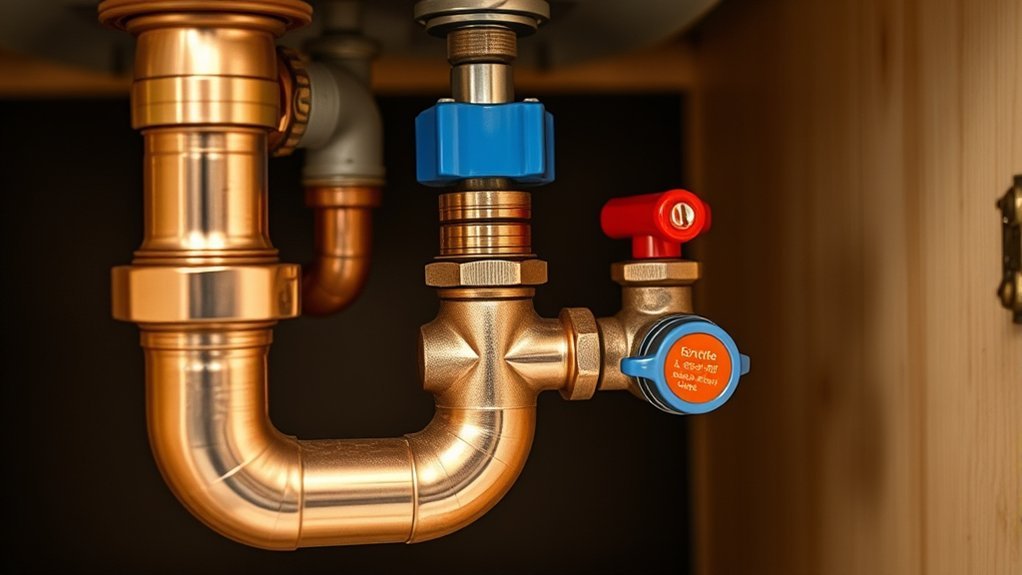
What exactly is a water hammer arrestor, and why should you care about it? A water hammer arrestor is a device designed to absorb sudden pressure spikes in your plumbing system caused when a valve closes abruptly. These pressure surges, known as water hammer, can damage pipes and fittings if left unchecked.
Installing an arrestor prevents noise and potential leaks, enhancing your system’s longevity. In two word discussion ideas, “pressure control” and “pipe protection” summarize its function well.
Despite common confusion, this subtopic is unrelated to identifying specific water hammer locations. Instead, focus on understanding the arrestor’s role in cushioning hydraulic shocks. By grasping this, you ensure your plumbing operates smoothly without costly repairs, making the arrestor a critical component in maintaining system integrity.
Identifying Water Hammer Locations in Your Plumbing
You’ll want to start by pinpointing common causes of water hammer, like quick-closing valves and high water pressure. Focus on high-risk fixtures such as washing machines and dishwashers, where pressure surges often occur.
Identifying these locations helps you target where to install water hammer arrestors effectively.
Common Water Hammer Causes
Where do water hammer effects most commonly occur in your plumbing system? They often happen near quick-closing valves like faucets, washing machines, and dishwashers. Identifying these spots helps avoid false positives or chasing irrelevant topics when troubleshooting.
| Cause | Location | Effect |
|---|---|---|
| Rapid Valve Closure | Faucets, Fixtures | Sudden pressure spike, banging noise |
| High Water Pressure | Throughout System | Amplifies shock waves |
| Long Pipe Runs | Basement, Attic | Increased water momentum, vibration |
| Air Chambers Drained | Older Homes | Loss of cushioning, louder hammer noise |
Focus on these causes to pinpoint water hammer origins efficiently and install arrestors where they’ll be most effective.
High-Risk Plumbing Fixtures
Although water hammer can occur throughout your plumbing, certain fixtures present higher risks due to their operation and location. Fixtures like washing machines, dishwashers, and quick-closing valves cause rapid water stoppage, creating pressure surges that transmit shock waves through pipes.
Toilets also pose a risk because of their fast-fill valves. You’ll want to focus on these high-risk plumbing fixtures when deciding where to install water hammer arrestors. Ignoring them can lead to pipe damage and noisy plumbing.
Avoid unrelated topics such as general maintenance or unrelated home systems; concentrate strictly on locations prone to water hammer. By pinpointing these critical points, you’ll efficiently reduce the risk of pressure surges and protect your system without unnecessary installations elsewhere.
Pressure Surge Identification
How can you pinpoint the exact locations where water hammer pressure surges occur in your plumbing? Start by analyzing the pressure dynamics within your system. Rapid valve closures cause sudden shifts that generate shock waves.
Focus on areas near quick-closing valves, such as washing machines, dishwashers, or solenoid valves. Listen for loud banging or knocking sounds, which often indicate pressure surges.
Additionally, inspect for signs of air entrainment, as trapped air pockets can amplify pressure spikes. Use pressure gauges at strategic points to detect transient pressure increases.
Mapping these high-pressure zones helps you determine where to install water hammer arrestors effectively, minimizing system stress and prolonging pipe life. By precisely identifying surge points, you ensure targeted mitigation and maintain optimal plumbing performance.
Best Spots to Place Water Hammer Arrestors in Bathrooms
Because bathrooms contain multiple fixtures that frequently shut off water flow abruptly, installing water hammer arrestors close to these points is crucial. Focus on placing arrestors near faucets, toilets, and shower valves to minimize pressure surges effectively.
When installing, ensure seals are properly tightened to prevent leaks and maintain system integrity. Additionally, coordinate with existing venting systems to avoid interference that could reduce arrestor performance.
Position arrestors on the supply lines immediately downstream of shutoff valves or fixture connections for optimal shock absorption. This placement helps protect piping and fixtures from damage caused by sudden hydraulic shocks.
Where to Install Water Hammer Arrestors for Kitchen Appliances
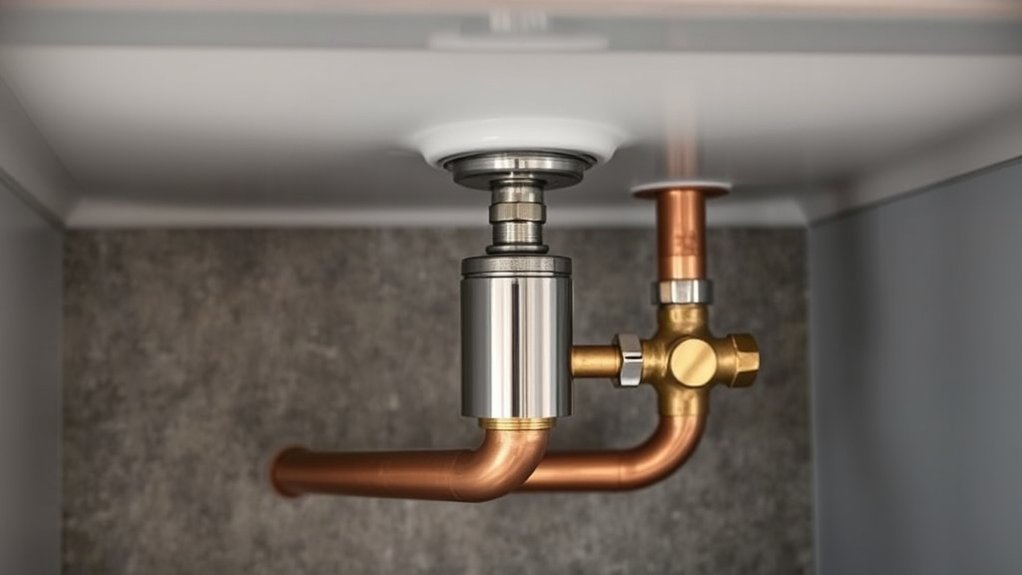
When installing water hammer arrestors for kitchen appliances, place them close to the appliance’s water supply line to effectively absorb pressure spikes. Position the arrestor near the shutoff valve to isolate and protect the section of piping connected to the appliance.
This setup guarantees quick response to water hammer and simplifies maintenance.
Near Appliance Water Supply
Although water hammer arrestors are essential throughout your plumbing system, installing them near appliance water supplies is particularly critical. Appliances like dishwashers and washing machines have solenoid valves that close rapidly, causing sudden pressure spikes.
Placing arrestors directly at these supply lines absorbs shock waves immediately, preventing pipe damage and noise. Avoid engaging in irrelevant topics or random discussions about distant pipe locations; focus strictly on the water supply line feeding the appliance.
Position the arrestor as close as possible to the appliance’s inlet to maximize effectiveness. Use arrestors rated for the appliance’s pressure and flow specifications to ensure reliable performance.
Proper installation here safeguards your plumbing and extends appliance longevity by mitigating water hammer effects precisely where they originate.
Close To Shutoff Valve
Installing water hammer arrestors near appliance water supplies helps absorb pressure spikes at their source, but positioning them close to the shutoff valve provides additional protection. When you install the arrestor immediately downstream of the shutoff valve, you minimize the risk of pressure surges traveling further into your plumbing system.
This placement is especially critical for kitchen appliances, where frequent valve operation triggers water hammer. Avoid treating this as an irrelevant topic or an unrelated concept; it directly impacts system longevity and noise reduction.
You’ll want to ensure the arrestor is compatible with the valve type and installed according to manufacturer guidelines to maintain effective pressure control. This strategic location complements, rather than replaces, arrestors near the appliance, creating a comprehensive defense against water hammer.
Water Hammer Arrestors in Laundry Rooms
Why does your laundry room often experience noisy pipes after the washing machine stops? The sudden halt creates a water hammer effect, causing pressure surges that rattle your plumbing.
Installing water hammer arrestors near the washing machine inlet valves is essential. Avoid confusing this with an irrelevant topic or unrelated concept, like placing arrestors on unrelated fixtures.
Here’s a practical layout:
| Location | Purpose | Notes |
|---|---|---|
| Hot water inlet | Absorb pressure shock | Closer to valve |
| Cold water inlet | Prevent pipe banging | Must fit tight space |
| Drain valve area | Optional, less critical | Helps with residual water flow |
Properly installed arrestors protect pipes, extend fixture life, and reduce noise, ensuring efficient laundry room plumbing.
Where to Place Water Hammer Arrestors on Main Water Lines
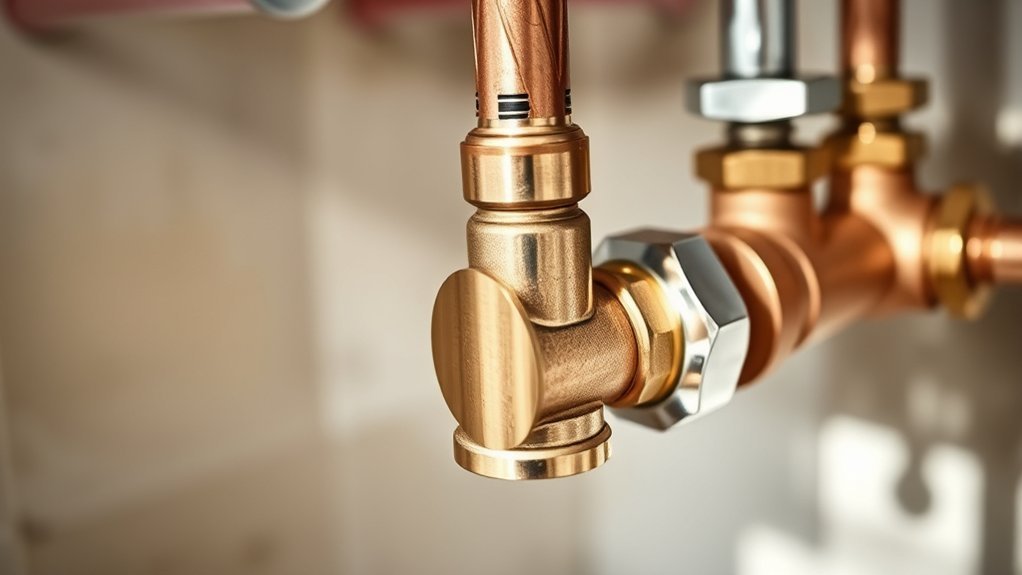
You should install water hammer arrestors near the water main entry to protect the entire plumbing system from pressure surges. Position them close to pressure valves where sudden valve closures can cause water hammer.
This placement guarantees effective absorption of shock waves before they propagate through your pipes.
Near Water Main Entry
Where exactly should you place water hammer arrestors on the main water lines near the water main entry? Positioning them correctly maximizes installation benefits and simplifies maintenance. Here’s how to proceed:
- Install arrestors immediately downstream of the main shut-off valve to absorb sudden pressure surges.
- Place them close to fixtures or branches that frequently cause water hammer, ensuring targeted protection.
- Mount arrestors on accessible sections of pipe for efficient maintenance and inspection.
- Avoid locations prone to freezing or excessive vibration to prolong arrestor lifespan and reliability.
Close To Pressure Valves
How close should water hammer arrestors be installed to pressure valves on main water lines? You should position arrestors as near as possible, ideally within 12 inches, to the pressure valves. This placement ensures immediate absorption of pressure surges caused by valve closure, preventing water hammer effects.
When planning installation, avoid mixing unrelated topic components like unrelated topic fittings that don’t impact pressure dynamics. Focus on two word discussion ideas such as “pressure spikes” and “valve response” to guide your approach.
Installing arrestors too far away reduces their effectiveness, allowing shock waves to propagate and potentially damage pipes. Keep the arrestor inline and accessible for maintenance.
This precise proximity optimizes system longevity and performance by mitigating stress on your main water lines efficiently and reliably.
Installing Water Hammer Arrestors Near Fast-Closing Valves
Why does installing water hammer arrestors near fast-closing valves matter? When these valves shut abruptly, they create pressure surges that can damage pipes and fittings. You need to place arrestors strategically to absorb the shock and protect your system.
Installing arrestors near fast-closing valves prevents damaging pressure surges by absorbing shock and protecting your plumbing system.
Follow these steps:
- Identify fast-closing valves in your plumbing layout, like solenoid or quick-shutoff valves.
- Install the arrestor as close as possible, ideally within 12 inches, to minimize pressure spike travel.
- Use appropriate fittings to ensure a secure, leak-free connection.
- Avoid unrelated topics such as garden irrigation or rain barrels in this discussion; focus on two word discussion ideas like “pressure control” and “shock absorption.”
This precise placement ensures longevity and reliability in your system by preventing water hammer damage near these critical valves.
How to Install Water Hammer Arrestors in New vs. Existing Pipes
Installing water hammer arrestors differs markedly between new and existing pipe systems due to accessibility and integration challenges. In new pipes, you can plan for optimal placement during installation, ensuring compliance with local codes and minimizing future disruptions. Existing pipes require careful retrofitting, often demanding shut-offs and partial disassembly, which impacts financial considerations.
| Aspect | New Pipes |
|---|---|
| Accessibility | High, during construction |
| Installation Speed | Faster, integrated planning |
| Compliance | Easier to meet |
| Financial Impact | Lower long-term costs |
| Disruption | Minimal |
| Aspect | Existing Pipes |
| Accessibility | Limited, confined spaces |
| Installation Speed | Slower, retrofitting needed |
| Compliance | Must retrofit to standards |
| Financial Impact | Higher due to labor |
| Disruption | Significant |
Understanding these differences helps you plan effective, compliant installations while managing costs.
How to Choose the Best Water Hammer Arrestor for Your Plumbing
What factors should you consider to ensure you select the most effective water hammer arrestor for your plumbing system? First, match the arrestor to your system’s types of pipe materials—copper, PVC, or PEX, since compatibility affects sealing and durability.
Second, evaluate the arrestor’s pressure rating to handle your system’s maximum operating pressure without failure. Third, choose the appropriate volume capacity; a larger volume suits high flow rates to absorb shock effectively.
Fourth, review warranty considerations. Longer warranties often indicate better build quality and manufacturer confidence. By focusing on these four criteria, you ensure optimal performance and longevity for your water hammer arrestor, preventing costly damage and maintaining system integrity.
Common Installation Mistakes and How to Avoid Them
Choosing the right water hammer arrestor is only part of ensuring your plumbing system functions properly; how you install it matters just as much. One common mistake is placing the arrestor too far from the valve or fixture, reducing its effectiveness. You should install it as close as possible to the source of water hammer.
Another error is ignoring pipe orientation. Install the arrestor according to manufacturer specifications to avoid air pocket issues. Avoid mixing unrelated topic considerations, like aesthetic preferences or unrelated plumbing repairs, which can distract and lead to improper installation.
Don’t engage in random discussion about parts unrelated to the arrestor’s function during installation. Focus solely on correct placement, secure fittings, and proper pipe connections. Following these guidelines ensures your arrestor performs optimally, preventing noisy, damaging water hammer effects.
Frequently Asked Questions
How Long Do Water Hammer Arrestors Typically Last?
Water hammer arrestors typically last 10-15 years, depending on installation timing and material compatibility. You’ll ensure longevity by installing them correctly and choosing materials compatible with your plumbing system to prevent premature wear or failure.
Can Water Hammer Arrestors Reduce Overall Water Pressure?
Water pressure myths mislead many; water hammer arrestors don’t drastically decrease pressure. Proper installation placement considerations ensure they absorb shock without restricting flow, maintaining system stability while preventing damaging pressure surges effectively.
Are Water Hammer Arrestors Compatible With All Pipe Materials?
Water hammer arrestors aren’t compatible with all pipe materials; avoid incompatible materials like certain plastics.
You’ll need to consider sizing carefully to ensure proper function and avoid pressure issues within your specific plumbing system.
Do Water Hammer Arrestors Require Regular Maintenance?
Think of water hammer arrestors as silent sentinels; they don’t demand frequent water hammer maintenance.
However, occasional checks ensure long term efficiency, preventing wear or blockages, so your plumbing system stays protected and operates smoothly over time.
Can Water Hammer Arrestors Prevent Pipe Noise in Multi-Story Homes?
Yes, water hammer arrestors can reduce pipe noise in multi-story homes. For effective results, you should focus on proper install placement near valves and follow installation tips like securing fittings tightly and flushing the system after installation.
Conclusion
To tackle troublesome taps and thwart water hammer hazards, install arrestors as close as possible to quick-closing valves—ideally within 12 inches. Target toilets, taps, and tech like washers and dishwashers to temper turbulent shocks.
Trust tried-and-true techniques: place arrestors downstream of main shut-offs, ensure easy access, and select suitable materials. Staying sharp and specific safeguards your system, stops striking sounds, and sustains smooth, silent, and safe plumbing performance.
For optimal protection, always remember where to install water hammer arrestor to maintain system integrity and quiet operation.