You might think a sudden pipe bang, known as water hammer, is just a minor annoyance, but it actually signals a serious pressure surge that can damage your plumbing system. A water hammer arrestor is designed to absorb these shock waves caused by rapid valve closures, protecting your pipes from stress and leaks.
Understanding how this device works can save you costly repairs and extend your system’s lifespan. So let’s explore what makes it essential.
What a Water Hammer Arrestor Is and Why It Protects Your Pipes
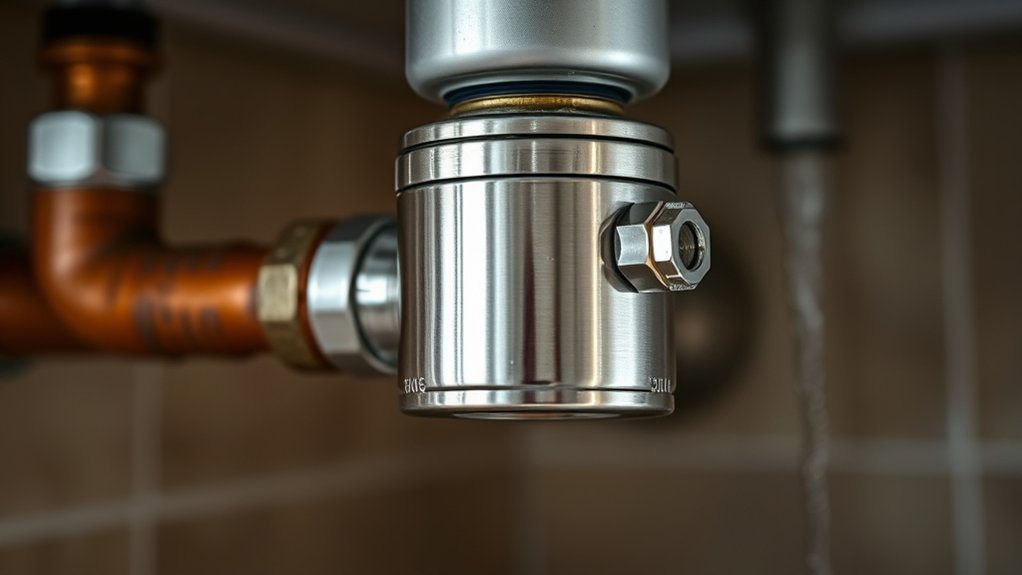
Understanding water hammer arrestors is essential if you want to protect your plumbing system from the sudden pressure surges caused by rapid valve closures. Water hammer occurs when a fast-closing valve causes a shockwave in the pipes, potentially damaging fixtures and joints.
A water hammer arrestor is a device designed to absorb this shock, preventing pipe banging and structural harm. It typically contains a piston or air chamber that cushions the abrupt pressure spike, dissipating energy safely.
Knowing water hammer arrestor basics helps you choose the right model and install it correctly near valves prone to causing water hammer. By incorporating these devices, you maintain system integrity, reduce noise, and extend your plumbing’s lifespan through effective shock absorption.
Signs You Have Water Hammer Problems
While water hammer arrestors help protect your plumbing, you need to recognize the warning signs that indicate water hammer is already affecting your system. Common signs you have water hammer problems include loud banging or knocking noises when you shut off faucets or appliances.
These sounds result from sudden water pressure surges causing pipes to move or vibrate. You might also notice visible pipe movement or even damage, such as loose fittings or leaks.
Ignoring these signs compromises preventing pipe failure and reduces corrosion protection, accelerating pipe wear. Addressing water hammer issues promptly maintains system integrity and avoids costly repairs.
Monitoring water pressure fluctuations and responding to these signs you have will help safeguard your plumbing infrastructure effectively.
How a Water Hammer Arrestor Keeps Your Plumbing Safe
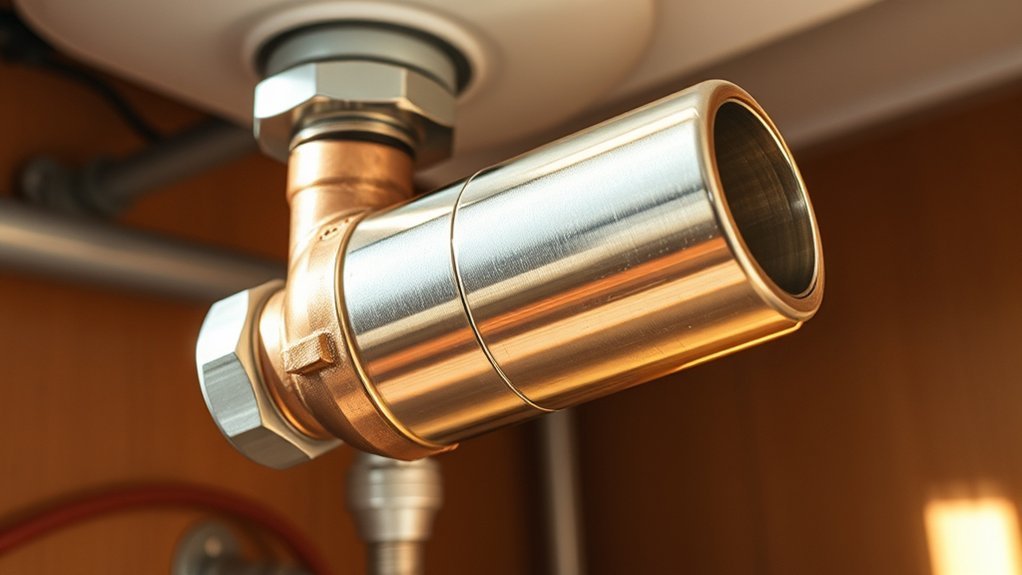
A water hammer arrestor protects your plumbing by absorbing sudden pressure surges, preventing pipe damage. It also reduces the loud banging noises caused by water hammer.
Preventing Pipe Damage
How exactly does a water hammer arrestor protect your plumbing system from damage? When water flow suddenly stops, it creates a pressure surge called water hammer. This surge can cause pipes to shake violently, leading to joint failure, leaks, or pipe bursts.
A water hammer arrestor acts as a shock absorber by providing a cushion of air or gas that compresses when the surge occurs, dissipating the force. Proper arrestor placement is critical; installing it close to valves or appliances prone to sudden shutoff ensures maximum protection.
Reducing Noise Levels
Protecting your plumbing from pressure surges also means addressing the loud banging noises caused by water hammer. A water hammer arrestor uses precise calibration techniques to absorb the shock waves created when water flow abruptly stops.
By adjusting the internal air chamber or spring mechanism, the arrestor effectively cushions the pressure spike, preventing the pipe from vibrating and producing noise. Implementing proper noise mitigation strategies involves selecting an arrestor with the correct size and calibration for your system’s pressure rating and flow characteristics.
This tailored approach reduces the intensity of sound waves traveling through the pipes, ensuring quieter operation. When installed correctly, the water hammer arrestor minimizes disruptive banging sounds, maintaining both the comfort of your environment and the integrity of your plumbing system.
Enhancing System Longevity
Why should you prioritize installing a water hammer arrestor in your plumbing system? Just as urban planning carefully designs river delta channels to manage water flow and prevent erosion, a water hammer arrestor controls sudden pressure surges in your pipes.
These pressure spikes, if unchecked, cause stress and fatigue, leading to premature wear and potential pipe bursts. By absorbing shock waves, the arrestor reduces mechanical strain on valves and fittings, substantially extending your system’s lifespan.
This preventive measure protects your plumbing infrastructure similarly to how thoughtful urban planning safeguards natural waterways. Incorporating a water hammer arrestor not only secures your system against damage but also minimizes maintenance costs and downtime.
Ultimately, you preserve your plumbing’s integrity, ensuring reliable performance for years to come.
Types of Water Hammer Arrestors You Should Know
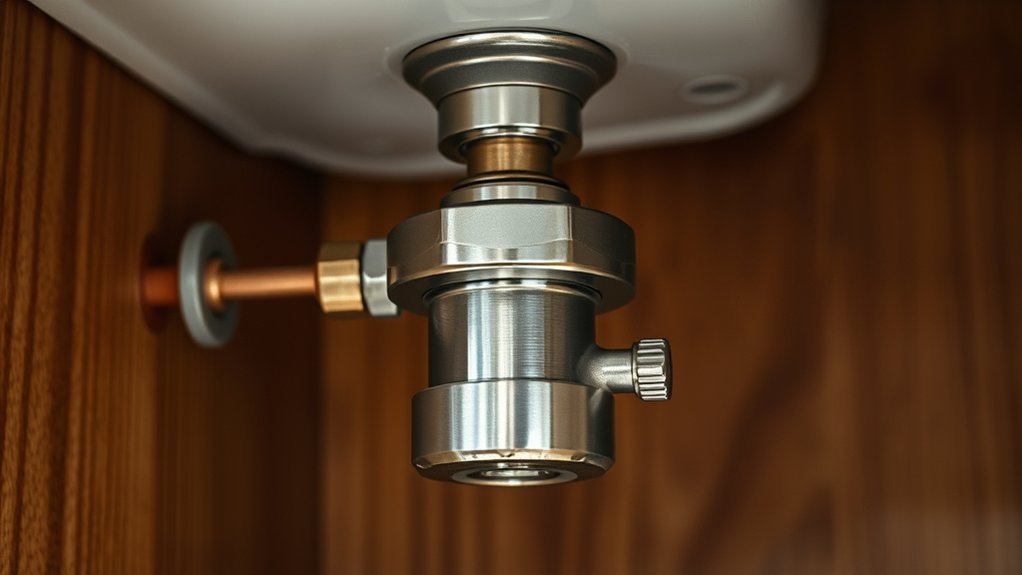
What types of water hammer arrestors can best address your plumbing needs? You’ll find several types, each suited for specific approach alternatives and installation angles. Selecting the right one depends on your system’s design and space constraints.
| Type | Key Feature |
|---|---|
| Piston-style | Effective at various angles |
| Diaphragm-type | Compact, versatile approach |
| Spring-type | Durable under high pressure |
| Chamber-type | Simple design, easy install |
Piston-style arrestors accommodate diverse installation angles, ideal where space is limited. Diaphragm-types offer flexibility in approach alternatives, fitting tight spots. Spring-type arrestors handle higher pressures, suitable for robust systems.
Chamber-type units provide straightforward installation but require precise mounting to avoid inefficiency. Understanding these types helps you optimize system protection.
Best Places to Install a Water Hammer Arrestor
Choosing the right type of water hammer arrestor is only part of ensuring effective plumbing protection. Knowing where to install it makes a significant difference in performance. You’ll want to focus on these key locations:
1. Near quick-closing valves
Install arrestors close to valves like washing machine or dishwasher water inlets to absorb shock immediately.
2. At branch lines
Position arrestors where water lines split to prevent hammer effects in multiple fixtures.
3. Close to main shut-off valves
This placement protects the entire plumbing system from pressure surges.
Consider installation aesthetics by choosing arrestors with color coding that matches your pipes, simplifying maintenance and identification. Proper placement minimizes stress on pipes and fittings, ensuring long-lasting, quiet operation without compromising your plumbing’s appearance.
Choosing the Right Water Hammer Arrestor
How do you determine the best water hammer arrestor for your plumbing system? Start by choosing materials that match your pipe type. Use brass for durability with copper pipes, and plastic for flexibility with PEX systems. Noise reduction is critical; select arrestors designed with effective dampening mechanisms to minimize banging sounds.
| Feature | Material Options | Noise Reduction Effectiveness |
|---|---|---|
| Durability | Brass, Plastic | High with brass, moderate with plastic |
| Compatibility | Copper, PEX | N/A |
| Installation Type | Inline, Wall-mount | High efficiency in both types |
How to Install a Water Hammer Arrestor
To install a water hammer arrestor, you’ll need basic plumbing tools like a wrench, pipe cutter, and Teflon tape. Begin by turning off the water supply and draining the pipes to prevent leaks during installation.
Then, follow the specific steps for connecting the arrestor at the appropriate location in your plumbing system.
Tools Needed
What tools will you need to install a water hammer arrestor effectively? To maintain your water system’s integrity and ensure proper pressure regulation, gather the following essentials:
- Adjustable Wrench for tightening fittings securely without damaging pipes.
- Pipe Cutter or Hacksaw to cleanly cut pipes where the arrestor will be installed.
- Teflon Tape to seal threaded connections, preventing leaks and maintaining system pressure.
These tools are critical for a precise installation. The adjustable wrench allows you to achieve the necessary torque on fittings, ensuring a leak-free seal. A clean cut with the pipe cutter provides smooth pipe ends, which is essential for proper fitting connections.
Teflon tape enhances thread sealing, crucial for maintaining optimal pressure regulation and avoiding water hammer issues in your plumbing system. Having these tools ready will streamline your installation process and safeguard your water system’s performance.
Installation Steps
Although installing a water hammer arrestor may seem straightforward, following precise steps ensures best performance and prevents potential leaks. Start by shutting off the main water supply and draining the system to avoid water damage. These safety considerations are essential.
Identify the correct location, typically near fast-closing valves. Use appropriate fittings and thread sealant to secure the arrestor, adhering to installing basics.
| Step | Action |
|---|---|
| 1 | Turn off water supply |
| 2 | Drain pipes |
| 3 | Locate installation point |
| 4 | Apply thread sealant |
| 5 | Attach arrestor securely |
After installation, restore water supply and check for leaks. Proper torque and alignment prevent future issues, guaranteeing long-term efficiency and safety.
Frequently Asked Questions
How Much Does a Water Hammer Arrestor Cost on Average?
You’ll find water hammer arrestors typically cost between $20 and $50. When planning, focus on two word discussion ideas like “budget considerations” and “installation complexity” to ensure you select the right model within your financial limits.
Can a Water Hammer Arrestor Reduce Plumbing Noise?
Think of a water hammer arrestor as a shock absorber for your pipes; it effectively cushions sudden pressure surges, making noise reduction a key benefit. Incorporate this into your discussion ideas to enhance plumbing quietness considerably.
Are Water Hammer Arrestors Compatible With All Pipe Materials?
Water hammer arrestors aren’t universally compatible; you’ll face incompatibility with copper pipes due to galvanic corrosion risks. Avoid installation pitfalls by selecting arrestors designed for your pipe material and ensuring proper placement and secure fittings.
How Long Does a Water Hammer Arrestor Typically Last?
You’ll find water hammer arrestors typically last 10-15 years, depending on usage and quality. Performing a relevance check on pipe conditions ensures optimal lifespan.
Regular maintenance and timely replacements keep your system running smoothly.
Do Water Hammer Arrestors Require Regular Maintenance?
You don’t usually need regular maintenance for water hammer arrestors, but addressing maintenance gaps promptly ensures optimum function.
They’re cost effective solutions, providing long-term protection with minimal upkeep, reducing potential plumbing damage and repair expenses.
Conclusion
You protect your pipes by installing a water hammer arrestor. You prevent damage by recognizing water hammer signs early. You ensure system longevity by choosing the right arrestor type and placing it strategically.
You maintain quiet, efficient plumbing by following precise installation steps. By doing all this, you safeguard your home’s plumbing, reduce repair costs, and enjoy peace of mind.
Taking these actions keeps your water flowing smoothly and your pipes secure, making a water hammer arrestor an essential component of your plumbing system.