You might say Thor’s hammer isn’t just made of metal—it’s crafted from something far beyond ordinary materials. What is Thor’s hammer made of? Its core, forged by mythical dwarven smiths in supernatural fires, carries a divine essence that ordinary tools can’t match.
This unique composition is key to Mjölnir’s legendary strength and storm-commanding power, but understanding why requires exploring both ancient lore and modern interpretations.
What exactly makes this hammer so extraordinary?
What Is Mjölnir and Why Its Material Matters
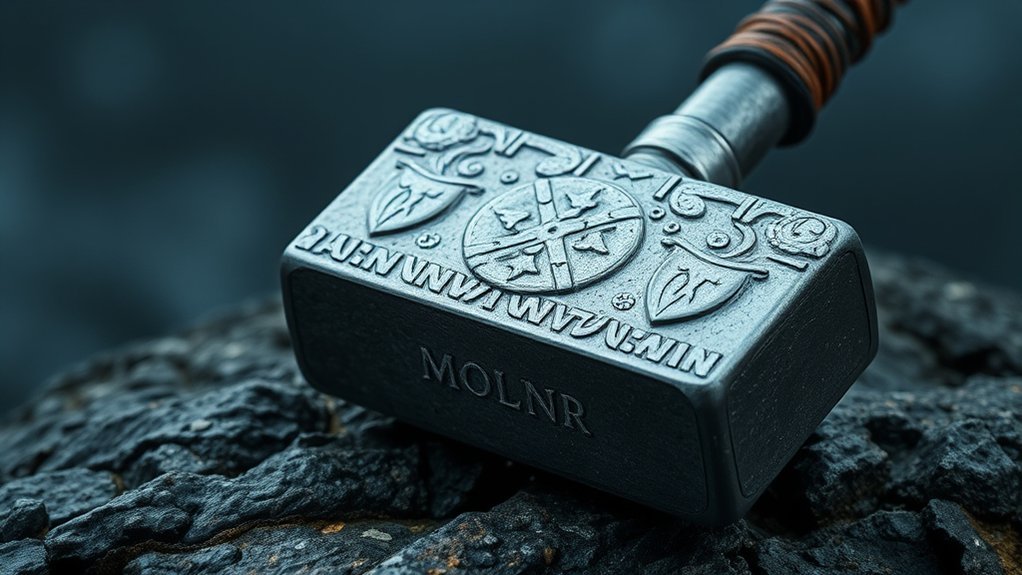
What exactly is Mjölnir, and why does its material composition hold such significance? You’re looking at more than just a weapon; Mjölnir embodies mythic metallurgy, forged from materials that reflect divine power and cosmic balance.
Its composition isn’t arbitrary; it’s deeply rooted in hammercraft symbolism, representing strength, protection, and the natural order. Understanding Mjölnir’s material helps you grasp how the hammer transcends ordinary metalwork, linking Thor’s might to the very forces that govern the universe.
When you consider the hammer’s material, you see it as a physical manifestation of Norse cultural values and spiritual beliefs, making its essence vital to its legendary status. This is why the hammer’s substance matters: it’s a symbol forged in myth and meaning.
How Norse Legends Describe Mjölnir’s Creation
You’ll find that Norse legends credit Mjölnir’s creation to a precise, mythical forging process filled with divine craftsmanship. The hammer was forged by master dwarven smiths, whose unparalleled skill gave it unmatched power and durability.
Understanding their role helps reveal why Mjölnir is more than just a weapon. It’s a symbol of supernatural strength and protection.
Mythical Forging Process
Although the crafting of Thor’s hammer, Mjölnir, is shrouded in myth, Norse legends provide a vivid account of its creation by the skilled dwarven brothers Sindri (or Eitri) and Brokkr. You’ll find that the mythical forging process is steeped in mythic metallurgy, where extraordinary materials and supernatural forces converge.
The brothers engaged in intense forging rituals, hammering and tempering the enchanted metal within an otherworldly forge beneath the earth. Every strike and breath of fire was charged with divine power, imbuing Mjölnir with unmatched strength and magical properties.
The process wasn’t merely physical but ritualistic, ensuring the hammer’s ability to protect gods and mortals alike. By understanding these ancient techniques, you grasp how the hammer’s legendary might was born from both craft and cosmic enchantment.
Role of Dwarven Craftsmen
When exploring the role of dwarven craftsmen in Norse legends, you’ll find that Sindri (also known as Eitri) and Brokkr stand at the heart of Mjölnir’s creation. These master dwarves exemplify unparalleled dwarven craftsmanship, shaping the hammer through a process steeped in mythical metallurgy.
According to the myth, their skill transcended ordinary forging; they manipulated magical metals within their forge, imbuing Mjölnir with unmatched power and resilience. You can appreciate how their expertise wasn’t just technical but also deeply mystical, blending physical skill with enchanted elements.
This fusion of craftsmanship and mythical metallurgy made Mjölnir not only a weapon but a symbol of divine authority. Understanding their pivotal role helps you grasp why Thor’s hammer remains an enduring emblem in Norse mythology.
The Mythological Metal Behind Mjölnir
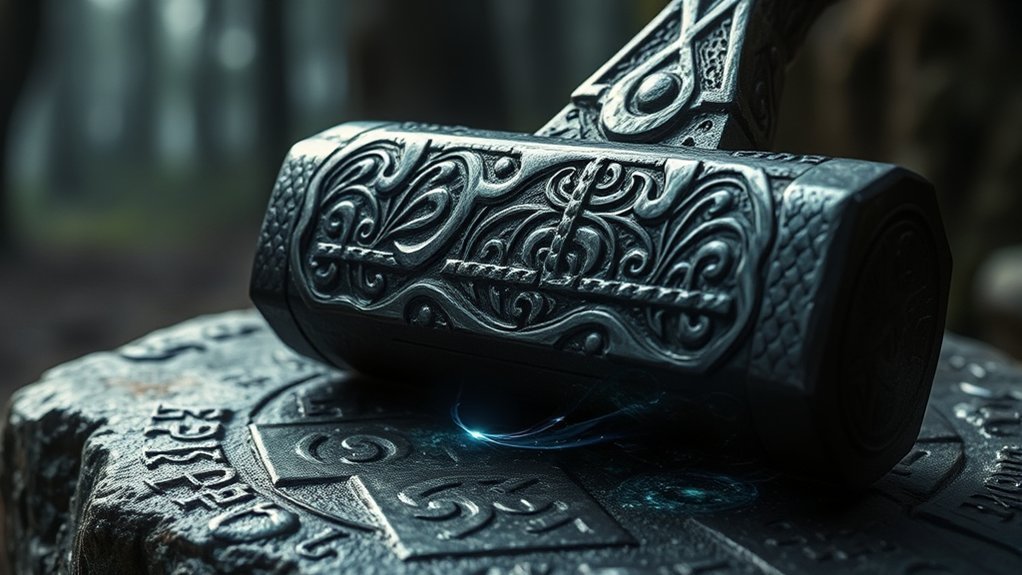
You’ll find that Mjölnir is forged from a rare mythical metal known as Uru, said to originate from the heart of dying stars in Norse mythology. This metal’s unique properties make it nearly indestructible and capable of channeling immense magical energy.
Understanding Uru’s origins and attributes is key to grasping why Thor’s hammer wields such legendary power.
Origins of Mythical Metals
Delving into the origins of the mythical metal behind Mjölnir reveals a fascinating blend of ancient lore and symbolic significance. You’ll find that mythic metallurgy isn’t just about crafting; it embodies the mystical forces revered by Norse culture.
This metal, often linked to the dwarves’ unparalleled skill, represents more than a physical substance. It’s a vessel of cultural symbolism, reflecting power, protection, and divine authority.
In these myths, metals like uru are forged in supernatural fires, signifying a connection between the earthly and the divine. Understanding this origin helps you appreciate how Thor’s hammer transcends mere weaponry, becoming an emblem of cosmic balance and resilience deeply rooted in Norse belief systems and storytelling traditions.
Properties of Uru Metal
The strength of uru metal lies not only in its physical composition but also in its mystical attributes that set it apart from ordinary materials. When you examine uru, you find it’s incredibly dense and nearly indestructible, forged in the heart of a dying star, imbuing it with cosmic energy.
This unique origin grants uru exceptional conductivity to magical energies, making it the perfect medium for enchanted weapons like Mjölnir. From an offbeat angle, you might compare uru’s properties to an unrelated topic, quantum entanglement, both defying conventional understanding and connecting realms unseen.
Unlike mundane metals, uru resonates with divine forces, empowering Thor’s hammer to return to its wielder and summon storms. You see, its rarity and enchantment combine, making uru far more than just a mythical metal.
Materials Inspired by Mjölnir in Comics and Fiction
How have creators in comics and fiction expanded upon the legendary material of Mjölnir to craft new, imaginative substances? They explore mythic metallurgy, blending ancient lore with futuristic science to conceive metals rivaling Uru’s mystique.
You’ll find cosmic alloys, metals forged in stellar furnaces or imbued with celestial energies, used to replicate or surpass Mjölnir’s power. These materials often exhibit extraordinary resilience, energy conduction, or enchantment receptivity, reflecting the hammer’s divine nature.
What Science Says About Mjölnir’s Indestructibility
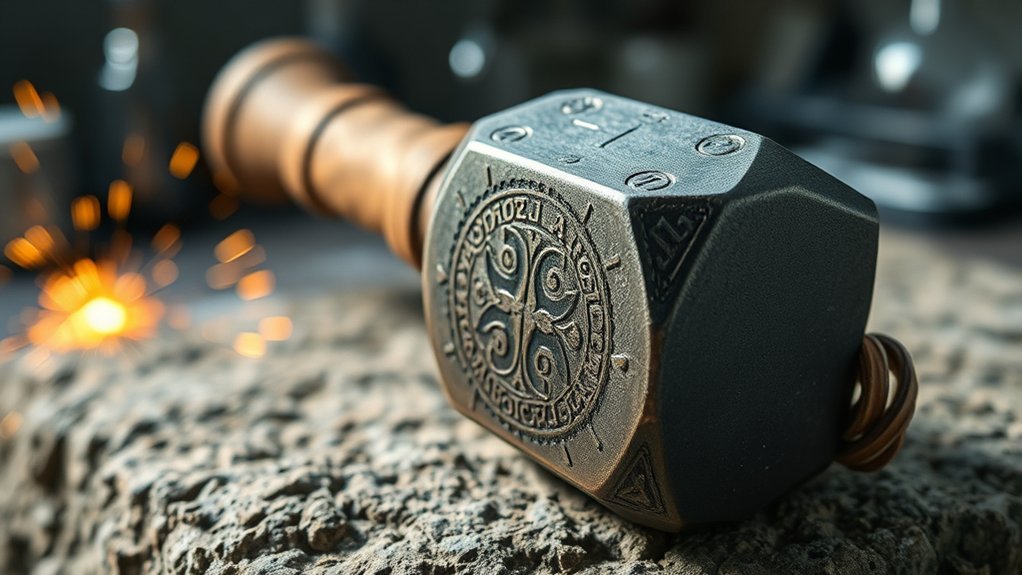
While fictional materials inspired by Mjölnir capture the imagination, real-world science approaches the hammer’s legendary indestructibility with a different lens. You’ll find that subtopic idea one, the study of extreme material strength, helps explain why Mjölnir’s durability fascinates researchers.
Scientists examine metals and alloys that push physical limits, like tungsten or titanium, to understand how something might resist deformation or fracture under intense forces. Subtopic idea two involves atomic bonding and crystal structure, which play crucial roles in a material’s resilience.
Although no known material matches Mjölnir’s mythic invulnerability, these scientific principles guide your understanding of what “indestructible” could mean practically. By analyzing these factors, you gain insight into why Thor’s hammer remains a unique symbol of strength beyond current material capabilities.
Mjölnir’s Material in Modern Movies and Media
What makes Mjölnir’s material so captivating in modern movies and media? You see, filmmakers blend mythic metallurgy with visual storytelling to make the hammerhead legends resonate powerfully. When you watch Thor wield Mjölnir, you’re not just seeing a weapon; you’re witnessing the embodiment of ancient craftsmanship reimagined through CGI and narrative.
Here’s why it stands out:
- Mythic Metallurgy Visualization: Movies depict Mjölnir forged from rare, otherworldly metals, emphasizing its unique, indestructible nature.
- Symbolic Hammerhead Legends: The hammerhead’s design evokes Norse mythology, anchoring the weapon in cultural depth.
- Narrative Enhancement: Media uses Mjölnir’s material to symbolize worthiness, linking its composition to Thor’s heroic journey.
This blend keeps Mjölnir’s material both legendary and tangible for audiences today.
Why Mjölnir’s Material Shapes Its Legendary Power
Why does Mjölnir’s material play such a crucial role in defining its legendary power? You see, the hammer’s mythic metallurgy isn’t just about strength—it embodies divine essence. Forged from the rare metal uru, Mjölnir’s composition links directly to its unstoppable force and enchantments.
This unique material enhances its hammer symbolism, representing protection, destruction, and worthiness.
| Material Aspect | Symbolic Meaning | Functional Impact |
|---|---|---|
| Uru Metal | Divine origin | Indestructibility |
| Enchanted Alloy | Magical power | Energy channeling |
| Lightweight Core | Swift wielding | Enhanced combat agility |
Understanding Mjölnir’s material helps you grasp why it transcends ordinary weapons. Its very makeup shapes its mythic legacy and power.
Frequently Asked Questions
Can Anyone Lift Thor’s Hammer Besides Thor?
You can’t lift Thor’s hammer unless you’re worthy, as enchantments enforce this. Two word ideas1 like strength alone won’t help.
Two word ideas2 such as worthiness and honor determine who can wield it, not just power.
How Does Mjölnir Return to Thor After Being Thrown?
Like a boomerang guided by magic, Mjölnir’s return relies on Thor’s hammer physics. An enchanted force pulls it back to his hand instantly after being thrown, ensuring it never strays from its rightful wielder’s grasp.
Are There Any Real-Life Replicas of Mjölnir?
You can find real life replicas of Mjölnir crafted with impressive detail, honoring the hammer mythology. These replicas often use metal and leather, serving as both collector’s items and symbols of Norse cultural heritage you can proudly display.
What Powers Does Mjölnir Grant Its Wielder?
You gain immense strength, control over lightning, and the power to summon storms through Mjölnir’s hammer metallurgy and enchantment mechanics. These channel divine energy and ensure only the worthy can wield its devastating, mythical force.
How Has Mjölnir Influenced Modern Pop Culture?
You’ll see Mjölnir’s pop culture impact everywhere, symbolizing power and protection through mythic symbolism. It shapes comics, movies, and fashion, connecting ancient lore with modern storytelling and inspiring countless adaptations across media.
Conclusion
You can’t underestimate the mighty material making Mjölnir magical. Forged from uru, a unique, unbreakable alloy, it channels cosmic currents and commands celestial storms. This divine design delivers durability, dynamism, and divine dominance, distinguishing it from mere mortal metals.
Whether in myth, movies, or modern media, Mjölnir’s mystical metal molds its legendary legacy. It merges mythic might with masterful metallurgy to maintain Thor’s thunderous throne forever. The secret behind Thor’s hammer lies in the extraordinary composition of uru, the very essence of what makes Thor’s hammer so powerful.