When you need a dead blow hammer that delivers controlled force without the typical rebound, it becomes your go-to tool. Its hollow head, partially filled with loose steel shot, absorbs impact energy and reduces bounce, allowing for precise strikes.
This design minimizes damage to delicate surfaces and enhances accuracy. Understanding how this tool works and when to use it can greatly improve your metalwork and assembly tasks—so let’s explore what sets it apart.
What Is a Dead Blow Hammer and How Does It Work?
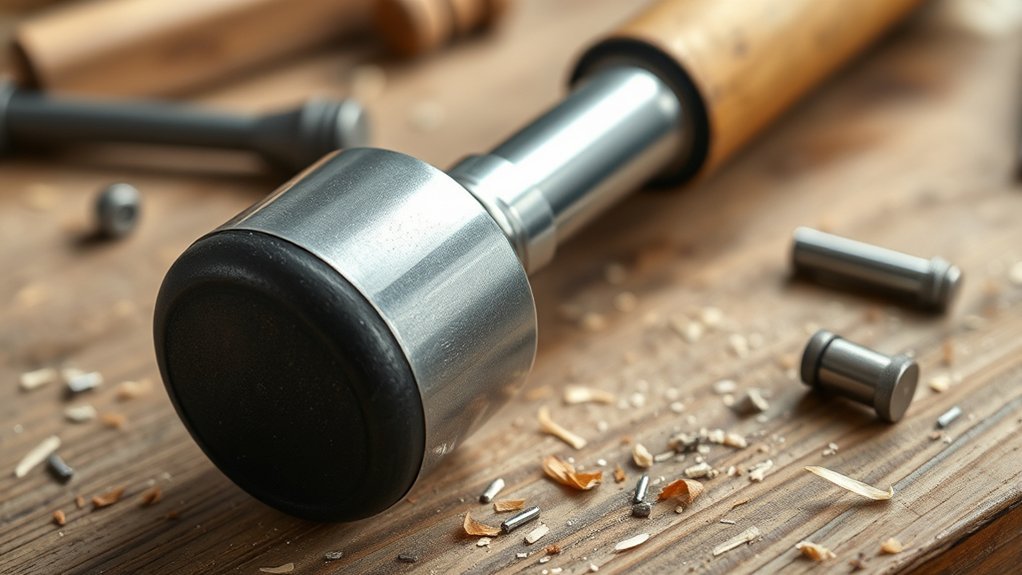
How does a dead blow hammer differ from a traditional hammer? Unlike standard hammers, a dead blow hammer features a hollow head filled with materials like steel shot or sand. This design allows the energy from your strike to be distributed more evenly, reducing rebound considerably.
When you swing a dead blow hammer, the internal filling shifts, absorbing impact forces and preventing the hammer from bouncing back upon contact. This rebound reduction enhances control and minimizes damage to the work surface.
You’ll find that the dead blow hammer delivers a more efficient transfer of force, making it ideal for precision tasks where controlled strikes are essential. Its specialized construction sets it apart by combining impact absorption and force delivery in one tool.
Why Dead Blow Hammers Reduce Rebound and Damage
You’ll notice that a dead blow hammer minimizes rebound thanks to its internal design mechanics, which control the movement of loose material inside the head. This setup absorbs energy during impact, preventing it from bouncing back.
Internal Design Mechanics
Why do dead blow hammers minimize rebound and prevent surface damage? It’s their internal design mechanics at work. Inside the hammer head, you’ll find a cavity partially filled with loose steel shot or sand.
When you strike, this material shifts, absorbing and redistributing kinetic energy. This controlled energy transfer reduces hammer rebound, enhancing hammer safety by preventing accidental slips or mishits.
Additionally, the design limits the peak impact force, protecting the struck surface from damage. The hammer’s ergonomic handle complements this by reducing vibration and user fatigue, improving tool ergonomics.
Understanding these mechanics helps you appreciate how dead blow hammers deliver precise strikes while minimizing unwanted bounce and surface impact, making them essential for tasks requiring controlled force and safety.
Energy Absorption Techniques
The unique internal design of dead blow hammers directly influences their energy absorption capabilities. By housing loose steel shot or sand inside a hollow head, the hammer dissipates kinetic energy during impact.
This design minimizes rebound, reducing damage to both the tool and the workpiece. As you strike, the internal material shifts, absorbing shock and preventing the hammer from bouncing back.
| Feature | Benefit |
|---|---|
| Internal loose shot | Absorbs and dissipates energy |
| Hollow head | Allows material movement |
| Reduced rebound | Enhances control and precision |
| Shock absorption | Protects workpiece integrity |
| Consistent impact | Improves efficiency |
With these energy absorption techniques, a dead blow hammer delivers controlled, powerful strikes without damaging your materials.
Impact Force Distribution
When you strike with a dead blow hammer, its internal materials shift to spread the impact force evenly across the surface, considerably reducing rebound. This impact distribution is achieved by the loose steel shot or sand inside the hammerhead, which moves forward upon impact.
This movement extends the contact time between the hammer and the target, allowing the force to be delivered more gradually and uniformly. By controlling rebound, the hammer minimizes the risk of damage to both the workpiece and the user’s hand.
Unlike traditional hammers, which deliver a sharp, concentrated blow followed by a strong rebound, dead blow hammers dissipate kinetic energy internally. This mechanism ensures precise strikes and reduces the chance of surface marring, making them ideal for sensitive or delicate applications requiring controlled force application.
Key Features That Make Dead Blow Hammers Unique
How do dead blow hammers deliver such controlled impact without rebounding? They utilize internal mechanisms that absorb and redistribute energy, providing superior rebound control. This unique feature minimizes bounce-back, improving precision and safety during use.
| Feature | Function |
|---|---|
| Rebound Control | Reduces hammer bounce for accuracy |
| Energy Distribution | Spreads impact to prevent damage |
| Weight Efficiency | Maximizes force with minimal effort |
Materials and Construction of Dead Blow Hammers
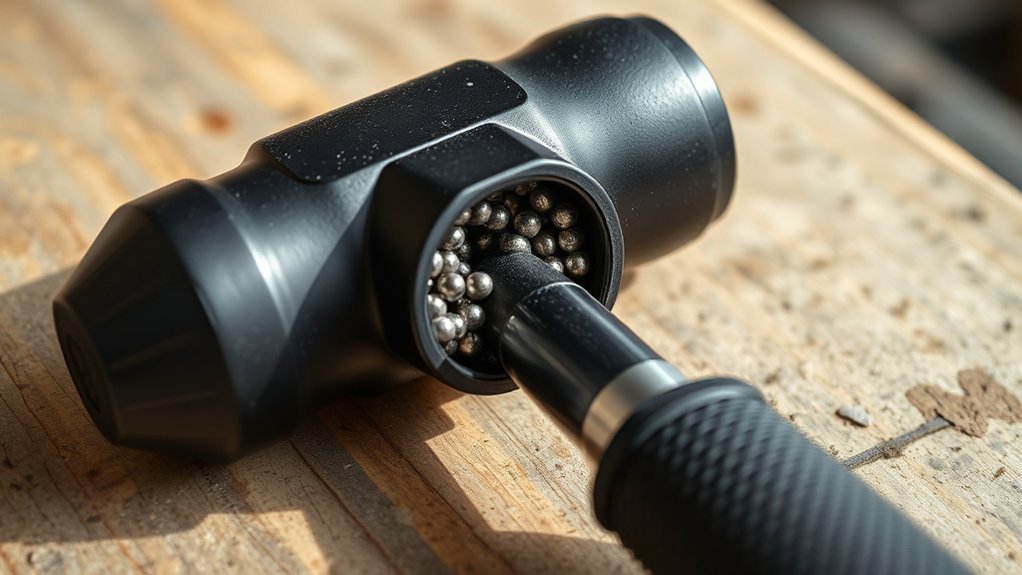
You’ll find dead blow hammers commonly made from materials like steel, rubber, or polyurethane to optimize durability and impact absorption. Inside, they feature a hollow head filled with loose steel shot or sand, which controls rebound and delivers consistent force.
Understanding these materials and internal designs helps you choose the right hammer for precision work.
Common Hammer Materials
What materials make dead blow hammers so effective? Typically, dead blow hammers use high-density plastic or rubber for the striking face, which absorbs impact and reduces rebound.
The handle often consists of fiberglass or reinforced nylon to enhance hammer ergonomics, minimizing user fatigue and improving control. These materials contribute significantly to metalworking safety by reducing the risk of slipping or accidental damage.
Some models incorporate steel or aluminum for added weight, but with a non-marring surface to protect delicate workpieces. The combination of durable, shock-absorbing materials and ergonomic design ensures you get precise strikes without harmful vibrations.
Selecting the right material directly influences the hammer’s performance and your safety during use, making it essential to understand these common materials before choosing a dead blow hammer.
Internal Construction Design
The effectiveness of dead blow hammers stems not only from their external materials but also from their internal construction. When you examine these tools, you’ll notice the design focuses on controlled energy transfer and minimizing recoil. Key aspects include:
- Weight distribution: The hammerhead contains loose steel shot or sand that shifts upon impact, optimizing force delivery and reducing rebound.
- Internal cavity: This hollow space inside the head allows filler materials to move freely, enhancing shock absorption and ensuring consistent strikes.
- Aesthetics considerations: Although primarily functional, manufacturers carefully design the internal structure to maintain a balanced look and ergonomic feel.
Understanding these design elements helps you appreciate how a dead blow hammer delivers precision and durability in demanding applications.
When to Choose a Dead Blow Hammer Over a Regular Hammer
When should you opt for a dead blow hammer instead of a regular hammer? Choose a dead blow hammer when you need controlled force with minimal rebound, especially on delicate or precision components. This tool’s internal design reduces vibration, preventing damage and improving accuracy.
Debunking myths, it’s not just for avoiding surface marring; the dead blow hammer excels in situations requiring consistent impact without shock to the workpiece. Consider alternative uses like assembling tight-fitting parts or adjusting machinery where excess force from a regular hammer could cause misalignment or damage.
If you need a tool that delivers powerful strikes while maintaining control and reducing operator fatigue, a dead blow hammer is your better choice over a traditional hammer.
Common Workshop Applications for Dead Blow Hammers
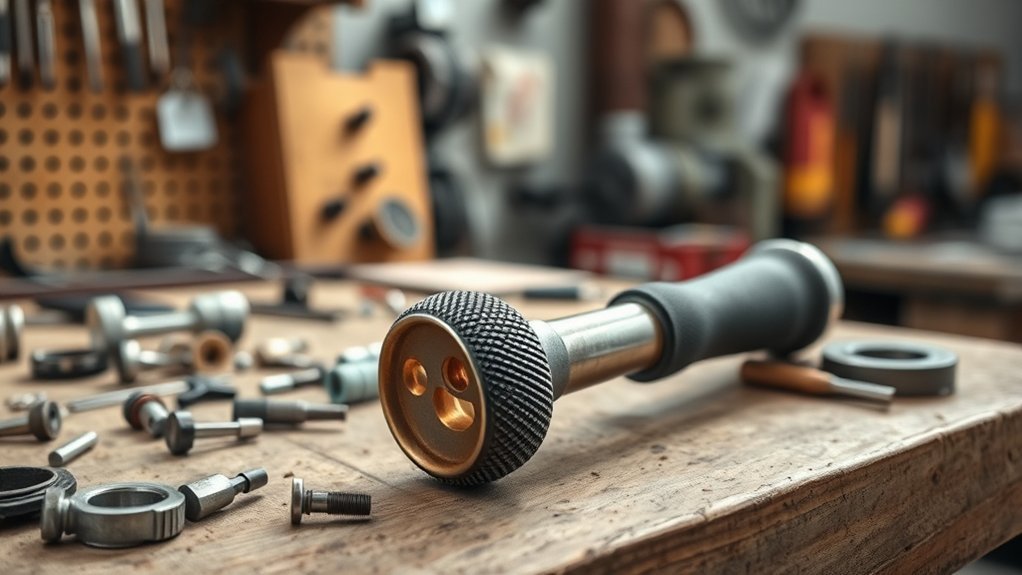
Dead blow hammers find extensive use in workshops where precision and control are essential. When you choose selection criteria for your hammer, understanding its common applications helps avoid weight distribution issues that can affect performance.
Dead blow hammers are essential tools for precision work, where proper weight distribution ensures optimal performance.
Here are three typical uses:
- Assembly Work: You’ll use dead blow hammers to fit parts together without damaging surfaces, as their controlled impact prevents marring.
- Metal Fabrication: They efficiently shape or align metal components, reducing rebound and improving accuracy.
- Automotive Repair: These hammers help you loosen or fit parts where a traditional hammer’s force might cause damage.
Practical Tips for Using Dead Blow Hammers Effectively
How can you maximize the effectiveness of a dead blow hammer in your tasks? First, always ensure your grip is firm but relaxed to maintain control and reduce user fatigue. Position the hammer perpendicular to the striking surface to deliver maximum impact force.
Avoid swinging with excessive speed; the dead blow hammer’s internal design absorbs rebound, so measured strikes produce optimal results. Focus on accuracy rather than power, as this minimizes damage and improves efficiency.
When engaging in hammer usage, select the appropriate hammer size and weight according to the job to prevent overstriking or insufficient force. Lastly, use smooth, consistent strokes to leverage the dead blow hammer’s energy transfer, ensuring controlled and precise strikes in assembly, disassembly, or delicate surface adjustments.
How to Care for and Maintain Your Dead Blow Hammer
Maximizing the effectiveness of your dead blow hammer means paying close attention to its upkeep. Proper care and maintenance not only extend its lifespan but also ensure safety considerations are met during use. Follow these key steps:
Maintaining your dead blow hammer boosts longevity and safety for optimal performance in every use.
- Clean Regularly: Remove debris and dust after each use with a damp cloth to prevent buildup that can affect performance. Avoid harsh chemicals that may degrade materials.
- Inspect for Damage: Check the hammer’s head and handle for cracks, dents, or looseness. Early detection prevents accidents and maintains tool integrity.
- Store Properly: Keep the hammer in a dry, temperature-controlled environment. Avoid exposure to moisture and extreme temperatures that can compromise the hammer’s components.
Adhering to these practices guarantees your dead blow hammer remains reliable and safe for all your projects.
Frequently Asked Questions
Can a Dead Blow Hammer Be Used for Woodworking?
Yes, you can use a dead blow hammer for woodworking. It offers excellent vibration reduction and durability, letting you apply controlled force without damaging wood surfaces. This makes it ideal for assembling joints and delicate woodworking tasks.
Are Dead Blow Hammers Safe for Delicate Electronics?
You shouldn’t use dead blow hammers on delicate electronics due to safety considerations; their force can damage sensitive components. Instead, opt for precision tools designed specifically to protect fragile electronic parts during handling or repair.
How Heavy Should a Dead Blow Hammer Be for Automotive Work?
You’ll want a dead blow hammer weighing 1.5 to 3 pounds for automotive work, balancing heavy hammer impact and vibration reduction.
Alloy construction guarantees hammer balance, improving arc impact control. Dead blow hammers outperform clutching tools in precision and force.
Can Dead Blow Hammers Replace Mallets in Construction?
You can’t fully replace mallets with dead blow hammers in construction. Their two word discussion idea, impact control, differs from mallets’ two word discussion idea, surface protection. Use each tool based on material sensitivity and task precision.
Do Dead Blow Hammers Work Well in Cold Weather?
You might be surprised. Dead blow hammers do perform well in cold weather, thanks to resilient material choices like polyurethane and steel shot. Their cold weather performance stays consistent, minimizing rebound and ensuring precise, controlled strikes even in freezing conditions.
Conclusion
Now that you know how a dead blow hammer controls impact with precision, imagine the difference it could make in your next project. You’re not just reducing rebound—you’re protecting your work, improving accuracy, and mastering delicate tasks with confidence.
Ready to elevate your craftsmanship? Understanding when and how to use this tool could transform your approach.
Don’t just hammer—strike smart. Your next level of precision is within reach with a dead blow hammer.