If you want to understand where hammer sharks live, you need to contemplate their global presence in warm temperate to tropical waters. You’ll find them mainly along continental shelves, island chains, and offshore reefs, favoring coastal zones like coral reefs and mangroves.
They generally stay within shallow depths but occasionally venture deeper for food. These habitat choices influence their behavior and survival in ways you might not expect.
Global Distribution of Hammer Sharks
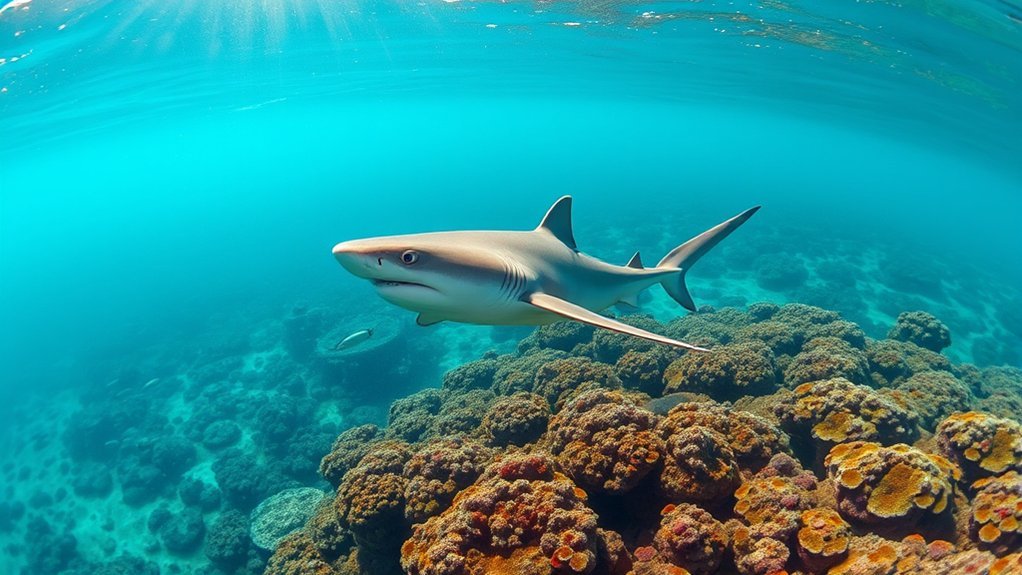
The global distribution of hammerhead sharks spans warm temperate and tropical waters across the world’s oceans. You’ll find hammer distribution concentrated mainly along continental shelves, island chains, and offshore reefs where water temperatures range between 20°C and 30°C.
These sharks exhibit specific reef depth dynamics, typically occupying depths from the shallow subtidal zones down to around 80 meters. This vertical range allows them to exploit diverse prey while avoiding lower oxygen levels found in deeper waters.
Hammerheads also display seasonal migrations corresponding to shifts in water temperature and prey availability. By understanding these distribution patterns, you can better appreciate how hammerheads adapt to varying marine environments, balancing the need for suitable thermal conditions and prey resources within their preferred reef and coastal ecosystems.
Preferred Coastal and Coral Reef Habitats
Understanding where hammerhead sharks choose to spend their time within these temperature and depth ranges helps clarify their ecological roles. You’ll find hammerheads primarily inhabiting coastal zones rich in biodiversity, such as mangroves and estuaries, where they exploit abundant prey.
They also frequent coral reef habitats, which act as critical hunting grounds influencing reef fish dynamics. These sharks regulate populations of mid-sized predatory fish, maintaining ecological balance. You’ll observe them navigating complex reef structures, leveraging sensory adaptations to detect prey amid coral formations.
Their presence enhances ecosystem resilience by promoting species diversity. By studying their habitat preferences, you’ll better grasp how hammerhead sharks contribute to sustaining coastal biodiversity and the intricate trophic interactions within coral reef communities.
Why Hammer Sharks Head to Deeper Waters
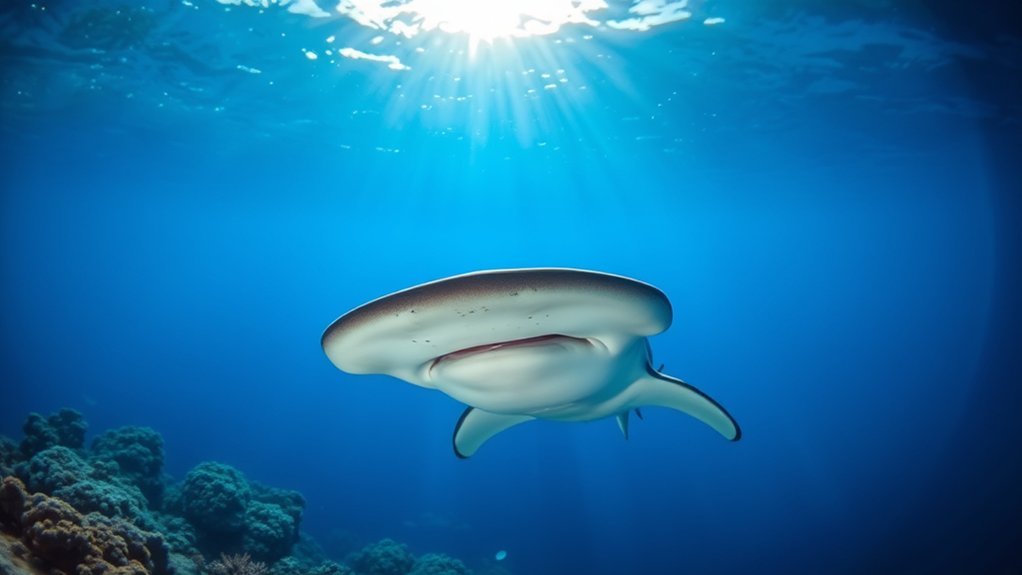
Why do hammerhead sharks venture into deeper waters despite their affinity for coastal and reef habitats? You’ll find that changes in habitat depth directly influence their movement patterns.
Deeper waters offer distinct advantages linked to prey availability and environmental conditions. Specifically, hammer sharks head deeper to:
Deeper waters provide hammerhead sharks access to abundant prey and favorable environmental conditions.
- Access abundant prey species like squid and small fish that thrive at greater depths.
- Exploit cooler temperatures that may enhance their metabolic efficiency.
- Avoid predators or competition concentrated in shallower zones.
These factors combine to make deeper waters a vital part of their range, allowing hammerheads to optimize feeding opportunities and survival. Understanding how they use varying habitat depths reveals the complexity of their ecological needs beyond coastal reefs.
How Habitat Shapes Hammer Shark Behavior
Hammerhead sharks adjust their behaviors in direct response to the characteristics of their habitats, whether in shallow reefs or open ocean. You’ll notice that in complex reef environments, habitat effects drive these sharks to rely heavily on their cephalofoil’s enhanced sensory organs for navigating tight spaces and locating prey.
This adaptation influences their hunting techniques, allowing them to exploit specific niches. In contrast, in open ocean habitats, hammerheads modify their swimming patterns to optimize energy efficiency during long-distance travel, affecting predator-prey dynamics by enabling them to encounter different prey species.
Understanding these habitat effects helps you see how environmental variables directly shape hammer shark behavior, influencing feeding, movement, and social interactions, all critical for their ecological role within marine ecosystems.
Habitat’s Role in Hammer Shark Survival
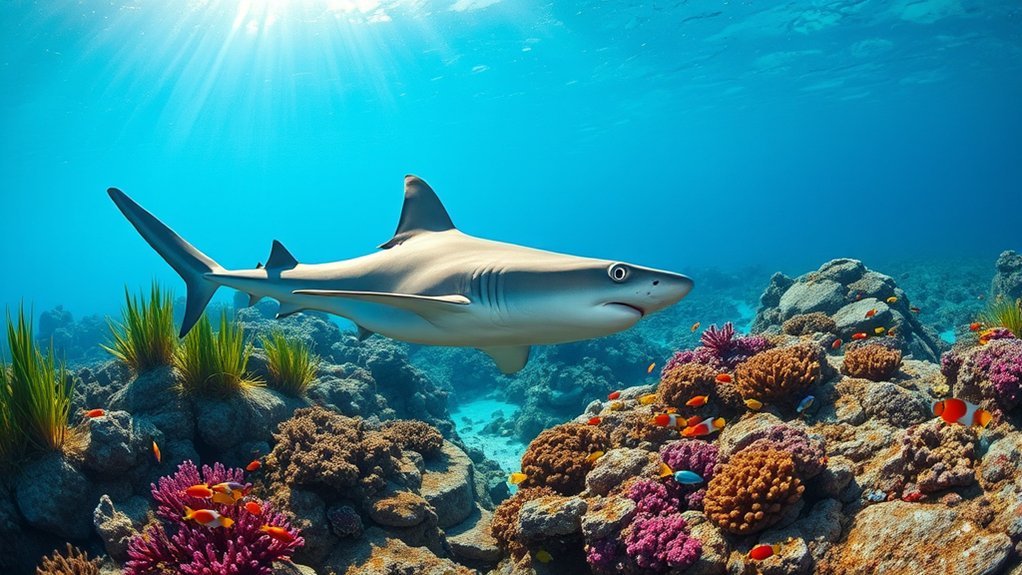
Many factors within a shark’s habitat directly impact its survival, from prey availability to shelter and water conditions. You need to understand habitat dynamics to appreciate how hammer sharks thrive. Their survival hinges on the balance between environmental factors and predator prey interactions.
For example, changes in water temperature or salinity can alter where prey congregates, directly influencing hunting success. Key aspects affecting hammer shark survival include:
- Availability of diverse prey species for balanced nutrition
- Presence of reef structures or seagrass beds offering shelter from predators
- Stable water quality parameters supporting physiological functions
Frequently Asked Questions
What Do Hammer Sharks Eat?
You’ll find hammer sharks feeding primarily on crustaceans, mollusks, and small fish. Their habitat preferences influence their feeding behavior, as they use their uniquely shaped heads to detect prey on ocean floors within coastal and continental shelf environments.
How Long Do Hammer Sharks Live?
You won’t find hammer sharks living forever, but they can live up to 25 years. Despite habitat myths, their migration patterns reveal precise, scientifically confirmed lifespans.
These lifespans help you understand their role in marine ecosystems.
Are Hammer Sharks Dangerous to Humans?
You shouldn’t worry; hammer sharks aren’t dangerous to humans. Despite habitat myths, human encounters rarely provoke aggression.
They prefer shallow coastal waters, staying cautious and avoiding conflict, making attacks extremely uncommon and generally non-threatening.
How Do Hammer Sharks Reproduce?
You’ll find hammer sharks reproduce via ovoviviparity, where embryos develop inside eggs in the mother. Their mating behaviors involve complex rituals, influenced by habitat comparison, as environmental factors shape reproductive timing and success.
What Are the Main Threats to Hammer Sharks?
You’ll find that fishing pressure and habitat degradation pose major threats to hammer sharks, disrupting their habitat preferences and feeding ecology. These sharks rely on specific coastal environments rich in prey species for survival and reproduction.
Conclusion
Like a skilled navigator using a compass, you’ll find hammer sharks expertly maneuvering warm coastal waters, coral reefs, and estuaries worldwide. Their habitats, from shallow subtidal zones to depths around 80 meters, influence their hunting, migration, and survival strategies.
By understanding these environments—shaped by temperature, prey availability, and water quality—you appreciate how habitat intricately controls hammer sharks’ behavior and ecological role. This deep connection to their surroundings ensures their persistence across diverse marine landscapes.
Ultimately, the specific places where hammer sharks live play a crucial role in shaping their life and survival.