If you’re dealing with water hammer—the sudden banging noise in your pipes—it’s important to address it before it causes damage. You’ll need to shut off your main water supply, drain the lines, and pinpoint where the noise is coming from.
Installing the right arrestors or air chambers and securing your pipes correctly can make a big difference. But there’s more to consider to fully stop those pressure surges. Taking these steps will help protect your plumbing system and reduce noise effectively.
What Causes Water Hammer
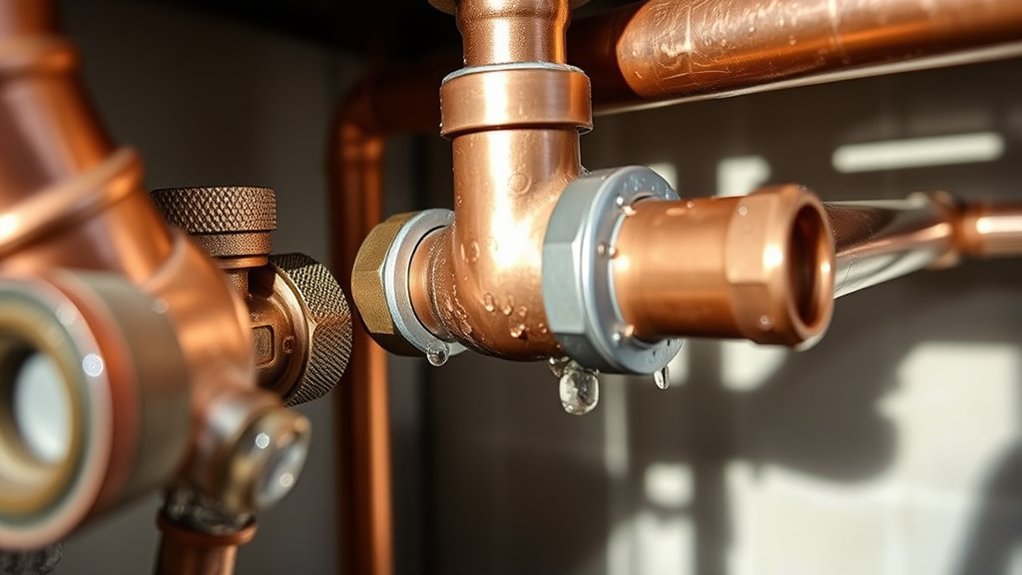
What causes water hammer, and why does it create such a loud knocking noise in your pipes? It happens when water flow suddenly stops or changes direction, causing a pressure surge.
That surge makes the pipes bang against walls or fittings. To understand this, you need to know how to diagnose plumbing issues accurately.
Many water hammer myths suggest it’s due to faulty pipes or poor installation, but in reality, it’s the rapid valve closure that triggers the shockwave. Knowing this helps you avoid unnecessary repairs.
The key is identifying the source of the sudden stoppage, usually quick-closing valves like those on washing machines or dishwashers. Once you grasp this cause, you can focus on effective fixes rather than chasing common misconceptions.
How to Tell If You Have Water Hammer
Recognizing water hammer starts with listening for the telltale loud banging or knocking noises in your pipes, especially right after a valve closes quickly. These sounds occur when water’s momentum suddenly stops, causing pressure surges inside your plumbing.
You might also notice vibrations or rattling in the pipes as the sound diverging from the impact travels through your system. If you hear these noises frequently when turning off faucets or appliances, it’s a strong sign of water hammer.
Additionally, pay attention to any unusual pipe movement or leaks, as persistent pressure surges can damage fittings over time. Identifying these symptoms early helps you address the problem before it leads to costly repairs or pipe failure.
How to Safely Shut Off Water Before Fixing
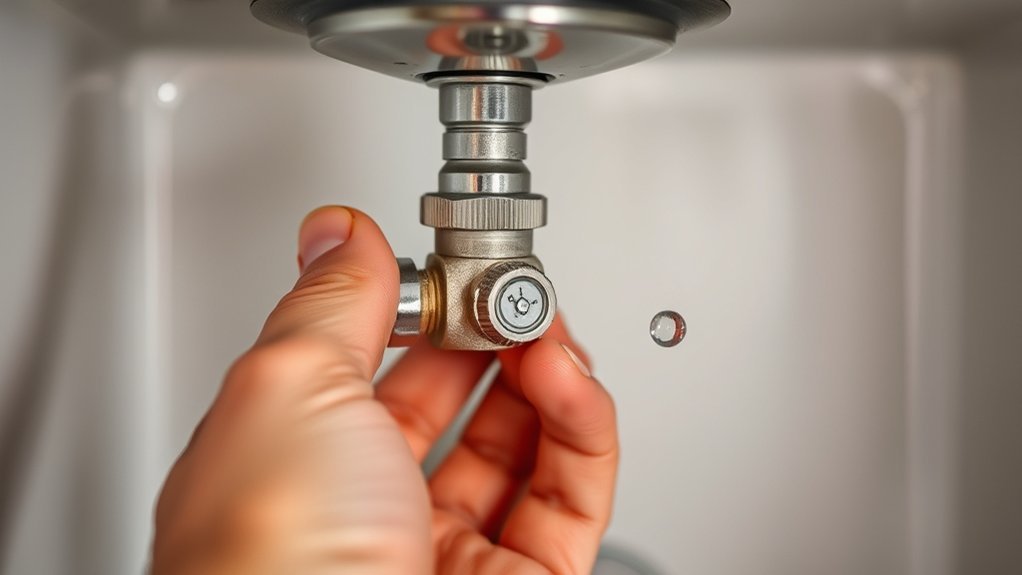
Before you start fixing water hammer, how do you safely shut off your water supply? First, locate your home’s main water shutoff valve, usually near the water meter or where the main line enters your house. Turn the valve clockwise to stop the water flow completely.
This safe shutdown prevents sudden pressure surges and protects your plumbing while you work. Next, open a faucet at the lowest point in your home to drain any remaining water in the pipes.
Understanding water hammer basics means knowing that shutting off the water supply correctly is crucial; it eliminates the risk of water damage and ensures a smooth repair process. Always double-check the valve is fully closed before proceeding with any fixes.
Installing Water Hammer Arrestors to Stop the Noise
Wondering how to stop that banging noise in your pipes? Installing arrestors is a reliable solution. Water hammer arrestors absorb the shock wave caused by sudden water flow stops, effectively reducing pipe vibration and noise.
To install arrestors, first shut off your water supply and drain the pipes. Then, mount the arrestor near the fixture causing the noise, typically close to fast-closing valves like dishwashers or washing machines. Make sure to use the correct type and size for your pipe system.
Secure the arrestor to a solid surface to prevent movement, which further reduces vibration. Once installed, turn your water back on and check for leaks. Properly installing arrestors not only stops the noise but also protects your plumbing from damage caused by water hammer.
Preventing Water Hammer With Air Chambers and Pipe Supports
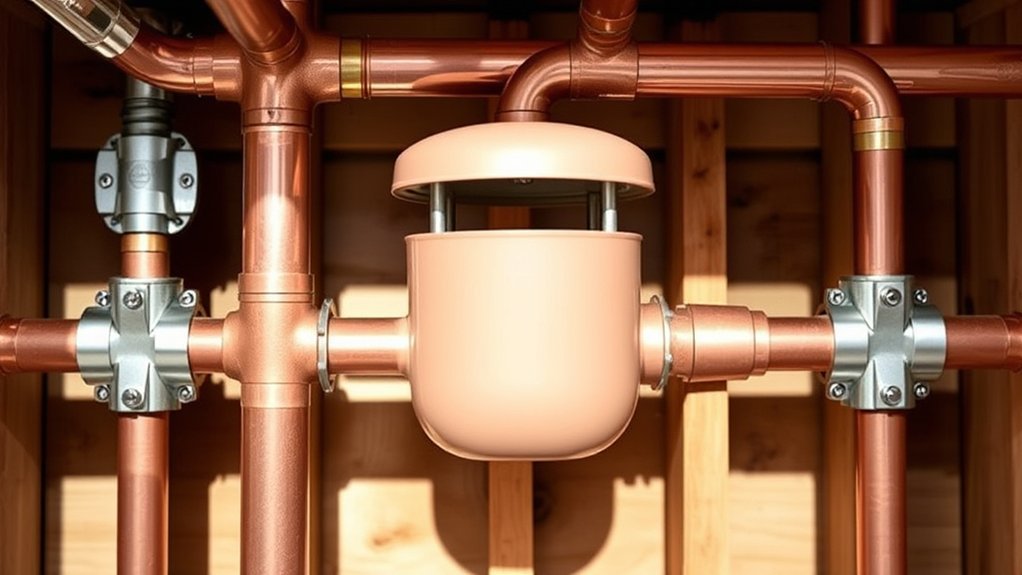
Installing water hammer arrestors helps absorb shock waves, but you can also prevent the problem by using air chambers and properly securing your pipes. Installing air chambers at strategic points cushions sudden water stops, reducing the noise and stress on your plumbing.
Additionally, minimizing pipe vibration is essential to avoid damage and noise caused by loose pipes. To effectively prevent water hammer, focus on:
- Installing air chambers near valves and quick-closing faucets
- Using pipe supports and clamps to secure pipes firmly
- Checking and replacing worn or loose pipe supports regularly
Frequently Asked Questions
Can Water Hammer Damage My Home’s Plumbing Over Time?
Yes, water hammer can cause long term damage to your home’s plumbing by stressing pipes and joints. If you don’t address it, leaks or bursts might develop, leading to costly repairs and water damage.
Are There Specific Tools Needed to Fix Water Hammer?
Need specific tools to fix water hammer? Yes, you’ll use pressure gauges to check water flow, shock absorbers to reduce banging, and a plumber’s wrench to tighten fittings.
These tools make the job efficient and safe.
How Much Does It Typically Cost to Repair Water Hammer?
You can expect repair costs between $100 and $500, depending on cost factors like pipe materials, water pressure, and replacement options such as air chambers, pressure regulators, shock arrestors, or valve replacements.
Warranty coverage and insurance claims may help.
Can Water Hammer Affect Appliances Like Washing Machines?
Yes, water hammer can damage washing machines by causing stress on plumbing pipes and appliance valves. You should address it promptly to prevent leaks, noise, and potential appliance failure. This ensures your machines run smoothly and last longer.
Is Water Hammer Covered by Homeowner’s Insurance?
You won’t find water hammer under a fairy tale’s magical fix; however, your homeowner’s insurance may cover water damage if pipes burst.
Check your policy and understand the insurance claim process to guarantee proper water damage coverage.
Conclusion
Now that you know how to fix water hammer, you can stop those annoying noises and protect your pipes. For example, a homeowner in Ohio installed water hammer arrestors near their washing machine valves and secured loose pipes, eliminating the banging entirely.
Just remember to shut off the water first, drain the lines, and check for leaks after installation. With these steps, you’ll prevent costly damage and enjoy a quieter, safer plumbing system.
By following these simple precautions, you can effectively fix water hammer and maintain the integrity of your plumbing.