You might assume a hammer drill is suitable for all materials, but that’s not entirely accurate. A hammer drill is specifically designed to drill into hard materials like concrete, brick, and stone. While its percussive mechanism excels at penetrating these dense surfaces, using it on softer materials can lead to unnecessary wear and reduced efficiency.
Understanding exactly which materials benefit from a hammer drill’s design is crucial for optimal results and tool longevity. Let’s explore what makes certain materials ideal for this specialized tool.
How a Hammer Drill Works
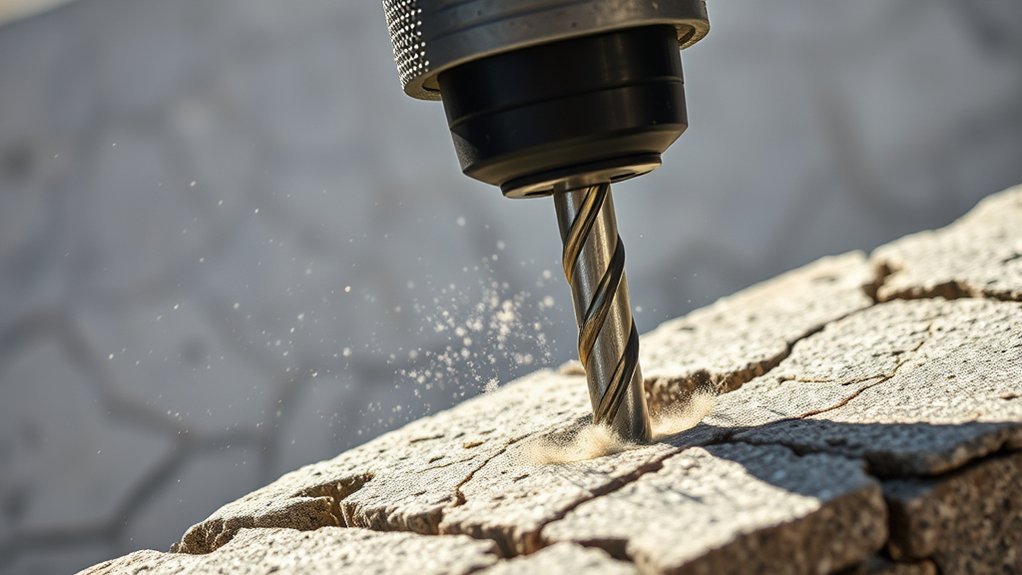
How does a hammer drill operate to efficiently penetrate hard materials? You’ll notice it combines rotary drilling with a rapid hammering action, delivering repeated impacts while the drill bit rotates. This dual motion fractures dense materials, allowing the bit to advance with less force.
Maintaining drill bit balance is crucial; an imbalanced bit can cause vibrations, reducing precision and increasing user fatigue. Additionally, hammer drill ergonomics play a vital role in control and comfort, especially during extended use.
The design typically includes vibration-dampening handles and strategically placed grips, enabling you to maintain steady pressure and accurate drilling angles. By integrating balanced drill bits and ergonomic features, the hammer drill ensures efficient, precise penetration of tough surfaces without compromising user safety or performance.
What Materials Can You Use a Hammer Drill On?
Where do hammer drills perform best regarding material? You’ll find they excel on concrete, brick, and masonry due to their percussive action combined with rotation. These materials demand a drill capable of delivering impact to break through dense surfaces efficiently.
While you can use a hammer drill on softer materials like wood or metal, it’s generally unnecessary and may cause damage. When selecting materials to drill, consider useful safety practices: always wear eye protection and use the correct drill bit to prevent accidents.
Additionally, budget considerations matter. You don’t want to invest in a heavy-duty hammer drill if your projects mostly involve softer materials. Choosing the appropriate tool for your material ensures both efficiency and longevity of your equipment.
Why Hammer Drills Are Best for Hard Materials
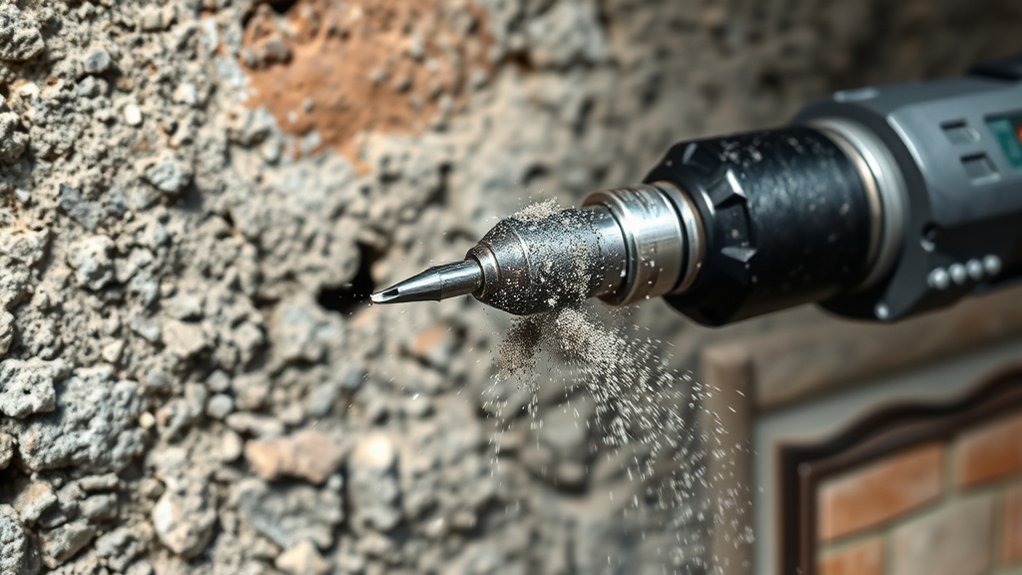
Why do hammer drills outperform standard drills on hard materials? You rely on hammer drills because they combine rotary motion with a rapid hammering action, enabling efficient penetration of tough surfaces. When addressing hammer drill myths, it’s crucial to understand their mechanical advantage.
Here’s why they excel:
- Impact Mechanism: The hammering motion delivers percussive force, breaking up dense materials without excessive pressure.
- Material Compatibility: They’re engineered to handle masonry, brick, and stone, ensuring optimal drilling speed and bit longevity.
- Safety Considerations: Using a hammer drill reduces operator fatigue and the risk of bit slippage, enhancing control and preventing accidents.
Drilling Concrete With a Hammer Drill
When you need to create holes in concrete, a hammer drill offers the necessary force and precision that conventional drills lack. The hammering action combines rapid, short hammer thrusts with rotation, allowing you to penetrate dense concrete efficiently.
The first idea one to consider is selecting a carbide-tipped masonry bit, which ensures durability and effective drilling. Secondly, controlling the drill speed and applying steady pressure prevents bit overheating and prolongs tool life.
By engaging the hammer function, you maximize impact energy transfer, reducing drilling time and effort. Always ensure the drill’s settings match the concrete’s density to optimize performance.
Following these technical guidelines enables you to drill concrete accurately and safely with your hammer drill.
Using a Hammer Drill on Brick and Masonry
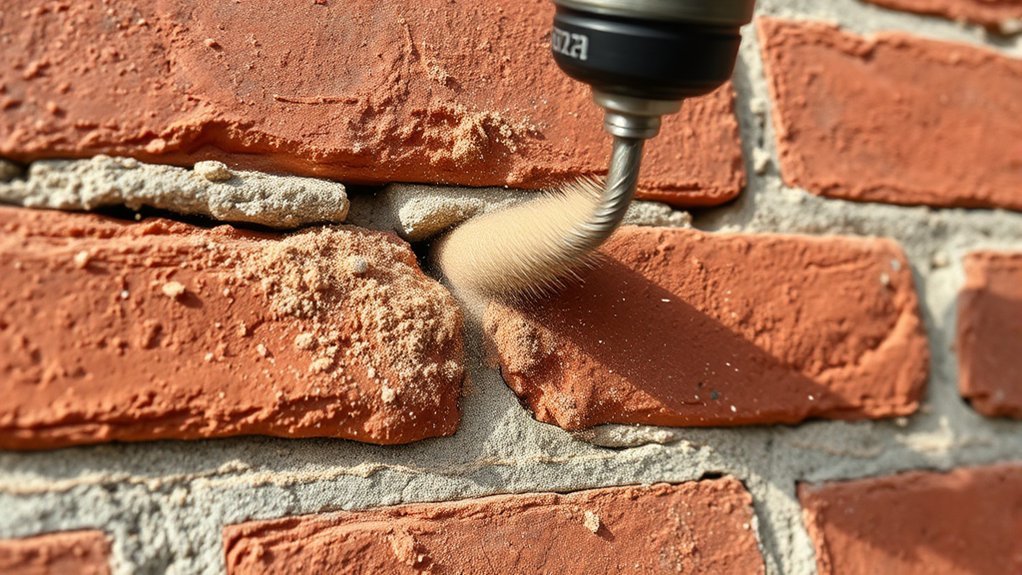
When using a hammer drill on brick and masonry, you should select carbide-tipped masonry bits for optimal performance. Apply steady pressure while allowing the hammer action to do the work, avoiding excessive force that could damage the material.
Additionally, maintain a consistent drilling speed and clear debris frequently to ensure clean, precise holes.
Optimal Bit Types
Which drill bits deliver the best performance on brick and masonry when using a hammer drill? Selecting the optimal bit type is critical for efficiency and durability. Consider these key options:
- Carbide-tipped bits: Engineered for toughness, these bits excel in penetrating dense masonry and brick without rapid wear.
- SDS-plus bits: Designed for hammer drills, they provide secure bit retention and enhanced impact transfer, ensuring precise drilling.
- Rebar-compatible bits: If encountering reinforced concrete or brick with embedded metal, these specialized bits maintain integrity without damage.
These two-word discussion ideas emphasize the importance of matching bit design with material demands. Employing the correct bit type maximizes hammer drill performance, prolongs tool life, and safeguards against bit failure during demanding masonry applications.
Drilling Techniques and Tips
Selecting the appropriate drill bit sets the foundation, but mastering your technique guarantees clean, accurate holes in brick and masonry. When using a hammer drill, apply consistent pressure without forcing the tool. Distinguish cutting vs drilling by allowing the bit to grind rather than slice material.
Always follow safety precautions, including wearing eye protection and securing the workpiece. Pause periodically to clear dust and prevent bit overheating.
| Technique | Recommendation |
|---|---|
| Bit Selection | Use carbide-tipped masonry bits |
| Pressure Application | Moderate, steady pressure |
| Dust Management | Frequent pauses for clearing |
Can You Use a Hammer Drill on Metal?
How effective is a hammer drill when working with metal? Hammer drills are primarily designed for masonry; their percussive action aids in penetrating concrete but complicates metal drilling. When you use a hammer drill on metal, consider these points:
Hammer drills excel in masonry but require adjustments for effective and safe metal drilling.
- Disable the hammer function: Hammer action can damage both the drill bit and metal surface.
- Use appropriate drill bits: Select high-speed steel (HSS) or cobalt bits designed for metal drilling.
- Apply steady pressure and moderate speed: Excessive force or speed generates heat, reducing bit life and drilling accuracy.
How to Drill Wood With a Hammer Drill
Drilling wood with a hammer drill requires disabling the hammer function to prevent unnecessary impact that could damage the material. When using a hammer drill wood, select a sharp, appropriate wood drill bit and maintain steady pressure.
Follow essential safety tips such as wearing protective eyewear and securing the wood piece firmly.
| Step | Description |
|---|---|
| Disable Hammer Mode | Switch off hammer function |
| Choose Bit | Use a wood-specific drill bit |
| Secure Material | Clamp wood to avoid movement |
| Steady Pressure | Apply consistent, moderate force |
| Safety Gear | Wear glasses and gloves |
Adhering to these steps ensures clean, precise holes while preserving both the tool and the wood integrity.
Materials You Shouldn’t Drill With a Hammer Drill
Why should you avoid using a hammer drill on certain materials? Hammer drills are specialized for masonry and concrete; using them on inappropriate materials can cause damage, reduce tool lifespan, and create safety hazards. Disregarding this leads to dangerous myths and the use of irrelevant tools.
Hammer drills are designed for masonry; using them on other materials risks damage, tool wear, and safety issues.
Avoid hammer drilling these materials:
- Wood: The hammering action splinters and damages the wood fibers.
- Metal: The impact can deform the metal and dull drill bits rapidly.
- Drywall and Soft Plastics: These materials crack or shatter under the hammering force.
Using a hammer drill incorrectly compromises precision and safety. Instead, select the appropriate drill type to ensure efficient, safe, and high-quality results. Don’t fall prey to dangerous myths that suggest hammer drills are universal tools.
Frequently Asked Questions
What Safety Gear Is Recommended When Using a Hammer Drill?
You should always wear safety gear, including protective eyewear, heavy-duty gloves, and hearing protection when using a hammer drill. This gear minimizes injury risks from debris, noise, and vibration.
Wearing the right equipment ensures precise and safe operation throughout your task.
How Do You Maintain and Clean a Hammer Drill?
You maintain and clean a hammer drill by regularly removing debris, lubricating moving parts, and inspecting for wear. Avoid urban legends; rely on chalk talk advice from experts to ensure precise, effective upkeep and prolong tool lifespan.
Can a Hammer Drill Be Used for Driving Screws?
You can use a hammer drill for driving screws, but it’s not ideal. Its impact mechanisms are designed for drilling hard materials, and drill bit materials aren’t optimized for screw threads.
This risks damage or inefficiency during fastening.
What Is the Average Lifespan of a Hammer Drill?
You can expect a hammer drill’s average lifespan to range from 3 to 7 years, depending on material durability and how well you maintain motor cooling.
Proper use and regular servicing considerably extend its operational life.
Are Cordless Hammer Drills as Effective as Corded Ones?
Like a racecar on a track, cordless hammer drills match corded ones in power and precision when equipped with advanced battery chemistry and appropriate drill bit types, though rubber matting and dust extraction efficiency might vary slightly.
Conclusion
When you wield a hammer drill, think of it as a powerful chisel carving through stone—best reserved for concrete, brick, and masonry’s tough armor. Using it on softer materials like wood or metal is like trying to sculpt silk with a hammer—inefficient and damaging.
By choosing the right materials and bits, and applying steady, measured pressure, you’ll carve with precision. This approach preserves your tool’s life and ensures every strike hits its mark with maximum impact.
In conclusion, a hammer drill is specifically designed to be drilled with materials such as concrete, brick, and masonry for optimal performance and durability.