Water hammer is more than just a harmless noise; it is a phenomenon caused by a sudden change in water flow that creates a shockwave in your pipes.
This pressure surge can put significant strain on your plumbing system, often in ways you might not immediately notice.
Understanding what triggers water hammer and how it behaves is essential.
This knowledge can help you prevent potential damage or costly repairs down the line.
Taking steps to manage water hammer effectively safeguards your plumbing and extends its lifespan.
What Is Water Hammer and How Does It Happen?
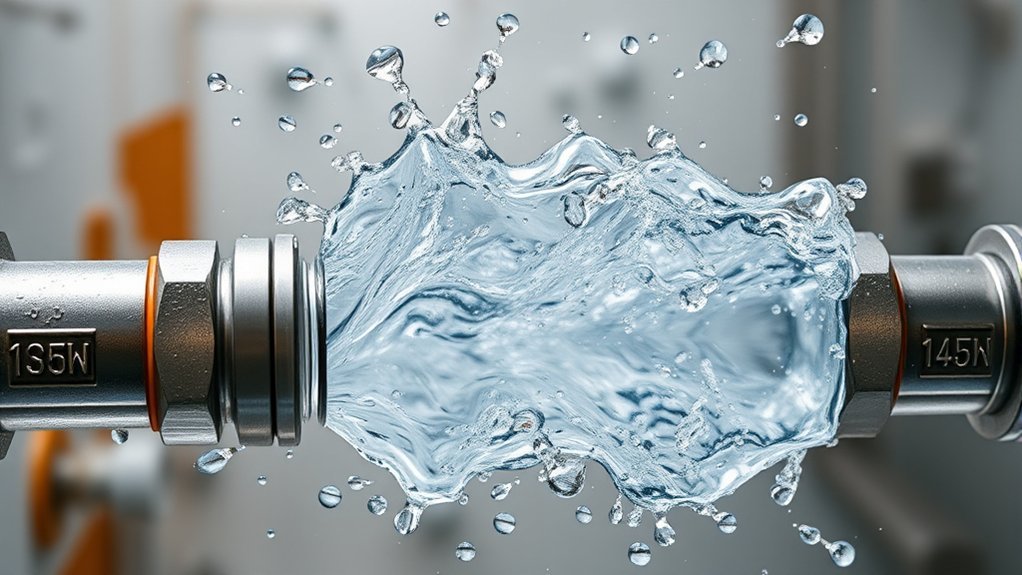
How does water hammer occur in piping systems? It happens when a fluid in motion suddenly stops or changes direction, creating a pressure surge. This shockwave travels through the pipes, causing vibrations and potential damage.
You need to understand that stagnant or stale water exacerbates this effect by promoting pipe corrosion. Corroded pipes lose structural integrity, making them more susceptible to water hammer stresses.
When valves close abruptly, the momentum of moving water generates a rapid pressure rise. This causes pipes to expand and contract quickly, leading to mechanical strain.
If you ignore these dynamics, the repeated impact can cause leaks or pipe bursts. Recognizing how water hammer develops helps you implement appropriate control measures to protect your system from corrosion and mechanical failure.
Why Does Water Hammer Make That Loud Banging Noise?
When you suddenly stop water flow, it creates a high-pressure wave that travels through the pipe. This pressure wave strikes pipe fittings or walls, generating a sharp impact force.
The resulting vibration of the pipe structure produces the loud banging noise you hear.
Sudden Water Flow Stop
The loud banging noise you hear during a water hammer occurs because the sudden stoppage of water flow creates a pressure surge within the pipes. When you abruptly close a valve or tap, the moving water, which had been maintaining a silent flow, encounters an immediate barrier.
This rapid deceleration causes kinetic energy to convert into a pressure spike, transmitting a shockwave through the plumbing system. Unlike the quiet consistency of rocksteady taps, this abrupt halt lacks gradual pressure equalization, resulting in pipe vibrations and loud bangs.
You can think of it as water momentum colliding with a closed valve, generating transient high pressure. Understanding this sudden water flow stop is crucial to grasp why water hammer disrupts otherwise stable, silent flow conditions.
Pressure Wave Impact
Why does water hammer produce such a loud banging noise? When water flowing through kitchen plumbing suddenly stops or changes direction, it generates a high-pressure wave that travels rapidly through the pipes. This pressure wave impacts the pipe walls and fittings, creating a sharp, forceful shock.
According to sound science, this impact causes the pipe material to vibrate briefly, emitting the characteristic banging noise you hear. The intensity of the noise depends on factors like water velocity, pipe length, and material rigidity.
In kitchen plumbing, where pipes often run through confined spaces, the sudden pressure spike reflects multiple times, amplifying the sound. Understanding this pressure wave impact clarifies why abrupt valve closures lead to loud noises and potential pipe stress, emphasizing the need for proper water flow control to minimize damage.
Pipe Vibration Effects
How exactly does water hammer cause pipes to produce such a loud banging noise? When the sudden change in flow velocity generates a pressure wave, it impacts the pipe walls, inducing vibrations. These vibrations translate into the characteristic loud banging sound you hear in household plumbing or irrigation systems. Here’s why:
- Rapid Deceleration: The quick halt of water flow creates a high-pressure surge that pushes against the pipe walls, causing them to oscillate.
- Pipe Material and Mounting: Metal pipes transmit vibrations more efficiently, and loosely secured pipes amplify noise due to increased movement.
- Resonance Effects: The pressure wave frequency can match the pipe’s natural frequency, intensifying vibrations and noise.
Understanding these factors helps you diagnose and mitigate water hammer noise effectively.
How Can You Identify Water Hammer in Your Pipes?
You can identify water hammer by listening for sharp banging noises when valves close suddenly. Check your pipes for visible vibrations or shaking, which indicate pressure fluctuations.
Additionally, frequent surges in water pressure often signal this hydraulic shock within your plumbing system.
Common Noise Indicators
When do you notice sudden banging or knocking sounds coming from your pipes? These noises often signal water hammer, a hydraulic shock phenomenon with both practical and philosophical implications. It highlights the tension between fluid dynamics and human experience, as historical anecdotes reveal.
To identify water hammer through noise indicators, focus on:
- Sharp, repetitive banging immediately after closing a valve or tap, indicating rapid water deceleration.
- Knocking sounds synchronized with specific appliance use, like dishwashers or washing machines, reflecting pressure surges.
- Vibrations accompanied by metallic clanging within pipe walls, signifying shockwave transmission.
Recognizing these auditory signals helps you diagnose water hammer early, preventing structural damage and costly repairs. Understanding these noise patterns connects you to both the technical nature and the broader historical context of fluid mechanics in plumbing systems.
Visible Pipe Vibrations
Auditory cues like banging and knocking often accompany a more visible sign of water hammer: pipe vibrations. When water flow suddenly stops, the momentum creates pressure waves that cause pipes to oscillate.
You can identify these vibrations by observing pipes that visibly shake or move, especially near bends, joints, or unsupported sections. These oscillations directly tie to the mechanics of water hammer.
Spotting the vibrations requires close inspection, as the movement can appear as a random pair of rapid pulses rather than continuous motion. Recognizing these subtle signs helps you diagnose water hammer early, preventing potential pipe damage or joint failure.
Monitoring pipe stability complements noise detection, giving a fuller picture of your plumbing system’s health.
Frequent Water Pressure Surges
How often do sudden spikes in water pressure occur in your plumbing system? These frequent water pressure surges signal potential water hammer issues. To identify them, monitor for:
- Audible banging noises near valves or fittings, especially when shutting off drip irrigation lines or laundry hoses.
- Visible pipe vibrations or movement caused by rapid pressure changes.
- Recurrent damage to flexible connectors like laundry hoses, which can fatigue prematurely under pressure surges.
Such signs indicate pressure waves traveling through the pipes, resulting from abrupt valve closures or pump shutdowns. Paying close attention to these indicators lets you diagnose water hammer accurately and take corrective measures, such as installing water hammer arrestors or adjusting system pressure. Proper identification prevents damage and prolongs the lifespan of your irrigation and laundry plumbing components.
Where Does Water Hammer Usually Happen in Your Pipes?
Where in your plumbing system does water hammer most frequently occur? It typically happens near fast-closing valves, such as those in irrigation systems or washing machines, where abrupt flow stoppage generates pressure surges.
Water hammer most often occurs near fast-closing valves like those in irrigation systems and washing machines.
In new building installations, improperly secured pipes and lack of air chambers amplify these effects. Water hammer often manifests at elbow joints, tees, or valve assemblies where velocity changes sharply.
Your irrigation systems are particularly vulnerable due to solenoid valves cycling rapidly, causing repeated shocks. Additionally, vertical risers and long pipe runs without adequate supports increase the risk by allowing pipe movement.
Understanding these critical locations helps you identify where water hammer stress concentrates, enabling you to anticipate potential damage zones within your plumbing network before failures occur.
What Are Simple Fixes to Prevent Water Hammer at Home?
Since water hammer tends to occur near fast-closing valves and unsecured pipe sections, addressing these specific points can markedly reduce pressure surges. You can implement simple fixes at home by focusing on three key measures:
- Install water hammer arrestors: These devices absorb shock waves, preventing pipe stress.
- Secure loose pipes: Use clamps or brackets to minimize movement and vibration.
- Replace fast-closing valves: Opt for slow-closing or soft-closing valve types to moderate pressure changes.
This two word idea, “pressure control,” is central to mitigating water hammer. Avoid unrelated topic diversions like general plumbing upgrades, as they won’t directly solve the issue. By applying these targeted, analytical steps, you’ll enhance system longevity and reduce noise without unnecessary complexity or expense.
When Should You Call a Professional for Water Hammer Issues?
Why should you consider calling a professional when dealing with water hammer issues? Water hammer can cause significant damage to your plumbing system, and a professional inspection ensures accurate diagnosis and effective solutions.
If you notice persistent banging noises or visible pipe damage, you shouldn’t delay emergency repairs.
| Condition | Recommended Action |
|---|---|
| Loud banging after valve closure | Schedule professional inspection |
| Visible pipe damage or leaks | Call immediately for emergency repairs |
| Temporary fixes fail to resolve | Seek expert evaluation |
| Frequent water hammer occurrences | Arrange comprehensive system assessment |
Relying on a professional helps prevent long-term damage and costly replacements. Their expertise identifies underlying issues that simple DIY fixes might miss, safeguarding your home’s plumbing integrity.
Frequently Asked Questions
Can Water Hammer Damage Appliances Connected to Plumbing?
Yes, water hammer can damage appliances connected to your water supply. The sudden pressure surge creates an appliance impact, stressing internal components and potentially causing leaks or mechanical failure.
This damage can be prevented if devices like arrestors are properly installed to mitigate the pressure surge.
Is Water Hammer More Common in Old or New Homes?
You’ll find water hammer more common in old homes, where 70% use rigid iron pipes prone to shock waves. New homes often have flexible PEX pipes, reducing pipe material susceptibility to water hammer’s damaging pressure surges.
Does Water Hammer Affect Water Pressure Throughout the House?
Yes, water hammer can cause fluctuations in water pressure throughout your house. It may also contribute to pipe clogs by dislodging debris or stressing joints, leading to blockages and inconsistent flow in your plumbing system.
Are There Specific Pipe Materials More Prone to Water Hammer?
You’d think copper pipes could survive a hurricane, but they’re actually more prone to water hammer than PEX systems. PEX pipes flex slightly and absorb shocks, reducing noise and damage. This makes them a smarter choice for durability.
Can Water Hammer Cause Leaks or Pipe Bursts Over Time?
Yes, water hammer can cause leaks or pipe bursts over time if you don’t prioritize leak prevention and optimize pipe design. Proper materials and pressure control minimize stress, ensuring system longevity and avoiding costly damage.
Conclusion
So, you love surprise pipe concerts at 3 a.m.? Water hammer’s your culprit, jolting your plumbing like a caffeine binge. Sure, it’s just physics showing off—momentum meets abrupt stops—but those bangs and vibrations aren’t a quirky feature; they’re stress tests your pipes didn’t ask for.
You can patch it with simple fixes, but ignoring it is like inviting a leak to the party. When in doubt, call a pro before your pipes stage a rebellion. Remember, addressing water hammer promptly can save your plumbing from serious damage.