You might think Thor’s hammer, Mjölnir, is just a simple tool, but it carries a weight of meaning that spans centuries. Known as Mjölnir, this legendary weapon isn’t just a hammer—it’s a symbol forged by mythical dwarves, embodying divine power and protection.
Its story weaves through ancient myths and modern culture alike, revealing layers that go far beyond its striking appearance. Understanding its name is just the beginning.
What Is the Name of Thor’s Hammer and Where Does It Come From?
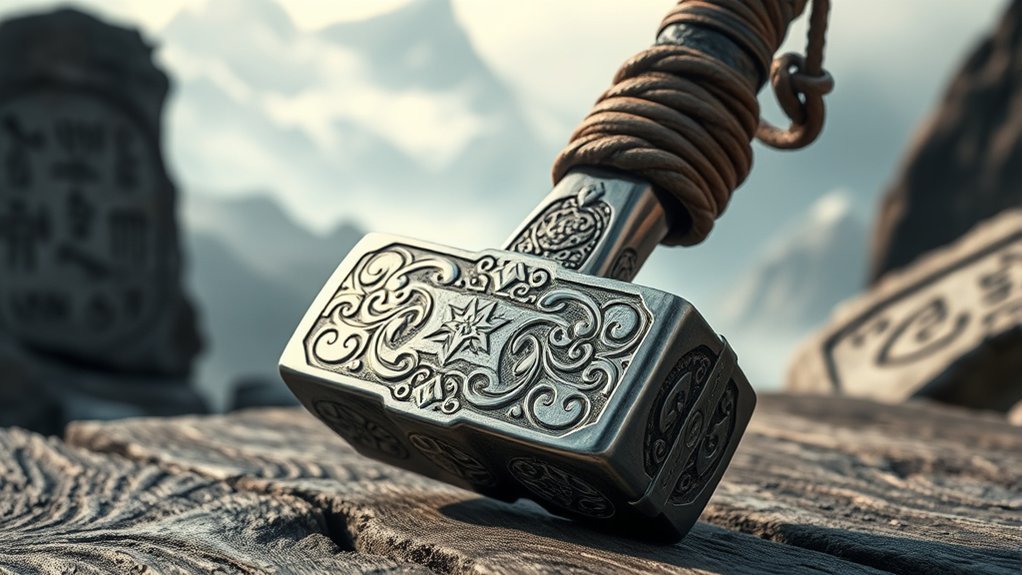
What exactly is the name of Thor’s hammer, and where does it originate? Thor’s hammer is called Mjölnir, a term rooted deeply in Norse mythology origins. This weapon’s name translates roughly to “crusher” or “grinder,” reflecting its immense power.
You’ll find Mjölnir prominently depicted in ancient Norse texts and artifacts, symbolizing protection, consecration, and destruction. Its mythology origins trace back to the blacksmith gods Sindri and Brokkr, who forged it with unmatched craftsmanship.
You should know that the hammer symbolism extends beyond mere weaponry. It represents divine authority and the power to maintain cosmic order.
When you study Mjölnir, you uncover a rich narrative about strength and protection in Norse culture, encapsulating Thor’s role as a guardian of gods and humans alike.
Mythological Significance of Thor’s Hammer
Beyond its name and origin, Mjölnir holds profound mythological significance that shapes much of Norse belief. You recognize it as more than a weapon; it embodies mythic craftsmanship, forged by dwarven smiths, reflecting divine ownership by Thor.
This hammer symbolizes the cosmic order, balancing chaos and protection within Norse cosmology.
| Aspect | Significance |
|---|---|
| Mythic Craftsmanship | Crafted by dwarves from elemental forces |
| Divine Ownership | Exclusively Thor’s, symbolizing his authority |
| Cosmic Role | Maintains order, links gods and humans |
| Ritual Use | Used in blessings, consecrations |
Understanding these facets helps you grasp why Mjölnir remains central to Norse mythology’s spiritual and cultural fabric.
Thor’s Hammer as a Symbol of Power and Protection
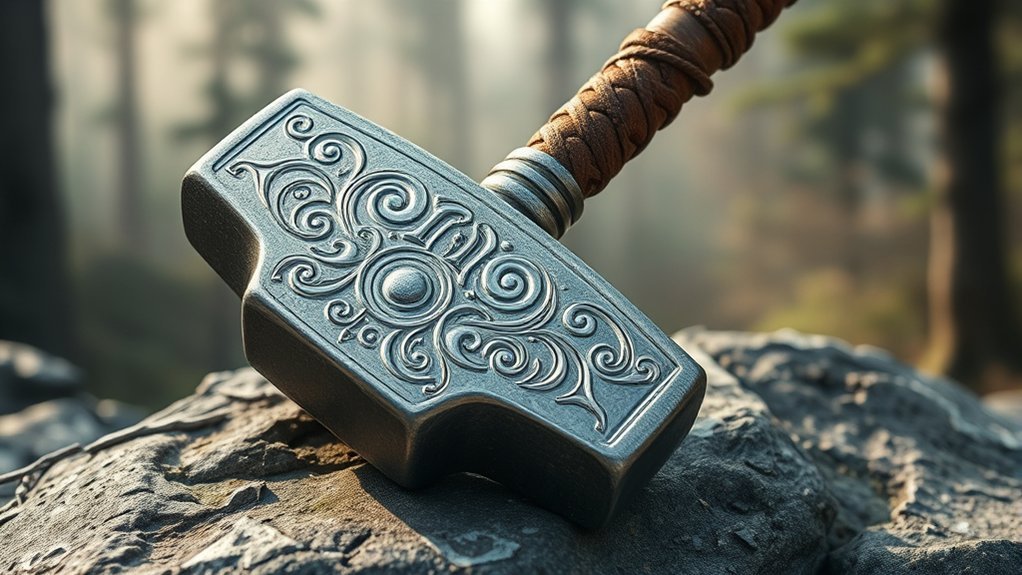
How did Thor’s hammer come to represent such an enduring symbol of power and protection? Its mythic origins lie in Norse mythology, where Mjölnir, forged by dwarven smiths, embodies the god Thor’s strength and ability to defend gods and humans alike.
You’ll find that this hammer symbolizes not only brute force but also the protection of order against chaos. Over centuries, its cultural symbolism expanded beyond mythology, serving as an amulet to guard against harm and evil.
When you wear or see Thor’s hammer, you’re engaging with a powerful emblem that conveys resilience, divine authority, and safety. This deep-rooted symbolism reflects a universal human desire for protection and strength, connecting ancient beliefs with enduring cultural values.
Thor’s Hammer in Modern Popular Culture
The enduring symbolism of Thor’s hammer has found a vibrant place in modern popular culture, shaping how new generations perceive this ancient emblem. When you encounter the thor hammer today, you see it not just as a mythological weapon but as a powerful icon in various media and fashion. Its presence reinforces themes of strength, justice, and protection.
You’ll find the thor hammer reflected in:
- Comic books and blockbuster films, where it defines Thor’s heroic identity.
- Jewelry and clothing, serving as a statement of cultural heritage and personal empowerment.
- Video games, offering players a symbol of power and resilience.
Why Thor’s Hammer Still Captivates Us Today
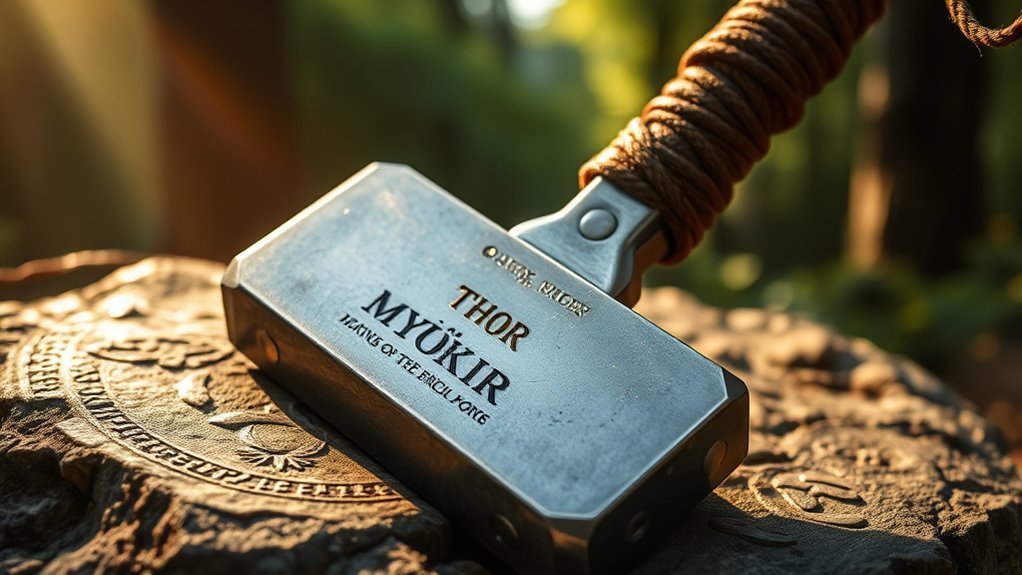
Why does Thor’s hammer continue to resonate so deeply with people across different cultures and generations? Its mythic origins root it in powerful symbolism: strength, protection, and justice. When you hold or see Mjölnir, you connect to ancient narratives that have shaped human understanding of heroism and divine power.
The cultural impact of Thor’s hammer extends beyond mythology into art, jewelry, and media, reinforcing its presence in daily life. You’re drawn to its design and legacy because it embodies resilience and moral authority.
This timeless appeal ensures Mjölnir remains relevant, inspiring modern audiences who seek meaning in symbols that transcend time. Its blend of mythic power and cultural significance keeps you captivated, honoring tradition while adapting to contemporary values.
Frequently Asked Questions
How Heavy Is Thor’s Hammer According to Mythology?
You won’t find a specific mythic weight for Thor’s hammer in mythology, as its power matters more than mass. Cultural depictions emphasize its immense strength and unliftable nature, symbolizing divine authority rather than measurable heaviness.
Can Only Thor Lift the Hammer?
You can only lift the hammer if you possess true hammerworthiness, a rare quality. Thor isn’t the sole bearer; others deemed worthy have lifted it, proving strength alone doesn’t guarantee you can wield this legendary weapon.
What Materials Were Used to Make Thor’s Hammer in Myths?
You’ll find Thor’s hammer forged from mythical metallurgy, combining uru metal and divine craftsmanship. This hammer symbolizes power, protection, and authority, reflecting its supernatural origin and importance in Norse mythology’s cosmic balance and warrior ethos.
Are There Any Famous Stories About Thor Losing His Hammer?
You’ll find Thor losing his hammer in a famous tale where its absence symbolizes vulnerability within his mythical lineage. This loss tests his strength and wits, reinforcing hammer symbolism as power and protection in Norse mythology.
How Is Thor’s Hammer Depicted in Different Cultures?
You’ll find depiction variations of Thor’s hammer across cultures, showing unique artistic styles and symbolic meanings. Cultural adaptations highlight its power differently, from Norse mythology’s intricate designs to modern pop culture’s sleek, iconic representation.
Conclusion
Now that you know Mjölnir isn’t just any hammer but a legendary symbol forged by dwarven smiths, you can appreciate its deep mythological roots and enduring power. It’s more than a weapon—it’s a protector, a blessing, and a link between gods and humans.
Whether in ancient tales or modern culture, Mjölnir’s legacy stands strong, showing that the hammer’s true strength lies in its timeless symbolism of resilience and justice. This is why the name of Thor’s hammer, Mjölnir, remains so significant across generations.