A hammer drill isn’t just a regular drill with extra power; it combines rotary drilling with a rapid hammering action to tackle tough materials like concrete. This powerful tool is designed specifically for heavy-duty drilling tasks that require more than just spinning bits.
You might assume it works like a standard drill, but its unique mechanism delivers repeated impacts while the bit spins, which significantly improves drilling efficiency. Understanding how this tool functions can change the way you approach heavy-duty projects.
Knowing when and how to use a hammer drill will help you choose the right equipment for the task and ensure better results in demanding applications.
Hammer Drill Basics: What It Is and How It Works
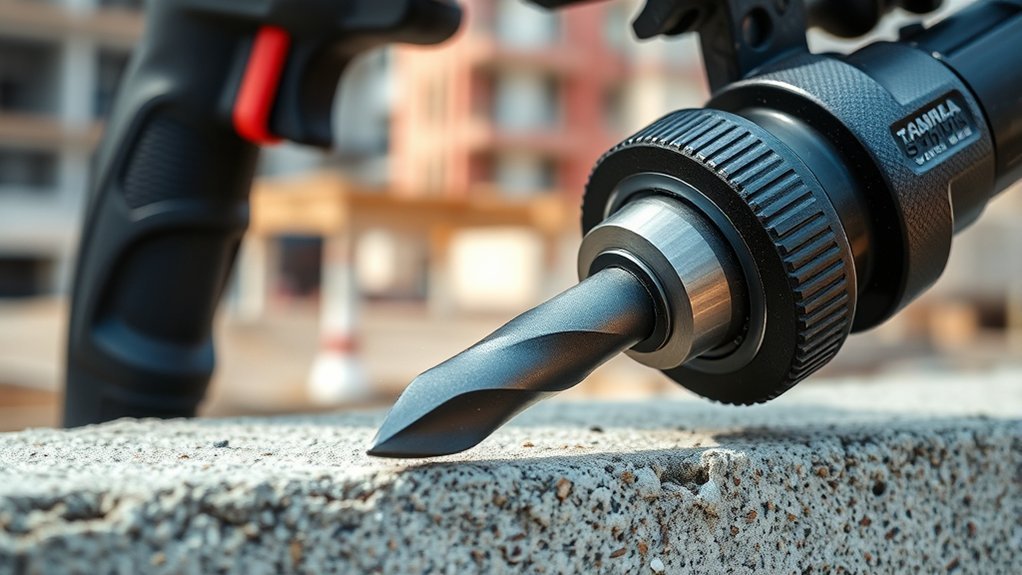
A hammer drill is a versatile power tool designed to drill into hard materials like concrete, brick, and stone by combining rotary drilling with a rapid hammering action. When you operate it, the hammer mechanics engage a piston mechanism that delivers fast, repetitive impacts directly to the drill bit.
This simultaneous hammering and rotation significantly improves penetration efficiency. You’ll appreciate the drill ergonomics engineered into the design, such as cushioned grips and balanced weight distribution, which reduce user fatigue during extended use.
The vibration control systems further enhance comfort and precision. Understanding these fundamental features helps you leverage the hammer drill’s capability for demanding applications, ensuring you select and use the tool correctly for optimal performance and safety.
Hammer Drill vs. Regular Drill: What’s the Difference?
You’ll notice a hammer drill combines rotary drilling with a rapid hammering action, unlike a regular drill that only rotates. This makes hammer drills ideal for masonry and concrete, while regular drills excel in wood and metal applications.
Understanding these functional differences helps you choose the right tool for your project.
Functionality Comparison
How does a hammer drill differ from a regular drill in terms of functionality? A regular drill rotates the bit to bore holes, ideal for wood, metal, and plastic.
A hammer drill, however, adds a rapid hammering action while rotating, which greatly enhances hammer drill efficiency when working with masonry or concrete. This dual-action mechanism allows it to break through hard materials without excessive force.
In a performance comparison, regular drills excel in precision and speed on softer materials but struggle with dense surfaces. Hammer drills deliver superior impact energy, improving drilling speed and reducing user fatigue on tough substrates.
Understanding these functional differences helps you select the right tool for your task, optimizing both effort and outcome.
Best Use Cases
Choosing between a hammer drill and a regular drill depends largely on the material and nature of the task at hand. If you’re working with hard surfaces like concrete, brick, or stone, a hammer drill’s pounding action makes drilling faster and more efficient.
For softer materials such as wood, metal, or plastic, a regular drill provides sufficient torque without the impact function, preventing damage. Understanding this subtopic helps you select the right tool for your project.
When brainstorming ideas for your tasks, consider the material hardness and drilling depth. Hammer drills excel in masonry applications, while regular drills suit general household projects or delicate work.
When to Use a Hammer Drill
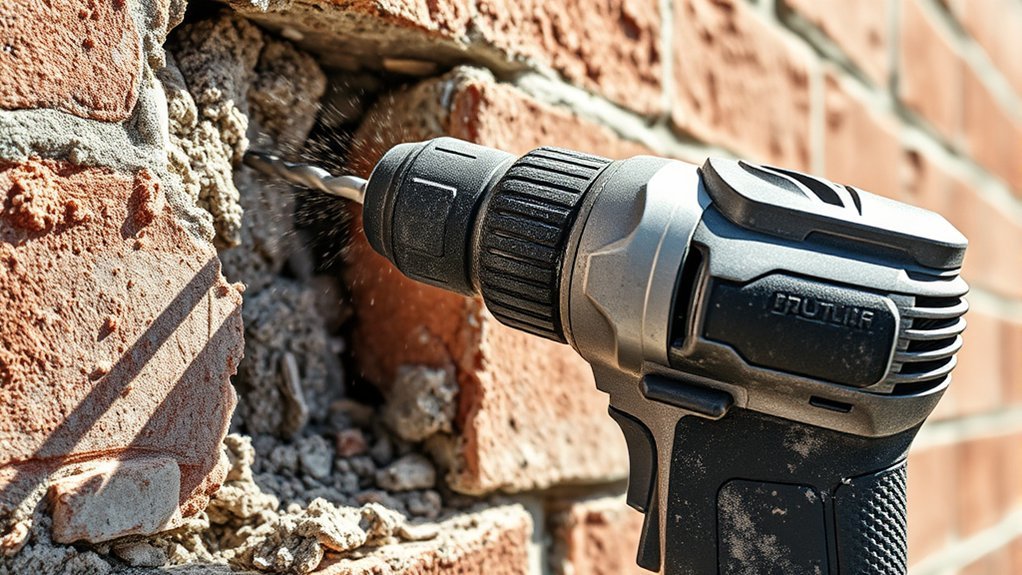
When should you reach for a hammer drill instead of a standard drill? You use a hammer drill when you face tough materials like concrete or masonry that require both rotation and a hammering action to penetrate effectively.
Hammer drill etiquette means reserving its use for non boring applications that demand impact force, avoiding unnecessary wear on softer materials.
| Material Type | Recommended Tool | Application Example |
|---|---|---|
| Wood | Standard drill | Drilling pilot holes |
| Metal | Standard drill | Installing screws |
| Concrete | Hammer drill | Anchoring bolts |
| Brick | Hammer drill | Fixing wall mounts |
| Ceramic tile | Standard drill | Installing fixtures |
Use the hammer drill precisely for impact tasks to ensure efficiency and tool longevity.
Types of Hammer Drills and Their Features
Hammer drills come in several types, each designed to handle specific tasks and materials with varying levels of power and control. You’ll primarily encounter two types: rotary hammer drills and standard hammer drills.
Standard hammer drills use a mechanical impact mechanism that provides rapid hammering motion, ideal for drilling into softer hammer drill materials like brick and mortar.
Rotary hammer drills employ a pneumatic impact mechanism, delivering stronger, more consistent blows suited for tougher materials such as concrete and stone. Additionally, rotary hammers often offer multiple modes, including drilling, hammering, or combination, to adapt to your project’s demands.
Understanding these types helps you match the hammer drill’s impact mechanism and power to the materials you’re working with, ensuring efficient and precise drilling performance.
How to Choose the Right Hammer Drill
To choose the right hammer drill, you need to assess the power and performance required for your projects. Consider the drill type options, including corded, cordless, and SDS models, to match your application.
Finally, balance your budget with essential features to ensure optimal value and functionality.
Power and Performance
How much power do you really need for your drilling tasks? When selecting a hammer drill, understanding power delivery is essential. Power, often measured in amps (corded) or volts (cordless), directly affects the tool’s ability to penetrate tough materials like concrete or masonry.
Higher power means better performance under load, reducing the chance of stalling. However, excessive power can make the drill heavier and harder to control.
You should match the hammer drill’s power delivery to your typical projects. For light-duty tasks, a lower amp or volt model suffices, offering precision without unnecessary bulk.
For heavy-duty applications, choose a hammer drill with robust power to maintain consistent impact energy and rotation speed. This balance ensures efficient drilling while minimizing fatigue and maximizing control.
Drill Type Options
Selecting the right drill type depends largely on the power requirements and the nature of your tasks. You need to understand common hammer drill misconceptions, such as overestimating cordless capabilities.
Cordless models offer portability but face cordless limitations like reduced runtime and power compared to corded versions. Assess whether your application demands sustained high torque or intermittent use.
| Drill Type | Ideal Use |
|---|---|
| Corded Hammer | Heavy-duty, continuous |
| Cordless Hammer | Light to moderate tasks |
| Rotary Hammer | Concrete, masonry |
| SDS Hammer | Professional, intense |
| Combination Drill | Versatile, general use |
Choosing based on this matrix ensures efficiency and longevity, avoiding mistakes tied to hammer drill misconceptions and cordless limitations.
Budget and Features
What factors should you prioritize when balancing budget constraints with essential features in a hammer drill? Start by assessing your primary use cases to determine which features are non-negotiable, such as adjustable speed settings, torque control, or cordless convenience.
Budget considerations often require you to make feature trade offs; for example, opting for a lower amperage motor might save cost but reduce power for heavy-duty tasks. Evaluate the drill’s hammering mechanism. Electro-pneumatic models offer superior performance but at a higher price.
Also, consider battery life and charging time if you choose cordless models, as these affect efficiency. Prioritize features that directly enhance your project’s effectiveness while staying within your financial limits. This approach ensures you select a hammer drill that delivers optimal performance without overspending.
Hammer Drill Safety Tips
Why must you prioritize safety when operating a hammer drill? Ignoring safety can lead to serious injuries despite common safety myths suggesting otherwise. Understanding PPE basics and proper handling is crucial.
Always wear protective gear to shield yourself from flying debris and dust. To operate safely, follow these essential tips:
- Use safety glasses and hearing protection to prevent eye and ear damage.
- Wear gloves to improve grip and protect hands from vibration.
- Ensure the work area is clear of obstacles and well-lit.
- Check the drill bit’s condition and secure it tightly before use.
- Avoid loose clothing or jewelry that could get caught in the drill.
Adhering strictly to these practices minimizes risk and enhances control during hammer drilling tasks.
Maintaining Your Hammer Drill for Long-Term Performance
Regularly maintaining your hammer drill ensures it performs efficiently and lasts longer under demanding conditions. Begin with routine lubrication of the chuck and moving parts to reduce friction and wear.
Routine lubrication of the chuck and moving parts keeps your hammer drill running smoothly and extends its lifespan.
Check brushes and replace them before excessive wear affects motor function. Clean dust and debris from vents and internal components after each use to prevent overheating.
Use two word discussion ideas like “inspection checklist” and “component replacement” to organize your maintenance reminders effectively. Store the drill in a dry, cool environment to avoid corrosion.
Test the hammer mechanism periodically to detect early signs of malfunction. By integrating these precise maintenance practices into your workflow, you’ll extend your hammer drill’s lifespan and maintain optimal performance during heavy-duty tasks.
Frequently Asked Questions
Can a Hammer Drill Be Used for Woodworking Projects?
You can use a hammer drill for woodworking, but its woodworking feasibility is limited. Its impact function suits hard materials, so for wood, disable hammer mode to ensure proper material compatibility and avoid damage to your project.
What Accessories Are Compatible With Hammer Drills?
You’ll find accessories compatibility includes SDS-plus and standard drill bits, chisels, and tils. Choose drill bit types like masonry, wood, or metal for precise results.
Ensure your hammer drill supports these for optimal performance.
How Loud Is a Hammer Drill During Operation?
Hammer drills can reach noise levels around 110 decibels, which is quite loud. You should use noise reduction methods like earmuffs or earplugs to protect your hearing during operation and minimize exposure to harmful sound intensity.
Are Hammer Drills Suitable for Left-Handed Users?
Yes, hammer drills can suit left-handed users if you prioritize left-handed ergonomics and choose models with reversible handles.
User adaptation improves by adjusting grip and controls, ensuring comfort and precision during operation.
Can a Hammer Drill Be Converted Into a Regular Drill?
You can easily switch a hammer drill to regular drilling by disabling the hammer function, showing conversion feasibility. This adjustment lets you perform precise, non-impact drilling tasks, maximizing your tool’s versatility without compromising performance or control.
Conclusion
Now that you know how a hammer drill combines rotary motion with rapid hammering to tackle tough materials, consider this: studies show hammer drills improve drilling speed by up to 50% on concrete compared to regular drills.
Choosing the right type and using proper safety measures ensures you work efficiently and safely. With regular maintenance, your hammer drill will deliver reliable performance for years.
This makes the hammer drill an essential tool for any serious DIYer or professional.