If you notice your toe bending abnormally or feel persistent discomfort, addressing hammer toe early is vital. Hammer toe can cause pain and affect your mobility, so taking action promptly is important. You can start by selecting proper footwear that reduces pressure and supports alignment.
Incorporating specific exercises and using orthotic devices may also ease symptoms effectively. These methods help in relieving discomfort and improving toe flexibility. However, when pain continues or the deformity progresses, understanding your medical and surgical options becomes essential.
Seeking professional advice can prevent further complications and improve your quality of life. Early intervention often leads to better outcomes and less invasive treatments.
How to Spot Hammer Toe Early
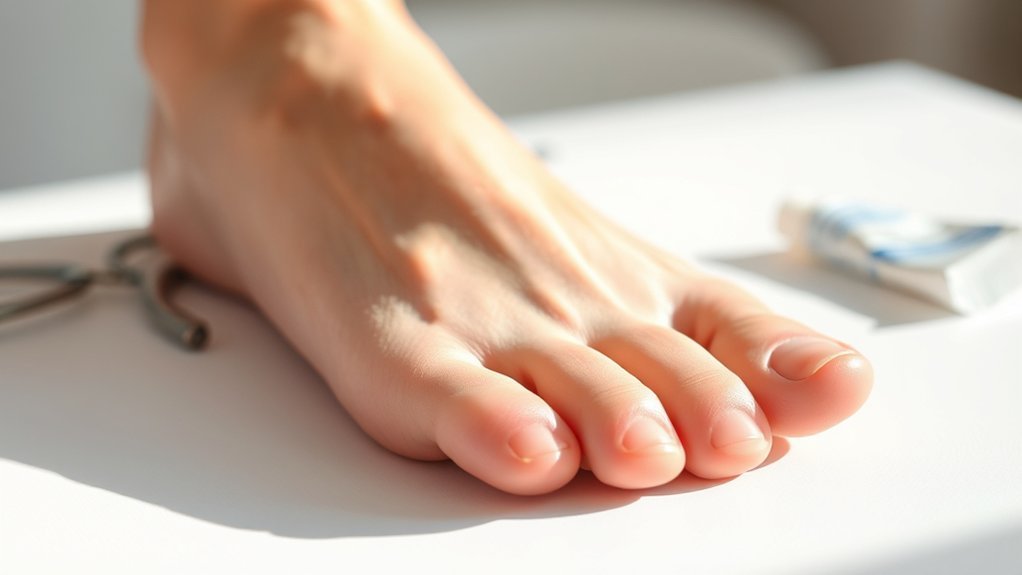
How can you identify hammer toe in its initial stages? Spotting symptoms early is essential for effective intervention. You’ll notice an abnormal bend in the middle joint of your toe, causing it to curl downward.
Early warning signs include discomfort during walking, swelling, redness, or the formation of corns and calluses on the affected joint due to friction. You might also feel stiffness or a limited range of motion in the toe.
Discomfort while walking, swelling, redness, corns, calluses, stiffness, and limited toe movement signal early hammer toe.
By closely monitoring these symptoms, you can detect hammer toe before it progresses to a more severe deformity. Early identification allows you to implement corrective measures promptly, potentially avoiding surgical intervention and improving overall foot health.
Recognizing these early warning signs is key to managing hammer toe effectively.
Choosing Shoes to Prevent and Relieve Hammer Toe
Why does shoe choice matter when preventing and relieving hammer toe? The right footwear minimizes pressure on the toes, reducing deformity progression and pain. Focus on shoe material and heel height. Soft, breathable materials decrease friction, while low heel height limits forward foot pressure.
| Feature | Recommendation |
|---|---|
| Shoe Material | Soft leather or mesh |
| Toe Box Width | Wide, to reduce crowding |
| Heel Height | Less than 2 inches |
| Sole Flexibility | Moderate, supports natural gait |
| Insole Padding | Cushioned for shock absorption |
Choose shoes that provide adequate space and support. Avoid stiff materials and high heels that exacerbate toe contracture. Proper shoe selection is essential in managing hammer toe effectively.
Exercises and Stretches to Fix Hammer Toe Pain
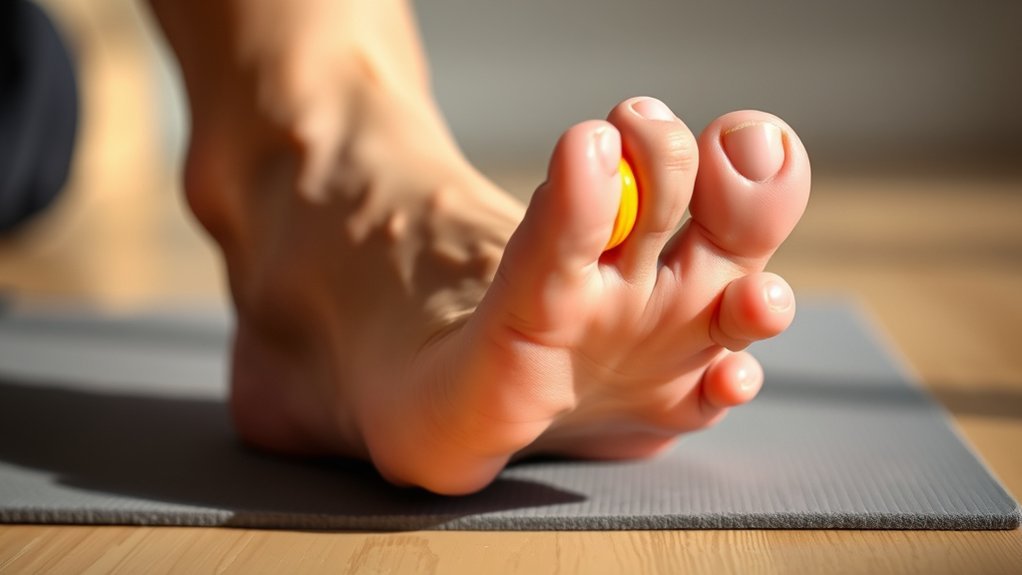
Selecting appropriate footwear reduces pressure and discomfort, but targeted exercises and stretches play a crucial role in alleviating hammer toe pain. Understanding hammer toe mechanics helps you focus on strengthening and mobilizing the affected joints.
Toe flexion exercises, such as curling your toes downward while resisting with your hand or sliding a towel under your toes and scrunching it, improve muscle balance and joint alignment. Additionally, stretching the extensor tendons on the top of your toes counteracts the abnormal contracture.
Perform these exercises regularly, holding stretches for 20-30 seconds and repeating flexion movements 10-15 times per session. Consistency enhances flexibility, relieves tension, and reduces deformity progression.
These interventions support joint mobility and mitigate pain without invasive measures, helping you manage hammer toe effectively.
Orthotic Devices and Splints for Hammer Toe
Where can you find additional support to correct hammer toe alignment and ease discomfort? Orthotic devices and splints for hammertoes offer targeted mechanical correction and symptom relief. These devices realign the toe joints, reduce pressure points, and prevent deformity progression.
Common orthotic devices and splints include:
- Custom shoe inserts that redistribute weight and stabilize toes
- Silicone or gel toe sleeves cushioning against friction
- Adjustable splints for hammertoes that maintain proper joint positioning
Using these devices consistently can improve toe posture and minimize pain during daily activities. Consult a podiatrist to select orthotic devices tailored to your foot structure. Proper fit and gradual adaptation are crucial to effectiveness. Orthotic solutions serve as a conservative measure to manage mild to moderate hammer toe without invasive procedures.
Medical and Surgical Options for Severe Hammer Toe

When conservative treatments no longer alleviate severe hammer toe symptoms, medical and surgical interventions become necessary. Medical treatment may involve corticosteroid injections or medications to reduce inflammation and pain. When these options fail, surgical repair is the definitive solution to correct deformity and restore toe function.
| Option | Description |
|---|---|
| Corticosteroid Injection | Reduces inflammation and relieves pain |
| Oral Medications | Manage pain and swelling |
| Tendon Release | Surgical lengthening of tight tendons |
| Joint Resection | Removal of bone segments to straighten toe |
| Fusion | Permanently stabilizes the toe joint |
Consult a specialist to evaluate your condition and determine the appropriate medical treatment or surgical repair tailored to your needs.
Frequently Asked Questions
Can Hammer Toe Affect Children or Only Adults?
You’ll find hammer toe primarily affects adults, but pediatric cases do occur. Hammer toe demographics show adults dominate due to footwear and aging.
Pediatric vs adult cases differ in cause and treatment urgency, requiring precise diagnosis.
Is Hammer Toe Hereditary?
Hammer toe genetics hint hereditary risk, helping you recognize potential predispositions. You shouldn’t ignore family history, as inherited foot structure abnormalities can increase your likelihood of developing hammer toe.
This emphasizes prevention and early intervention.
How Long Does Hammer Toe Take to Develop?
Hammer toe development varies, depending on your foot’s biomechanics and developing causes like muscle imbalance or ill-fitting shoes. The timeframe progression can range from weeks to months, gradually worsening without intervention or corrective measures.
Can Hammer Toe Cause Other Foot Problems?
Yes, hammer toe can cause other foot problems by altering foot biomechanics, leading to pressure points, corns, and calluses.
You’ll notice changes in gait and balance, increasing your risk of pain and further deformities.
Are There Any Dietary Supplements That Help Hammer Toe?
Don’t bet the farm on dietary supplements curing hammer toe; medical evidence is scarce. While some suggest vitamins and minerals for joint health, no supplements have proven effective in correcting this specific deformity conclusively.
Conclusion
If you spot hammer toe early, you can nip it in the bud with proper shoes, targeted exercises, and orthotic devices. Don’t underestimate the power of gentle stretches and well-fitted footwear to ease pain and improve alignment.
However, if discomfort lingers or the deformity worsens, seeking medical advice is essential. Sometimes, surgical intervention becomes the last resort to restore function and prevent long-term issues.
Taking action promptly keeps you a step ahead of hammer toe complications. Early care and attention are key to effectively managing and fixing hammer toe.