Did you know that up to 90% of dust generated by an orbital sander can be captured with the right setup? Attaching an orbital sander to a shop vac not only keeps your workspace cleaner but also improves sanding efficiency.
To get this right, you’ll need to focus on matching hose sizes and securing airtight connections. Understanding these key steps is essential before you start attaching your tools.
Why Connecting Your Orbital Sander to a Shop Vac Makes Sanding Easier
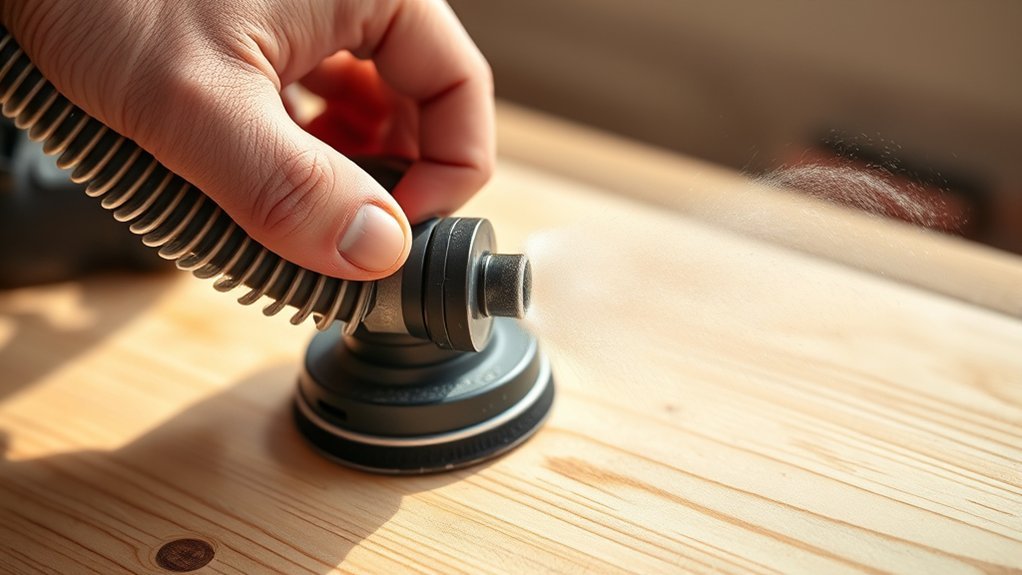
Why should you connect your orbital sander to a shop vac? Doing so markedly reduces dust accumulation, improving visibility and accuracy while you work. Dust buildup is more than an unrelated topic; it directly affects your sanding quality and safety.
By attaching your sander to a shop vac, you maintain a cleaner workspace, minimizing airborne particles that can cause respiratory issues. This connection improves audience engagement in instructional settings by demonstrating professional-grade techniques and emphasizing safety.
Additionally, it extends the life of your sanding pads and equipment by preventing clogging. Overall, integrating your orbital sander with a shop vac offers practical benefits: better dust control, enhanced precision, and a healthier environment, making sanding easier and more efficient for you.
Tools and Materials Needed for Connecting Your Orbital Sander to a Shop Vac
To connect your orbital sander to a shop vac, you’ll need a few key tools like a screwdriver and measuring tape. Gather essential materials such as a vacuum hose adapter, clamps, and possibly a custom connector to ensure a secure fit.
Choosing compatible accessories based on your sander and vac specifications is critical for optimal dust collection.
Essential Tools Overview
Gathering the right tools and materials is essential for efficiently connecting your orbital sander to a shop vac. Proper sanding ergonomics and effective dust filtration depend on having the correct equipment.
Below is an overview of essential tools you’ll need to ensure a secure and functional connection:
| Tool | Purpose | Notes |
|---|---|---|
| Hose Adapter | Connects sander to vac hose | Must fit both tools snugly |
| Clamps | Secure hose to adapter | Prevents disconnection during use |
| Screwdriver Set | Tightens clamps and fittings | Phillips and flathead recommended |
Having these tools on hand will streamline setup and maintain optimal dust control while preserving your sanding posture.
Required Materials Checklist
With the right tools in place, you’ll need specific materials to connect your orbital sander to your shop vac effectively. Start with a flexible vacuum hose that matches the diameter of both your sander’s dust port and the shop vac inlet. Include a hose adapter or coupler to guarantee a secure fit.
You’ll also require clamps or zip ties to fasten connections tightly, preventing dust leaks. Consider a dust collection bag or filter if your shop vac doesn’t have one.
Before purchasing, initiate a conversation with suppliers or read product specs to verify compatibility. Budgeting wisely means selecting durable materials that won’t need frequent replacement, saving you time and money.
Keeping this checklist ready will streamline your setup and improve dust extraction performance.
Choosing Compatible Accessories
How do you guarantee your orbital sander and shop vac work seamlessly together? Start by selecting accessories designed for compatibility. Choose a vacuum hose adapter that fits both your sander’s dust port and the shop vac’s hose diameter.
Prioritize adapters made from durable materials to guarantee a tight seal, minimizing dust leakage and optimizing suction. Consider usability considerations like ease of attachment and detachment, so you can switch setups without hassle.
Additionally, select hoses and adapters that contribute to noise reduction by dampening airflow sounds. Avoid generic connectors that may cause poor fit or increased vibration, which can hamper performance and increase noise.
Finding the Dust Port on Your Orbital Sander
Where exactly is the dust port located on your orbital sander? Usually, you’ll find it near the rear or side of the sander’s casing, designed for optimal dust extraction. This port is crucial for maintaining sanding aesthetics by reducing debris buildup on your workpiece.
To identify it, look for a round or oval outlet, often fitted with a detachable dust bag or a plastic connector. Avoid confusing this with other openings; some may resemble vents or handles, which are unrelated to dust collection.
When inspecting your sander, focus on this two word discussion idea: “dust port.” Properly locating it ensures efficient attachment to your shop vac, minimizing airborne dust and improving overall sanding performance without compromising your workspace cleanliness.
How to Choose the Right Hose Adapter for Your Shop Vac
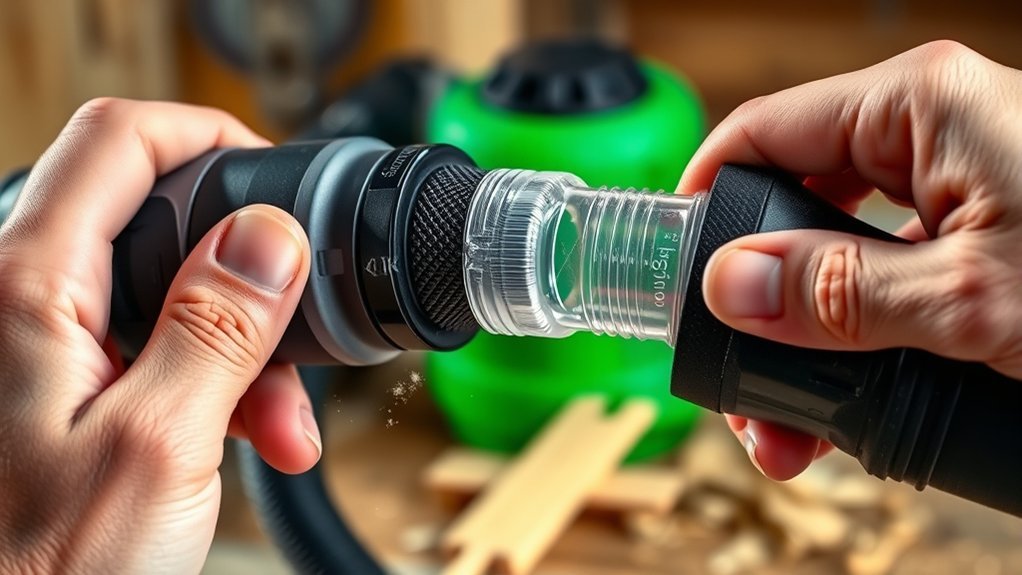
Why does selecting the right hose adapter matter for connecting your shop vac to an orbital sander? Proper hose compatibility ensures a secure fit between the sander’s dust port and your shop vac hose, preventing leaks that reduce suction efficiency.
To achieve effective dust suppression, the adapter must match both diameter and shape precisely. Measure the diameter of your sander’s dust port and shop vac hose before purchasing an adapter.
Look for adapters made from durable materials that maintain a tight seal under vacuum pressure. Avoid generic adapters that may fit loosely, causing dust to escape and reducing your shop’s cleanliness and air quality.
Choosing the correct hose adapter optimizes airflow, maximizes dust collection, and extends your tools’ lifespan by preventing dust buildup inside them.
How to Attach Your Orbital Sander to a Shop Vac
Once you’ve selected the right hose adapter for a secure connection, attaching your orbital sander to your shop vac is straightforward. First, ensure the dust port on your sander aligns with the adapter size. Slide the adapter firmly onto the sander’s dust port.
Next, connect the shop vac hose to the other end of the adapter, pressing until it fits snugly. Avoid forcing connections, as this can damage components. Don’t get distracted by any irrelevant topic or unrelated discussion about other tools or vacuum types; focus solely on your sander and shop vac setup.
With the correct adapter and proper alignment, your orbital sander will efficiently channel dust into the shop vac, keeping your workspace clean without unnecessary complications.
Securing Your Orbital Sander-Shop Vac Connection to Prevent Air Leaks
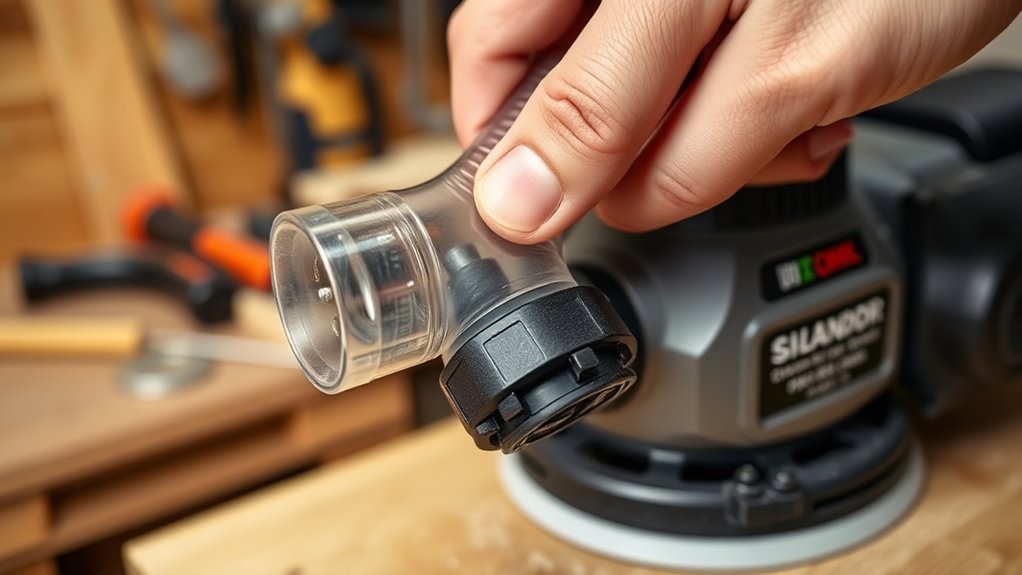
How can you guarantee your orbital sander and shop vac connection stays airtight during operation? The key is to secure all joints with proper fittings and use quality seals like rubber gaskets or silicone tape.
Secure all joints with proper fittings and quality seals to keep your sander and shop vac connection airtight.
Avoid gaps where air can leak, as these reduce suction efficiency and increase dust escape. It’s fact, not fiction, that even small leaks compromise dust collection performance.
Addressing this isn’t just technical; it involves ethical concerns, ensuring a cleaner workspace and protecting your health. Use hose clamps to tighten connections firmly, and inspect for soft spots or cracks in hoses.
If you choose adapters, verify their compatibility to maintain a snug fit. Taking these steps prevents leaks, enhances system reliability, and supports responsible dust management.
How to Test and Adjust Your Dust Collection Setup
Ensuring airtight connections between your orbital sander and shop vac sets the foundation for effective dust collection, but you’ll need to verify performance through testing. Start by running the sander and checking for visible dust leaks around joints. Use dust seal strategies like adding foam tape or clamps to improve seals.
If dust escapes, adjust connections or try alternative sanding methods that produce less dust. Measure airflow to confirm suction strength meets requirements.
| Test Step | Expected Result | Adjustment Action |
|---|---|---|
| Visual inspection | No dust escaping | Tighten fittings, add seals |
| Airflow measurement | Meets or exceeds baseline | Check for blockages |
| Sound check | Consistent vacuum noise | Secure loose parts |
| Sanding test | Minimal dust around sander | Adjust dust port angle |
| Seal integrity | No air gaps detected | Replace worn seals |
Cleaning and Maintaining Your Orbital Sander-Shop Vac Connection
Why does regular cleaning and maintenance matter for your orbital sander-shop vac connection? Dust buildup can reduce suction efficiency, causing poor dust collection and potential motor strain.
To keep your setup optimal, disconnect the hose and inspect it for clogs or debris. Use compressed air or a flexible brush to clear blockages. Check the seals between the sander and the vac for wear or cracks that could leak dust.
Clean the vac’s filter regularly to maintain airflow, especially if you’re using solar power to run your shop vac. Efficient operation maximizes energy savings.
Avoid letting random gardening debris or outdoor dust mingle with your workshop dust collection system to prevent contamination. Routine maintenance ensures consistent suction and prolongs your equipment’s lifespan.
Troubleshooting Common Dust Collection Problems
If your dust collection system isn’t performing as expected, you’ll want to identify common issues like reduced suction, hose blockages, or leaks quickly. First, inspect the hose for debris or kinks that limit airflow, as blockages directly reduce dust free sanding efficiency.
Next, check all connections for leaks; even small gaps can compromise suction and increase noise, affecting quiet operation. Verify the shop vac’s filter is clean to maintain optimal airflow.
Also, ensure the orbital sander’s dust port aligns properly with the hose. If suction remains low, test the shop vac independently to isolate the problem.
Addressing these factors promptly will restore effective dust extraction, keeping your workspace cleaner and preserving the sander’s performance during use.
Advanced Tips to Boost Orbital Sander Dust Collection
To maximize dust collection, position your vacuum hose for the shortest, most direct path to the dust port. Upgrade to high-efficiency filters to capture finer particles and protect your shop vac’s motor.
Consider customizing dust port adapters to ensure a tight, secure fit between your sander and vacuum hose.
Optimize Vacuum Hose Placement
Where should you position your vacuum hose for maximum dust collection efficiency? Place it as close to the sander’s dust port as possible without restricting movement. This minimizes debris escape and supports noise reduction, crucial in creative woodworking.
Use these guidelines for optimal hose placement:
| Position | Effect |
|---|---|
| Directly beside port | Best dust capture |
| Slightly behind port | Moderate efficiency |
| Above sander | Risk of clogging |
| Far from port | Poor dust control |
| Flexible hose bend | Maintains suction flow |
Keep the hose flexible but avoid sharp bends that reduce airflow. Secure the hose to prevent vibration noise and maintain consistent suction. Proper positioning not only boosts dust collection but also reduces noise, improving your workspace comfort.
Use High-Efficiency Filters
Why settle for standard filters when you can drastically improve dust collection with high-efficiency alternatives? High-efficiency filters capture finer dust particles, preventing them from escaping back into your workspace.
This upgrade not only keeps your air cleaner but also extends the life of your shop vac’s motor by reducing internal dust buildup. When selecting filters, avoid off topic ideas like unrelated topic features that don’t enhance filtration performance.
Focus on filters rated for fine dust capture, such as HEPA or equivalent. Installing these filters is straightforward and pays off by maintaining consistent suction and reducing airborne dust hazards.
Don’t overlook this simple upgrade. It’s a technical tweak that significantly boosts your orbital sander dust collection system’s effectiveness without complicated modifications.
Customize Dust Port Adapters
Upgrading your filters improves dust capture, but optimizing the connection between your orbital sander and shop vac can take performance further. Customize dust port adapters to create a tight, secure fit that minimizes air leaks and maximizes suction.
Use flexible couplers or 3D-printed adapters tailored to your specific sander and vacuum ports. Avoid conversation drift into unrelated topic attachments; focus solely on airtight connections for dust control efficiency.
Measure diameters precisely, and consider adding rubber gaskets to enhance the seal. This customization reduces dust escape at the source, improving collection and reducing cleanup.
Frequently Asked Questions
Can I Use Any Brand of Shop Vac With My Orbital Sander?
You can use most shop vac brands with your orbital sander, but check for loading screen compatibility and hose size.
Battery compatibility doesn’t affect this, but ensure your sander’s power source matches your workflow for efficiency.
How Often Should I Replace the Filter in My Shop Vac?
You should replace your shop vac filter every 3-6 months, depending on dust management and airflow considerations. If you notice reduced suction or visible dirt buildup, swap it sooner to maintain optimal performance and protect your motor.
Is It Safe to Use a Shop Vac Indoors Without Ventilation?
You shouldn’t use a shop vac indoors without proper indoor ventilation. Dust and fumes can accumulate, risking health.
Keep your filter maintenance current to ensure efficient particle capture and reduce airborne contaminants during operation.
Can I Connect Multiple Sanders to One Shop Vac?
Though it’s not like juggling telegrams, you generally can’t connect multiple sanders to one shop vac without losing suction.
Avoid off topic chatter or unrelated branding; focus on proper hose diameter and vac power for efficiency.
What Safety Gear Should I Wear While Sanding With Dust Collection?
You should wear safety gear including a dust mask or respirator, safety goggles, and hearing protection while sanding with dust collection. This protects your lungs, eyes, and ears from fine particles and noise exposure effectively.
Conclusion
By connecting your orbital sander to a shop vac, you not only keep your workspace cleaner but also extend your sander’s life—coincidentally saving you time and money.
With the right adapter and a secure fit, dust collection becomes effortless, letting you focus on smooth finishes instead of cleanup. Just test the suction, seal any leaks, and maintain the connection regularly.
It’s a simple upgrade that turns sanding into a cleaner, more efficient task. Properly attaching your orbital sander to a shop vac ensures optimal dust control and enhances your sanding experience.