Choosing the right sandpaper for your palm sander means measuring your sander’s pad, matching the backing system, and trimming for a perfect fit. You can’t just grab any size and expect smooth results—incorrect sizing leads to slipping, bunching, or uneven wear.
Knowing exactly what size sandpaper works for your palm sander is key to efficient, precise sanding. But how do you determine those dimensions and avoid common pitfalls? Understanding these details ensures your sanding projects go smoothly and produce professional results.
How to Measure Your Palm Sander for Sandpaper Size
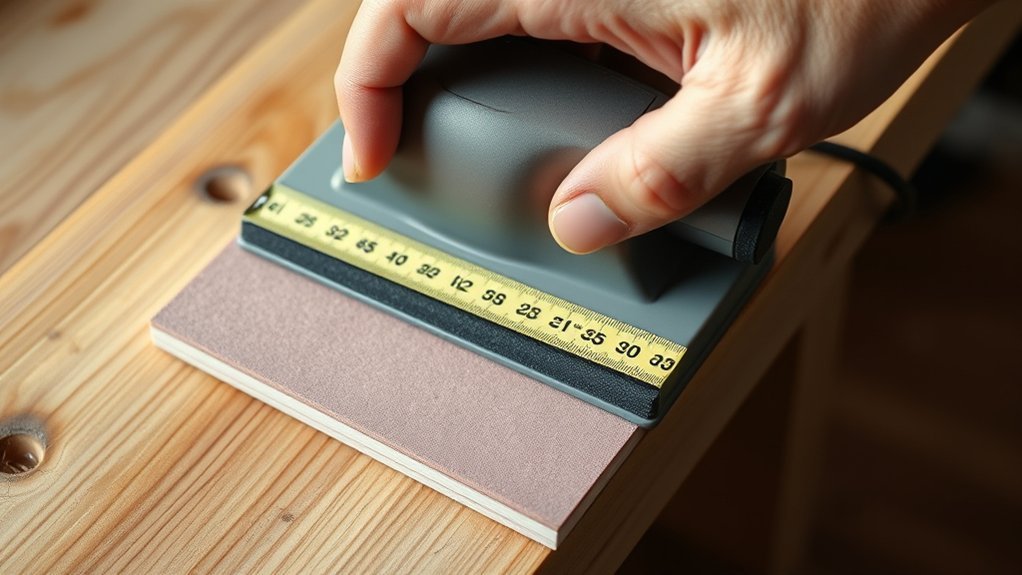
How do you determine the right sandpaper size for your palm sander? Start by measuring the sanding pad’s dimensions accurately. Use a ruler or caliper to get the length and width of the pad. This step is crucial for pad compatibility, ensuring the sandpaper fits securely without slipping during use.
Don’t forget to check the shape, whether square, rectangular, or round, as this affects the sandpaper cut. Next, assess the measuring grip area of your sander; it influences how you handle the tool and the sandpaper’s placement. Confirm that the sandpaper’s backing matches the pad type, such as hook-and-loop or adhesive.
Common Sandpaper Sizes for Palm Sanders
You’ll find that most palm sanders use standard sandpaper sizes, typically around 5 by 9 inches, but checking your sander’s specifications ensures the best fit. Different brands may have slight variations in shape or attachment style, so compatibility matters.
Knowing these common dimensions helps you pick sandpaper that works smoothly without extra trimming or adjustments.
Standard Sandpaper Dimensions
What dimensions should you look for when selecting sandpaper for your palm sander? Choosing the right size is essential for effective sanding and maintaining palm sander ergonomics.
Standard sandpaper sizes generally match the sanding pad dimensions, ensuring full coverage and best control. Here are common dimensions to consider:
- 5 x 9 inches: A versatile size fitting many standard palm sanders.
- 6 x 9 inches: Slightly larger, offering extended surface area without sacrificing grip.
- 9 x 11 inches: Often used for detail palm sanders, balancing precision with coverage.
When discussing ideas about sandpaper size, consider these standard dimensions to maintain comfort and efficiency during use. Proper sizing improves your sanding experience and helps avoid excess material waste or reduced performance.
Compatibility With Palm Sanders
Which sandpaper sizes work best with your palm sander? Most palm sanders use sheets measuring around 5 by 9 inches, designed to fit snugly without excess overlap or gaps. Using sandpaper that’s too large or too small can reduce efficiency and damage the tool.
Avoid taking irrelevant topics or random detours when choosing sandpaper size; stick to the manufacturer’s recommended dimensions to ensure compatibility. You’ll find that standard sizes like 5”x9” or sometimes 4.5”x9” cover most palm sanders on the market.
This precise fit allows the sandpaper to attach securely, maximizing surface contact and preventing tearing during operation. So, always check your sander’s specifications to match the sandpaper size accurately for optimal performance.
Variations Based On Brand
How do sandpaper sizes vary among different palm sander brands? You’ll find that each brand often designs sandpaper to match specific dimensions, ensuring optimal brand compatibility and grip comfort. For instance, some brands prioritize a square shape for better edge sanding, while others prefer rectangular sheets.
Here are common variations to keep in mind:
- Bosch: Typically uses 93mm x 185mm sheets, focusing on secure hook-and-loop attachment for grip comfort.
- DeWalt: Often opts for 91mm x 140mm, balancing compactness with effective coverage.
- Makita: Uses 93mm x 228mm, providing extended sanding surface for larger tasks.
Choosing the right size based on your sander’s brand ensures maximum efficiency, prevents slipping, and enhances your control during sanding.
Why Getting the Right Sandpaper Size Makes a Difference
Why does selecting the right size sandpaper for your palm sander matter? Using the correct size ensures full contact between the sandpaper and the sander’s pad, which directly impacts material durability and your sanding efficiency.
If the sandpaper is too large or small, it can bunch up or peel off, reducing its lifespan and risking uneven wear on your sander’s pad. Proper sizing also maintains grit consistency across the sanding surface, preventing patchy results and saving you time.
When the sandpaper fits perfectly, you get smooth, uniform sanding without damaging your project or equipment. So, investing a moment to measure and select the right sandpaper size helps you work smarter, protects your tools, and achieves professional-quality finishes every time.
How Grit Size Affects Your Sanding Results
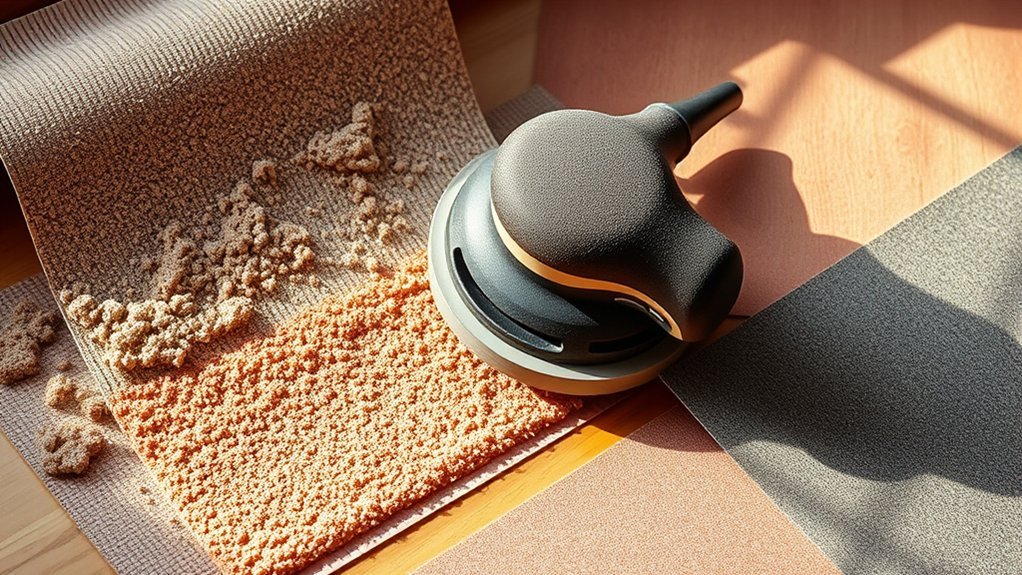
Once you’ve chosen the right size sandpaper for your palm sander, the grit size becomes your next key consideration. Understanding how grit affects your results is essential in palm sander basics, ensuring sandpaper compatibility with your project.
Coarser grits remove material quickly but leave rough surfaces, while finer grits smooth out imperfections without damaging the wood.
Keep these two word discussion ideas in mind for grit selection:
- Coarse grit: aggressive material removal
- Medium grit: balancing speed and smoothness
- Fine grit: final finish and polish
Choosing Sandpaper for Palm Sander Detail and Edge Work
When tackling detail and edge work with your palm sander, selecting the right sandpaper size and type can make all the difference. For precise edges, choose sandpaper with good edge protection to avoid tearing or premature wear.
Also, opt for sandpaper compatible with your sander’s dust collection system to keep your workspace clean and prolong sandpaper life.
| Sandpaper Type | Best Use Case |
|---|---|
| Fine Grit | Smooth detail work |
| Medium Grit | Light edge shaping |
| Flexible Backing | Curves & tight edges |
Flexible backing sandpaper is ideal for contours and tight edges, ensuring you won’t damage delicate surfaces. Always match your sandpaper to your sander’s dust collection for efficient debris removal and a cleaner finish.
Cutting Sandpaper to Fit Your Palm Sander
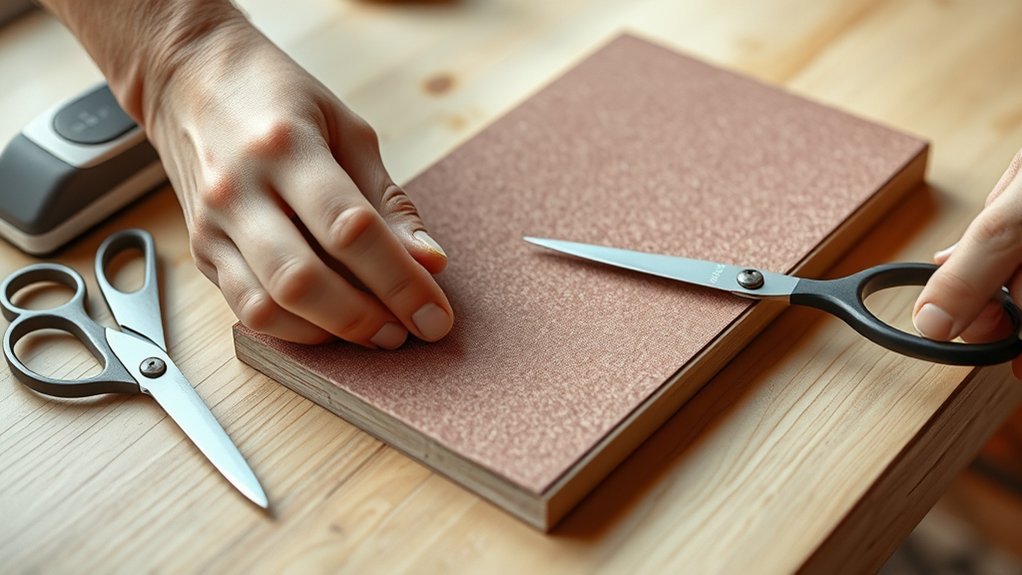
Matching your sandpaper to the sander’s dust collection system and work type sets you up for success, but proper sizing is just as important. To cut sandpaper that fits your palm sander perfectly, start by measuring the base pad precisely. Avoid relying on random topic advice or unrelated concept tips that don’t apply to your model.
Properly sizing sandpaper to your sander’s base is crucial for optimal fit and performance.
Here’s a practical approach:
- Lay the sandpaper flat and trace the base’s outline directly onto it.
- Use sharp scissors to cut along the traced lines carefully, ensuring no excess edges.
- If your sander uses hook-and-loop attachment, cut within a millimeter of the outline for a snug fit.
This method ensures secure attachment, prevents slipping, and maximizes sanding efficiency. Precise cutting avoids damage to both the sandpaper and your tool.
How to Know When to Replace Sandpaper
You’ll know it’s time to replace sandpaper when it looks smooth, clogged, or tears easily. Using worn sandpaper reduces sanding efficiency and can leave uneven surfaces.
Replace your sheets regularly, especially after heavy use, to maintain consistent results.
Signs of Worn Sandpaper
A key indicator that sandpaper needs replacement is its reduced effectiveness in smoothing surfaces. When you notice the finish isn’t as sleek, it’s time to inspect the sandpaper closely. Signs of worn sandpaper include:
- Visible abrasive wear: The grit looks flattened or shiny, reducing its cutting power.
- Tearing or crumbling edges: This often happens due to an incorrect fit on your palm sander, causing uneven pressure.
- Clogged surface: Dust and debris fill the grit spaces, preventing proper sanding action.
Regularly check your sandpaper for these signs to maintain optimal performance. Replacing worn sandpaper promptly helps you avoid uneven sanding and damage to your workpiece. Don’t wait until the sandpaper looks completely useless; early replacement keeps your project smooth and efficient.
Impact on Sanding Quality
How can you tell if your sandpaper is still up to the task? The impact on sanding quality is immediate when the abrasive grit wears down. You’ll notice uneven surfaces or slower material removal rates, clear signs it’s time to swap it out.
Don’t confuse this with an unrelated topic like sander motor issues or a tangential concept such as dust collection. Focus solely on the sandpaper’s condition.
| Sign | Effect on Quality |
|---|---|
| Worn Grit | Reduced abrasive action |
| Clogged Surface | Uneven sanding |
| Tears or Holes | Scratches or gouges |
| Loss of Flexibility | Inconsistent pressure |
Monitor these signs closely. Replacing sandpaper at the right time ensures smooth, efficient sanding and professional results.
Frequency of Replacement
Frequently checking your sandpaper’s condition helps determine the right time for replacement. If you wait too long, you risk irreversible damage to your workpiece or sander. Here’s how to know when it’s time to switch out the sandpaper:
Reduced abrasive effectiveness: If sanding takes longer or feels less aggressive, the grit is worn down.
Visible clogging or tears: Debris buildup or rips reduce sanding quality and can scratch surfaces.
Increased noise levels: A louder or unusual sound often means the sandpaper isn’t gripping properly.
Replacing your sandpaper promptly ensures consistent results and protects your palm sander from strain. Don’t ignore signs of wear; timely replacement saves time and prevents costly damage.
Fixing Common Sandpaper Fit Problems
Why does your sandpaper sometimes fail to fit your palm sander properly? Often, it’s due to incorrect size or misaligned holes. Avoid two word discussion ideas or irrelevant topics like grit types here; focus strictly on fit issues.
Start by verifying the sandpaper size matches your sander’s base. Next, check if the holes on the sandpaper align with the sander’s dust collection system. If they don’t, the paper won’t stick or collect dust efficiently.
| Problem | Cause | Solution |
|---|---|---|
| Paper too large/small | Incorrect sandpaper size | Measure base, buy correct size |
| Misaligned holes | Wrong hole pattern | Match hole pattern exactly |
| Paper slips off | Worn hook-and-loop system | Replace or clean system |
| Paper bunches up | Poor attachment | Secure edges before sanding |
Top Places to Buy Quality Sandpaper for Palm Sanders
Where can you find reliable, high-quality sandpaper for your palm sander? Choosing the right supplier is essential for consistent results and efficient sanding physics.
To maintain a well-organized workspace, consider these top places for your sandpaper needs:
- Specialty woodworking stores: They stock premium sandpaper designed for ideal grit and durability, ideal for precise sanding physics and minimizing clogging.
- Online retailers: Websites like Amazon or dedicated tool shops offer wide selections and bulk options, helping you streamline shop organization and avoid frequent restocking.
- Home improvement centers: Big-box stores provide accessible, quality sandpaper brands suitable for most palm sanders, balancing cost and performance for everyday projects.
Frequently Asked Questions
Can I Use Sandpaper for Palm Sanders on Other Types of Sanders?
You can use sandpaper for palm sanders on other sanders only if sandpaper compatibility matches the sanding pad types.
Check size, attachment method, and grit to ensure proper fit and effective sanding results before switching.
How Do I Store Sandpaper to Maintain Its Effectiveness?
Think of sandpaper like a delicate flower. Store sandpaper flat in dry storage and maintain humidity control under 50%. Implement a label system by grit and type. This keeps it sharp, ready, and long-lasting.
What Safety Gear Should I Wear When Using a Palm Sander?
You should wear safety gear like goggles, a dust mask, and hearing protection when using a palm sander.
Gloves and long sleeves help protect your skin from debris, ensuring you stay safe and comfortable during sanding.
Can Wet Sanding Be Done With a Palm Sander?
Think wet sanding with a palm sander is possible? It’s tricky since most palm sander compatibility doesn’t support water.
You’ll need a specialized model or wet/dry sandpaper designed for controlled, careful wet sanding tasks.
How Do Different Sandpaper Materials Affect Sanding Performance?
Different materials like aluminum oxide or silicon carbide affect sanding performance by varying durability and grit sharpness. You’ll get smoother finishes with finer grits and faster stock removal with coarser, tougher materials suited for your project.
Conclusion
Choosing the right sandpaper size for your palm sander is essential for smooth, efficient work. Did you know that using incorrectly sized sandpaper can reduce sanding efficiency by up to 30%? Measuring your sander’s pad carefully and matching the backing system ensures full contact, prevents slipping, and extends sandpaper life.
Always trim sandpaper precisely for the best fit. By paying attention to size and grit, you’ll get professional results every time with less hassle. Remember, selecting the correct size sandpaper for your palm sander is key to achieving optimal performance and a flawless finish.