Sanding detailed furniture requires a delicate touch rather than rough handling. You’ll need to approach the process with the right tools and techniques to preserve every intricate curve and carving. If you rush or use the wrong grit, you risk losing those fine details forever.
Understanding how to prepare and sand each area carefully can make all the difference. Here’s what you need to know before you start.
Gather the Right Tools for the Job
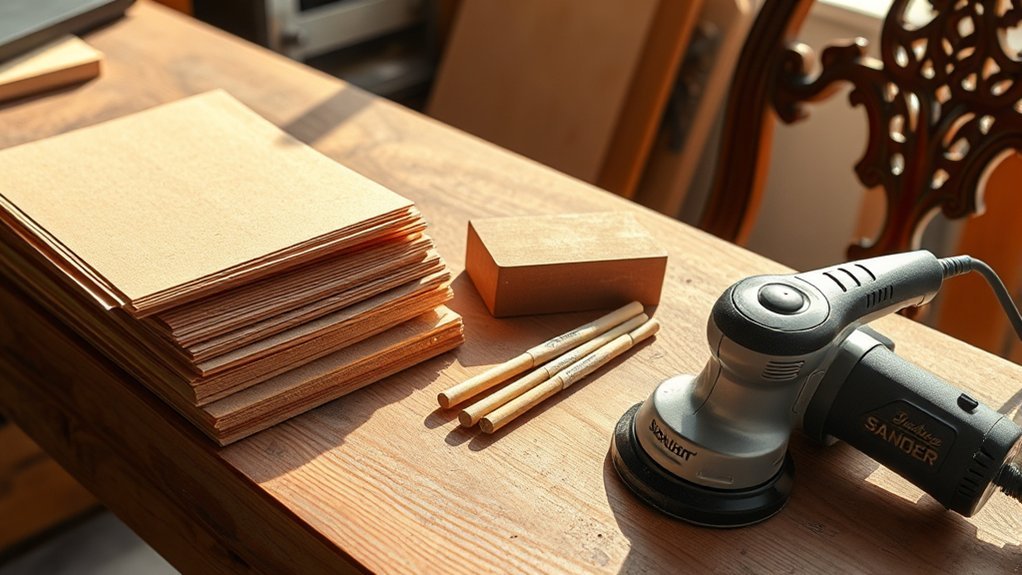
Where do you begin when preparing to sand detailed furniture? First, gather tools essential for precision work: fine-grit sandpaper, sanding sponges, small sanding blocks, and detail sanding sticks. You’ll also need a vacuum or brush to keep dust at bay.
Before starting, prepare your workspace carefully. Ensure good lighting and ventilation, and cover surfaces to catch debris. Remember, sanding detailed furniture demands attention to grain direction to avoid damage and achieve smoothness.
Techniques not covered here, like power sanding, can harm intricate carvings, so rely on hand tools. By systematically assembling your tools and setting up your workspace, you set a strong foundation for successful sanding that respects the piece’s craftsmanship and prepares it for finishing.
Get the Surface Ready Without Hurting Carvings
With your tools ready and workspace set, you can focus on preparing the furniture surface without damaging the delicate carvings. Start by gently dusting the entire piece to remove loose debris that might scratch the surface during sanding.
Use soft brushes or compressed air to clear dust from crevices, protecting carvings from abrasion. Embrace an even sanding approach by moving methodically across flat areas, avoiding excessive pressure that could harm details.
For intricate sections, rely on hand sanding with small, flexible pads to maintain the meticulous texture of the wood. This careful preparation ensures the surface is smooth and consistent, laying the groundwork for fine finishing.
Taking these steps preserves the integrity of the carvings while optimizing the furniture’s overall look and feel.
Pick the Perfect Sandpaper Grits
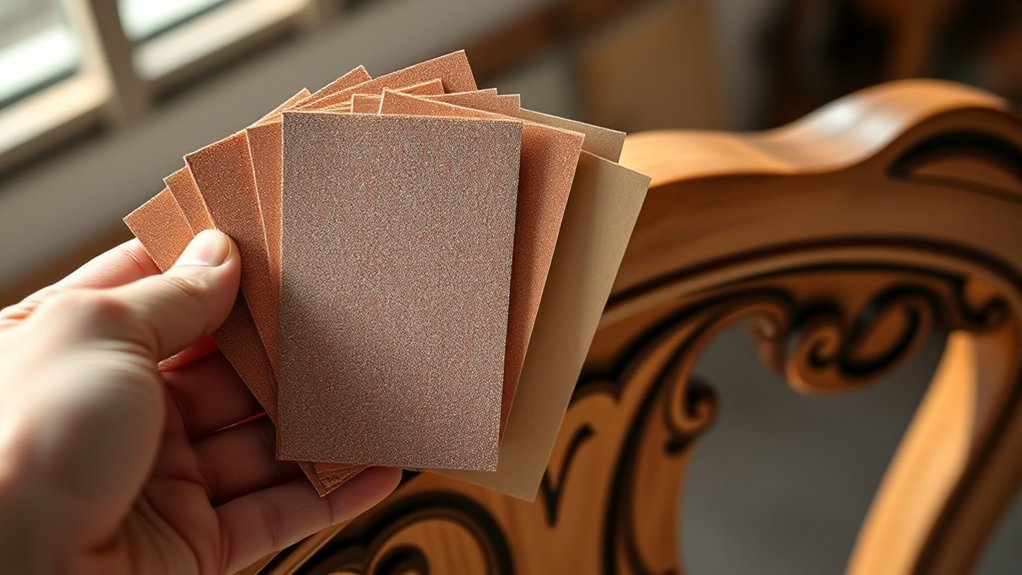
How do you choose the right sandpaper grit for detailed furniture? Selecting the perfect grit is essential for preserving delicate carvings while achieving a smooth finish. Start with precision grit to control abrasion without damaging intricate work.
Consider moisture management, as sanding damp wood requires different grit choices to avoid swelling or tearing.
Keep these guidelines in mind:
- Use coarse grit (60-80) only for removing old finishes, avoiding detailed areas.
- Switch to medium grit (120-150) for general smoothing.
- Apply fine grit (220-320) for final surface refinement.
- Opt for ultra-fine grit (400+) when preparing for finishing touches.
Sand Those Hard-to-Reach Spots Like a Pro
Moving through tight corners and intricate crevices can challenge even the most experienced woodworker. To sand those hard-to-reach spots like a pro, focus on edge control and tool ergonomics. Choose tools that allow precise movements and fit comfortably in your hand for extended work.
Small, flexible sanding tools or detail sanders excel here. Use gentle back-and-forth strokes to avoid rounding edges unintentionally.
| Tool Type | Best Use | Ergonomic Feature |
|---|---|---|
| Detail Sander | Intricate carvings | Compact grip, lightweight |
| Sanding Sticks | Narrow grooves, corners | Slim, easy to maneuver |
| Flexible Pads | Curved surfaces | Bendable, adapts to contours |
Mastering these tools ensures thorough sanding without sacrificing the integrity of your furniture’s details.
Finish Smoothly to Show Off Every Detail
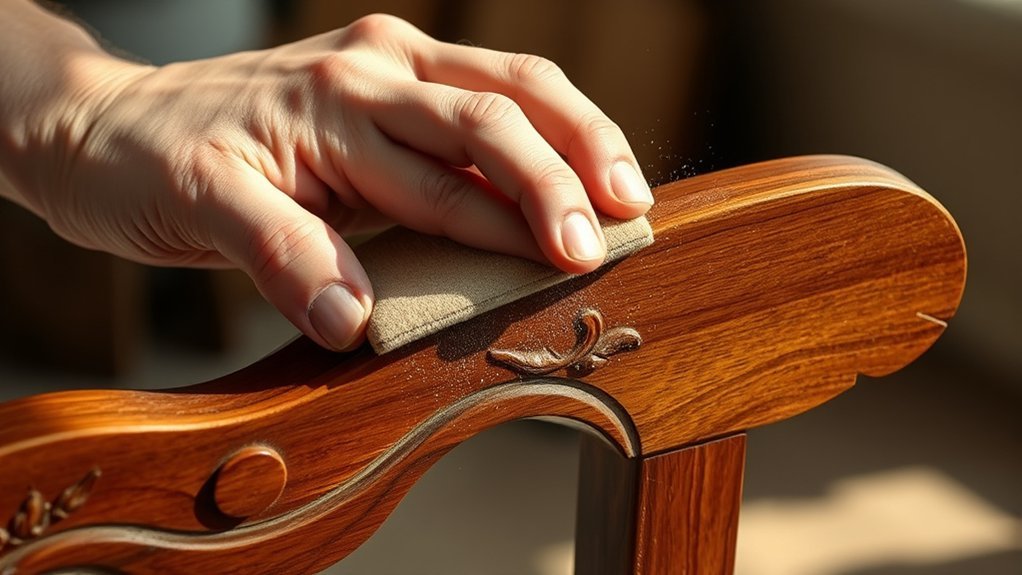
After mastering the art of sanding tight spots, you’ll want to focus on finishing smoothly to highlight every intricate detail. Achieving a smooth finish with an even texture demands careful attention to your sanding technique. This step ensures detail preservation and prepares the surface for staining or painting.
To finish smoothly:
To finish smoothly, use fine-grit sandpaper, sand with the grain, and carefully remove dust for flawless results.
- Use fine-grit sandpaper (220-320 grit) for the final pass, reducing scratches.
- Sand with the grain to maintain wood integrity and avoid uneven textures.
- Employ a sanding sponge or flexible pad to conform to curves without damaging details.
- Wipe the surface with a tack cloth to remove dust, revealing imperfections for a final light touch-up.
Following this methodical approach guarantees your furniture’s details will truly stand out.
Frequently Asked Questions
Can I Use an Electric Sander on Detailed Furniture?
You can use an electric sander on detailed furniture, but only with caution. Prioritize detailed furniture safety by selecting fine-grit pads and working slowly to avoid damage.
Hand-sanding intricate areas often yields better control and results.
How Do I Protect Delicate Wood From Moisture During Sanding?
You’ll protect wood by controlling moisture. Studies show 60% humidity prevents damage. Use a tack cloth to wipe dust and avoid water-based products during sanding.
Focus on moisture management, ignoring irrelevant details for an efficient sanding process.
What Safety Gear Should I Wear While Sanding Furniture?
You should wear safety gear including a dust mask or respirator, safety goggles, and hearing protection. Use dust collection systems to minimize airborne particles, keeping your workspace clean and protecting your lungs effectively during sanding.
How Long Does It Typically Take to Sand Detailed Furniture?
You won’t finish sanding detailed furniture faster than a snail on espresso. Timing varies from several hours to days. Your sanding pace considerations must balance patience and precision to avoid turning intricate carvings into modern art disasters.
Can I Refinish Antique Furniture Without Damaging Its Value?
You can refinish antique furniture, but respect refinishing ethics to preserve antique valuation. Carefully assess its condition, avoid over-sanding, and use gentle techniques to maintain original character, ensuring you don’t diminish its historical or monetary worth.
Conclusion
Now that you’ve mastered sanding detailed furniture, you’re armed with the precision and patience to transform even the most intricate pieces into stunning masterpieces. With the right tools, careful grit progression, and mindful attention to every crevice, your work will shine brighter than a thousand diamonds.
Keep sanding with purpose and respect for the grain, and you’ll effortlessly highlight every delicate detail. This approach brings timeless beauty to your cherished furniture.
By continuing to hone your technique, you ensure that sanding detailed furniture remains a rewarding and skillful craft.