Imagine sand as a silent shield, capable of cutting off oxygen and heat in an electrical fire. Can sand put out an electrical fire? You might think it’s a simple fix, but its effectiveness depends on specific conditions like the fire’s size and whether the power is off.
Before you reach for the nearest bucket, it’s important to understand when sand can truly help and when other methods are necessary. Using sand improperly might worsen the situation or fail to extinguish the fire effectively. Always assess the circumstances carefully to ensure safety.
Why Water Is Dangerous for Electrical Fires

Why should you never use water to extinguish an electrical fire? Water conducts electricity, creating a dangerous path that can cause electrocution or spread the fire further. When water contacts live electrical components, it can short-circuit circuits, escalating hazards and risking equipment damage.
In fire prevention, understanding these risks is crucial to ensure safe intervention. Although sand presents its own hazards if improperly applied, it doesn’t conduct electricity, making it safer around electrical fires.
You must avoid water to reduce the risk of shock and prevent fire escalation. Recognizing the limitations of water in electrical fire scenarios helps you prioritize safer alternatives that mitigate both fire hazards and electrical risks, enhancing overall safety in fire prevention strategies.
How Sand Extinguishes Electrical Fires
How exactly does sand extinguish electrical fires? Sand works by cutting off the fire’s oxygen supply, which is essential for combustion. When you apply sand to an electrical fire, it forms a dense, non-conductive layer over the burning material.
This layer effectively smothers the flames, preventing oxygen from reaching the fuel source. Unlike water, sand does not conduct electricity, so it won’t cause further electrical hazards or short circuits. Additionally, sand absorbs heat, helping to lower the temperature below the ignition point.
When to Use Sand on Electrical Fires
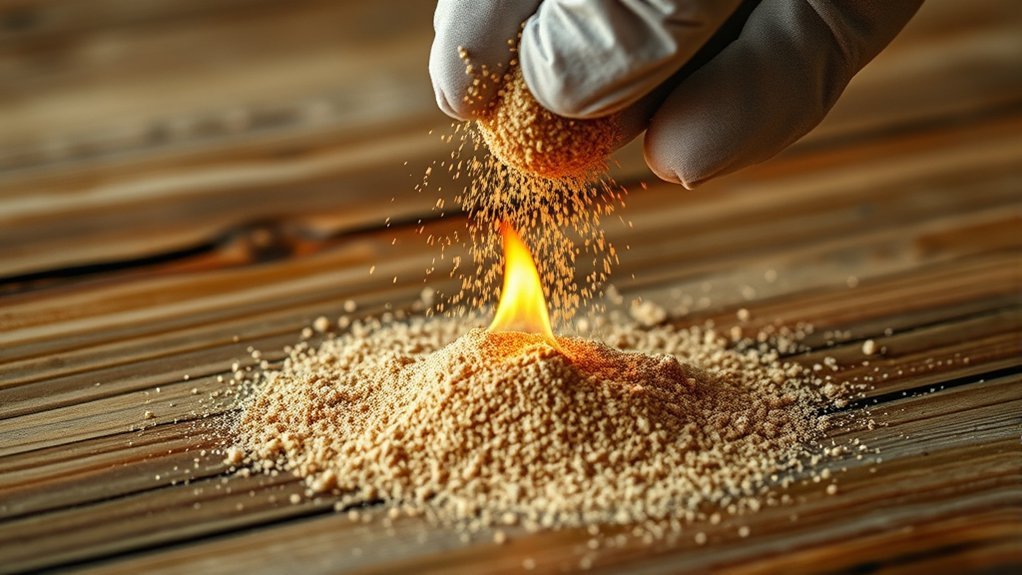
When should you choose sand to extinguish an electrical fire? Sand usage is most effective when you face small to moderate fires involving electrical equipment where water or foam extinguishers pose shock risks. Because sand is non-conductive, it minimizes electrical hazards by isolating the fire from oxygen without creating a conductive path.
You should apply sand directly onto the base of the fire, smothering flames and preventing re-ignition. Avoid sand usage if the fire is large, spreading rapidly, or in confined spaces where you cannot safely approach. Also, don’t use sand on energized equipment without de-energizing first to reduce risk.
In short, sand is best for localized electrical fires where you can safely control and contain the blaze without introducing further electrical danger.
Alternative Methods for Electrical Fires
Effective alternatives to sand for extinguishing electrical fires include specialized fire extinguishers designed to handle energized equipment safely. These devices create a nonconductive barrier, preventing electrical current flow while ensuring sparks containment.
You’ll often find Class C extinguishers, which use dry chemicals or clean agents, ideal for this purpose.
| Method | Key Feature |
|---|---|
| Dry Chemical | Interrupts electrical circuit, sparks containment |
| CO2 Extinguisher | Displaces oxygen, nonconductive barrier |
| Clean Agent | Leaves no residue, safe on electronics |
| Fire Blanket | Smothers fire, provides sparks containment |
Safety Tips for Handling Electrical Fires at Home
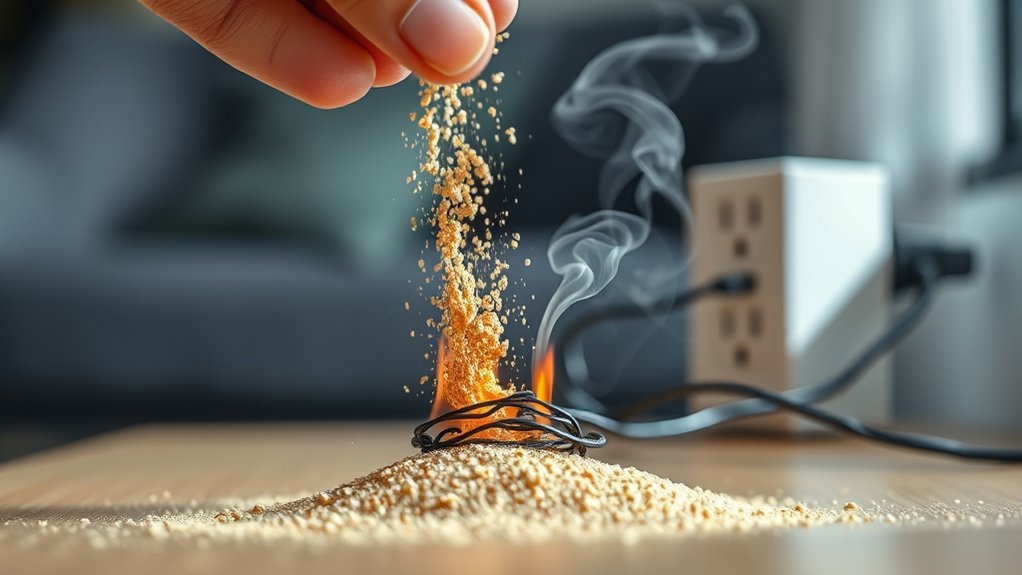
While specialized extinguishers and alternatives like sand play roles in managing electrical fires, knowing how to handle such incidents safely at home is equally important. Prioritize immediate power disconnection to reduce current flow, minimizing fire propagation risks.
Specialized extinguishers and sand help, but safely disconnecting power first is crucial in electrical fires.
Avoid water usage, as it compromises fire safety by conducting electricity and increasing shock hazards. Understand sand performance: sand smothers flames by cutting oxygen supply without conducting electricity, making it a viable option when conventional extinguishers aren’t available.
Always keep a Class C-rated extinguisher accessible and familiarize yourself with its operation. Maintain clear evacuation routes and never attempt to fight large or rapidly spreading electrical fires alone.
Regularly inspect electrical devices to prevent faults. These measures collectively enhance your home’s fire safety and reduce injury or property damage during electrical fire incidents.
Frequently Asked Questions
Can Sand Be Used on All Types of Electrical Equipment?
You shouldn’t use sand on all electrical equipment due to equipment compatibility and sand safety concerns. It’s effective only on specific fires where sand won’t damage components or conduct electricity. Always verify suitability first.
How Long Does Sand Take to Extinguish an Electrical Fire?
Like a clock’s tick, sand extinguishes an electrical fire almost instantly by smothering flames and cutting oxygen flow. For electrical fire safety, you’ll see results within seconds, provided the fire’s small and confined.
Is Sand Reusable After Putting Out an Electrical Fire?
You shouldn’t reuse sand after putting out an electrical fire due to contamination risks. Prioritize proper disposal over recovery, following strict safety protocols to avoid chemical hazards and guarantee effective fire safety management.
Can Sand Cause Damage to Electrical Devices?
Yes, sand can cause damage to electrical devices by infiltrating components.
For sand safety, you should avoid electrical risk by preventing sand contamination, ensuring it’s used carefully only when necessary to minimize potential harm to equipment.
Where Can I Buy Fire Extinguishing Sand?
You can buy fire extinguishing sand from fire safety vendors specializing in Can sand strategies. Look for industrial suppliers or online stores offering fire suppression materials, ensuring you select certified, high-quality sand designed specifically for fire emergencies.
Conclusion
When dealing with electrical fires, don’t put all your eggs in one basket by relying solely on sand. While sand can smother small flames by cutting off oxygen and absorbing heat, it’s essential to first de-energize the power.
For larger or spreading fires, you’ll need more effective methods like Class C extinguishers. Always prioritize safety, act quickly, and understand the limits of each tool to prevent disaster and protect yourself and your home.
In conclusion, while sand can help in some cases, knowing whether sand can put out an electrical fire safely is crucial before relying on it.