When choosing an electric sander, you need to match the electric sander to your project’s demands. Are you smoothing a large surface, working in tight corners, or stripping heavy material? Each type—from belt to orbital to detail sanders—offers distinct benefits and trade-offs.
Understanding these differences helps you avoid frustration and get the finish you want. But what features really matter, and which sander fits your budget and tasks best?
Types of Electric Sanders and Their Uses
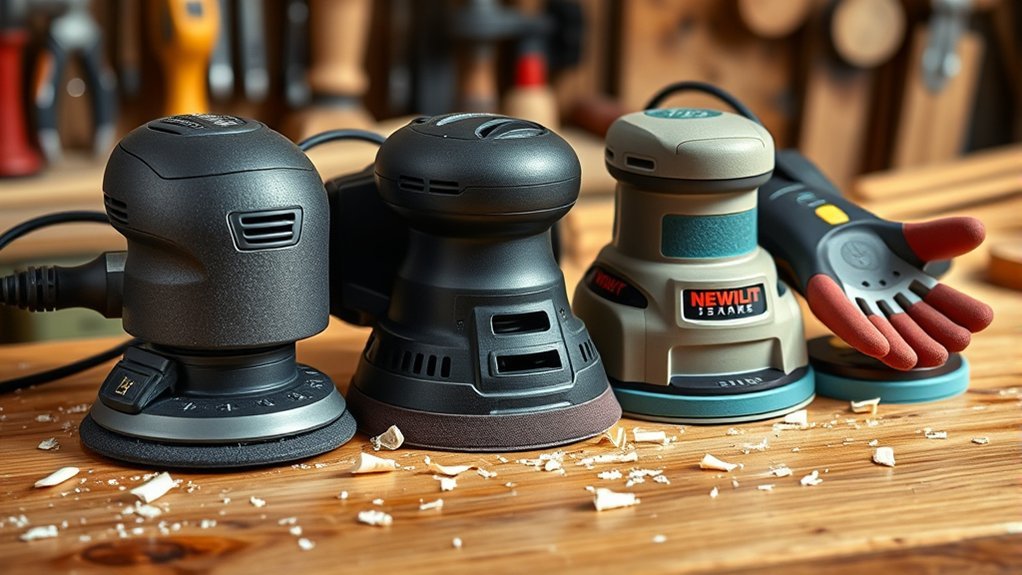
Wondering which electric sander suits your project best? You’ll find three main types: orbital, belt, and detail sanders. Orbital sanders are versatile, perfect for smooth finishes and light sanding without causing unexpected noise.
Looking for the right electric sander? Choose from orbital, belt, or detail models for any sanding task.
Belt sanders handle heavy-duty work, quickly removing large amounts of material but tend to be louder. Detail sanders reach tight corners and intricate areas, ideal for precision tasks.
When choosing, consider dust filtration. Models with efficient dust collection keep your workspace cleaner and improve visibility.
Good dust filtration also protects your health by reducing airborne particles. By understanding these types and their uses, you can pick the right sander that balances power, noise level, and cleanliness for your specific needs.
Key Features to Look for in an Electric Sander
You’ll want to focus on power and speed options to match the materials and tasks you’re working on. Make sure the sander is compatible with various abrasives for versatility.
Also, check the dust collection system to keep your workspace clean and improve sanding efficiency.
Power and Speed Options
How much power and speed do you really need in an electric sander? It depends on your project. Higher power means faster material removal but can be overkill for delicate tasks.
Variable speed settings offer flexibility, letting you adjust for different surfaces without switching tools. Don’t get distracted by unrelated topics like brand hype or irrelevant discussion about features that don’t impact performance.
Focus on the wattage or amperage to gauge power. Around 2 to 3 amps is standard for most handheld sanders. For speed, look for models with adjustable RPMs, typically ranging from 6,000 to 12,000.
This range covers both aggressive sanding and fine finishing. Choosing the right power and speed settings ensures efficient work and better control, so you avoid damaging your project or wasting time.
Abrasive Compatibility
After choosing the right power and speed, the next step is making sure your sander works well with the abrasives you plan to use. Abrasive compatibility is essential because it determines how effectively the sander removes material and the quality of the finish.
Look for a sander that supports a variety of abrasive grit sizes and types, such as sandpaper sheets, discs, or pads, depending on your projects. This flexibility allows you to switch abrasives easily for different surfaces and tasks.
Also, check that the sander’s attachment system securely holds the abrasives in place during operation. While abrasive compatibility affects performance, remember that it interacts with dust collection efficiency, so choosing a sander that balances both will improve your overall sanding experience and workspace cleanliness.
Dust Collection Efficiency
Why does dust collection efficiency matter when choosing an electric sander? Efficient dust control keeps your workspace cleaner, improves visibility, and protects your health by reducing airborne particles. It also helps maintain the sander’s performance by preventing clogging. When shopping, look for features that enhance dust collection without adding excessive noise.
Consider these key points:
- Integrated dust bags or canisters that are easy to empty
- Compatibility with vacuum attachments for superior dust control
- Designs that minimize noise, contributing to noise reduction during operation
How to Match Your Project to the Right Electric Sander
To pick the right electric sander, start by considering the material you’re working on and the finish you want to achieve.
You’ll also need to match the sander’s power and size to your project’s demands. This approach guarantees you get efficient results without overworking your tool or the surface.
Project Surface Material
How do you choose the right electric sander for your project? Start by considering the project surface and its material compatibility. Different surfaces demand different sanders to avoid damage and ensure efficiency.
For example, softer materials like pine require gentler sanding, while harder materials like metal or hardwood need more aggressive options.
Here’s a quick guide to match your project surface with the right sander:
- Wood: Orbital or detail sanders work well for smooth, even finishes without gouging.
- Metal: Use a belt or disc sander with appropriate abrasive pads made for metal.
- Paint or varnish removal: A random orbital sander offers controlled sanding without overly damaging the underlying material.
Choosing the right tool ensures you respect the material’s properties and achieve the best results.
Desired Finish Quality
What level of smoothness do you want to achieve with your project? Your desired finish quality directly influences the type of electric sander you should choose.
For rough surface prep or removing old finishes, a belt sander offers aggressive material removal but leaves a rougher surface. If you aim for a finer finish, an orbital or random orbital sander provides better control and smoother results.
These sanders excel at refining surfaces without gouging the wood, making them ideal for final sanding before staining or painting. Consider the finish quality you need: coarse sanding requires power, while fine finish demands precision.
Matching your sander to your project’s finish quality ensures efficient work and an optimal surface prep that sets you up for a flawless end result.
Sander Power And Size
Choosing the right power and size for your electric sander depends on the scale and demands of your project. A larger, more powerful sander tackles heavy material removal quickly, but it can be unwieldy for small, detailed work.
Meanwhile, a compact, lightweight model offers better sander ergonomics, reducing fatigue during fine sanding tasks.
Consider these factors to match your sander to your needs:
- Project size: Bigger surfaces require higher power and larger sanding pads.
- Precision: Smaller sanders offer control for delicate finishes.
- Dust control: Efficient dust collection keeps your workspace clean and prolongs sander life.
Picking the right balance of power, size, and dust control ensures your sander performs comfortably and effectively.
Why Orbital and Random Orbital Sanders Are Popular
Why do so many woodworkers and DIY enthusiasts reach for orbital and random orbital sanders? These tools offer versatility and ease of use, making them ideal for a variety of sanding tasks.
When comparing orbital vs. random orbital, the main difference lies in the motion: orbital sanders move in a consistent circular pattern, while random orbital sanders combine circular and elliptical motions to reduce swirl marks. This makes random orbital sanders especially popular for finishing work.
Both types often include dust extraction systems, which help keep your workspace cleaner and improve sanding efficiency by preventing clogging. You’ll appreciate how these sanders balance power, control, and convenience, making them go-to choices for everything from smoothing surfaces to prepping for paint or stain.
When to Use Electric Belt Sanders for Heavy-Duty Jobs
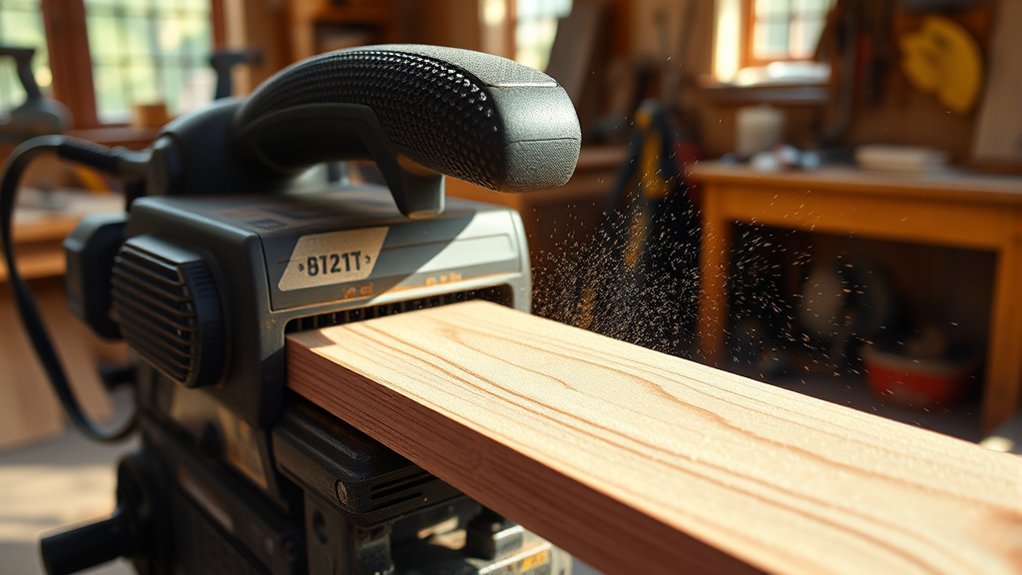
While orbital and random orbital sanders excel at fine finishing and detail work, they may not be the best choice when you need to remove large amounts of material quickly. That’s where heavy duty belt sand options come in handy.
Electric belt sanders are built for tough jobs, offering powerful sanding with abrasive belt durability that stands up to extended use. You’ll want to use them when:
- Stripping old paint or varnish from large surfaces
- Shaping rough lumber or smoothing uneven wood quickly
- Preparing floors or decks before refinishing
These sanders handle aggressive sanding tasks without overheating or wearing out belts too fast. When your project demands speed and strength, an electric belt sander is your go-to tool, saving you time and effort on heavy-duty jobs.
How Detail Sanders Help With Tight Spaces and Fine Work
Where can you turn when your sanding project involves tight corners or intricate details? That’s where detail sanders shine. Their compact, pointed tips let you reach tight spaces that larger sanders simply can’t access.
One of the key detail sander advantages is their ability to deliver precision sanding on small surfaces without damaging surrounding areas. You’ll find them ideal for fine work like sanding window frames, furniture edges, and carved wood.
Detail sanders provide precise sanding on small surfaces without harming nearby areas—perfect for delicate woodworking tasks.
Their lightweight design also gives you better control, reducing user fatigue during detailed tasks. If your project demands accuracy in confined spots, a detail sander offers a practical solution.
It’s a smart investment for anyone who frequently works on detailed woodworking or restoration jobs requiring finesse and access to tight spaces.
Choosing the Best Electric Sander for Your Budget
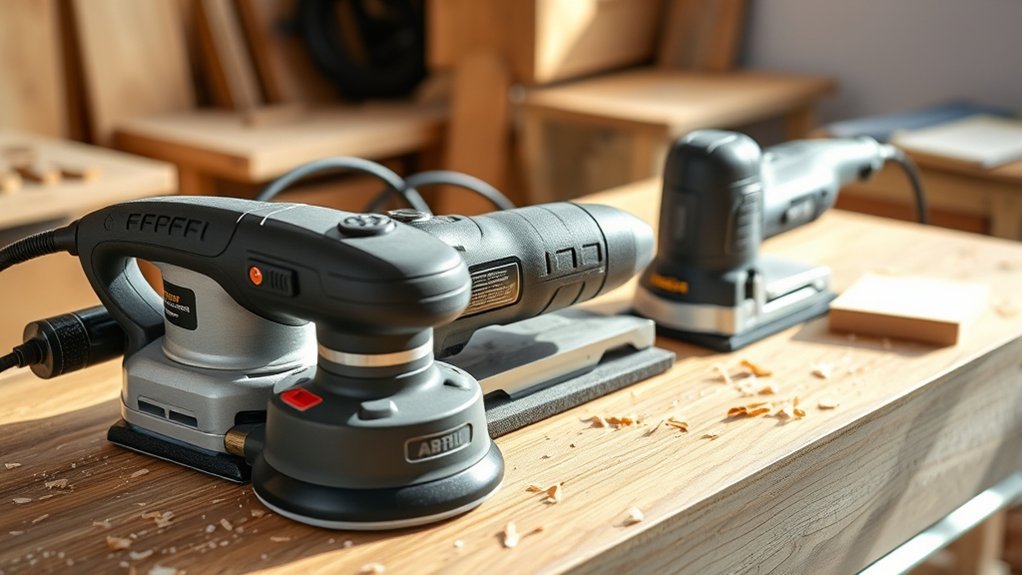
How do you find the right electric sander without breaking the bank? Start by balancing budget considerations with the sander’s features and durability. It’s tempting to pick the cheapest option, but investing a bit more often pays off in performance and lifespan.
Also, don’t overlook warranty coverage. It can save you money if the tool fails.
Focus on these key points:
- Prioritize models with solid warranty coverage for peace of mind.
- Choose a sander type that matches your typical projects to avoid overspending.
- Read reviews to ensure the sander performs well within your budget range.
Frequently Asked Questions
How Do I Properly Maintain and Clean My Electric Sander?
You should follow a regular cleaning routine by removing dust, checking pads, and lubricating moving parts. Stick to a maintenance schedule to inspect brushes and cords, ensuring your electric sander stays efficient and lasts longer.
Are Electric Sanders Safe for Beginners to Use?
Yes, electric sanders are safe for beginners if you choose models with safety features like dust collection and speed control.
You’ll minimize beginner risk by wearing protective gear and following instructions carefully for better results.
What Types of Sandpaper Grit Are Best for Different Surfaces?
Think of sandpaper grit like a ladder. Start with coarse grit (40-60) for rough surfaces, then medium (80-120) for smoothing, and fine (150-220) for finishing.
Use dust collection with all types of grinders for cleaner work.
Can Electric Sanders Be Used on Metal or Only Wood?
You can use electric sanders on metal, but choose the right grit to avoid damaging the edge grain. For wood, consider moisture resistance too.
Always match your sander and sandpaper to your material’s needs.
How Noisy Are Electric Sanders During Operation?
Electric sanders aren’t exactly silent operation; they can roar louder than a lion. But models with dust suppression help reduce noise and mess, making your work smoother and less disruptive.
Pick one with these features for comfort.
Conclusion
Choosing the right sander makes your project smoother and faster. For example, if you’re refinishing a worn deck, a belt sander quickly removes old paint but needs careful handling near edges.
On the other hand, a random orbital sander works great for furniture, giving you a fine finish without gouging. Think about your typical tasks, prioritize dust control and speed settings, and pick a model that fits your budget and project needs.
When deciding what type of electric sander to buy, consider the specific requirements of your projects. This will help ensure you get the best tool for efficient and quality results.