You might find it surprising that palm trees can grow in sand and not only survive but also thrive in sandy soil, despite its poor nutrient content and rapid drainage.
However, success depends on selecting species suited to loose substrates and carefully managing soil amendments, watering, and nutrients.
Understanding these specific requirements is essential if you want to grow healthy palms in such challenging conditions.
But what exactly does that entail?
Can Palm Trees Grow in Sandy Soil?

How well do palm trees adapt to sandy soil? You’ll find that certain palm species tolerate sandy substrates due to their root systems designed for rapid water absorption and anchorage in loose media. However, sandy soil’s low water retention demands careful palm irrigation to prevent drought stress.
When you apply sandy mulch around the base, it helps reduce evaporation and stabilizes temperature, improving moisture availability. You must irrigate frequently but with moderate volume to avoid nutrient leaching, as sandy soil drains quickly.
Which Palm Tree Species Thrive Best in Sandy Soil?
You’ll find that certain palm species, such as the Sabal palmetto and Phoenix roebelenii, have structural and physiological traits tailored for sandy soils. These adaptations include extensive root systems for stability and efficient water uptake in low-nutrient environments.
Understanding which species thrive in sandy conditions helps you select palms best suited for your landscape.
Best Palm Species
Although many palm species can tolerate sandy soil, certain varieties exhibit superior adaptability and growth in these conditions due to their root structure and nutrient uptake mechanisms. To best thrive in sandy substrates, you should consider species like the Coconut Palm (Cocos nucifera), known for its extensive fibrous root system that efficiently anchors in loose sand and accesses deep water reserves.
The Date Palm (Phoenix dactylifera) also excels, with roots adapted to absorb sparse nutrients common in sandy coastal habitats. Additionally, the Sabal Palm (Sabal palmetto) demonstrates resilience in nutrient-poor sandy soils, contributing to palm biodiversity in coastal ecosystems.
Selecting these species ensures you benefit from palms naturally evolved to flourish where sand predominates, optimizing both growth and survival in challenging environments.
Sandy Soil Adaptations
Why do some palm species thrive better than others in sandy soil? It comes down to specific adaptations that enhance their survival in such challenging conditions. Palms suited for sandy environments exhibit traits that improve drought tolerance and wind resistance, critical for thriving where water retention is low and winds are strong.
Here are three key adaptations:
- Extensive Root Systems: These roots penetrate deep and spread wide, maximizing water uptake in well-drained sand.
- Thick, Waxy Cuticles: This reduces water loss via transpiration, enhancing drought tolerance.
- Flexible Trunks and Fronds: They bend without breaking, providing superior wind resistance.
Species like the Canary Island Date Palm and Coconut Palm possess these traits, making them ideal for sandy soils where others might fail.
What Sandy Soil Conditions Support Palm Tree Growth?
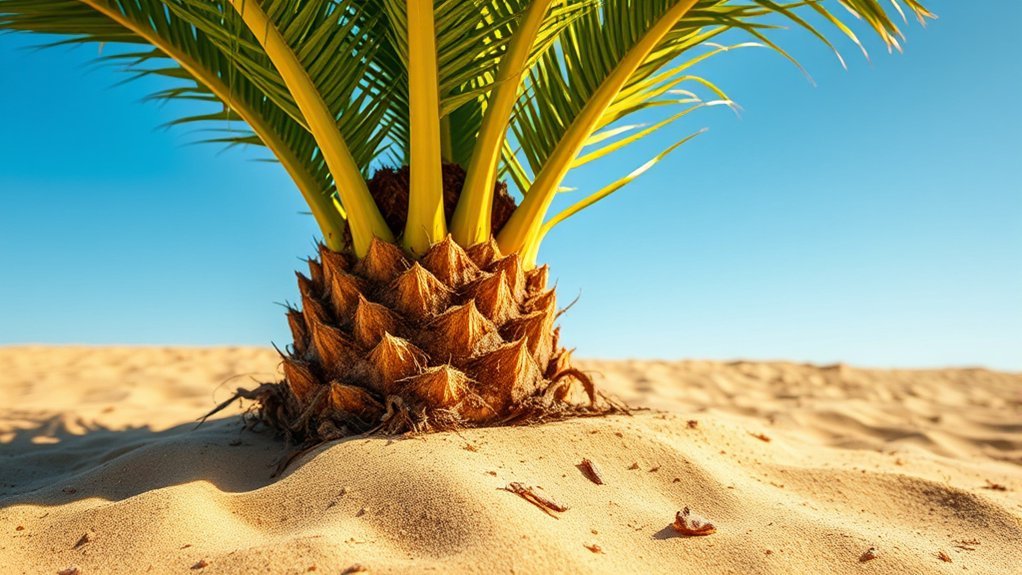
You’ll need sandy soil that balances excellent drainage with consistent moisture retention to support palm tree growth.
Pay close attention to nutrient availability, since sand typically lacks essential minerals like nitrogen and potassium. Adjusting these factors ensures your palm roots receive oxygen and nutrients without becoming waterlogged.
Nutrient Requirements In Sand
A well-balanced nutrient profile in sandy soil is essential for palm trees to thrive, as sand inherently lacks organic matter and retains nutrients poorly. The soil texture influences nutrient cycling, limiting the natural replenishment of vital elements.
To support palm growth in sand, focus on these aspects:
- Organic Matter Addition: Incorporate compost or mulch to enhance nutrient retention and improve soil texture, facilitating better nutrient cycling.
- Targeted Fertilization: Apply fertilizers rich in potassium, magnesium, and nitrogen, as these macronutrients are crucial for palm development but often deficient in sandy soils.
- Micronutrient Supplementation: Monitor and supplement essential micronutrients like zinc, manganese, and iron to prevent deficiencies common in sandy substrates.
Drainage And Moisture Levels
How does sandy soil’s drainage and moisture content influence palm tree health? You need to focus on drainage considerations and moisture management because sandy soil drains quickly, which can lead to water stress for palms.
Proper moisture balance is essential; too little water causes dehydration, while too much leads to root rot. You should guarantee sandy soil retains enough moisture without becoming waterlogged.
| Factor | Optimal Range | Impact on Palm Trees |
|---|---|---|
| Drainage Rate | Fast but not extreme | Prevents root suffocation |
| Moisture Content | Moderate (10-20%) | Supports nutrient uptake |
| Watering Frequency | Frequent but light | Maintains consistent moisture |
Adjust irrigation based on these parameters to promote healthy palm growth.
How to Prepare Sandy Soil for Planting Palm Trees
Where should you begin when preparing sandy soil for planting palm trees? Start with careful soil testing to determine nutrient content, pH levels, and organic matter. This step ensures you address sandy soil’s typical deficiencies and acidity.
Next, focus on improving soil structure and fertility by:
- Incorporating organic matter, such as compost or well-rotted manure, to increase water retention and nutrient availability.
- Adding slow-release fertilizers formulated for palms, considering micronutrients vital for growth.
- Implementing wind protection measures, like installing barriers or planting windbreak shrubs, to reduce soil erosion and moisture loss.
Watering and Caring for Palms in Sandy Soil
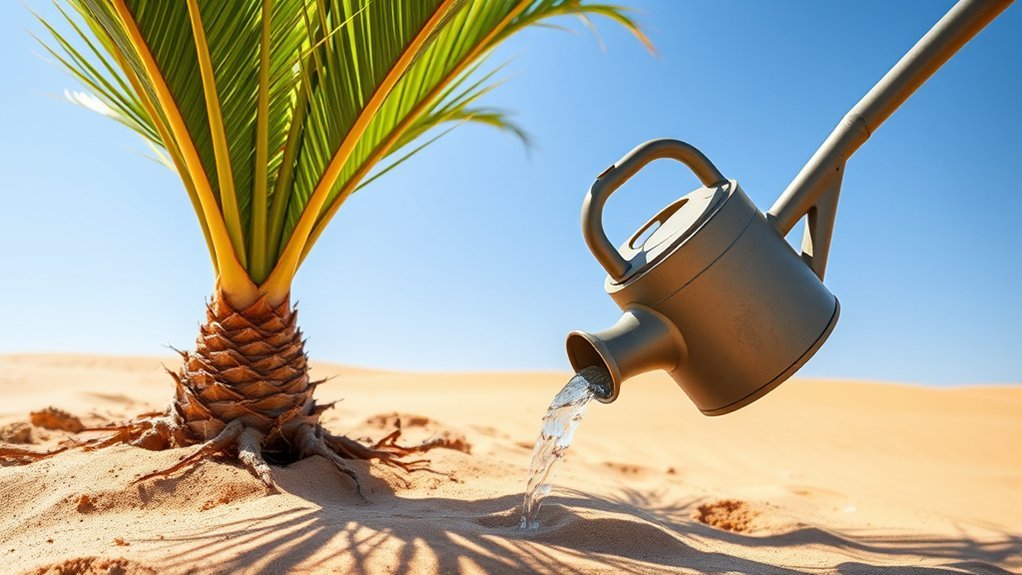
Why does watering palm trees in sandy soil require special attention? Sandy soil drains rapidly, demanding precise watering strategies to prevent dehydration and nutrient loss. You’ll need to water deeply but infrequently, encouraging roots to grow downward and improving root management.
Mulching helps retain moisture, while monitoring soil moisture regularly prevents overwatering. Below is a concise guide:
| Task | Frequency | Purpose |
|---|---|---|
| Deep watering | Weekly | Promote deep root growth |
| Mulching | Monthly | Retain soil moisture |
| Soil moisture check | Twice weekly | Prevent water stress |
| Fertilization | Every 6 weeks | Nutrient replenishment |
| Root inspection | Quarterly | Assess root health |
Following these steps ensures your palms thrive in sandy conditions by maintaining optimal hydration and robust root systems.
Troubleshooting Common Palm Tree Problems in Sandy Soil
When palm trees struggle in sandy soil, pinpointing the exact cause can be challenging due to the soil’s unique properties. You’ll need targeted ideas to diagnose and address issues effectively. Consider these common problems:
- Nutrient Deficiency: Sandy soil drains quickly, leaching essential nutrients. Yellowing leaves often indicate a lack of magnesium or potassium.
- Overwatering or Underwatering: Sandy soil’s rapid drainage can lead to root stress. Check moisture levels to avoid root rot or drought stress.
- Palm Pests: In sandy environments, pests like spider mites and scale insects thrive. Inspect fronds regularly for early signs of infestation.
Tips for Creating a Healthy Palm Oasis in Sandy Landscapes
Addressing nutrient deficiencies, moisture imbalances, and pest control lays the groundwork for cultivating palms in sandy soil. To create a healthy palm oasis, start by enhancing palm hydration through regular, deep watering that compensates for sand’s rapid drainage.
Apply sandy mulch around the base to reduce evaporation, moderate soil temperature, and improve moisture retention. Incorporate organic matter into the sand to boost nutrient availability and support microbial activity.
Use a balanced, slow-release fertilizer formulated for palms to prevent nutrient leaching. Monitor soil pH regularly, aiming for 6.0 to 7.0, and adjust as needed to optimize nutrient uptake.
Implement integrated pest management strategies, inspecting palms frequently for signs of infestation and applying targeted treatments promptly. These precise measures ensure your palms thrive despite sandy landscape challenges.
Frequently Asked Questions
How Long Does It Take for Palm Trees to Mature in Sandy Soil?
You’ll see palm trees mature in sandy soil within 5 to 15 years, depending on growth rate and soil moisture.
Maintaining consistent moisture accelerates growth since sandy soil drains quickly, requiring careful irrigation for optimal development.
Can Palm Trees Survive Salt Spray Near Coastal Sandy Beaches?
Like a sailor braving the storm, you’ll find palm trees can survive salt spray and coastal wind due to their waxy leaves and salt-excreting glands. These features protect them by limiting salt absorption and preventing dehydration.
Do Palm Trees Need Fertilizer When Growing in Sand?
You’ll need to apply fertilizer when growing palm trees in sand because nutrient availability is low. Timing fertilizer applications during active growth phases ensures optimal nutrient uptake and supports healthy development in the nutrient-poor sandy substrate.
Are Palm Tree Roots Prone to Damage in Sandy Environments?
You’ll find palm root stability can be compromised in sandy soils due to low sand nutrient availability. This makes roots more vulnerable to damage, so you should enhance soil conditions to support stronger root development and anchor palms securely.
Can Sandy Soil Increase the Risk of Palm Tree Diseases?
Yes, sandy soil can increase disease risk by promoting water stress. You should implement a precise irrigation strategy and disease prevention measures to maintain optimal moisture, preventing pathogens from weakening your palm trees in such well-draining conditions.
Conclusion
You can definitely grow palm trees in sand, but it takes more than just planting and hoping. Like a ship navigating shifting dunes, you must carefully manage drainage, nutrients, and watering to keep palms thriving. Choose species suited for sandy soils and amend the ground with organic matter.
With precise care and patience, your palms will not only survive but flourish. By understanding the unique challenges of sandy environments, you can transform barren sand into a vibrant, tropical oasis. This is how you successfully grow palm trees in sand.