You might think all hand sanders work the same, but choosing the best hand sander can make or break your project’s finish.
Depending on whether you need fine detail, quick material removal, or access to tight corners, the ideal sander varies.
Understanding key features like vibration control, dust management, and ergonomic design will help you avoid costly mistakes.
Let’s explore how to match a sander’s strengths to your specific needs.
Choosing the Right Hand Sander for Your Project
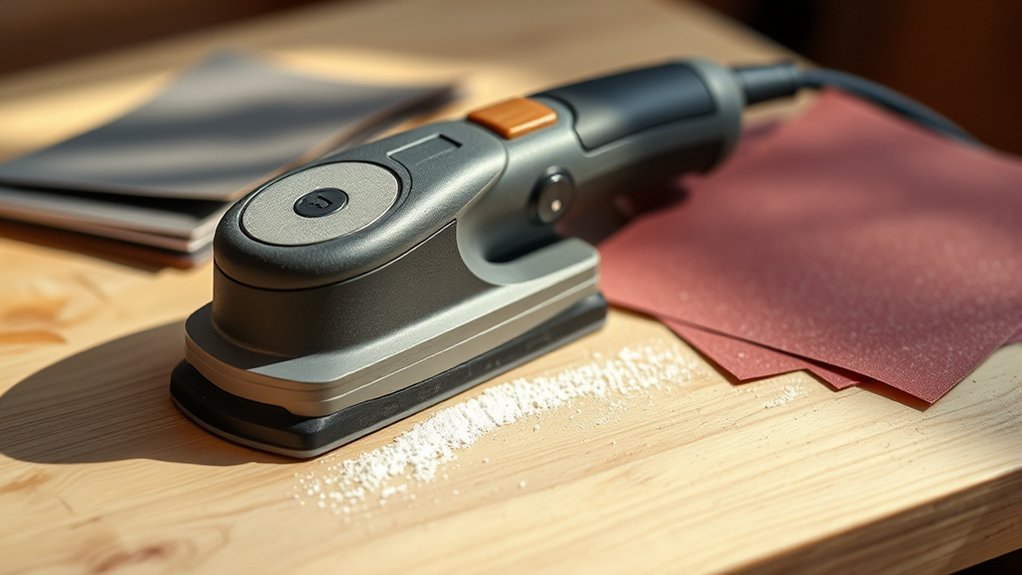
When selecting a hand sander, what key factors should you consider to match your project’s requirements? First, evaluate hand sander ergonomics to ensure comfort and reduce fatigue during extended use. Look for models with well-designed grips and balanced weight distribution to maintain control and precision.
Next, confirm dust collection compatibility; effective dust extraction systems prevent debris buildup, improving visibility and prolonging the tool’s lifespan. Make sure the sander supports standard dust bags or connects easily to your workshop vacuum.
Additionally, consider the power source and vibration levels, as these impact performance and user comfort. By prioritizing ergonomics and dust management, you’ll select a hand sander that enhances efficiency and safety, perfectly suited to your specific sanding tasks.
Different Types of Hand Sanders and Their Uses
How do you choose the right type of hand sander for your specific task? Understanding different sander designs helps. Orbital sanders move in small circles, ideal for fine finishing and smooth surfaces. Detail sanders have pointed tips, perfect for tight corners and intricate work.
Belt sanders use a continuous loop of sandpaper, suited for heavy material removal on large, flat surfaces. Palm sanders offer lightweight control for general-purpose sanding.
Each type often includes dust collection systems to maintain a clean workspace and improve visibility. Efficient dust collection prevents clogging, enhances sanding performance, and reduces airborne particles.
When selecting, consider the surface type, required finish, and accessibility. Matching the sander design to your project ensures precision and efficiency while minimizing cleanup.
Key Features to Look for in a Hand Sander
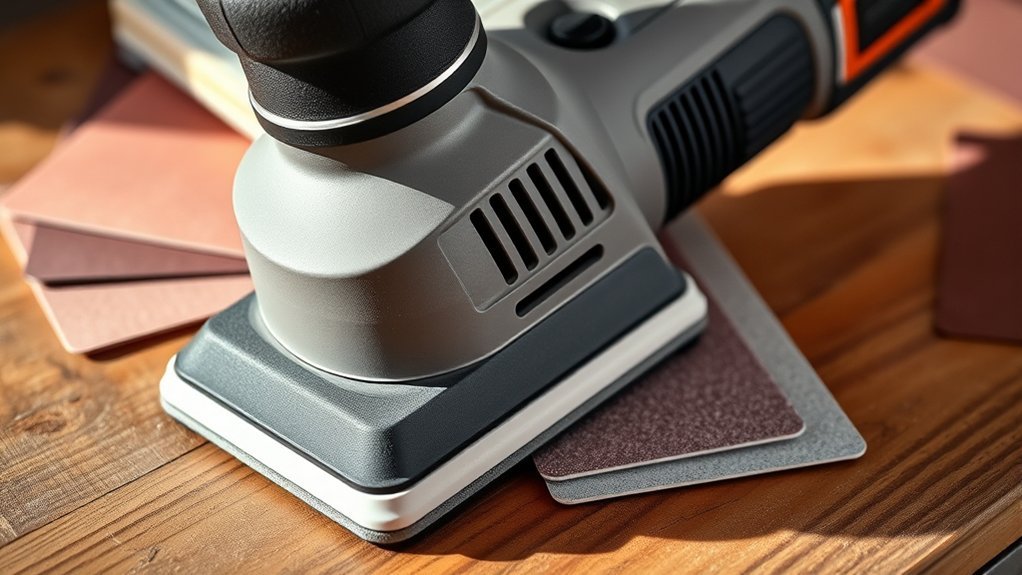
Choosing the right type of hand sander sets the foundation, but focusing on key features determines how well the tool performs in your hands. Prioritize effective dust collection to maintain a clean workspace and prolong sanding pad life.
Noise reduction matters if you’re working in noise-sensitive environments or for extended periods. Look for adjustable speed settings to tailor sanding aggressiveness to your project.
| Feature | Importance | Benefit |
|---|---|---|
| Dust Collection | High | Keeps workspace clean, improves health |
| Noise Reduction | Medium to High | Enhances comfort, reduces fatigue |
| Variable Speed | Medium | Customizes finish quality and control |
These features ensure your hand sander delivers consistent, precise, and comfortable performance every time.
Best Hand Sanders by Skill Level and Budget
Which hand sander suits your skill level and budget best depends on balancing performance, durability, and cost. For beginners, a simple orbital hand sander offers ease of use and affordability, providing effective hand sanding without overwhelming features.
Intermediate users benefit from a dual-action sander, which delivers increased control and versatility, justifying a moderate price point in a budget comparison. Advanced professionals should consider a high-quality random orbital or detail sander, designed for precision and extended use, despite a higher initial investment.
When selecting, assess the sander’s ergonomics, motor power, and dust collection efficiency relative to your skill level and project demands. Prioritize tools that maximize productivity while fitting your budget, ensuring you get optimal value for hand sanding tasks without overspending.
Tips to Maintain Your Hand Sander for Longer Life
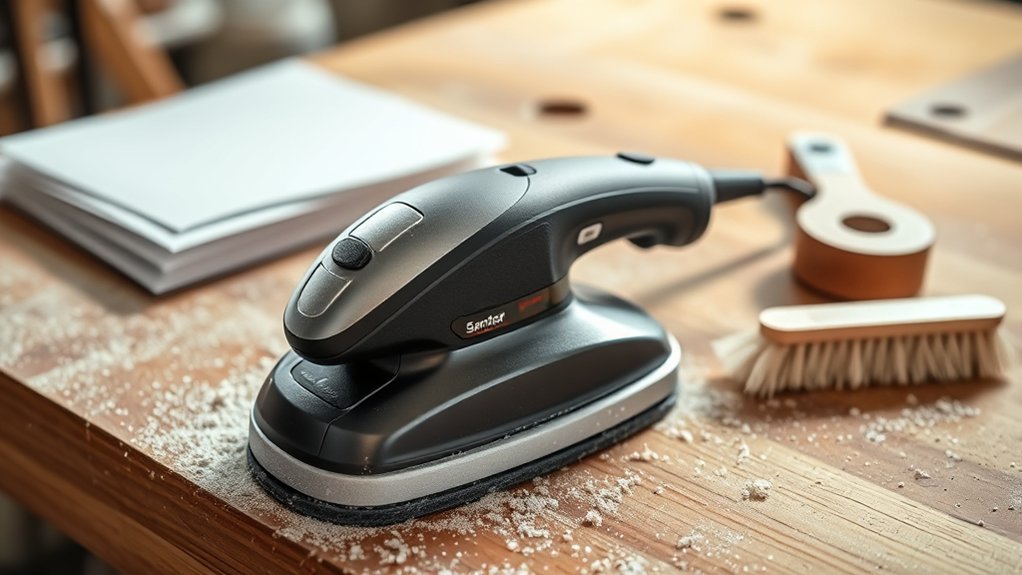
Want to extend the lifespan of your hand sander? Start by regularly inspecting and tightening all screws and fasteners to prevent edge noise caused by loose components.
Regularly check and tighten screws to prevent noise and extend your hand sander’s lifespan.
Clean the sanding pad after each use to avoid material buildup, which can reduce efficiency and cause uneven sanding. Implement effective dust control by emptying the dust bag or canister frequently and cleaning air vents to maintain optimal motor cooling.
Replace worn sanding pads promptly to ensure smooth operation and avoid damage to the tool. Lubricate moving parts according to the manufacturer’s instructions to reduce friction and wear.
Finally, store your hand sander in a dry, dust-free environment to prevent corrosion and electrical issues, ensuring your tool performs reliably over time.
Frequently Asked Questions
Can I Use a Hand Sander on Painted Surfaces Without Damage?
You can use a hand sander on painted surfaces, but you must choose fine-grit sandpaper and apply light pressure to avoid damaging delicate finishes.
Always test a small area first to ensure the finish remains intact.
What Safety Gear Is Recommended When Using a Hand Sander?
You’ll need safety gear like goggles, a dust mask, and sturdy footwear to guard against flying debris and slipping hazards. Maintain hazard awareness by wearing gloves and ear protection, ensuring precise, safe operation throughout your sanding task.
How Do I Dispose of Used Sandpaper Responsibly?
When disposing sandpaper, you should check for reusable scraps or compost natural fiber backing. Follow sustainability practices by avoiding landfill waste and recycling metal or plastic components where possible to minimize environmental impact responsibly.
Are Hand Sanders Suitable for Outdoor Furniture Restoration?
Yes, hand sanders are suitable for outdoor furniture restoration. You’ll efficiently remove old paint and smooth surfaces, ensuring better adhesion for new finishes.
Choose a model with variable speed and durable sandpaper for optimal paint removal results.
Can a Hand Sander Be Used for Metal Surfaces?
When restoring vintage car parts, you can use a hand sander on metal surfaces. Hand sanding pros include precision and control; just ensure you use fine-grit sandpaper and follow dust collection tips to minimize metal dust hazards.
Conclusion
Choosing the best hand sander is like selecting the right tool to sculpt your masterpiece—each type serves a distinct purpose. Focus on ergonomics, dust management, and speed control to guarantee precision and comfort. Whether you’re smoothing fine finishes or tackling rough surfaces, picking the right sander tailored to your project and skill level will boost efficiency and extend tool life.
Maintain it well, and your sander will be a reliable partner for years to come. Ultimately, investing time in choosing the best hand sander ensures your work is both precise and enjoyable.