Choosing the best orbital sander is like finding the right tool in a craftsman’s arsenal—it’s all about precision and efficiency. The best orbital sander should balance power and control, with features like variable speed and effective dust collection.
But how do you weigh corded versus cordless options or identify the best fit for your skill level and project needs? Understanding these nuances can make all the difference in your work.
What an Orbital Sander Does and Why It Matters
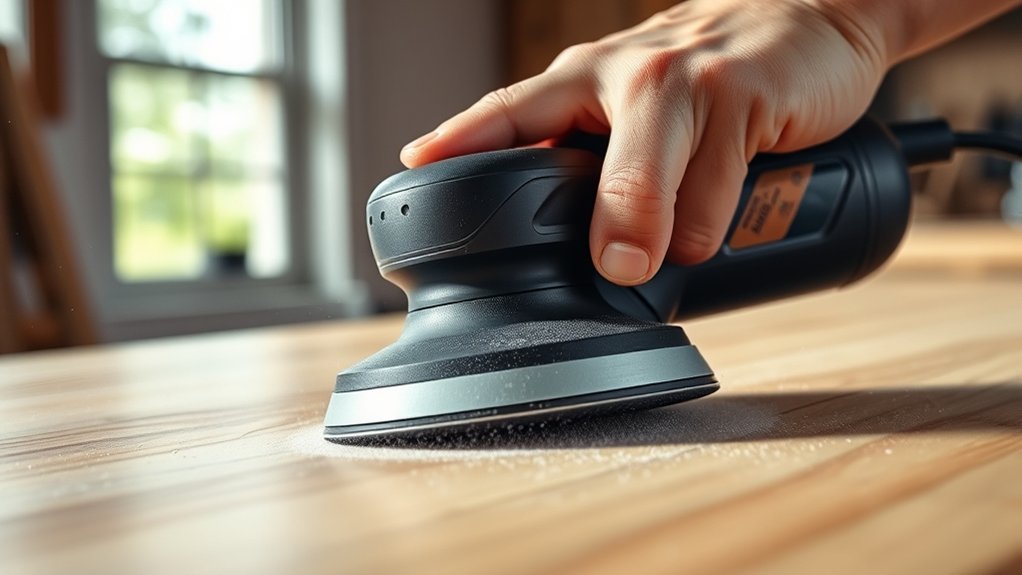
How does an orbital sander transform your woodworking or finishing projects? By leveraging orbital sander physics, it delivers rapid, circular sanding motions combined with random orbits to minimize swirl marks and achieve a smooth surface.
This precise motion allows you to remove material efficiently without gouging the wood. Understanding dust dynamics is crucial since sanding generates fine particles; the sander’s design incorporates mechanisms to capture dust at the source, preserving visibility and reducing airborne contaminants.
This improves both your workspace cleanliness and health safety. By mastering these principles, you enhance finishing quality and extend your tool’s efficiency. Using an orbital sander isn’t just about speed; it’s about controlled abrasion and effective dust management, making your projects look professional and last longer.
Key Features to Look For: Speed, Grip, and Dust Control
Why does speed matter when choosing an orbital sander? Speed controls how effectively the sander removes material and finishes surfaces. A variable speed setting lets you adjust for different tasks, avoiding damage or inefficiency.
When evaluating key features, focus on:
- Speed control – Enables precision for coarse or fine work.
- Ergonomic grip – Reduces fatigue and enhances control.
- Dust collection – Maintains a clean workspace and prevents clogging.
- Build quality – Ensures durability and consistent performance.
Don’t get distracted by irrelevant topics or unrelated concepts like brand hype or unnecessary attachments. Stick to these core features to identify the best orbital sander that meets your technical needs efficiently and reliably.
Corded vs. Cordless Orbital Sanders: Which Is Right for You?
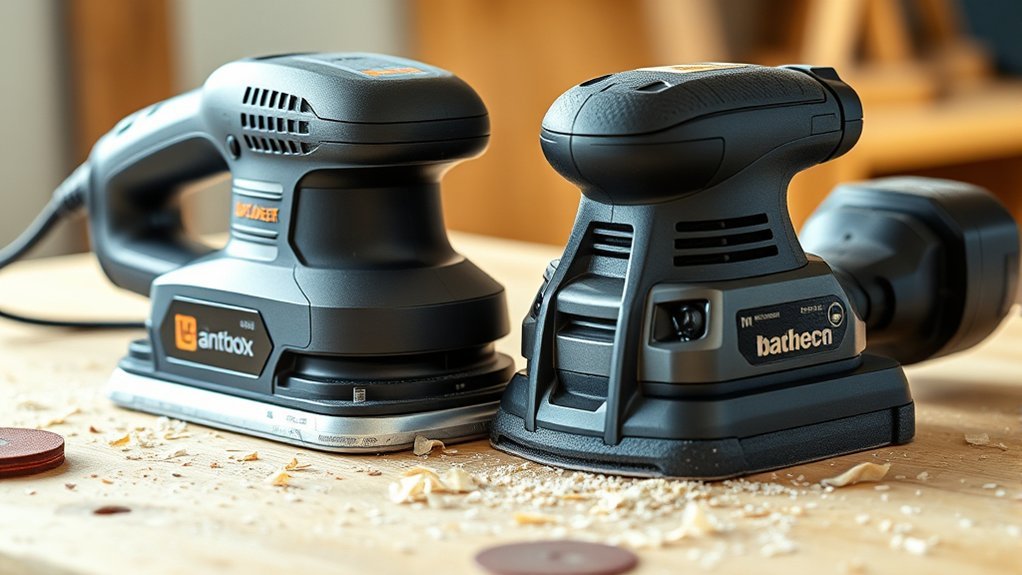
You’ll want to weigh power and performance against mobility when choosing between corded and cordless orbital sanders. Corded models deliver consistent power, while cordless options offer greater convenience and portability.
Battery life is a critical factor if you opt for cordless, as it directly impacts how long you can work without interruption.
Power and Performance
Choosing between a corded and cordless orbital sander hinges on understanding their power delivery and performance capabilities. Corded models provide consistent power, ideal for demanding tasks, while cordless units offer portability but may sacrifice runtime and peak power. Consider these factors:
- Power Output: Corded sanders maintain steady motor speed, ensuring uniform sanding without drops in performance.
- Battery Life: Cordless sanders depend on battery capacity, which limits continuous use and affects sanding duration.
- Dust Control: Both types can include dust collection systems, but corded models often support more robust dust control due to higher power.
- Torque and Speed: Corded sanders generally deliver higher torque and variable speed options, enhancing control over different materials.
Evaluate your project needs carefully when weighing corded vs cordless for optimal power and performance.
Mobility and Convenience
How much does mobility factor into your sanding projects? If you frequently move around or work in tight spots, a cordless orbital sander offers unmatched convenience. Its ergonomic grip enhances control, reducing fatigue during extended use.
Plus, cordless models with wireless charging capabilities eliminate the hassle of tangled cords and minimize downtime. On the other hand, corded orbital sanders provide consistent power without worrying about battery depletion, making them ideal for stationary tasks.
However, their limited range can restrict your movement. When choosing between corded and cordless, consider your workspace and project demands. If flexibility and ease of maneuvering are priorities, the cordless option with an ergonomic grip and wireless charging makes a compelling choice.
For continuous operation without interruption, a corded model might suit you better.
Battery Life Considerations
When does battery life become a decisive factor in selecting between corded and cordless orbital sanders? You’ll want to weigh this when portability and continuous operation matter most. Cordless models rely on battery capacity, influencing runtime and power output, while corded sanders provide consistent energy without interruption.
For a clear discussion idea 1, consider these points:
- Usage Duration: How long do your sanding sessions typically last?
- Power Demand: Does your project require peak power or steady output?
- Recharge Time: Are you prepared to wait or swap batteries during work?
- Portability Needs: Is unrestricted movement crucial for your workspace?
This framework aids discussion idea 2, helping you decide which sander suits your specific workflow and ensures productivity without unexpected downtime.
Best Orbital Sanders for Beginners and DIYers
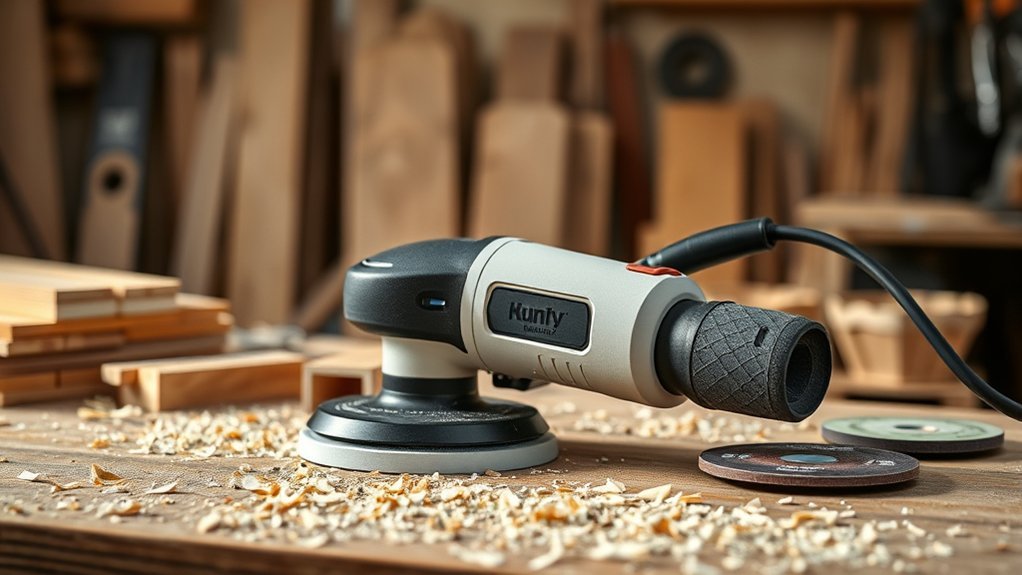
What makes an orbital sander ideal for beginners and DIYers? It’s about ease of use, affordability, and versatility in various sanding markets. You want a tool that’s lightweight, offers variable speed control, and has effective dust collection.
These features ensure smooth operation without overwhelming you. Here are discussion ideas to help you choose an orbital sander tailored for your skill level, unrelated to other H2s focused on professionals.
| Feature | Importance for Beginners |
|---|---|
| Weight | Ensures comfort during use |
| Speed Control | Allows adjustment for materials |
| Dust Collection | Keeps workspace clean |
| Price | Balances quality and budget |
Selecting an orbital sander with these features will optimize your DIY projects efficiently.
Top Orbital Sanders for Professional Woodworkers
While beginners benefit from lightweight, user-friendly orbital sanders, professional woodworkers require tools that deliver superior performance and durability for demanding tasks. When selecting your sander, focus on:
- Power and Speed Control – High RPMs with adjustable speeds let you tailor sanding force for diverse wood types and finishes.
- Sanding Ergonomics – Look for models with comfortable grips and vibration reduction to minimize fatigue during extended use.
- Noise Levels – Quieter operation improves your work environment and reduces hearing strain, especially in busy workshops.
- Durability and Dust Management – Robust construction and efficient dust collection systems ensure longevity and maintain workspace cleanliness.
These factors combined help you achieve precision, efficiency, and comfort, essential for professional woodworking projects.
How to Choose the Right Orbital Sander for Your Projects
How do you determine the ideal orbital sander for your specific woodworking projects? Start by evaluating the grit differences on the sanding edges; finer grits suit delicate finishing, while coarser grits handle substantial material removal. Choose a sander that offers easy grit changes to adapt to various surfaces quickly.
Also, consider noise levels. Lower decibel models reduce fatigue during extended use and minimize workspace disruption. Power and pad size must align with your project scale: larger pads cover more surface efficiently, while smaller ones provide precision in tight spots.
Additionally, check the sander’s orbital speed and dust collection efficiency to maintain control and cleanliness. By balancing these technical factors, you select a sander that maximizes productivity and finish quality tailored to your woodworking needs.
Maintenance Tips to Keep Your Orbital Sander Performing
To keep your orbital sander operating at peak efficiency, regularly remove dust and debris from vents and surfaces. You’ll also want to lubricate moving parts to reduce friction and wear.
Finally, inspect sanding pads for damage and replace them promptly to maintain optimal performance.
Cleaning Dust and Debris
Where does all that fine dust go after hours of sanding? Effective dust control is crucial to maintain your orbital sander’s performance and prolong its lifespan. Dust and debris can clog the motor and reduce sanding efficiency if neglected.
To clean your sander thoroughly, follow these steps:
- Detach and empty the dust collection bag or canister regularly to prevent buildup.
- Use compressed air to blow out dust from vents and internal components carefully.
- Wipe down the sanding pad and surrounding surfaces to remove stuck particles.
- Inspect and clean the sander’s exhaust ports to ensure unobstructed airflow.
Incorporate proper sanding technique by maintaining steady pressure and motion to reduce excessive dust generation. Consistent cleaning improves dust control and keeps your orbital sander operating smoothly.
Lubricating Moving Parts
Why does lubricating the moving parts matter for your orbital sander’s performance? Properly lubricating parts reduces friction and wear, ensuring smooth motor operation and extending the tool’s lifespan. Neglecting this can lead to overheating and premature component failure.
Incorporate lubricating parts into your regular maintenance schedule, ideally after every 20 hours of use or as specified by the manufacturer. Use recommended lubricants, typically light machine oil or grease, applied sparingly to bearings and pivot points.
Avoid over-lubrication, which can attract dust and debris, impairing function. Consistently following a precise maintenance schedule keeps internal components operating efficiently, maintaining your sander’s power and responsiveness.
This preventative care prevents costly repairs and downtime, letting your orbital sander perform at its best for years.
Inspecting and Replacing Pads
Maintaining smooth motor operation through proper lubrication directly impacts the effectiveness of your orbital sander’s pads. To ensure optimal performance, regularly inspect and replace worn pads, addressing sanding grit concerns promptly. Follow these steps:
- Examine the pad surface for uneven wear, tears, or hardened resin buildup that could impair sanding quality.
- Confirm the pad’s attachment is secure; loose pads reduce efficiency and risk damage.
- Replace pads immediately if you notice significant wear or if sanding grit has embedded deeply, as this compromises finish quality.
- Match the replacement pad with the appropriate sanding grit to maintain consistent abrasive action and prevent motor strain.
Consistent pad replacement not only enhances sanding precision but prolongs your sander’s lifespan.
Frequently Asked Questions
Can Orbital Sanders Be Used on Metal Surfaces?
Yes, you can use orbital sanders on metal surfaces. Ensure you select the right abrasive for metal surface sanding, as orbital sander compatibility with metals depends on using appropriate pads and grit for efficient, smooth results without damaging the material.
How Noisy Is an Orbital Sander During Operation?
You won’t confuse an orbital sander for a whisper; its noisy comparison to a gentle hum is far off. Yet, with proper grip, you can manage vibration concerns, maintaining control without sacrificing performance or comfort.
Are There Any Safety Precautions When Using an Orbital Sander?
You should always wear safety gloves and a dust mask when using an orbital sander to protect your hands from abrasions and prevent inhaling fine dust particles.
Also, ensure proper ventilation and secure your workpiece firmly.
What Types of Sandpaper Grit Are Compatible With Orbital Sanders?
You’ll find sandpaper compatibility with orbital sanders typically spans a grit range from 40 for coarse stripping up to 400 for fine finishing.
Always match grit size to your project’s surface requirements for ideal results.
Can Orbital Sanders Be Used for Automotive Bodywork?
You can use orbital sanders for automotive bodywork, but be aware of orbital sander limitations like less aggressive material removal and potential swirl marks.
Ensure proper dust containment to maintain a clean workspace and prevent contamination during paint prep.
Conclusion
Choosing the best orbital sander isn’t just about picking a tool—it’s about crafting perfection with every stroke. With the right balance of power, control, and dust management, you’re not just sanding; you’re shaping your vision.
Remember, whether corded or cordless, comfort and maintenance keep your sander running smoothly. So, gear up wisely, and let your projects shine.
Because the perfect finish is never an accident, it’s your mastery in motion—and the best orbital sander is the key to achieving that flawless result.