If you’re wondering, “Do I need an orbital sander?” and you’re working on flat or gently curved surfaces, this tool might be your best option. It helps smooth or prep surfaces without leaving swirl marks, making it ideal for many projects.
An orbital sander offers control and versatility, especially when handling delicate materials or removing finishes. Its design allows for efficient sanding without damaging the workpiece.
Before you invest, consider whether your project demands more aggressive sanding, detailed precision, or a quieter operation. These factors can influence the best tool choice for your needs.
When Should You Use an Orbital Sander?
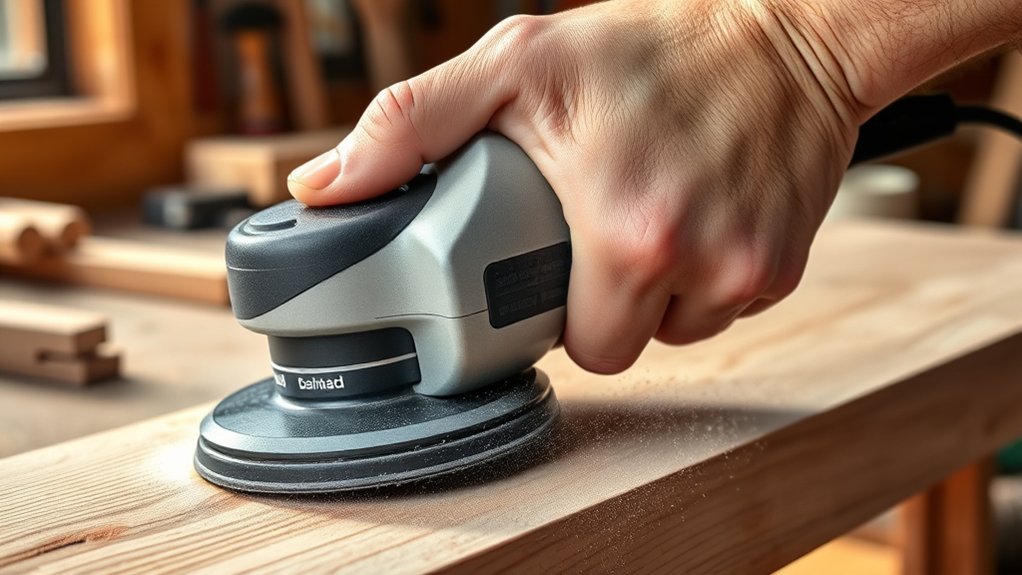
When should you reach for an orbital sander? You use it primarily when you need precision sanding on flat or slightly curved surfaces. Its random orbital motion reduces swirl marks, giving you a smooth, even finish that’s difficult to achieve with other sanders.
You’ll appreciate its versatility when preparing surfaces for paint or varnish, ensuring consistent material removal without gouging. Another critical factor is dust management; most orbital sanders come with built-in dust collection systems or ports for vacuum attachments.
Using these features keeps your workspace cleaner, improves visibility, and protects your respiratory health. Knowing when to deploy an orbital sander means balancing the need for refined surface preparation with efficient dust control, making it an essential tool for detailed, high-quality sanding tasks.
Which Projects Benefit Most From an Orbital Sander?
Which projects truly gain from an orbital sander? You’ll find it invaluable for smoothing wood surfaces, removing old finishes, and preparing substrates for painting or staining. Its random orbital motion minimizes swirl marks, delivering a consistent finish that’s hard to achieve with other sanders.
Beyond traditional woodworking, orbital sanders excel in novel applications like refinishing metal or plastic components, where control and surface preservation matter. When working with atypical materials such as composite panels or delicate laminates, this tool lets you adjust speed and sanding grit precisely, reducing the risk of damage.
If your project demands efficiency combined with a fine finish on diverse surfaces, an orbital sander becomes essential, streamlining prep work and enhancing your overall craftsmanship.
When Should You Choose a Different Sander?
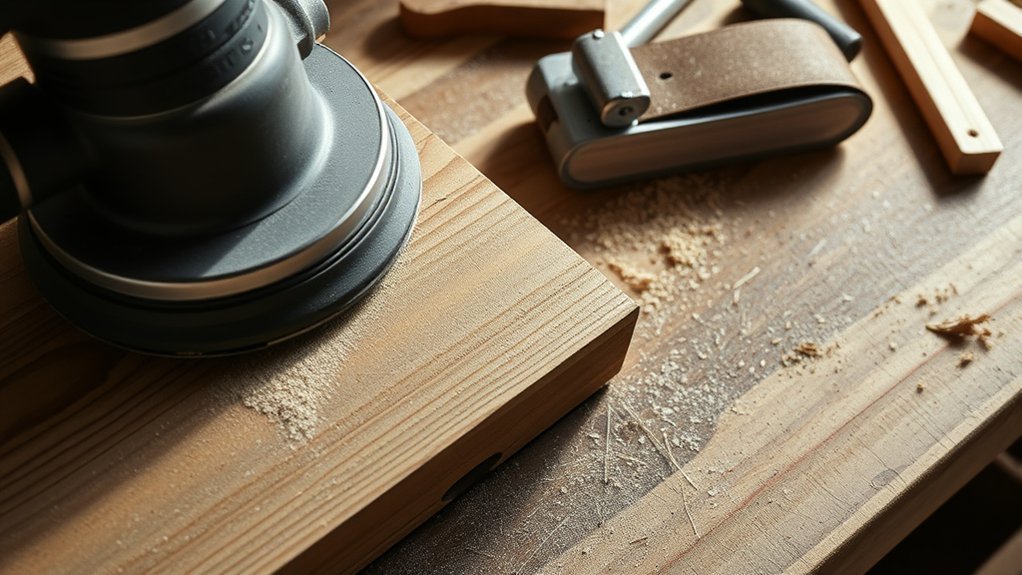
Orbital sanders excel at delivering smooth finishes on various materials, but certain tasks demand tools with different capabilities. You should choose a different sander when:
Orbital sanders are great for smooth finishes, but some projects require tools with specialized functions.
- You need aggressive material removal. Belt sanders outperform orbitals here.
- Your project requires intricate detail work; detail sanders offer better precision.
- Lower decibel levels are critical, such as in noise-sensitive environments.
- Superior dust collection is necessary for health or cleanliness. Some sanders feature more efficient dust extraction systems.
How to Choose the Right Orbital Sander for You
How do you determine the best orbital sander for your specific needs? Start by evaluating the motor type and power; brushless motors offer longer life and efficient performance, while brushed motors are more affordable but require more maintenance.
Consider the motor’s amperage and speed settings. Variable speed controls provide greater versatility for different materials and finishes. Next, focus on dust collection. A sander with an effective dust extraction system keeps your workspace clean and prolongs the tool’s lifespan.
Look for models featuring sealed ball bearings and dust-sealed switches to enhance durability. Finally, assess the sander’s ergonomics and weight to ensure comfortable, controlled operation during extended use. Choosing motors and dust collection systems carefully ensures you select an orbital sander that matches your project demands precisely.
How to Use an Orbital Sander Safely and Effectively
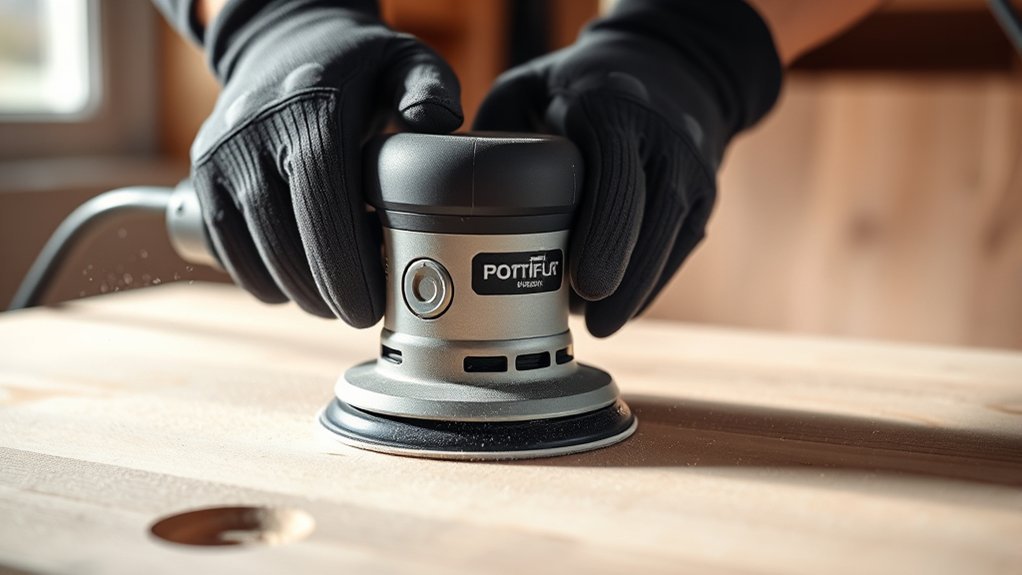
After selecting the right orbital sander based on motor type, speed, and dust collection, you’ll want to focus on operating it with safety and efficiency. Proper technique and caution ensure optimal results and longevity.
- Always maintain a firm edge grip to control the sander’s movement precisely and prevent slips.
- Activate dust control features such as vacuum attachments or dust bags to minimize airborne particles.
- Start the sander before contacting the surface, then move it steadily in overlapping circular motions to avoid gouges.
- Wear appropriate personal protective equipment: eye protection, hearing protection, and a dust mask to safeguard yourself from hazards.
Frequently Asked Questions
How Much Does an Orbital Sander Typically Cost?
You’ll find the cost range for an orbital sander typically between $30 and $150, depending on brand availability and features.
Trusted brands offer diverse options, so you can choose one that suits your specific project needs precisely.
Can an Orbital Sander Be Used for Metal Surfaces?
Yes, you can use an orbital sander on metal, but beware orbital sander misuse; it’s best for light smoothing, not deep metal finishing.
Its metal finishing limitations mean you’ll need specialized abrasives and careful technique for optimal results.
What Maintenance Does an Orbital Sander Require?
You should perform regular maintenance checks, ensuring dust collection systems are clear and filters cleaned. Inspect sanding pads for wear, lubricate moving parts, and verify electrical connections to maintain optimal performance and extend your orbital sander’s lifespan.
Are Orbital Sanders Noisy to Operate?
You’ll find orbital sanders quieter than belt sanders, offering lower noise level comparisons. Their dust collection efficiency reduces airborne particles, making operation less disruptive and cleaner. This benefits your workspace and hearing over extended use.
What Accessories or Attachments Are Compatible With Orbital Sanders?
Like finding the right key for a lock, your orbital sander’s accessory compatibility hinges on brand and model. Common attachment compatibility includes sanding discs, dust bags, polishing pads, and backing plates, ensuring precise and efficient operation.
Conclusion
If you’re tackling flat or gently curved surfaces, an orbital sander is your precision powerhouse, minimizing swirl marks like a master craftsman. It’s perfect for prepping paint or varnish and handling delicate materials with ease.
But don’t expect it to perform miracles on aggressive removal or intricate details—that’s where other sanders shine. Choose wisely, considering motor type and speed, and you’ll have a versatile tool that elevates your work to expert-level smoothness every time.
When deciding if you need an orbital sander, keep these strengths in mind to ensure it fits your project needs perfectly.