If you want to restore your parquet floor’s original beauty by sanding a parquet floor by hand, without renting heavy equipment, sanding by hand is a practical choice. You’ll need the right tools and a clear plan to ensure even results and avoid damaging the wood.
Proper preparation and technique are crucial to achieve a smooth, flawless finish. Before you start, understand the key steps that will guide you through the process efficiently and safely.
Essential Tools and Materials for Hand Sanding Parquet
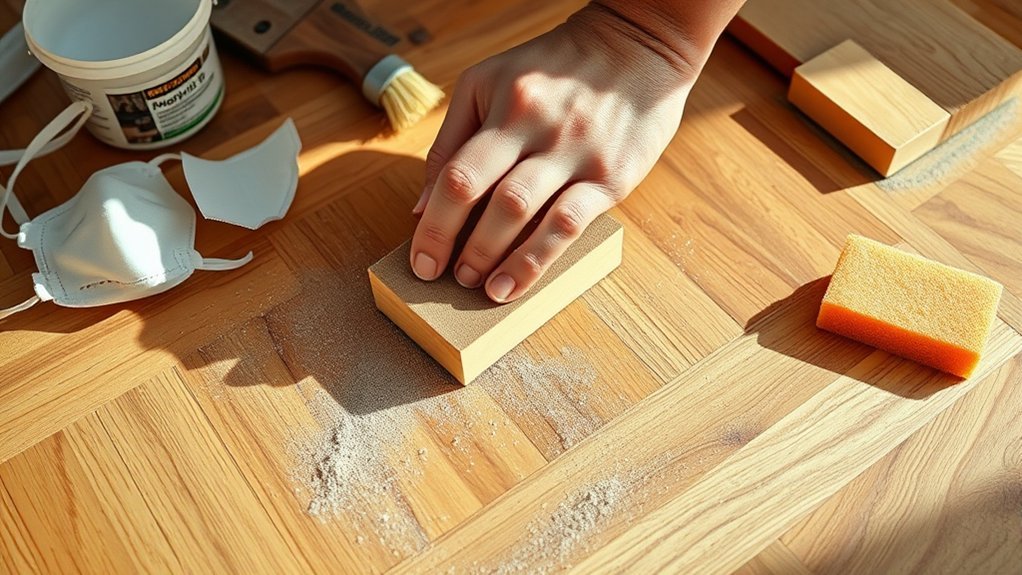
Before you begin sanding your parquet floor by hand, gather the essential tools and materials to guarantee an efficient and effective process. Start with a high-quality sanding block and a selection of sandpapers in varying grits, typically 60, 80, and 120 grit, to accommodate different sanding stages.
Include a detail sander or sanding sponge for precise edge sanding, crucial for preserving the parquet’s intricate pattern details. Choose sandpapers designed for hardwood to optimize abrasion without damaging the wood fibers.
Additionally, have a vacuum or tack cloth ready to remove dust between sanding phases. Proper material selection ensures uniform surface preparation and protects the parquet’s geometric patterns.
With these essential tools, you’ll maintain control and accuracy throughout the hand sanding process while safeguarding your parquet’s structural and aesthetic integrity.
How to Prepare Your Parquet Floor for Sanding
Although sanding by hand requires more effort than using a machine, you can achieve excellent results by thoroughly preparing your parquet floor. Effective parquet prep is essential to ensure your sanding strategy proceeds smoothly and uniformly.
Start by:
- Clearing the floor completely. Remove furniture, rugs, and debris to prevent interference.
- Inspecting the surface for nails or staples. These must be hammered down or removed to avoid damaging your sandpaper.
- Cleaning the floor. Vacuum and wipe it to eliminate dust and dirt that can scratch the wood during sanding.
Hand Sanding Technique for Parquet Floors
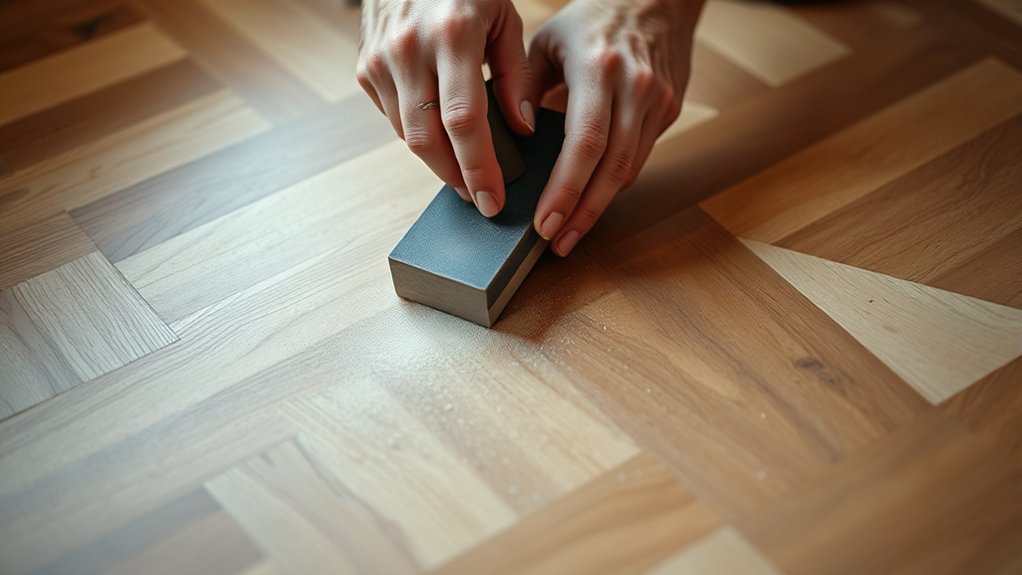
How exactly do you achieve a smooth, even finish when sanding a parquet floor by hand? Begin with coarse-grit sandpaper (around 60-80 grit) attached to a sanding block. Apply consistent pressure and move your hand in the direction of the wood grain, ensuring you follow the natural flow of the parquet patterns.
Avoid circular motions, which can create uneven surfaces. Maintain steady, overlapping strokes to prevent visible sanding marks. As you progress, switch to finer grits (120-150) to refine the surface and eliminate scratches from the previous grit.
Always inspect your work under good lighting to identify uneven areas. Hand sanding requires patience and precision, but by respecting the parquet patterns and using controlled technique, you’ll restore the floor’s smoothness without damaging the intricate wood design.
Sanding Edges and Intricate Parquet Patterns by Hand
Where do you start when sanding the edges and intricate patterns of a parquet floor by hand? Focus on preserving the integrity of edge patterns while ensuring uniform sanding. Follow these steps precisely:
- Select a sanding block or sponge with fine-grit sandpaper; its size should allow precise control around corners.
- Maintain a firm, ergonomic tool grip to avoid slipping and uneven pressure, which can damage delicate patterns.
- Use slow, controlled strokes along the edges, following the grain and pattern direction to achieve smooth, consistent results.
Pay particular attention to corners and inlays, where uneven sanding may occur. Avoid excessive pressure to prevent gouging the wood. This method ensures the parquet’s design remains sharp while preparing the surface evenly for finishing.
Finishing and Cleaning Your Parquet Floor After Sanding
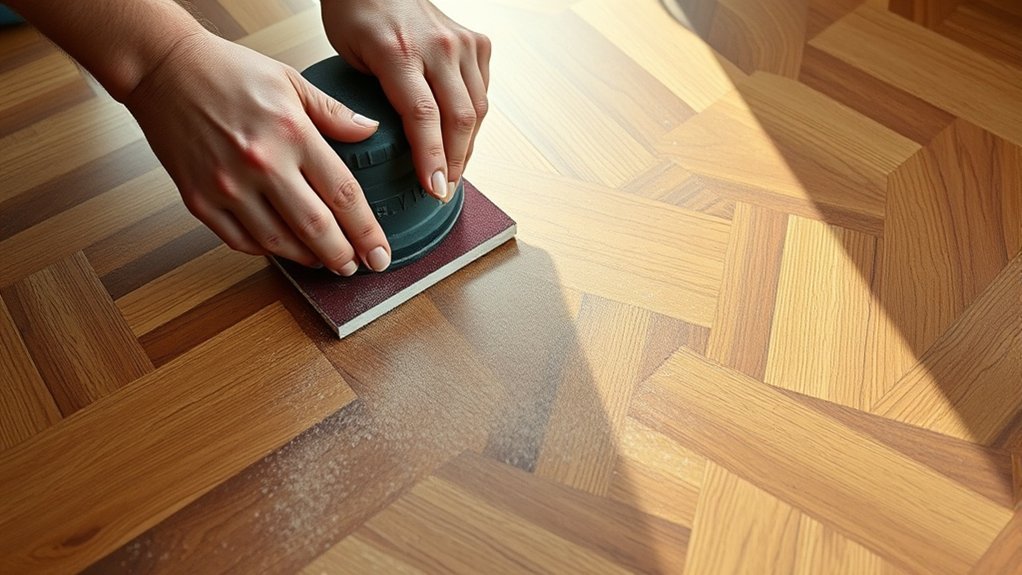
Once you’ve carefully sanded the edges and intricate patterns by hand, it’s time to focus on cleaning and finishing your parquet floor to protect its surface and highlight the wood’s natural beauty. Begin by thoroughly vacuuming the floor to remove all dust particles, then follow with a slightly damp microfiber cloth to pick up residual debris.
Adhering to proper cleaning routines guarantees a flawless finish application. Apply a high-quality wood sealer or varnish evenly using a brush or roller, allowing adequate drying time between coats as specified by the manufacturer. Your finishing thoughts should emphasize even coverage and smoothness to avoid streaks or bubbles.
Proper cleaning and finishing not only enhance the parquet’s appearance but also extend its durability, preserving your handcrafted sanding effort for years to come.
Frequently Asked Questions
Can I Sand a Parquet Floor With Water-Based Sandpaper?
You can sand parquet with water-based sandpaper, but ensure it’s designed for wet sanding to avoid damage. Use consistent pressure and allow the surface to dry thoroughly before finishing.
This helps maintain parquet integrity and achieve a smooth finish.
How Often Should Parquet Floors Be Sanded?
Think of your parquet floors as a book’s pages; they need gentle care. You should sand parquet floors every 7-10 years, depending on wear.
Regular maintenance extends their life without compromising the wood’s integrity or beauty.
Is It Safe to Sand Parquet Floors in Humid Climates?
You can safely sand parquet floors in humid climates if you use proper isolation techniques and humidity control. Ensure the room is well-ventilated, use dehumidifiers, and avoid excessive moisture to prevent wood damage during sanding.
Can I Use a Vacuum Instead of Sweeping Between Sanding?
Just as a gardener uses the right tools for delicate pruning, you can use vacuuming between passes to improve dust containment. This method is precise, reduces airborne particles, and ensures a cleaner surface for optimal sanding results.
What Are Common Mistakes to Avoid When Sanding Parquet Floors?
Common sanding mistakes include skipping parquet floor prep, using the wrong grit sandpaper, and uneven sanding pressure.
You shouldn’t rush the process or neglect cleaning debris, as these errors compromise your floor’s smoothness and finish quality.
Conclusion
By following these precise steps, you’ll sand your parquet floor by hand like a pro, achieving a smooth, flawless surface. Just as a sculptor carefully shapes every detail, your steady, even strokes will reveal the wood’s natural beauty.
Remember to progress through grits methodically, attend to edges with care, and finish with proper cleaning and sealing. This attention to detail ensures your parquet floor stands the test of time, looking polished and professional.
Taking the time to sand a parquet floor by hand properly will enhance its durability and appearance, making your efforts truly worthwhile.