Kinetic sand sticking to my hands happens because its fine grains are coated with a flexible polymer. This coating creates a thin, tacky layer that gives kinetic sand its unique texture and causes it to cling to your skin.
The polymer interacts with oils, moisture, and temperature on your hands, which significantly changes how sticky the sand feels.
Understanding these factors can help you manage the sand’s adhesion, but it’s more complicated than simply having wet or dry hands.
What Is Kinetic Sand Made Of and Why It’s Sticky
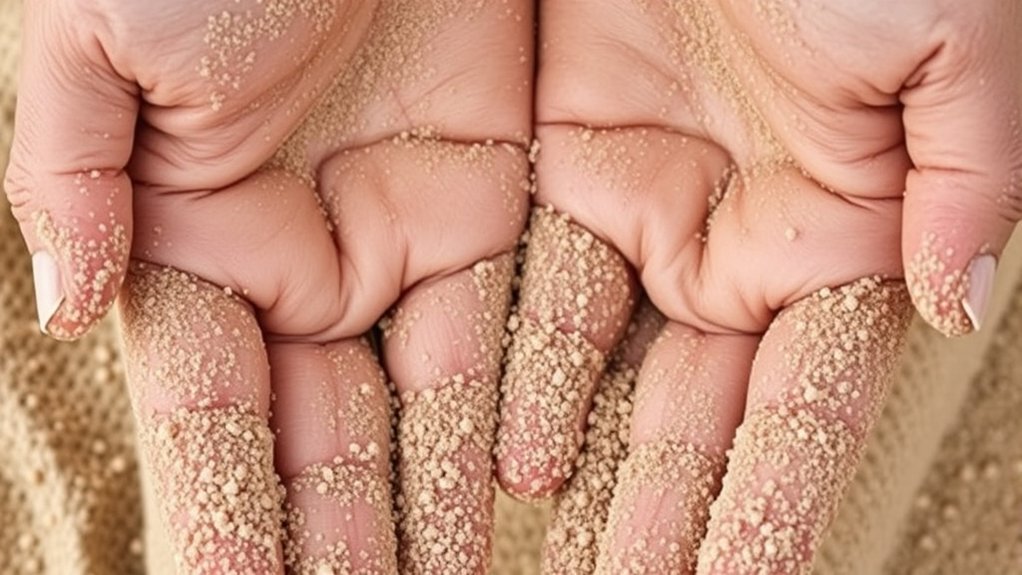
What exactly makes kinetic sand stick to your hands? The subtopic nuance lies in its unique sand composition. Kinetic sand consists primarily of fine silica sand particles coated with a polymer, typically polydimethylsiloxane.
This composition gives it viscoelastic properties, meaning it behaves both like a solid and a liquid. When you touch kinetic sand, the polymer coating creates a slight tackiness, allowing the particles to adhere temporarily to your skin.
This adhesion isn’t due to moisture but to the polymer’s molecular structure, which facilitates weak intermolecular forces between the sand and your skin’s surface. By understanding this sand composition, you can appreciate why kinetic sand feels sticky yet doesn’t leave residue, a precise balance engineered to optimize tactile interaction without excessive mess or difficulty in handling.
How Kinetic Sand’s Coating Affects Its Stickiness
You’ll notice kinetic sand’s polymer coating plays a key role in its stickiness by bonding with your skin oils at a molecular level. This coating’s hydrophobic properties also influence how moisture affects the sand’s adhesion to your hands.
Understanding these interactions helps explain why kinetic sand clings more or less depending on your skin’s moisture.
Polymer Coating Properties
How does the polymer coating on kinetic sand influence its tendency to stick to your hands? The polymer coating forms a thin, flexible layer around each sand grain, creating what’s called a sticky coating. This coating modifies the surface energy of the sand particles, enhancing adhesion forces during skin interaction.
When you handle kinetic sand, the polymer’s viscoelastic properties cause it to deform slightly, increasing contact area with your skin. This deformation strengthens the intermolecular forces, making the sand cling more readily.
Additionally, the coating’s hydrophobic nature limits moisture absorption, which would otherwise reduce stickiness. Consequently, the polymer coating’s precise chemical composition and mechanical behavior directly affect how much the sand adheres to your hands, balancing between easy manipulation and unwanted residue.
Interaction With Skin Oils
Why does kinetic sand sometimes cling more stubbornly to your hands after prolonged handling? The answer lies in the interaction between the sand’s polymer coating and your skin chemistry. Your skin naturally produces oils that alter its surface properties.
When you handle kinetic sand, these oils transfer to the sand particles, affecting the sand physics at the microscopic level. The polymer coating, designed to reduce adhesion, can become compromised as skin oils create localized changes in surface tension and adhesion forces.
This altered interface increases the sand’s stickiness, making it adhere more readily to your hands. Understanding this interaction clarifies that the stickiness isn’t just the sand’s nature but a dynamic response to your skin chemistry interacting with the engineered coating.
Effect of Moisture Levels
Where does moisture fit into the equation of kinetic sand’s stickiness? The sand’s proprietary coating is designed to optimize moisture management, balancing a minimal amount of water within its structure.
When you handle kinetic sand, any excess moisture on your skin alters this balance, increasing adhesion at the points of skin contact. This shift causes the sand particles to clump and stick more readily to your hands.
Conversely, if your skin is too dry, the sand’s coating doesn’t adhere as effectively, reducing stickiness. Understanding this precise moisture interplay helps you control stickiness: maintaining moderate skin hydration and avoiding damp or overly dry hands minimizes unwanted adhesion.
Essentially, kinetic sand’s stickiness is a function of how its coating interacts with variable moisture levels during skin contact.
How Moisture Increases Kinetic Sand Stickiness
What causes kinetic sand to cling more stubbornly to your hands? The primary factor is moisture effects interacting with skin oils. When your hands have residual moisture, even slight perspiration or dampness, it alters the sand’s surface tension.
Kinetic sand clings more when moisture on your skin interacts with natural oils, changing its surface tension.
This moisture creates weak capillary bridges between sand particles and your skin, increasing adhesion. Additionally, skin oils compound this effect by providing a slightly tacky interface that traps sand granules.
The combination of moisture and skin oils enhances the sand’s cohesive forces, making it stick more tenaciously. Understanding this interaction helps you manage stickiness. Drying your hands thoroughly reduces moisture effects and skin oil transfer, minimizing unwanted adhesion.
This precise balance between moisture levels and skin oils directly influences how much kinetic sand sticks to your hands.
How Temperature Changes Affect Kinetic Sand’s Stickiness
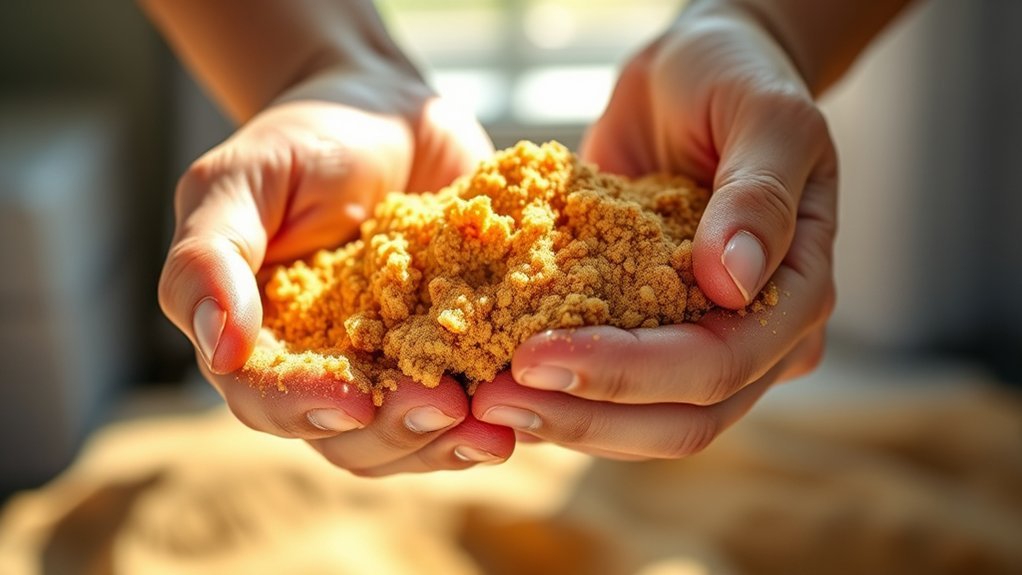
You’ll notice kinetic sand’s texture shifts with temperature changes, affecting how it sticks to your hands. In warmer conditions, the sand tends to become softer and more adhesive due to increased polymer flexibility.
Conversely, cooler temperatures make the sand firmer and less sticky by reducing the polymers’ mobility.
Temperature Impact on Texture
How does temperature influence the texture of kinetic sand and its tendency to stick to your hands? The sand’s silicone coating plays a crucial role in maintaining temperature stability, which directly affects texture.
When the ambient temperature shifts, the silicone matrix can slightly soften or harden, altering the sand’s flow characteristics. If it softens, the sand particles may clump more readily, increasing stickiness on your skin.
Conversely, if it hardens, the sand remains granular and less adhesive. You’ll notice that temperature fluctuations disrupt the balance between the sand’s granular integrity and the silicone’s viscoelastic properties.
This interplay determines how much kinetic sand adheres to your hands, highlighting the importance of consistent temperature conditions to preserve its intended tactile experience.
Warm vs. Cool Conditions
Why does kinetic sand behave differently under warm and cool conditions? Temperature directly influences the material’s viscosity and adhesive properties. When kinetic sand is exposed to warmth, the polymer binding agents become more pliable, increasing stickiness to your hands.
Conversely, cooler temperatures cause these polymers to stiffen, reducing adhesion and making the sand less tacky. To maintain consistent texture, you should consider storing sand in a controlled environment, avoiding extreme temperature fluctuations.
Additionally, scentless options of kinetic sand often have slightly altered polymer compositions, which may respond differently to temperature changes. By managing storage conditions and selecting appropriate formulations, you can minimize unwanted stickiness and optimize your handling experience under varying thermal environments.
How Skin Oils and Sweat Make Kinetic Sand Stick to You
What causes kinetic sand to cling stubbornly to your skin? The interaction between your skin’s natural oils and sweat with the sand’s hydrophobic polymer coating creates adhesion. These skin secretions alter the sand’s surface tension, increasing its stickiness.
Here’s how this works:
- Oil Layer Formation: Your skin oils create a thin film, enhancing the sand’s ability to adhere by increasing contact points.
- Sweat Moisture: Sweat adds moisture, modifying the sand’s granular structure and causing aggregation.
- Surface Chemistry: The sand’s polymer coating interacts chemically with lipids and salts in oils and sweat.
- Microtexture Changes: Oils and sweat alter your skin’s microtexture, improving grip for kinetic sand particles.
Understanding these subtopic idea1 and subtopic idea2 mechanisms clarifies why kinetic sand sticks more under certain conditions.
How Overhandling Makes Kinetic Sand Stickier
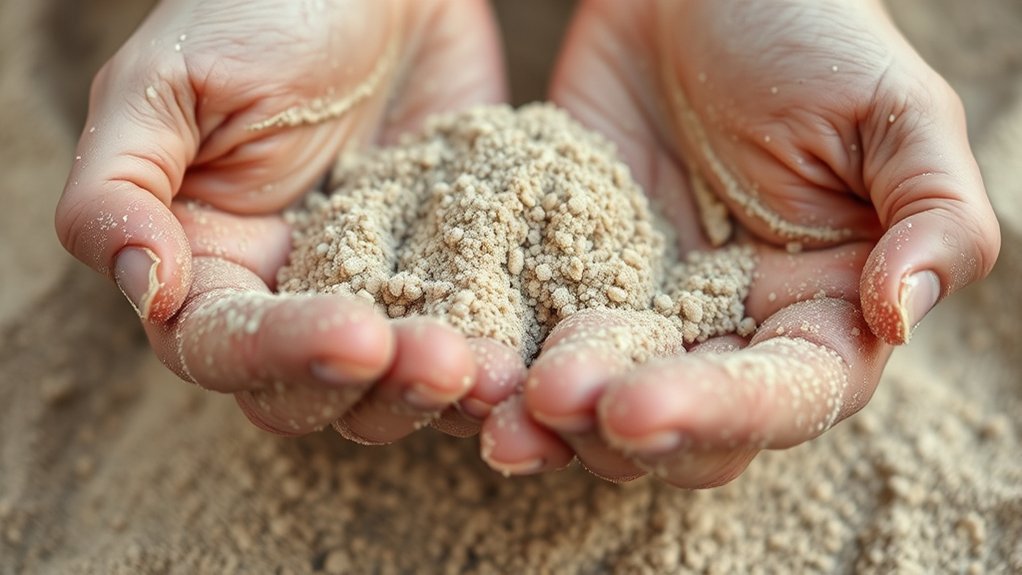
Beyond the chemical interactions between skin secretions and kinetic sand, the physical act of overhandling plays a significant role in increasing its stickiness. When you manipulate kinetic sand excessively, the constant pressure and friction break down its granular structure.
Overhandling causes the sand particles to compact tightly, reducing airflow between grains and increasing cohesion. This change intensifies the stickiness impact, making the sand adhere more firmly to your skin.
Additionally, repeated handling transfers more oils and sweat onto the sand’s surface, further enhancing adhesive forces. The mechanical stress alters the sand’s texture, turning it from free-flowing to clumpy, which amplifies its tendency to stick.
Understanding this dynamic helps explain why prolonged or vigorous play increases kinetic sand’s stickiness beyond just chemical factors.
How to Reduce Kinetic Sand Stickiness Without Losing Fun
You can reduce kinetic sand stickiness by carefully adjusting its moisture content to maintain flow without clumping. Applying surface barriers like gloves or a thin layer of oil helps minimize direct contact and residue buildup.
Additionally, selecting high-quality kinetic sand with balanced polymer composition ensures less adhesion while preserving its malleable texture.
Adjusting Moisture Levels
How can you fine-tune the moisture content in kinetic sand to minimize stickiness without compromising its unique texture? Adjusting moisture precisely is essential because excess water causes adhesion, while too little dries out the sand’s malleability. Temperature effects also influence moisture retention, as warmer conditions increase evaporation, altering stickiness.
To optimize moisture levels, try these steps:
- Gradually add small water amounts, mixing thoroughly to prevent clumps.
- Store sand in a cool, airtight container to reduce moisture loss and temperature fluctuations.
- Use a hygrometer to monitor ambient humidity, adjusting your approach accordingly.
- If sand feels sticky, spread it out to air-dry slightly before use.
Using Surface Barriers
Fine-tuning moisture levels certainly helps control kinetic sand’s stickiness, but managing the surface it contacts can further reduce unwanted adhesion. Applying surface barriers, such as gloves or thin plastic films, creates a non-porous interface that minimizes direct skin interaction.
This barrier decreases friction and prevents the sand’s particles from embedding into skin’s microtextures, effectively reducing clinginess. Additionally, using a light coating of a neutral, non-greasy lotion can form a protective layer, altering the skin’s surface energy and limiting particle adhesion without sacrificing tactile feedback.
When choosing surface barriers, ensure they are thin enough to preserve dexterity, so you maintain the kinetic sand’s sensory experience. This approach balances reducing stickiness with preserving the sand’s unique interactive qualities.
Choosing Quality Kinetic Sand
What distinguishes high-quality kinetic sand from lower-grade options often lies in its carefully engineered composition. To reduce excessive stickiness without compromising the tactile experience, consider these newbie tips:
- Polymer Quality: Opt for sand with well-balanced polymer coatings that ensure smooth flow and minimal residue on hands.
- Grain Uniformity: Choose sand with consistent grain size to prevent clumping and unwanted adhesion.
- Non-Toxic Certification: Verify toy safety by selecting products tested for harmful substances, ensuring safe prolonged contact.
- Moisture Control: High-quality sand manages moisture effectively, reducing stickiness and maintaining malleability.
Best Ways to Clean Kinetic Sand Off Your Hands Quickly
Where does kinetic sand cling most stubbornly on your hands? Typically, it accumulates in creases and around fingernails, areas where skin oils and moisture increase stickiness.
To clean it quickly, start by brushing off excess sand gently with a dry cloth or soft brush, minimizing residue spread. Next, rinse your hands under lukewarm water to loosen remaining particles; avoid hot water, which can increase skin oils and worsen adhesion.
Apply a small amount of liquid soap, focusing on areas with dense sand accumulation, then rub thoroughly to break down the sand’s bond with your skin. Finally, dry your hands with a clean towel, ensuring no moisture remains that could attract more kinetic sand.
This method efficiently reduces kinetic sand stickiness by targeting its interaction with skin oils and moisture.
What Types of Kinetic Sand Stick Less and Why
How do different formulations of kinetic sand affect its tendency to stick to your hands? The composition and texture directly influence adhesion. Here’s what you should consider:
- Powder focus: Sands emphasizing finer powder particles reduce moisture retention, minimizing stickiness.
- Binder ratio: Lower amounts of binding agents lead to less tacky sand, improving hand cleanliness.
- Additives: Some types include anti-stick additives that create a smoother, less adhesive surface.
- Color grading: Variations in pigments can alter surface texture slightly, impacting stickiness due to particle coating differences.
When to Replace Sticky Kinetic Sand
A key indicator that it’s time to replace your kinetic sand is a persistent stickiness that doesn’t improve with cleaning or drying. When you notice this, the substitution dynamics within the sand’s polymer and sand particles have likely degraded, reducing its intended non-stick properties.
In such cases, attempts to restore the sand through moisture adjustment or agitation often fail. For effective maintenance, consider two word discussion ideas like “texture change” or “material fatigue” as signals for replacement.
Continuing to use overly sticky sand can impair tactile play and lead to residue buildup on surfaces. To maintain optimal performance, replace kinetic sand once these substitution dynamics shift beyond reversible limits, ensuring the sand retains its characteristic moldability and clean feel without unwanted adhesion to your hands.
Frequently Asked Questions
Can Kinetic Sand Cause Skin Irritation or Allergies?
Kinetic sand’s stickiness causes minimal allergy risks for most users, but if you have sensitive skin or pre-existing conditions, you might experience irritation.
Always wash your hands after use and avoid prolonged contact to minimize potential reactions.
Is Kinetic Sand Safe for Children Under Three Years Old?
Kinetic sand safety for children under three is generally not recommended, as it poses choking hazards. You should always supervise use, ensuring the sand’s non-toxic composition, but closely evaluate individual risks before allowing young toddlers to play.
How Should Kinetic Sand Be Stored to Maintain Quality?
You should follow storing guidelines by sealing kinetic sand in an airtight container to prevent moisture loss or gain.
Managing moisture is essential to maintain its texture and prevent clumping or drying out over time.
Can Kinetic Sand Be Recycled or Reused After Use?
You can reuse kinetic sand multiple times by reshaping and remixing it. Recycling options are limited due to its polymer base.
Reuse ideas include creative molding, sensory activities, or combining with fresh sand to extend its lifespan effectively.
What Are Creative Activities to Do With Kinetic Sand?
You can engage in creative play by molding kinetic sand into detailed shapes, combining colors for sensory exploration, and designing tactile mazes.
These activities enhance fine motor skills and encourage analytical thinking through hands-on experimentation.
Conclusion
Think of kinetic sand like tiny magnets coated with a sticky polymer—when your hands get warm or oily, that “magnetism” intensifies, making the sand cling stubbornly.
Just as a well-oiled machine runs smoother but sticks less, managing moisture and skin oils reduces this adhesion. By keeping your hands clean and cool, you maintain the sand’s flow without losing its unique texture.
This simple care ensures your kinetic play stays fun and hassle-free every time, preventing kinetic sand from sticking to your hands.