You can sand a deck with an orbital sander, especially on flat surfaces where you need to remove old finish or smooth the wood quickly. Its random-orbit action helps minimize swirl marks, making it ideal for finish prep.
However, knowing when to switch to other tools and how to select the proper grit and technique is essential to avoid damage. Understanding these details will help you achieve a professional result.
Can You Use an Orbital Sander on a Deck?

How effective is an orbital sander for deck sanding? When it comes to deck prep, an orbital sander can be a solid choice for smoothing surfaces and removing old finishes. Its random orbital motion minimizes swirl marks and provides a uniform finish, which is crucial for preparing your deck for sealing or staining.
You’ll appreciate its ability to handle flat areas efficiently, speeding up the sanding process compared to manual methods. However, consider your sander choice carefully. Orbital sanders excel on broad, even surfaces but may struggle in tight corners or intricate areas.
For optimal deck prep, pair your orbital sander with appropriate grit sandpaper and apply steady, even pressure. This ensures the wood is properly prepared without damage, improving the longevity of your deck’s finish.
When Should You Use Other Tools Instead of an Orbital Sander?
While an orbital sander works well on flat, broad areas of your deck, there are situations where other tools outperform it. If your deck has intricate details, tight corners, or uneven surfaces, a detail sander or hand sanding tools provide better control, reducing the risk of deck damage.
Orbital sanders can be aggressive on delicate wood, potentially gouging or removing too much material. Additionally, noise considerations play a role. Orbital sanders generate significant noise, which could be problematic in noise-sensitive areas or during early hours.
In these cases, quieter tools like hand sanders or finishing sanders help maintain a lower noise level. For rough shaping or heavy material removal, a belt sander or power planer is more efficient than an orbital sander, which is designed for finer sanding tasks.
How to Prepare Your Deck for Orbital Sander Sanding
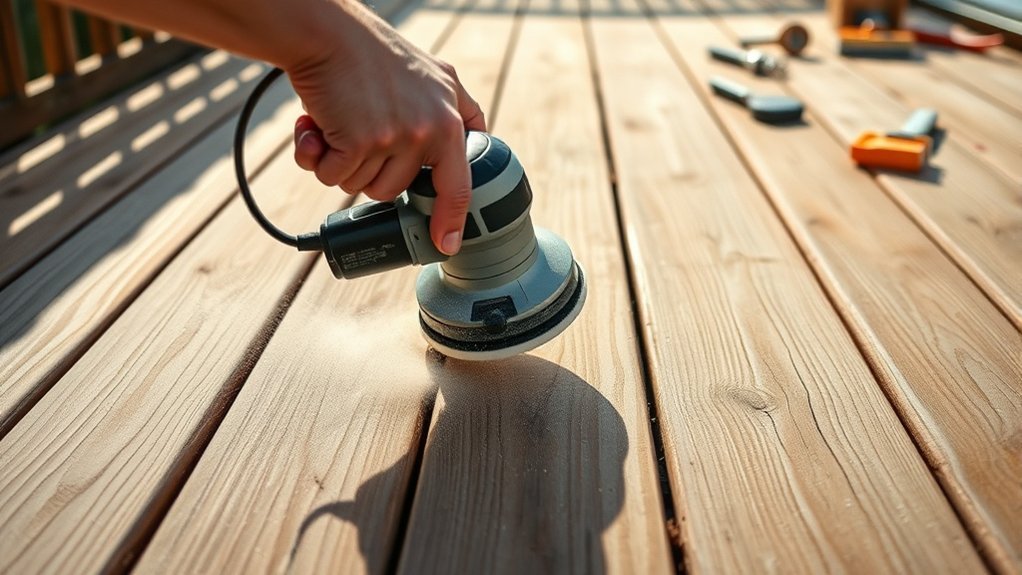
Before you start sanding your deck with an orbital sander, ensure the surface is clean and free of debris. Proper deck prep involves removing dirt, leaves, and loose paint using a broom or blower.
Check for protruding nails or screws and countersink or remove them to prevent tool damage and ensure smooth sanding. Inspect the wood for rotten or damaged boards and replace them as needed.
For tool safety, wear protective gear such as safety glasses, a dust mask, and hearing protection. Secure any loose boards and clear the work area of obstacles to avoid accidents.
Finally, connect your orbital sander to a dust collection system or vacuum to minimize airborne particles during sanding, improving both tool performance and your safety.
Picking the Right Orbital Sander and Sandpaper Grit
Which orbital sander suits your deck sanding project depends on the size of the area and the wood’s condition. For larger decks, choose a sander with a wider sanding pad (5 to 6 inches) for faster coverage.
If the wood is rough or weathered, opt for a model with variable speed control to adjust aggressiveness. When picking right sandpaper grit, start with a coarse grit (60-80) to remove old finish and surface imperfections.
Progress to medium grit (100-120) for smoothing and preparing the wood for finishing. Avoid using too fine a grit initially, as it won’t effectively strip damaged wood. Matching your sander’s power and pad size with appropriate sandpaper grit ensures efficient material removal and a uniformly prepared surface ready for subsequent treatment.
Tips for Sanding Your Deck Smoothly Without Damage
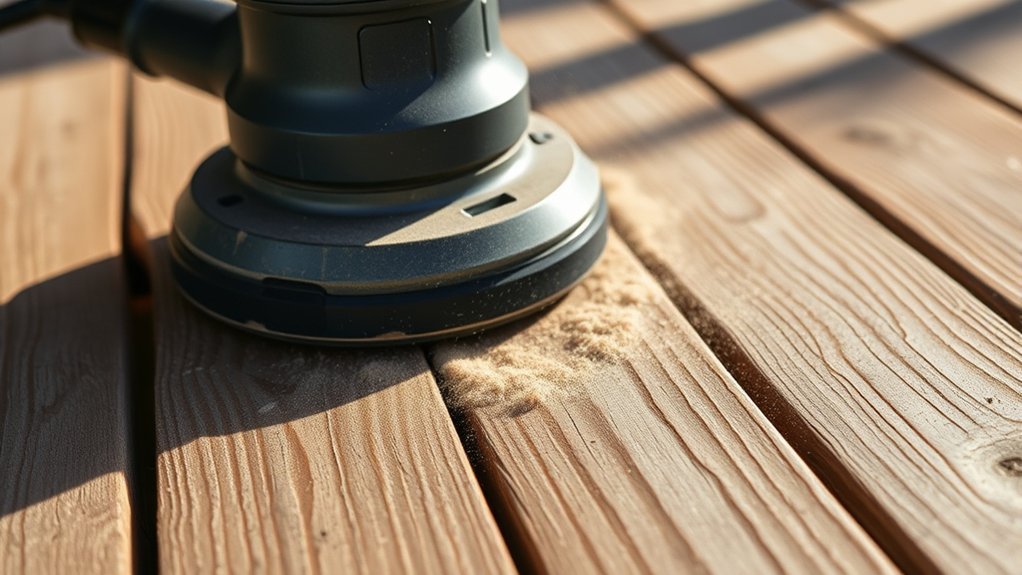
How can you sand your deck efficiently without causing damage? Start by ensuring your orbital sander uses the appropriate grit. Begin with 60-80 grit to remove roughness, then finish with 120-150 grit for smoothness.
Apply even pressure and keep the sander moving to avoid gouges or uneven spots. Always sand along the wood grain to prevent scratches.
Monitor weather timing carefully; sanding before a dry, calm period prevents moisture-related issues and prepares your deck for new deck sealing.
After sanding, remove all dust with a vacuum or tack cloth to ensure proper adhesion of sealants. Proper preparation and timing reduce the risk of damage, extend your deck’s lifespan, and enhance the effectiveness of your new deck sealing.
Frequently Asked Questions
How Long Does It Take to Sand an Average-Sized Deck?
You’ll spend about 4 to 8 hours sanding an average-sized deck, depending on wood condition and orbital sander efficiency.
Consider discussion ideas on Average Sized Deck sanding time for planning and Can I Sand a Deck With an Orbital Sander techniques.
Can I Sand a Deck Without Wearing Protective Gear?
You shouldn’t sand a deck without safety gear. Over 60% of DIY injuries involve eye or respiratory harm.
Consider discussion ideas on safety gear relevance. Protective goggles and masks prevent dust inhalation and debris eye injuries effectively.
What Maintenance Is Needed for an Orbital Sander After Use?
You should clean the dust collection system thoroughly after each use to maintain optimal performance. Inspect the sanding pad for wear and replace it if needed. Store the orbital sander in a dry place to ensure long-term deck maintenance efficiency.
Is It Safe to Sand a Deck During Humid Weather?
You shouldn’t sand a deck during high humidity, and you shouldn’t ignore orbital sander safety. Excess moisture can clog the sander, warp wood, and reduce finish adhesion, compromising your deck sanding humidity conditions and final results.
Can I Use an Orbital Sander on Painted Decks?
Yes, you can use an orbital sander on painted decks installation. It efficiently removes old paint, but be cautious not to sand too aggressively to avoid damaging wood beneath.
Always use appropriate grit for precise results.
Conclusion
You might think an orbital sander is just for small projects, but it’s actually perfect for sanding your deck’s broad, flat surfaces efficiently. While it handles most areas smoothly, remember to switch tools for tight corners or stubborn spots.
By choosing the right grit and applying steady pressure, you’ll avoid swirl marks and achieve a flawless finish. This approach ensures your deck looks professionally refinished without much hassle.
So, don’t hesitate—your deck’s next makeover could start with just the right orbital sander in hand. Using an orbital sander for your deck is a smart choice that combines efficiency and quality results.