You might assume sand can’t conduct electricity because it’s a dry, granular material, but that’s only part of the story.
Can sand conduct electricity? Its conductivity depends heavily on factors like moisture content, mineral impurities, and temperature.
Understanding how these variables alter sand’s electrical behavior reveals complexities you wouldn’t expect from a simple insulator.
Exploring these influences uncovers why sand’s conductivity fluctuates so considerably in different environments.
Why Is Sand an Electrical Insulator by Default?
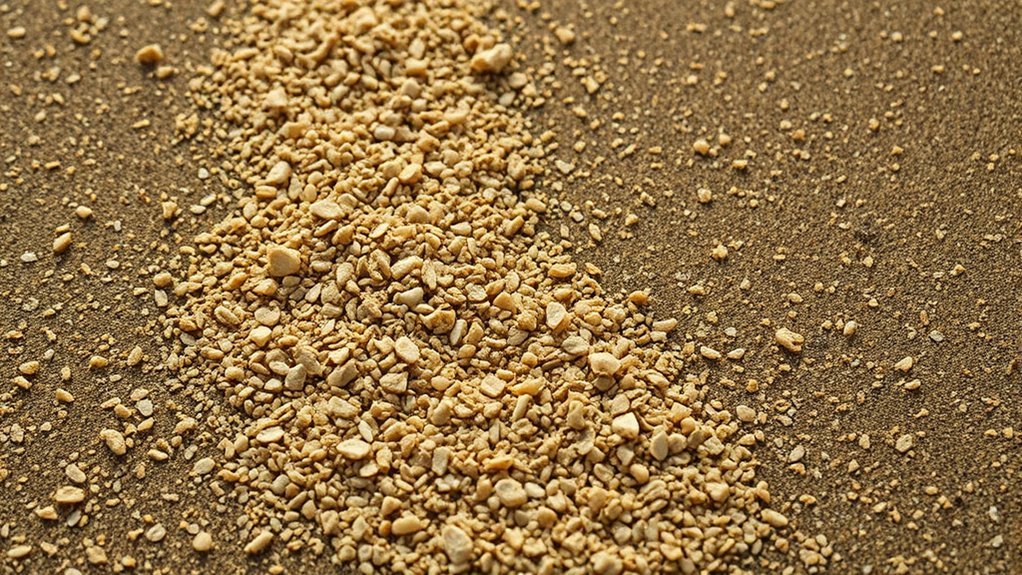
Although sand appears to be a simple material, its electrical insulating properties stem from its molecular structure and lack of free charge carriers. When you examine sand conductivity, you’ll notice it primarily consists of silicon dioxide (quartz), a mineral with strong covalent bonds that restrict electron mobility.
This limited electron movement results in minimal electrical conduction. You should also consider mineral variation in sand samples; different minerals can slightly alter conductivity, but most common sands remain insulators due to their intrinsic electronic configurations.
The absence of metallic elements or free ions means sand cannot support significant current flow under normal conditions. Understanding these factors clarifies why, by default, sand acts as an electrical insulator rather than a conductor in typical environments.
How Does Moisture Affect Sand’s Electrical Conductivity?
While dry sand resists electrical flow due to its molecular structure, introducing moisture changes this dynamic markedly. Water molecules fill the interstitial spaces between sand grains, enabling ion mobility and enhancing conductivity.
This principle underpins solar desalination processes, where moist sand layers facilitate electrical charge transfer. In desert dune hydrology, moisture content critically influences subsurface electrical properties, affecting geophysical surveys and water resource assessments.
| Moisture Level | Conductivity (µS/cm) | Application Context | Impact on Electrical Flow |
|---|---|---|---|
| 0% (dry) | <1 | Baseline sand condition | Almost no conduction |
| 5% | 50 | Early moisture infiltration | Moderate ion transport |
| 15% | 200 | Post-rain dune moisture | Significant conductivity rise |
| 30% | 500 | Solar desalination setup | Optimal for charge mobility |
You’ll see moisture is key for sand’s conductive behavior.
What Role Does Mineral Content Play in Sand’s Electrical Conductivity?
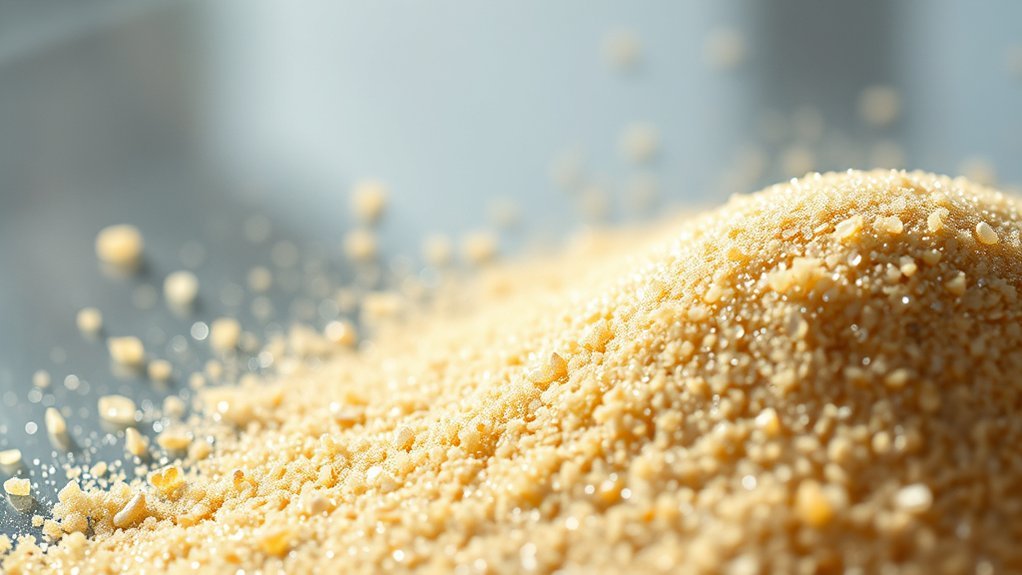
How exactly does mineral content influence sand’s electrical conductivity? You need to analyze the sand composition to understand this. Sand isn’t purely silica; it contains various mineral impurities such as iron oxides, feldspar, and mica.
These impurities introduce free ions and localized charge carriers, which enhance conductivity. For example, iron oxides can provide pathways for electron movement, increasing electrical flow.
Conversely, quartz-rich sand with minimal impurities exhibits poor conductivity due to a lack of mobile charge carriers. The type, concentration, and distribution of these mineral impurities directly affect the sand’s ability to conduct electricity.
Hence, by evaluating sand composition and the nature of its mineral impurities, you can predict and explain variations in electrical conductivity with accuracy and technical rigor.
Does Temperature Affect Sand’s Electrical Conductivity?
Why does temperature impact sand’s electrical conductivity? Temperature effects influence the mobility of charge carriers within sand’s mineral matrix. As temperature rises, increased thermal energy facilitates ion movement and electron transfer, enhancing conductivity.
However, this effect depends on the specific mineral interactions present. For example, certain minerals may exhibit increased ionic dissociation at elevated temperatures, boosting charge carrier concentration. Conversely, some mineral phases may undergo structural changes that impede electron flow.
You’ll find that dry sand typically shows limited conductivity changes with temperature, but moisture content can amplify temperature effects due to enhanced ionic mobility in water films surrounding mineral grains. Understanding these temperature-dependent mineral interactions is crucial when assessing sand’s conductivity in varying environmental conditions, particularly for applications involving temperature fluctuations.
Where Does Sand Conduct Electricity Naturally?

Where can you find sand naturally conducting electricity? In specific contexts tied to sand formation and its environmental conditions, sand can exhibit measurable electrical conductivity. This typically occurs when mineral impurities or moisture are present, especially in desert environments where sand grains undergo physical and chemical changes.
Key natural settings include:
- Coastal regions with saline moisture enhancing conductivity
- Volcanic areas where metallic minerals integrate into sand
- Desert environments after rare rainfall events increasing moisture content
- Riverbeds transporting mineral-rich sediments
- Sand dunes with iron oxide coatings altering electrical properties
Understanding these environments helps you pinpoint where sand’s electrical conductivity arises naturally, driven by its composition and external factors influencing electron mobility within the granular matrix.
How Do Scientists Measure Sand’s Electrical Conductivity?
You’ll measure sand’s electrical conductivity using specialized equipment like four-point probes or impedance analyzers to ensure accuracy. Moisture content plays a critical role, so you’ll need to control and quantify it during testing.
Understanding these variables helps you interpret how well sand can conduct electricity under different conditions.
Conductivity Measurement Techniques
How do scientists accurately determine the electrical conductivity of sand? They apply precise measurement techniques that isolate sand’s intrinsic conductive properties, avoiding interference from dye presence or magnetic effects. These factors can distort readings, so controlling them is essential.
Key methods include:
- Four-point probe technique to minimize contact resistance
- Impedance spectroscopy for frequency-dependent analysis
- Use of electrodes embedded in sand samples
- Calibration with standards to account for environmental variables
- Shielding samples to prevent magnetic field interference
Role of Moisture Content
Why does moisture content play a critical role in measuring sand’s electrical conductivity? Moisture dramatically influences conductivity readings by enabling ionic movement within sand particles. You need to control moisture precisely to avoid falling for common conductivity myths, such as dry sand conducting electricity well.
Moisture effects alter the electrical pathways, increasing conductivity as water content rises, but too much water can saturate and change the sand’s structure.
Consider this simplified comparison:
| Moisture Content (%) | Conductivity (S/m) |
|---|---|
| 0 (Dry sand) | 0.0001 |
| 10 | 0.01 |
| 30 | 0.1 |
When you measure, ensure moisture levels are consistent to obtain reliable data and debunk myths regarding sand’s inherent conductivity.
Equipment Used in Testing
Accurate measurement of sand’s electrical conductivity requires specialized equipment designed to capture subtle variations in ionic flow. When you analyze sand properties, especially in the context of underground geology, you rely on instruments that provide precise, reproducible data.
These tools help determine how factors like moisture and mineral content influence conductivity.
Key equipment includes:
- Four-point probe meter: Minimizes contact resistance for accurate readings
- Impedance analyzer: Measures frequency-dependent electrical properties
- Conductivity cell: Contains sand samples under controlled conditions
- Moisture analyzer: Assesses water content essential for conductivity interpretation
- Data acquisition system: Records and processes electrical measurements in real time
Using this equipment, you can quantify how sand conducts electricity, informing geological models and practical applications.
What Are the Electrical Uses of Conductive Sand?
You’ll find conductive sand plays a vital role in electronics by providing a flexible, cost-effective medium for electrical pathways. It’s integral to sensor technology, where its properties enhance sensitivity and durability.
Additionally, conductive sand contributes to energy storage solutions by improving charge distribution and stability.
Applications in Electronics
How does conductive sand enhance electronic devices? By challenging conductivity myths, conductive sand proves essential in developing sand inspired composites that improve durability and electrical performance. You’ll find these composites increasingly vital in electronics for their unique properties.
Consider these applications:
- Flexible circuit boards utilizing sand-based conductive inks
- Electromagnetic interference (EMI) shielding materials
- Heat dissipation substrates with enhanced conductivity
- Transparent conductive films for touchscreens
- Printed sensors and antennas with improved signal integrity
Each application leverages sand’s modified conductivity to optimize device function. By integrating conductive sand composites, you can achieve cost-effective, lightweight alternatives to traditional materials while maintaining electrical reliability. This approach pushes the boundaries of electronics manufacturing, reinforcing sand’s emerging role beyond its conventional perception.
Role in Sensor Technology
Building on conductive sand’s impact in electronics, its role in sensor technology showcases how its unique electrical properties enable precise detection and measurement capabilities. You can leverage conductive sand sensors to monitor sand transport dynamics and predict dune formation by measuring changes in electrical resistance caused by shifting sand particles.
These sensors offer real-time data critical for environmental and geological studies.
| Parameter | Sensor Function |
|---|---|
| Electrical Conductivity | Detects variations in sand density |
| Resistance Change | Measures sand particle movement |
| Signal Stability | Ensures accurate dune formation tracking |
Use in Energy Storage
Conductive sand plays a significant role in energy storage technologies by enhancing the performance of electrodes in batteries and supercapacitors. When you incorporate purified sand through sand purification processes, you improve electrical conductivity and structural stability. This is essential for developing high-capacity, durable energy storage devices.
Additionally, conductive sand contributes to geothermal storage systems by facilitating efficient heat-to-electricity conversion. You’ll find these applications particularly valuable:
- Boosting electrode conductivity for faster charge cycles
- Increasing energy density in supercapacitors
- Enhancing thermal management in geothermal storage
- Providing cost-effective, abundant raw materials
- Improving cycle life through stable sand-based composites
Frequently Asked Questions
Can Sand Be Used in Electronic Device Manufacturing?
You can use sand in electronic device manufacturing primarily because its low sand conductivity makes it an excellent insulator. Silicon, derived from sand, is essential for semiconductors, enabling precise control over electrical properties in devices.
How Does Saltwater Presence Affect Sand’s Conductivity?
Saltwater effects turn sand into a liquid wire, enhancing conductivity by dissolving mineral impurities and creating ionic pathways. You’ll notice its electrical resistance plummets, enabling charge flow where dry sand would simply block the current.
Are Certain Sand Colors More Conductive Than Others?
Yes, colorful sand’s mineral conductivity varies because different minerals have distinct electrical properties. You’ll find darker sands with higher metal content conduct better, while lighter sands with quartz show lower conductivity due to their mineral composition.
Can Sand Conductivity Impact Wildlife or Plants?
You should consider that sand chemistry and particle size influence conductivity, which can affect soil electrical properties. This, in turn, impacts wildlife and plants by altering nutrient uptake and microbial activity in their habitats.
Is Conductive Sand Safe for Human Contact?
Like Prometheus wielding fire, you must handle conductive sand cautiously; its conductive safety hinges on voltage and moisture levels. Without proper controls, hazard exposure can cause shocks, so always assess conditions before human contact.
Conclusion
So, you’re hoping dry sand will power your next gadget? Think again. Without moisture or mineral guests, sand stubbornly refuses to conduct electricity, clinging to its insulator status like a diva.
Only by adding water or impurities does it grudgingly allow current to flow. Remember, nature’s sandy deserts aren’t secretly buzzing with electrons—they’re just dry and stubborn.
If you want conductivity, you’ll need to coax sand out of its electrical hibernation first. In short, dry sand does not conduct electricity effectively.