You might not realize that an orbital sander, despite its name, isn’t designed for buffing a car and can cause serious damage if used improperly.
Its aggressive abrasion and high-speed motion risk burning through clear coats and creating swirl marks.
However, understanding the specific risks of using an orbital sander on car paint and knowing proper alternatives can help you achieve a professional finish.
This way, you won’t compromise your vehicle’s paint integrity.
Is It Safe to Use an Orbital Sander on Car Paint?
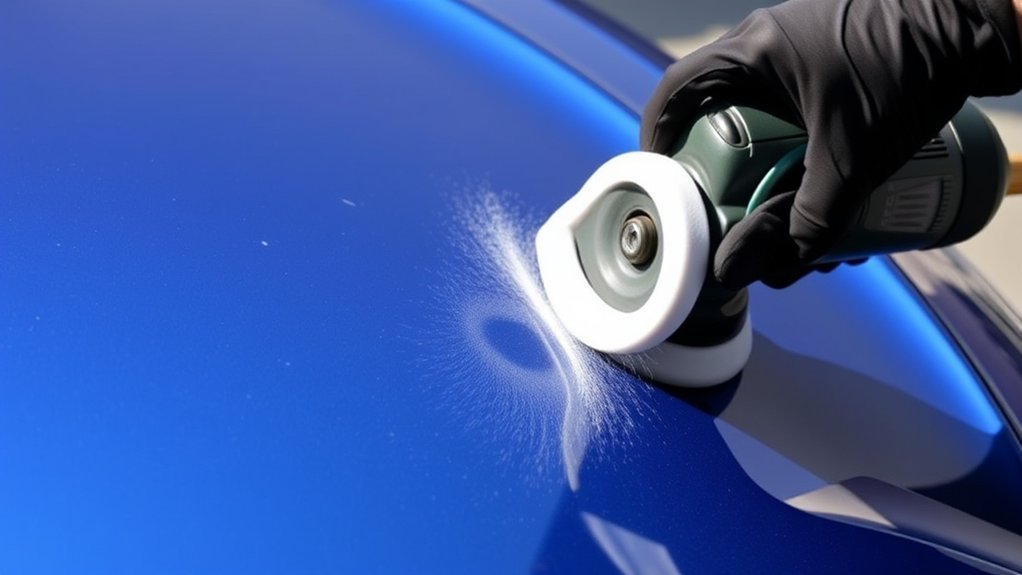
Although orbital sanders are designed for aggressive material removal, using one directly on car paint is generally unsafe because it can quickly damage the clear coat and underlying layers. You must understand that orbital sanders employ abrasive action, which compromises the abrasive safety needed to preserve paint integrity.
The paint primer beneath the clear coat is especially vulnerable; once breached, it exposes the metal surface to corrosion. Proper abrasive safety involves selecting tools and techniques that avoid excessive material removal.
Instead, consider specialized polishing tools designed for automotive finishes, which control abrasion and maintain paint primer protection. In summary, while orbital sanders excel in heavy-duty applications, their aggressive abrasion makes them unsuitable for safe use on car paint surfaces.
Risks of Using an Orbital Sander on Car Paint
Why should you avoid using an orbital sander on car paint? The primary concern lies in the aggressive abrasion orbital sanders apply, which can easily remove too much clear coat or even damage the base paint layer.
When tackling risks associated with this tool, you must consider that orbital sanders lack the finesse required for delicate paintwork. Technique pitfalls include uneven pressure and inconsistent motion, both of which can cause swirl marks, burns, or even sanding through the paint entirely.
Additionally, the high-speed rotation can generate excessive heat, potentially leading to paint bubbling or cracking. Because car paint is thin and sensitive, using an orbital sander without professional-grade control dramatically increases the risk of irreversible damage, making it generally unsuitable for buffing or polishing tasks.
How to Use an Orbital Sander Without Damaging Paint
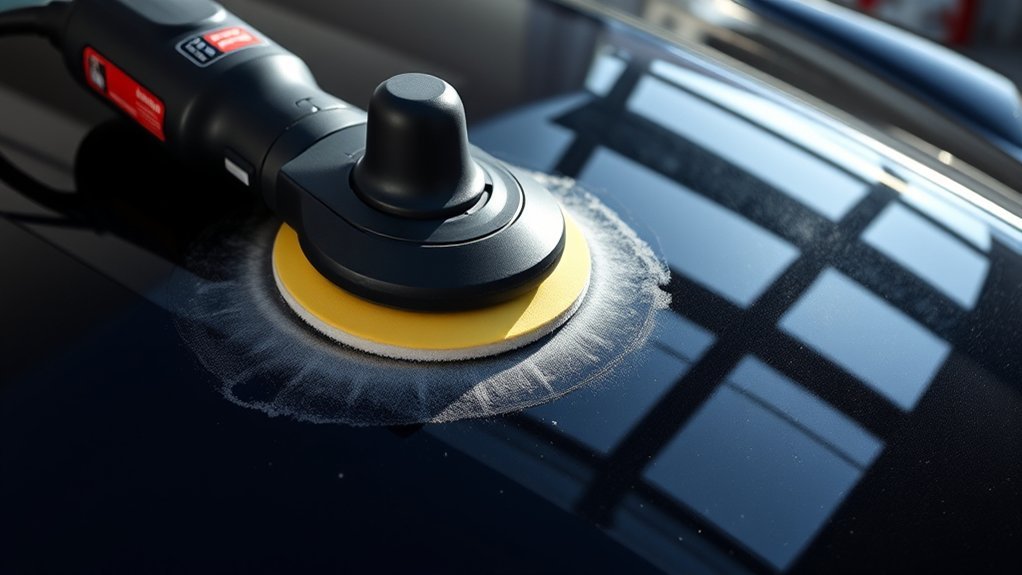
When you use an orbital sander on car paint, controlling pressure and speed is essential to prevent damage. Excessive force disrupts the buffering chemistry of the paint, causing paint crazing and surface defects. Use a low-speed setting and apply minimal, consistent pressure to protect the clear coat. Always test a small inconspicuous area first.
| Parameter | Recommended Setting | Purpose |
|---|---|---|
| Speed | 1500-2000 RPM | Prevents heat buildup |
| Pressure | Light to moderate | Avoids paint crazing |
| Pad Type | Soft foam or microfiber | Maintains buffering chemistry |
Keep the sander moving steadily to prevent uneven abrasion. Proper technique preserves the paint’s integrity while achieving a smooth, polished finish.
Better Tools to Buff Your Car Than an Orbital Sander
Which tools deliver better results than an orbital sander for car buffing? When evaluating buffing techniques, tool comparisons reveal that specialized equipment offers superior control and finish quality. Here are three recommended tools:
1. Dual-Action (DA) Polisher
Provides balanced oscillating and rotating motions, reducing heat buildup and paint damage risk while enhancing swirl mark removal.
2. Rotary Buffer
Offers higher speed and aggressive polishing capabilities, ideal for experienced users aiming for deep correction, though it requires careful handling.
3. Foam or Microfiber Applicator Pads
Used with hand polishers, these enable precise, low-impact buffing, perfect for delicate surfaces or spot correction.
Selecting these tools over an orbital sander optimizes buffing techniques, ensuring professional-grade results without compromising the integrity of your car’s paint.
How to Buff Car Paint Without Power Tools
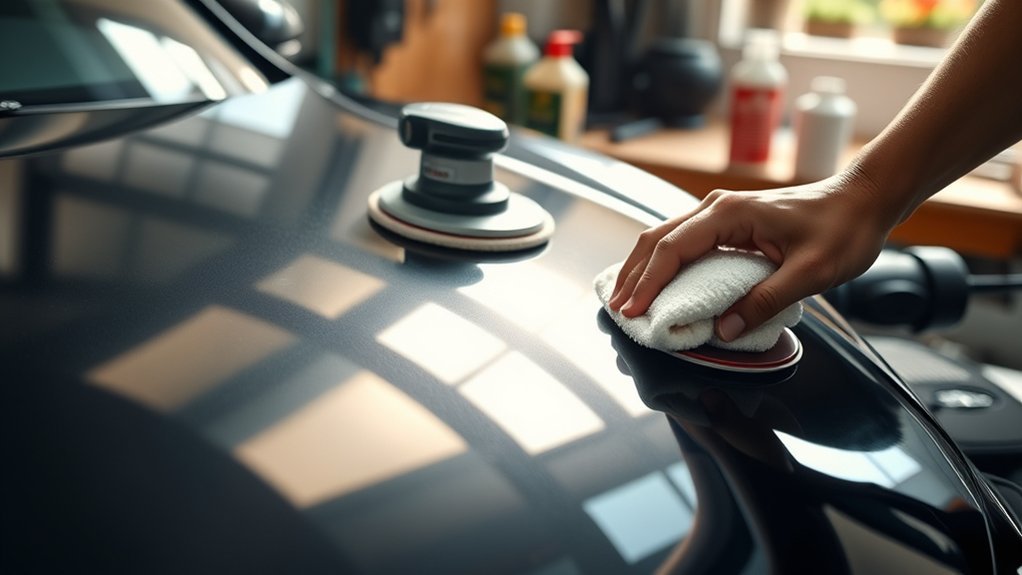
Buffing car paint without power tools requires patience and the right technique to achieve a smooth, polished finish. As a buffing beginner, start by selecting a high-quality microfiber cloth and a suitable rubbing compound or polish.
Apply a small amount of polish to the cloth, working it in small, circular motions with consistent pressure. Avoid pressing too hard, as this can damage the clear coat.
Contrary to common sander myths, manual buffing allows better control and reduces the risk of paint burns or swirl marks. Focus on one section at a time, regularly wiping away residue to assess progress.
Finish by applying a wax or sealant to protect the surface and enhance shine. This method, though labor-intensive, ensures precision without the risks power tools might introduce.
Frequently Asked Questions
Can an Orbital Sander Remove Deep Scratches From Car Paint?
No, an orbital sander can’t effectively handle deep scratch removal on car paint. It’s designed for light sanding and polishing, so you’ll need specialized tools and techniques to properly repair deep scratches without damaging the surface.
How Often Should I Buff My Car’s Paint?
You should buff your car’s paint every 3-6 months to maintain shine without causing damage.
Follow cautionary guidelines, like using proper pads and products, to avoid clear coat wear and ensure ideal buffing frequency for lasting results.
What Type of Buffing Pads Work Best With Orbital Sanders?
You’ll want foam or microfiber buffing pads for orbital sanding, as they provide the best finish without damaging paint. These two-word discussion ideas, “foam pads” and “microfiber pads,” ensure precise, professional results with your orbital sander.
Does Buffing With an Orbital Sander Improve Paint Gloss?
Want better paint gloss? Using an orbital sander can enhance buffing effectiveness if you choose proper pads and compounds.
However, you must consider safety considerations like speed control and avoiding paint burn for optimal, professional results.
Can I Use an Orbital Sander on Matte Car Finishes?
You shouldn’t use an orbital sander on matte finishes; it risks damaging the surface. Prioritize buffing safety by using soft pads and low speeds, ensuring matte finish care without altering the texture or sheen.
Conclusion
Buffing your car with an orbital sander is like wielding a chainsaw to trim delicate bonsai—too aggressive for the task. While you might think it’s a shortcut, this tool can easily strip away your paint’s protective layers, leaving swirl marks or worse.
Instead, choose a dual-action polisher or manual buffing with care. These methods offer precision and control, ensuring your car’s finish shines without the risk of costly damage.
In conclusion, using an orbital sander to buff a car is not recommended due to its harshness. Opt for safer alternatives to protect your vehicle’s paint and achieve the best results.