You might wonder if a random orbital sander really is better for your projects. This tool promises a balance between speed and finish quality, but does it deliver consistently?
Understanding how its unique motion impacts material removal and surface smoothness can clarify when it outperforms other sanders. Before you decide, it’s important to weigh its advantages against potential limitations and specific job requirements.
When Should You Choose a Random Orbital Sander?

When should you choose a random orbital sander? You’ll want to pick this tool when achieving the best finish is a priority, especially on wood, metal, or plastic surfaces. It excels in time efficiency, sanding quickly without leaving swirl marks or uneven spots.
If you’re concerned about risk factors like gouging or damaging delicate materials, this sander’s random orbit motion reduces those risks compared to other sanders. It also offers great tool compatibility, working well with various grit sandpaper types and hook-and-loop attachments, adapting easily to your project’s needs.
How a Random Orbital Sander Works
How exactly does a random orbital sander deliver such smooth, swirl-free finishes? The secret lies in how it works, combining two distinct sanding motions. The sanding mechanics involve the pad spinning in a circular motion while simultaneously moving in small ellipses or orbits.
This dual action prevents the abrasive from following the same path repeatedly, reducing swirl marks and uneven surfaces. When you press the sander against the material, the random orbital pattern ensures consistent sanding pressure across the surface.
You’ll notice the sanding pad vibrates slightly, which helps distribute the abrasive action evenly. This design not only speeds up material removal but also improves finish quality, making the tool versatile for both rough sanding and fine finishing tasks. Understanding these mechanics helps you use the sander more effectively.
Pros and Cons of Using a Random Orbital Sander
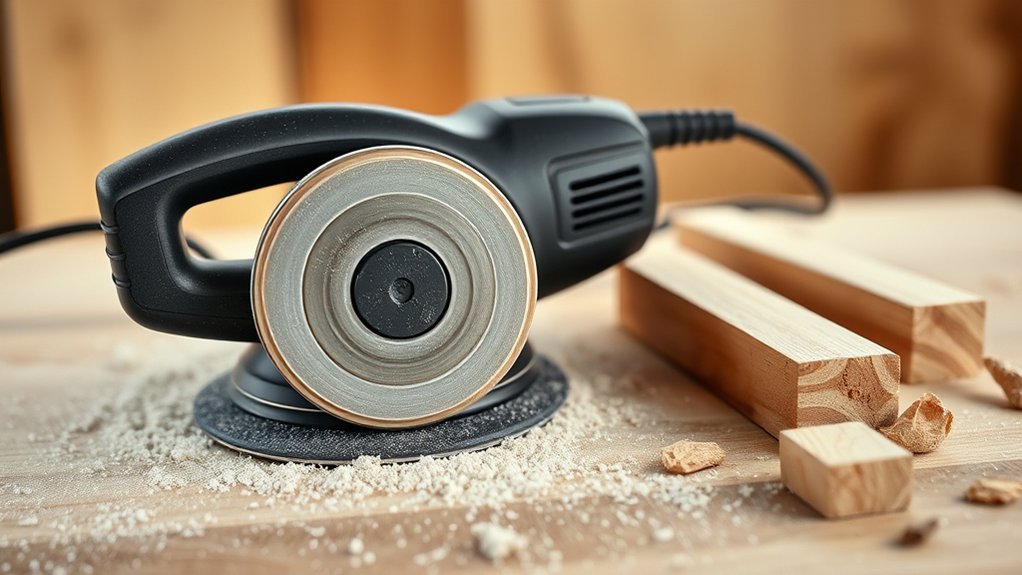
The unique dual-motion system that gives a random orbital sander its smooth, swirl-free finish also shapes its strengths and weaknesses. When you use one, consider these pros and cons:
- Lightweight ergonomics make it easy to handle for extended periods without fatigue.
- Excellent dust collection systems help keep your workspace clean and reduce airborne particles.
- Its random orbital motion minimizes visible sanding marks, delivering a professional finish.
- However, it can struggle with heavy material removal compared to more aggressive sanders.
Knowing these points helps you decide if this tool fits your project. Its balance of comfort and finish quality suits many tasks, but if you need rapid stock removal, you might find it less effective. Dust collection and ergonomic design enhance usability, making it a practical choice for fine sanding jobs.
Comparing Random Orbital Sanders to Other Sanders
Why choose a random orbital sander over other types like belt or detail sanders? The random orbital sander strikes a balance between power and control, offering a smoother finish quality compared to belt sanders, which are more aggressive and risk gouging softer materials.
Unlike detail sanders designed for tight corners, the random orbital handles larger surfaces efficiently without leaving swirl marks, thanks to its combined orbital and rotary action. This means you get consistent sanding results on flat or slightly curved surfaces.
If your project demands a fine finish with minimal effort, the random orbital is your go-to tool. It’s versatile enough for both rough sanding and final finishing, outperforming other sanders in delivering a clean, professional look without sacrificing ease of use.
Tips for Using a Random Orbital Sander Effectively
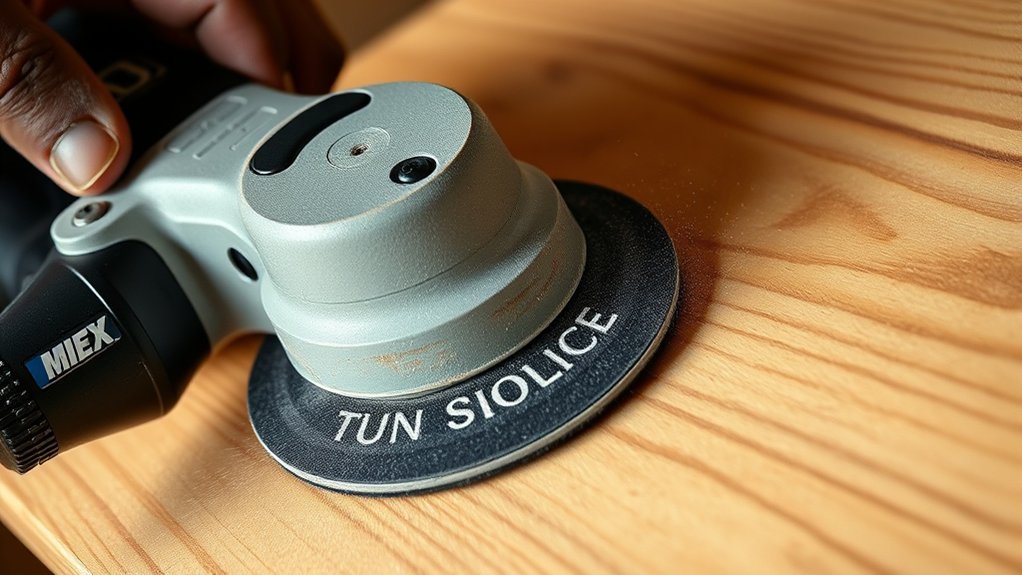
When should you apply firm, steady pressure while using a random orbital sander? Only when you need to smooth tough spots or achieve a consistent edge finish. Too much pressure can damage the surface or clog the sandpaper.
Here are four tips for effective use:
- Keep the sander moving steadily to avoid gouges and ensure an even edge finish.
- Use the appropriate grit sandpaper for each stage, starting coarse and moving finer.
- Engage dust control by connecting your sander to a vacuum or using a dust bag to keep your workspace clean.
- Hold the sander flat and avoid tilting to prevent uneven sanding.
Following these steps helps you get professional results without wasting time or materials.
Frequently Asked Questions
What Brands Manufacture the Best Random Orbital Sanders?
You’ll find Bosch, DeWalt, and Makita lead brand comparisons for random orbital sanders. They prioritize safety features like dust collection and ergonomic grips, helping you work efficiently while reducing risks during sanding tasks.
How Much Does a Quality Random Orbital Sander Typically Cost?
You’ll find quality random orbital sanders typically cost between $50 and $200. Costs vary by brand, with premium models from Bosch or DeWalt costing more but offering better durability and performance compared to budget options.
Can a Random Orbital Sander Be Used for Metal Surfaces?
Yes, you can use a random orbital sander for metal surface prep. Just make sure to choose the right abrasive pad or sandpaper designed for metal to avoid damage and achieve smooth, even sanding results efficiently.
What Safety Gear Is Recommended When Using a Random Orbital Sander?
You should wear safety goggles, a dust mask or respirator, hearing protection, and gloves.
Make sure you’ve had proper safety training, and use dust containment systems to minimize airborne particles while operating a random orbital sander.
How Do I Maintain and Clean My Random Orbital Sander?
To keep your sander in prime condition, follow maintenance tips like regularly cleaning dust ports and replacing worn pads. Be mindful of noise considerations, wear hearing protection, and avoid overworking the motor to extend its lifespan.
Conclusion
Choosing a random orbital sander is like picking a reliable all-terrain vehicle—you get a smooth ride across various surfaces without sacrificing control. If you want a balance of speed and finish quality with minimal swirl marks, it’s your go-to tool.
While it’s not the best for heavy material removal, its versatility and dust collection make your sanding tasks easier and cleaner. Use it right, and you’ll achieve professional results every time.
In conclusion, a random orbital sander is better for those seeking efficiency, precision, and a cleaner workspace in their sanding projects.