When you hold sand, you notice its granular texture immediately—tiny particles shifting and slipping through your fingers with varying resistance. Sand feels different depending on its condition. Dry sand feels loose and fine, while damp sand clumps together, changing its weight and cohesion.
The exact sensation depends on grain size, mineral makeup, and moisture content. Each factor subtly alters how the material interacts with your skin. Understanding these nuances reveals more than just texture—it uncovers a sensory experience worth exploring further.
What Does Sand Feel Like in Your Hands?
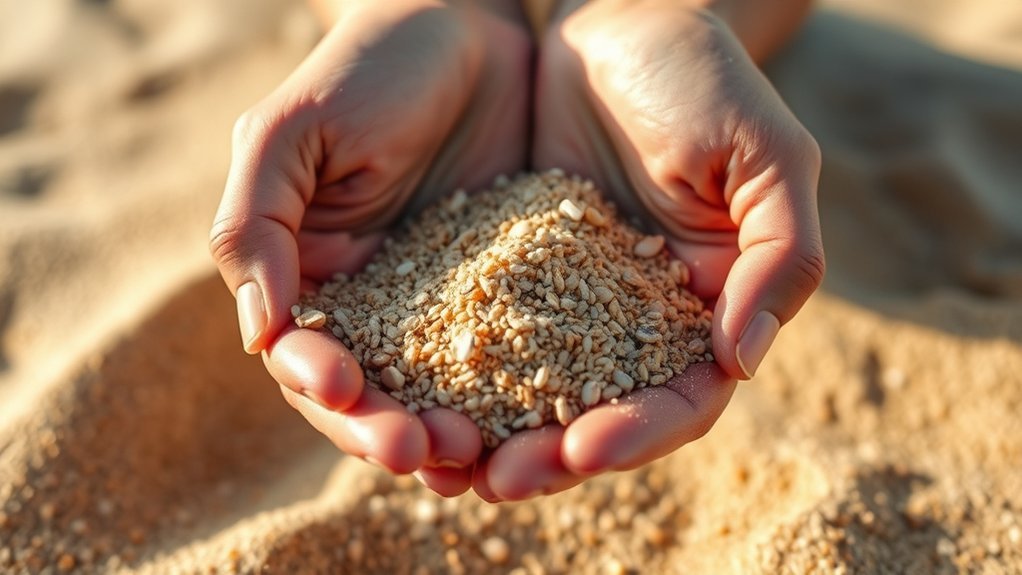
How exactly does sand feel when it slips through your hands? You notice its fine grains creating a subtle, uneven texture that contrasts with your skin. The friction between the sand particles and your fingers affects your grip, sometimes making it slippery or coarse depending on moisture levels.
As the sand trickles down, it activates memory triggers, perhaps beach vacations or childhood play, connecting tactile sensation with emotional recall. You feel the slight resistance as the grains shift and settle, emphasizing sand’s granular nature.
The sensation combines dry abrasiveness with occasional smoothness, offering a dynamic interplay of textures and grip. This precise, moment-to-moment interaction defines your sensory experience, making sand both a physical and psychological stimulus.
How Different Types of Sand Vary in Texture and Weight
You’ll notice that sand’s texture and weight change based on grain size, with finer grains feeling smoother and lighter. Moisture content also alters how sand clumps and flows through your fingers.
Additionally, the mineral makeup affects density and roughness, influencing the overall tactile experience.
Grain Size Differences
What determines the texture and weight of sand in your hands? Grain size plays a crucial role. Fine grains feel smooth and light, while coarse grains create a rougher, heavier sensation.
This grain size difference affects your texture pairing, linking tactile input to sensory memory. It helps you recall specific environments by touch alone.
| Grain Size | Texture |
|---|---|
| Fine (0.062-0.2 mm) | Silky, soft, light |
| Medium (0.2-0.6 mm) | Gritty, moderate weight |
| Coarse (0.6-2 mm) | Rough, heavy, abrasive |
As you handle sand, the varying grain sizes influence both how it feels and how much it weighs, impacting your sensory perception and memory recall.
Moisture Impact On Texture
Grain size sets the baseline for sand’s feel, but moisture dramatically alters its texture and weight as well. When you hold sand with varying moisture levels, you notice a stark texture contrast that shapes your sensory memory of it. Consider these effects:
- Dry sand feels loose, grainy, and lightweight, slipping easily through your fingers with minimal cohesion.
- Slightly damp sand gains heft and clumps, creating a granular paste that enhances tactile engagement without sogginess.
- Saturated sand becomes heavy and sticky, compacting into a dense mass that resists flow, noticeably increasing perceived weight.
These moisture-induced changes redefine how sand interacts with your hand, shifting from individual grains to cohesive units, which directly influences your tactile impression and memory of its texture and density.
Mineral Composition Effects
How does the mineral makeup of sand influence its texture and weight? When you hold sand, its feel depends largely on minimal mineralogy, the specific types and proportions of minerals present.
Sands dominated by quartz tend to feel lighter and smoother due to quartz’s relatively low density and well-rounded grain geometry. In contrast, sands with heavier minerals such as magnetite or garnet feel denser and often exhibit a coarser texture because their grains are angular and irregular.
The grain geometry also dictates how sand slips through your fingers; rounded grains create a silky sensation, while angular grains produce a rougher, grittier feel. By analyzing minimal mineralogy alongside grain geometry, you can predict both the tactile experience and the bulk density of different sands you encounter.
Why Moisture Changes How Sand Feels
When you hold dry sand, it feels loose and granular, slipping easily through your fingers. Adding moisture causes water to form thin films between grains, increasing cohesion and making the sand stick together.
This clumping changes the texture and grip, giving wet sand a denser, more compact feel in your hands.
Dry Sand Texture
Why does dry sand feel so distinctively coarse and loose between your fingers? It all comes down to the absence of moisture, which leaves individual grains free to shift and slip past each other. This creates a tactile experience often imprinted as a gritty memory.
When you handle dry sand, you notice:
- Granular Separation: Each grain remains independent, resisting cohesion, so the texture feels loose and crumbly.
- Surface Roughness: The irregular shapes and edges of dry sand particles enhance the coarse sensation against your skin.
- Air Gaps: Spaces filled with air between grains reduce density, contributing to the sensation of lightness and dryness.
This combination results in dry sand’s distinct texture, characterized by a lack of stickiness and a constantly shifting feel under your touch.
Effects of Wetness
While dry sand feels loose and gritty due to the lack of moisture, introducing water alters its physical properties considerably. You’ll notice wet sand becomes denser and smoother, enhancing tactile nostalgia that triggers memory recall of beach days.
Moisture creates surface tension between grains, reducing friction and changing how sand slips through your fingers. This shift makes the sand feel cooler and more cohesive without clumping excessively.
| Moisture Level | Texture |
|---|---|
| 0% (Dry) | Loose, gritty |
| 5-10% | Slightly dense |
| 10-15% | Smooth, cool |
| 15-20% | Dense, heavy |
| 20%+ | Saturated, slick |
Understanding these effects helps you appreciate how water transforms sand’s tactile experience.
Clumping and Grip
How does moisture influence the way sand clumps and grips your hand? Moisture changes the interaction between sand grains, creating distinct clumping sensations and grip challenges. When you handle damp sand, tiny water films form between particles, increasing cohesion.
This affects how sand behaves compared to dry grains.
- Adhesion Increase: Water causes sand grains to stick together, forming clumps that hold their shape in your hand.
- Enhanced Grip: The slight stickiness improves your grip, letting you mold sand easily without it slipping through your fingers.
- Variable Resistance: Depending on moisture level, clumping sensations range from crumbly to firm, altering how tightly you must grasp the sand to maintain control.
Understanding these factors helps you predict and manipulate sand’s tactile behavior effectively.
How Temperature Alters the Sensation of Sand
When you touch sand, temperature plays a pivotal role in shaping your sensory experience. Your temperature perception directly influences how the granules feel. Warm sand often feels soothing, while cold sand can be crisp and invigorating.
This variation triggers tactile nostalgia, reminding you of past encounters with different climates and seasons. The thermal conductivity of sand shifts your skin’s feedback, altering moisture evaporation and friction.
Here’s how temperature affects sensation:
| Temperature | Sensation | Emotional Response |
|---|---|---|
| Hot (>40°C) | Dry, grainy, warm | Comfort, relaxation |
| Warm (25-40°C) | Soft, slightly moist | Calm, tactile nostalgia |
| Cool (10-25°C) | Crisp, firm | Alertness, refreshment |
| Cold (<10°C) | Hard, almost icy | Shock, invigoration |
This precise interplay of heat and texture defines how you physically and emotionally perceive sand.
How Sand Can Bring Back Memories
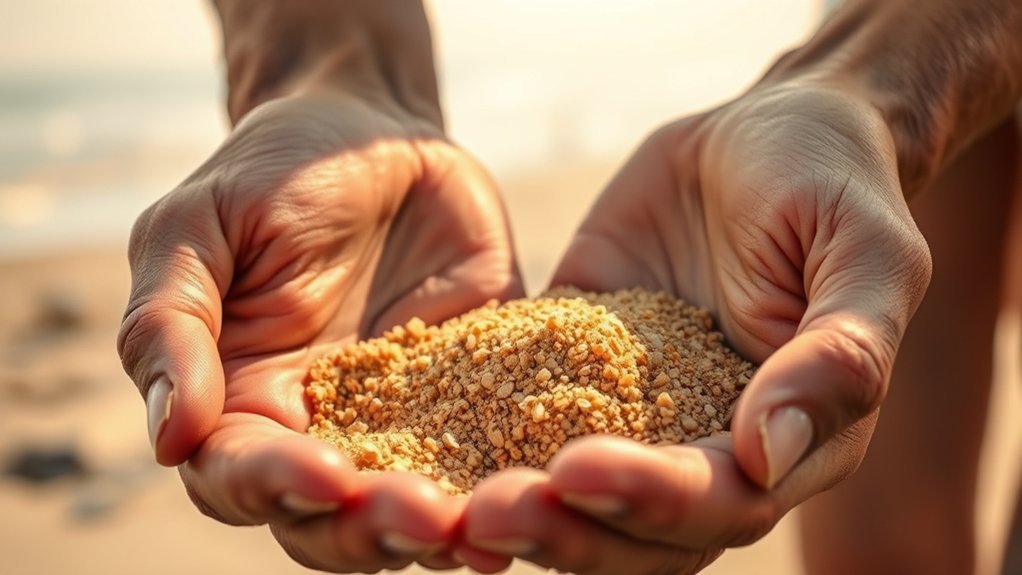
Why does the simple act of holding sand often trigger vivid memories? The answer lies in sand’s unique ability to activate nostalgia per Sound and tactile memory pathways in your brain. When you touch sand, three key mechanisms come into play:
- Tactile memory retrieval: Your skin’s mechanoreceptors send detailed signals about sand’s texture and temperature, instantly recalling past experiences.
- Multisensory integration: The subtle sound of sand shifting complements tactile input, reinforcing nostalgia per Sound.
- Contextual association: Your brain links these sensory inputs with specific environments, like a beach you visited, enhancing memory vividness.
Tips for Enjoying Sand’s Unique Textures
Although sand might seem uniform at first touch, its texture varies widely depending on grain size, moisture content, and mineral composition, offering a range of tactile experiences. When exploring sun kissed beaches, pay attention to how dry, fine grains contrast with damp, coarse ones.
Let the unique textures serve as memory triggers, enhancing your sensory connection to the environment.
| Texture Type | Sensory Tip |
|---|---|
| Fine, dry grains | Feel the smoothness slipping |
| Coarse, wet sand | Notice the granular resistance |
| Mixed mineral | Identify contrasting fragments |
| Compact, moist | Sense the dense, cool firmness |
Frequently Asked Questions
Is Sand Harmful or Abrasive to the Skin?
Sand isn’t typically harmful but can be abrasive due to its granular texture. If you have a sand allergy or sensitive skin, avoid prolonged soft contact to prevent irritation or dermatitis.
Always rinse thoroughly after exposure.
Can Sand Cause Allergic Reactions?
Sand’s subtle substances sometimes spark skin sensitivity, causing a sand allergy. While rare, sand can induce skin irritation through contaminants or allergens.
You should cautiously clean affected areas to prevent prolonged discomfort or inflammation.
How Does Sand Affect Sensitive Skin?
Sand can irritate sensitive skin due to its abrasive texture and temperature variation. You’ll notice that the soft texture sometimes feels rough, especially when grains rub repeatedly, potentially causing redness or discomfort on delicate skin areas.
Are There Health Benefits to Touching Sand?
You’ll find health benefits touching sand dunes, as minerals transfer to your skin, aiding mineral balance. This natural exfoliation stimulates circulation, promoting skin health and relaxation, making tactile interaction with sand a subtly therapeutic experience.
Does Sand Texture Change With Age?
You know what they say: “Time changes all things.” Sand texture aging occurs as mineral composition shifts through weathering and erosion, altering grain size and smoothness.
This affects how coarse or fine sand feels in your hands over time.
Conclusion
Though you might think sand’s texture is uniform, its feel actually shifts with moisture, grain size, and temperature, creating a complex sensory experience. When dry, it slips finely, but slight dampness binds grains into a malleable paste. This tactile variability not only engages your sense of touch but also connects you to memories and environments.
Embracing these subtle differences lets you fully appreciate sand’s intricate and dynamic nature in your hands. Ultimately, understanding what sand feels like in your hands reveals the unique and ever-changing qualities that make it so fascinating.