When you pick up an orbital sander, you’re holding a tool designed for efficient, precise surface smoothing.
An orbital sander uses a motor-driven pad that moves in small, rapid circular orbits, combining rotation and oscillation to minimize swirl marks.
This movement allows you to sand evenly across various materials without gouging.
Understanding how this mechanism works and what sets it apart will help you get the best results on your next project.
What Is an Orbital Sander and How Does It Work?
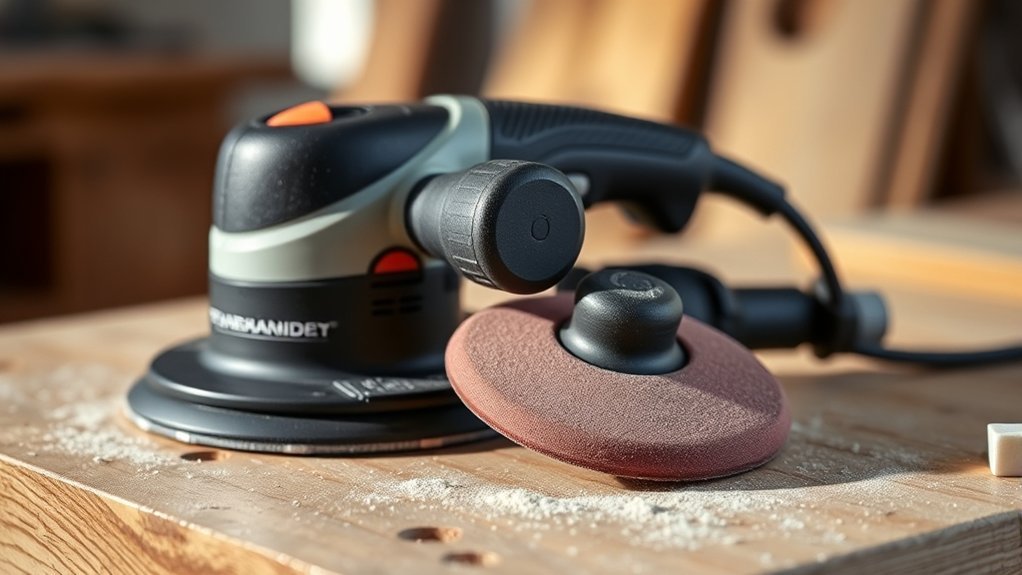
How does an orbital sander achieve smooth surfaces with precision? You use its motor-driven sanding pad, which moves in small, rapid circular orbits. This orbital motion prevents sanding patterns or swirl marks, ensuring even abrasion.
An orbital sander’s rapid, small circular orbits deliver smooth, even surfaces without swirl marks.
The pad’s random orbit combines rotation and oscillation, allowing you to work on diverse surfaces without gouging. Unlike an irrelevant topic like handheld power drills or an off topic idea such as paintbrush types, the orbital sander focuses solely on surface finishing.
Its design includes a dust collection system to keep your workspace clean and maintain visibility. When you apply moderate pressure, the sander’s motion removes material efficiently without damaging the substrate.
Understanding these mechanical details helps you utilize the tool properly for optimal results.
What Makes Orbital Sanders Stand Out?
The orbital sander’s unique movement pattern sets it apart from other sanding tools, delivering consistent, swirl-free finishes that you can rely on. You’ll appreciate how its random orbital action reduces sanding marks, a key orbital sander quirk that enhances surface smoothness.
Additionally, effective dust management systems in many models keep your workspace cleaner and extend abrasive life. Understanding these quirks helps you optimize performance and maintenance.
| Feature | Benefit | Practical Tip |
|---|---|---|
| Random Orbital Motion | Minimizes swirl marks | Use consistent pressure |
| Dust Collection | Keeps workspace clean | Empty dust bag regularly |
| Variable Speed | Adjust to material hardness | Start slow, increase as needed |
Mastering these aspects ensures you get the best results from your orbital sander.
Types of Orbital Sanders: Which One Should You Choose?

You’ll find three main types of orbital sanders suited for different tasks: random orbital sanders for smooth, swirl-free finishes; palm orbital sanders for quick, general sanding with easy control; and detail orbital sanders designed to reach tight corners and intricate areas.
Choosing the right one depends on the project’s precision and surface area. Understanding their specific functions helps you work efficiently and achieve optimal results.
Random Orbital Sanders
Why choose a random orbital sander over other types? This tool combines rotational and orbital motion, minimizing swirl marks and delivering a smoother finish. It’s ideal when you want to ignite your creative fuel and refine surfaces with precision.
Here’s why it stands out:
- Versatility: Works equally well on wood, metal, and plastic, adapting to various project needs.
- Efficiency: The random orbit motion ensures faster material removal without compromising surface quality.
- Control: Offers better grip and balance, allowing you to apply consistent pressure, essential when adjusting color theory elements like hues and saturation on painted surfaces.
Using a random orbital sander helps you achieve professional-grade results while maintaining control over texture and finish.
Palm Orbital Sanders
How does a palm orbital sander fit into your toolkit compared to other orbital sanders? Palm sanders are designed for control and comfort, featuring an ergonomic orbital grip that lets you maneuver the tool with precision.
Unlike larger random orbital sanders, palm sanders are lightweight and compact, making them ideal for small to medium surfaces and detailed finishing work. Their orbital motion reduces swirl marks and provides a smooth finish, but they typically remove material slower than more aggressive sanders.
When selecting a palm orbital sander, focus on vibration control, dust collection, and pad size to match your project needs. Incorporating a palm sander will enhance your ability to handle fine sanding tasks efficiently without sacrificing control or comfort during extended use.
Detail Orbital Sanders
Where do detail orbital sanders fit in your toolkit when precision sanding is critical? These compact tools excel at reaching tight corners and intricate surfaces where larger sanders can’t.
To get the most out of your detail orbital sander, focus on these key points:
- Maintenance routines: Regularly clean dust ports and check abrasive pads for wear to ensure consistent performance and prolong sander life.
- Storage tips: Store your sander in a dry, dust-free environment, ideally in a case or on a padded surface to prevent damage to delicate parts.
- Application precision: Use variable speed settings to adjust aggressiveness, allowing you to work safely on delicate materials without gouging.
What Surfaces Can You Sand With an Orbital Sander?
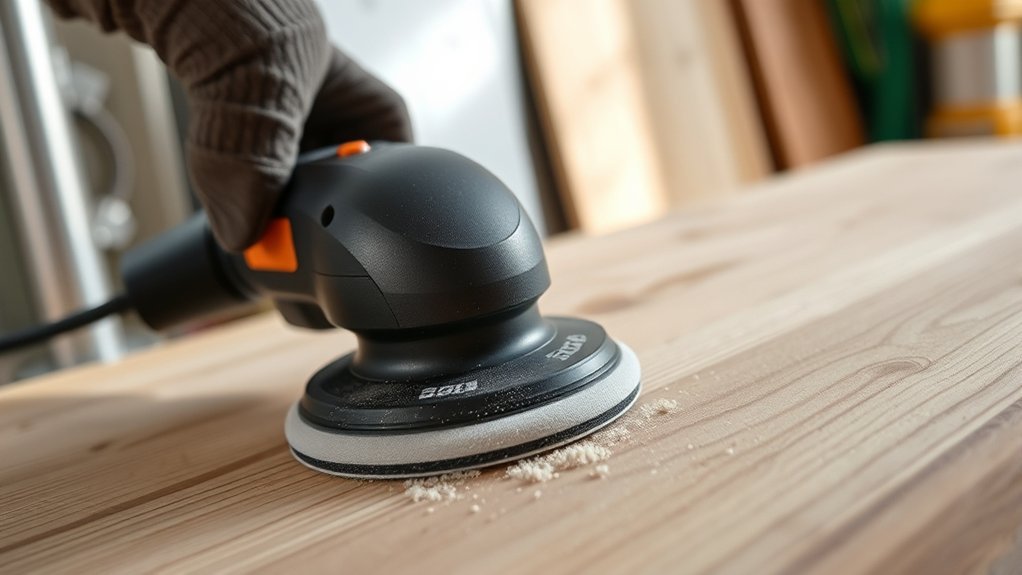
Which materials can you efficiently smooth and finish using an orbital sander? Primarily, you’ll work on wood, MDF, and plywood, where the sander excels at delivering a consistent surface finish by evenly removing material without gouging.
You can also use it on metal surfaces to eliminate rust or old paint, though you’ll need specific abrasive pads designed for metal. For plastics, an orbital sander can smooth edges and surfaces if you choose the right grit and keep the speed moderate to avoid melting.
Effective dust management is crucial regardless of the material; most orbital sanders come with dust collection ports that reduce airborne particles, improving visibility and preventing clogging of the abrasive. This makes your sanding process cleaner and more precise across various surfaces.
How to Choose the Right Orbital Sander for Your Project
When selecting an orbital sander for your project, you’ll need to contemplate factors like the size of the sanding pad, motor power, and variable speed controls. These discussion ideas are crucial and unrelated to other H2s, focusing solely on your tool choice. Consider these three key points:
- Pad Size: Smaller pads (5 inches) offer precision for tight spaces; larger pads cover more area quickly.
- Motor Power: Higher amps or wattage deliver faster material removal, essential for heavy-duty tasks.
- Variable Speed: Adjustable speeds let you tailor the aggressiveness based on surface type and finish requirements.
How to Use an Orbital Sander Safely: Step-by-Step
How do you guarantee safe operation while using an orbital sander? First, wear a dust mask or respirator to protect yourself from dangerous dust particles. Always secure your workpiece firmly to prevent slipping.
Before powering on, check that the sanding pad is properly attached to avoid kickback. Turn on the sander and let it reach full speed before contacting the surface.
Use steady, even pressure, don’t force the tool to prevent gouging. Keep your grip firm but relaxed to manage noisy vibrations effectively.
Move the sander in smooth, overlapping motions to ensure even sanding. After finishing, turn off the sander and wait for it to stop completely before setting it down.
Finally, clean your workspace to remove dust buildup, maintaining a safe environment.
Common Orbital Sander Mistakes and How to Avoid Them
When using an orbital sander, applying too much or too little pressure can damage your workpiece or reduce efficiency. Choosing the wrong grit sandpaper will either leave scratches or fail to smooth the surface properly.
Also, skipping proper safety gear increases the risk of injury from dust and debris.
Incorrect Pressure Application
Why does applying incorrect pressure with an orbital sander compromise your work quality? When you press too hard or too lightly, you disrupt the sanding technique’s efficiency and finish. Incorrect pressure can cause uneven surfaces, premature sandpaper wear, and motor strain.
To avoid these issues, follow these guidelines:
- Maintain light, consistent pressure. Let the sander’s weight do the work; pressing hard won’t speed up sanding but will gouge the surface.
- Keep the sander moving steadily. Holding it in one spot under pressure creates swirl marks and unevenness.
- Adjust pressure based on material. Softer woods require gentler pressure, while harder materials tolerate slightly firmer contact but never excessive force.
Mastering the correct pressure ensures smooth, professional results and prolongs your tool’s life.
Using Wrong Grit Sandpaper
Which grit sandpaper you choose can make or break your sanding project’s outcome. Using the wrong grit often leads to inefficient material removal or surface damage.
Coarse grit removes material quickly but can leave deep scratches if used improperly. Fine grit smooths surfaces but won’t correct imperfections efficiently.
To avoid these issues, start with a grit appropriate for the surface condition and gradually progress to finer grits. Applying excessive pressure to compensate for the wrong grit only worsens the finish and wears out both the sandpaper and sander prematurely.
Instead, let the orbital sander’s motion do the work. Selecting the correct grit avoids uneven sanding, reduces the need for rework, and ensures a professional finish. Always match grit to the task to maintain control and achieve desired results efficiently.
Ignoring Proper Safety Gear
Selecting the correct sandpaper grit improves your finish and reduces rework, but overlooking proper safety gear can put you at serious risk during sanding. Ignoring safety is a common mistake that compromises both your health and the tool’s longevity.
To protect yourself and maintain your orbital sander effectively, follow these essential maintenance tips:
- Always wear eye protection to shield against dust and debris that can cause serious injury.
- Use a dust mask or respirator to prevent inhaling fine particles, which can lead to respiratory issues.
- Wear hearing protection to reduce exposure to the sander’s high noise levels, preserving your hearing over time.
Incorporating proper safety gear ensures you avoid accidents and keeps your orbital sander in optimal working condition.
Keep Your Orbital Sander Clean and Working Like New
How often do you clean your orbital sander to maintain peak performance? Regular cleaning is essential to prevent dust buildup, which can clog vents and reduce motor efficiency.
Start with compressed air to blow out dust from the motor housing and vents. Use a soft brush to remove debris from the sanding pad and around the clamps. Check your sander’s manual for disassembly instructions to access internal components safely.
For maintenance tips, inspect the power cord for damage and ensure the sanding pad is secure and free from residue. Replace worn sanding discs promptly to avoid uneven sanding and motor strain.
Applying these cleaning techniques consistently extends your sander’s lifespan and keeps it working like new, ensuring reliable, smooth operation every time you use it.
Best Sanding Projects to Try With Your Orbital Sander
Where can you put your orbital sander to best use? This versatile tool excels in various sanding tasks, making your projects efficient and precise. Here are three ideal projects to try:
- Refinishing Furniture: Use your orbital sander to remove old finishes smoothly without damaging wood grain. Start with coarse grit and progress to finer grits for a flawless surface.
- Preparing Doors and Cabinets: Sanding edges and flat surfaces ensures paint or stain adheres evenly. The sander’s random orbit prevents swirl marks, giving professional results.
- Smoothing Rough Lumber: Quickly level uneven boards, saving time compared to hand sanding.
Side note: always monitor grit changes to avoid over-sanding. For budget tips, buy sanding discs in bulk and reuse them wisely to extend their life. This approach ensures cost-efficiency while maintaining quality results.
Frequently Asked Questions
Can Orbital Sanders Be Used for Metal Polishing?
Yes, you can use orbital sanders for metal polishing, but their orbital sander durability limits heavy-duty jobs. Compared to grinders, orbital sander noise comparison shows less noise, making them ideal for finer, quieter metal finishing tasks.
What Accessories Are Compatible With Orbital Sanders?
Over 70% of orbital sander users improve dust extraction efficiency with compatible accessories like vacuum adapters, various grit sanding discs, and backing pads. These ensure optimal orbital sander maintenance and extend tool lifespan while enhancing performance.
How Long Does an Orbital Sander Typically Last?
You can expect an orbital sander’s durability to last 3-5 years with regular use. To extend its lifespan, clean dust filters, replace worn pads, and lubricate moving parts as maintenance tips for optimal performance.
Are Orbital Sanders Noisy Compared to Other Sanders?
You won’t find orbital sanders as noisy compared to belt sanders in noise comparison tests. Their dust management systems also reduce airborne particles, making them quieter and cleaner, ideal for detailed and prolonged sanding tasks.
Can Orbital Sanders Be Used for Automotive Bodywork?
Yes, you can use orbital sanders for automotive bodywork. Their bodywork usage includes metal polishing and surface smoothing, but you’ll want fine-grit pads and controlled pressure to avoid damaging delicate metal surfaces during polishing tasks.
Conclusion
Now that you’ve got the hang of what an orbital sander does and how to handle it, you’re well on your way to achieving smooth, professional results without the usual headaches.
By choosing the right type and applying steady, thoughtful pressure, you’ll avoid common slip-ups and keep your tool running like new.
Embrace this handy device—it’s your secret weapon for tackling surfaces with precision and ease.
With an orbital sander in your toolkit, achieving flawless finishes becomes simpler and more efficient than ever.