Mastering how to use a Ryobi hand sander is like wielding a precision instrument—your control directly shapes the outcome.
You’ll need to start with thorough preparation: selecting the right grit, securing sandpaper properly, and maintaining steady, even pressure. Skipping these steps can compromise your finish and tool efficiency.
Before you pick it up, consider the subtle adjustments that make all the difference in achieving a flawless surface.
Picking the Best Ryobi Hand Sander for You
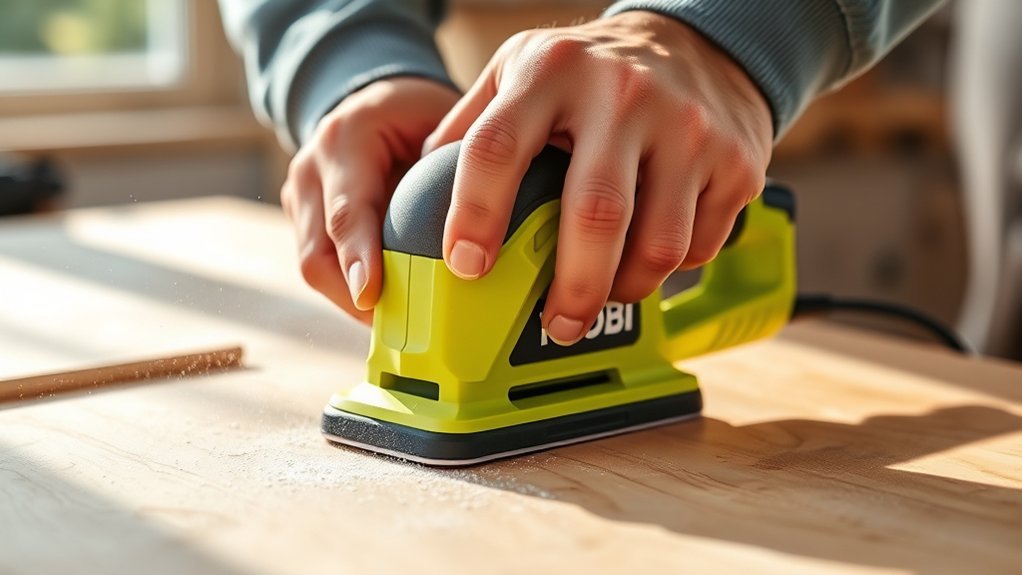
How do you choose the best Ryobi hand sander for your project? Start by identifying what you need beyond sanding technique. Consider factors like power source, pad size, and dust collection.
Ryobi offers orbital and detail sanders; orbital models suit larger surfaces, while detail sanders excel in tight spots. Think about your workspace and whether cordless convenience or corded consistency fits better.
Also, examine the tool’s vibration levels for comfort during extended use. Don’t overlook dust extraction efficiency, as it impacts cleanup and air quality.
When evaluating options, avoid distractions from unrelated topic ideas such as finishing methods or paint removal. Focus strictly on the tool’s specifications and ergonomics to match your project needs precisely.
This approach ensures you select a Ryobi sander optimized for your tasks.
How to Use a Ryobi Hand Sander: Step-by-Step Guide
Before you start, make sure the work surface is clean and free of debris to ensure smooth sanding.
You’ll then learn how to properly operate the Ryobi hand sander, including securing the sandpaper and controlling the tool’s speed.
Following these steps carefully will help you achieve an even, professional finish.
Preparing The Work Surface
Where should you start when preparing a surface for sanding with your Ryobi hand sander? Begin by thoroughly cleaning the workspace to eliminate dirt, grease, or loose debris that could interfere with the sanding process. Use a vacuum or brush to remove dust and particles from the surface.
Next, assess the material for any protruding nails, screws, or staples and remove them to avoid damaging the sander or the surface. Implement effective dust management by setting up a dust collection system or working in a well-ventilated area to control airborne particles.
Finally, ensure the surface is dry and stable to provide a smooth, even sanding experience. Proper preparation minimizes imperfections and extends the life of both your sander and sanding sheets.
Operating The Ryobi Sander
Start by securely attaching the appropriate sanding sheet to your Ryobi hand sander, ensuring it aligns perfectly with the platen. Power on the sander and hold it firmly with both hands to maintain control.
Apply consistent, gentle pressure, letting the sander’s weight do most of the work to avoid excessive edge wear on the sanding sheet. Move the sander in smooth, overlapping strokes, keeping it flat against the surface to prevent gouging.
Be mindful of noise handling; if the sander becomes unusually loud, stop and check for debris or worn parts. Regularly inspect the sanding sheet for edge wear, replacing it when necessary to maintain optimal performance.
Always work in a well-ventilated area and wear appropriate safety gear during operation.
Essential Safety Gear for Ryobi Hand Sander Users
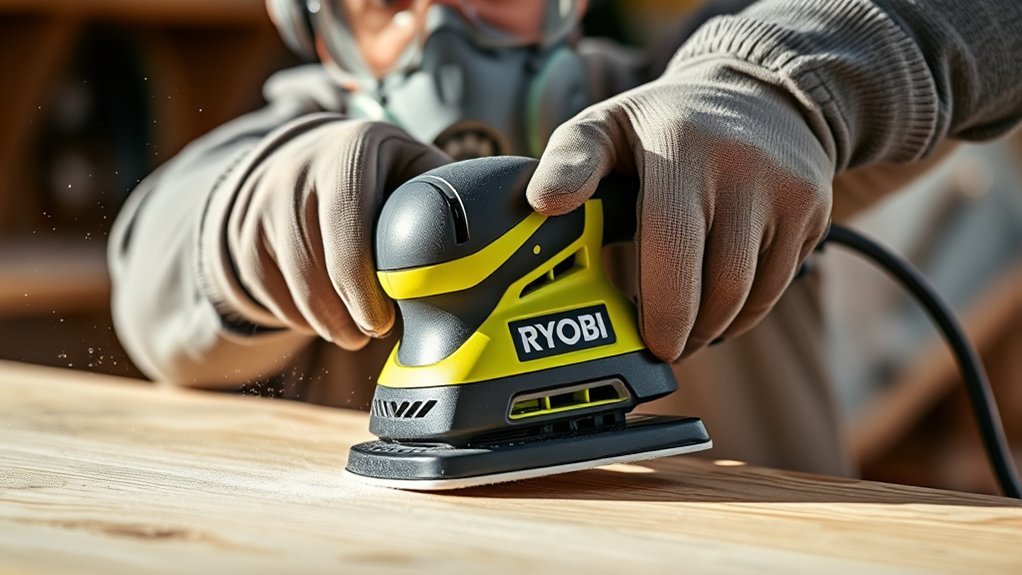
You should always wear protective eyewear to shield your eyes from dust and debris while sanding. Using a respiratory mask is crucial to prevent inhaling fine particles that can damage your lungs.
Additionally, select durable gloves to protect your hands from vibrations and abrasive surfaces during operation.
Protective Eyewear Importance
Why should you always wear protective eyewear when using a Ryobi hand sander? Because sanding generates fine dust and debris that can easily cause eye injuries. Proper eye protection is critical to prevent particles from entering your eyes and causing irritation or damage.
Choose safety glasses or goggles with high impact resistance to withstand flying debris and accidental contact. Look for eyewear that meets ANSI Z87.1 standards, ensuring reliable protection.
Ensure your eye protection fits securely and comfortably to avoid gaps that let particles in. Always inspect your eyewear before use for cracks or damage that could compromise safety.
Wearing impact-resistant eye protection minimizes injury risk, allowing you to focus on precise sanding without distractions caused by eye discomfort or hazards. Never underestimate this essential safety step.
Respiratory Mask Usage
How can you protect your lungs effectively while using a Ryobi hand sander? Wearing a proper respiratory mask is essential to prevent inhaling fine dust particles generated during sanding. Choose a mask with efficient air filtration to block harmful dust and debris. Ensure a snug fit to maximize protection and avoid leakage.
| Respiratory Mask Type | Air Filtration Efficiency |
|---|---|
| N95 | Filters 95% of particles |
| P100 | Filters 99.97% of particles |
| Half-face Respirator | Replaceable filters, higher efficiency |
Always inspect your respiratory mask before use and replace filters as recommended. Proper respiratory protection minimizes health risks, allowing you to work safely and effectively with your Ryobi hand sander.
Durable Gloves Selection
Selecting the right pair of durable gloves is essential for protecting your hands from abrasions, vibrations, and potential injuries while operating a Ryobi hand sander. Choose gloves made from high-quality materials such as reinforced leather or synthetic blends with excellent material durability.
These materials provide resistance against wear and tear, ensuring your gloves last through multiple sanding sessions. Look for gloves with padded palms and anti-vibration features to reduce hand fatigue and improve grip control.
Ensure the gloves fit snugly without restricting dexterity, allowing you to handle the sander precisely. Avoid gloves with loose stitching or thin fabric, as they compromise protection and durability.
Prioritizing material durability and ergonomic design will keep your hands safe and enhance your overall sanding performance.
Preparing Your Wood Surface for Ryobi Hand Sanding
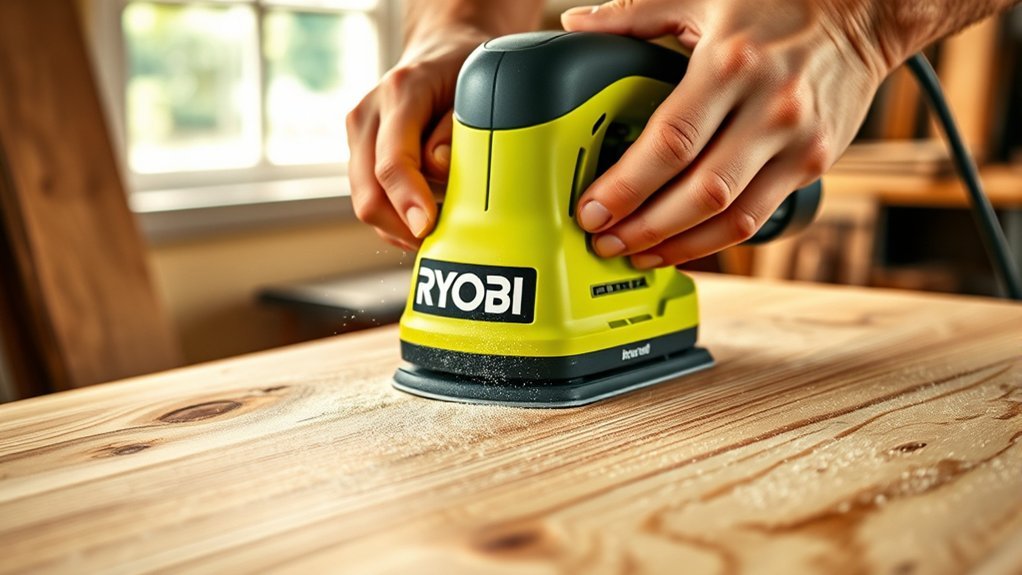
Before you start sanding with your Ryobi hand sander, you need to guarantee the wood surface is clean, dry, and free of debris. Begin by wiping the surface with a damp cloth to remove dust and dirt, then let it dry completely.
Inspect the wood for any protruding nails or screws and remove them to prevent damage. Effective dust management is vital; use a vacuum or tack cloth to clear residual particles, which ensures better sanding results and protects the sander’s motor.
Compared to other models, Ryobi sanders offer a favorable noise comparison, operating at moderate sound levels, but wearing hearing protection is still recommended. Proper preparation maximizes efficiency and extends the tool’s lifespan while preventing imperfections during the sanding process.
Tips for a Smooth Finish With Your Ryobi Hand Sander
What techniques guarantee a smooth, professional finish when using your Ryobi hand sander? First, maintain consistent pressure and move the sander evenly across the surface to avoid gouges or uneven spots. Use overlapping strokes to ensure full coverage.
To optimize dust removal, connect your sander’s dust collection system or use a vacuum attachment; this prevents buildup that can roughen the finish. For noise reduction, consider using rubber sanding pads or working in shorter intervals to minimize vibration.
Regularly inspect the sandpaper to avoid sanding with clogged grit, which hampers smoothness. Finally, finish with a finer grit to refine the surface. Following these tips will help you achieve a flawless finish with efficient dust control and minimized noise.
Changing and Maintaining Ryobi Hand Sander Sandpaper
To keep your Ryobi hand sander performing at its best, you’ll need to change and maintain the sandpaper regularly. Start by unplugging the sander for safety. Release the clamp levers or hook-and-loop system to remove worn sandpaper.
Inspect the sanding pad for damage or debris, cleaning it with a dry cloth to ensure proper adhesion. When changing sandpaper, align the new sheet precisely with the pad edges to prevent uneven wear. Press firmly to secure it in place.
Regularly maintaining sander components, like keeping the vents clear of dust, extends tool life. Avoid using damaged or clogged sandpaper, as it reduces efficiency and can strain the motor. By systematically changing sandpaper and maintaining sander parts, you’ll ensure consistent sanding performance and prolong your Ryobi’s durability.
Troubleshooting Your Ryobi Hand Sander: Common Problems and Fixes
Regularly changing and maintaining your Ryobi hand sander’s sandpaper helps prevent many common issues, but occasional problems can still arise during use. If your sander isn’t operating smoothly, start with noise troubleshooting. Unusual sounds often indicate worn bearings or loose components.
Disconnect the tool and perform a careful disassembly troubleshooting process to inspect internal parts. Check for debris buildup, damaged gears, or misaligned motor brushes. Tighten any loose screws and replace defective components as needed.
If the sander fails to start or stalls, verify the power source and switch integrity before deeper inspection. Using a multimeter during disassembly troubleshooting can help identify electrical faults. Consistent maintenance and prompt troubleshooting will keep your Ryobi hand sander running efficiently and extend its lifespan.
Frequently Asked Questions
What Is the Warranty Period for Ryobi Hand Sanders?
You get a two-year warranty duration on Ryobi hand sanders, covering defects and malfunctions. If issues arise, you can visit authorized service centers for repairs or replacements, ensuring your tool stays reliable and efficient.
Can Ryobi Hand Sanders Be Used on Metal Surfaces?
Yes, you can use Ryobi hand sanders for metal sanding. Their cordless power offers precise control and portability, making them effective for smoothing metal surfaces.
Just select appropriate abrasive pads designed specifically for metal.
Are Ryobi Hand Sanders Compatible With All Sandpaper Brands?
Ryobi hand sanders offer broad sandpaper compatibility but may require specific grit sizes or attachment types. You can use various brand alternatives, just ensure the sandpaper matches your sander’s dimensions and hook-and-loop or adhesive system for optimal performance.
How Loud Is a Ryobi Hand Sander During Operation?
You’ll find Ryobi hand sanders produce around 85 decibels, matching typical loudness measurements for power tools.
To improve comfort, use noise mitigation like ear protection and work in well-ventilated spaces to reduce fatigue.
Where Can I Buy Replacement Parts for Ryobi Hand Sanders?
You can buy replacement parts for Ryobi hand sanders directly from Ryobi’s official website, authorized retailers like Home Depot, or specialized tool part stores.
Always verify part compatibility using your sander’s model number before purchasing.
Conclusion
By following these steps, you’ll get the most out of your Ryobi hand sander. For example, when refinishing a worn coffee table, applying light pressure and consistent strokes prevented gouges and ensured a smooth surface.
Remember to change sandpaper before it clogs and keep vents clear for optimal performance. With proper preparation and maintenance, your Ryobi sander will deliver professional results every time.
Making your woodworking projects more efficient and precise is easy when you use a Ryobi hand sander correctly.