To use a reciprocating saw, first select and securely install the appropriate blade for your material. Make certain the saw is unplugged during setup and wear proper safety gear.
Position the blade aligned to your cut, then apply steady pressure while activating the trigger gradually. Keep the blade perpendicular and let the saw do the work to guarantee clean cuts.
Proper technique and blade choice improve efficiency and control — exploring more tips can help you master the tool.
How a Reciprocating Saw Works

A reciprocating saw operates by driving a blade back and forth in a push-pull motion, allowing you to cut through various materials efficiently. Understanding reciprocating saw mechanics helps you optimize its use.
Inside, a motor converts electrical or battery power into mechanical motion. This motion is transferred via a crankshaft or cam system to the blade holder, causing rapid reciprocation.
Saw power sources typically include corded electric models, which provide consistent power, or cordless battery-operated versions, offering portability. Each power source affects runtime and torque, influencing cutting performance.
The blade speed and stroke length directly impact cutting precision and efficiency, so knowing these mechanics allows you to select the right tool for your task. Proper control of the saw’s reciprocating action guarantees clean, effective cuts.
Pick the Perfect Blade for Your Job
Choosing the right blade for your reciprocating saw is essential for efficient cutting and tool longevity. You’ll need to take into account blade types, ensuring compatibility with the material you’re cutting, whether wood, metal, or plastic.
Pay close attention to the tooth configuration, as it directly affects cutting speed and finish quality.
Blade Types Overview
Blade selection directly impacts the efficiency and quality of your cuts when using a reciprocating saw. Understanding blade types is essential for peak performance.
Blade material options typically include high-carbon steel (HCS), bi-metal (BIM), and carbide-tipped variants. HCS blades offer flexibility and are suited for softer materials, while bi-metal blades provide durability and heat resistance, making them ideal for tougher applications. Carbide-tipped blades excel at cutting abrasive materials but come at a higher cost.
Additionally, blade length variations influence cutting depth and control; shorter blades offer precision in confined spaces, whereas longer blades enable deeper cuts. Choosing the appropriate combination of blade material and length guarantees your saw operates efficiently, prolongs blade life, and produces clean, accurate cuts tailored to your project’s requirements.
Material Compatibility
Although it might seem straightforward, matching your saw blade to the material you’re cutting is critical for achieving clean cuts and maintaining tool efficiency. Different wood types require blades designed for their density and grain.
For example, hardwoods demand blades with finer teeth to prevent splintering, while softwoods allow coarser teeth for faster cuts. When working with metal, consider the metal thickness carefully. Thin sheet metal needs blades with smaller teeth and tighter spacing to avoid snagging, whereas thicker metal calls for blades with larger, more aggressive teeth.
Using the wrong blade not only compromises cut quality but also accelerates blade wear and risks damaging your saw. Always select blades specifically rated for your material to optimize performance and extend tool life.
Blade Tooth Configuration
Matching your saw blade to the material is just part of the equation; the tooth configuration plays a significant role in how efficiently and cleanly you cut. Tooth design affects cutting efficiency by determining the size, shape, and spacing of the teeth.
For example, a blade with large, widely spaced teeth excels at aggressive demolition cuts through wood, removing material quickly but with a rougher finish. Conversely, fine-toothed blades produce smoother cuts on metal or plastic but cut slower.
Some blades feature variable tooth pitch to reduce vibration and extend blade life. When selecting a blade, consider both the tooth design and the material’s density.
Choosing the right configuration maximizes cutting efficiency, reduces effort, and prevents premature wear. Always match tooth design precisely to your job requirements for peak performance.
Set Up Your Reciprocating Saw: Assembly and Safety Checks
Before you start cutting, securely install the blade according to the saw’s locking mechanism to guarantee stability during operation. Double-check that the blade is compatible with your material and that all components are tightly fastened.
Always wear protective gear and inspect the saw for any damage or loose parts to maintain safety throughout your work.
Blade Installation Tips
To install the blade on your reciprocating saw correctly, you’ll need to first confirm the saw is unplugged or the battery is removed. Begin by selecting the appropriate blade type. Use blade alignment techniques to ascertain the blade slots perfectly into the clamp mechanism.
Insert the blade fully before engaging the locking lever or screw. Apply proper tensioning methods by tightening the clamp securely without overtightening, which can damage the blade or saw.
| Step | Action | Tip |
|---|---|---|
| Blade Selection | Choose based on material | Match blade type to task |
| Blade Alignment | Insert blade into clamp | Confirm blade teeth face forward |
| Tensioning | Tighten locking mechanism | Secure firmly, avoid overtightening |
Following these steps assures a stable, efficient blade setup.
Essential Safety Precautions
Although you’ve installed the blade correctly, you’ll need to perform essential safety checks to guarantee your reciprocating saw operates reliably and safely. Prioritize saw blade safety by inspecting the blade for any damage or wear before each use. Always wear personal protective equipment, including safety goggles, gloves, and hearing protection, to safeguard yourself from debris and noise. Ascertain the saw’s trigger lock and safety guard function properly to prevent accidental starts and injuries.
Verify blade tightness and alignment to avoid wobbling or detachment. Confirm power cord integrity or battery charge if cordless. Clear the work area of obstructions and secure the material firmly.
These precautions help maintain peak performance and protect you during operation.
Step-by-Step: Make Your First Cut
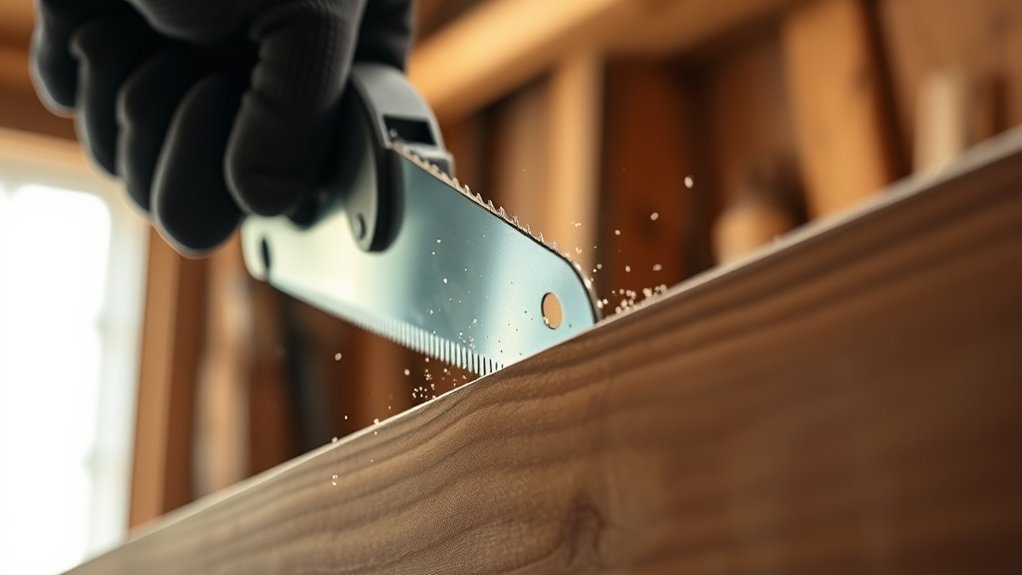
Position the reciprocating saw firmly with your dominant hand, ensuring the blade aligns exactly where you intend to cut. Use your other hand to stabilize the material if possible.
Before starting, select the correct blade for your task and verify the cutting depth to avoid damaging underlying surfaces. Engage the saw’s trigger gradually; applying steady, controlled pressure is essential for effective reciprocating saw techniques.
Maintain a firm grip and keep the blade perpendicular to the cutting line for accuracy. Let the saw do the work. Don’t force it. Once the blade has penetrated the material and the cut progresses smoothly, continue with consistent, even strokes until fully through.
Complete the cut by carefully releasing the trigger and waiting for the blade to stop before removing the tool.
Cut Wood, Metal & Drywall: Tips and Techniques
When cutting wood, metal, or drywall with a reciprocating saw, choosing the right blade and adjusting your technique are essential for clean, efficient cuts. To maximize cutting efficiency, use blades designed specifically for each material: bi-metal blades for metal, coarse-toothed blades for wood, and specialized blades for drywall to reduce dust and crumbling.
Choosing the right blade and technique ensures clean, efficient cuts in wood, metal, and drywall.
Apply steady pressure without forcing the saw; let the blade’s speed do the work. Maintain a consistent angle and avoid twisting to prevent blade binding.
Key reciprocating saw techniques for cutting wood, metal, and drywall include:
- Selecting the appropriate blade type and tooth configuration
- Controlling feed rate to balance speed and precision
- Securing the workpiece firmly to minimize vibration and guarantee stability
Following these tips will enhance your cutting efficiency and result in cleaner cuts.
Control Your Reciprocating Saw for Cleaner Cuts
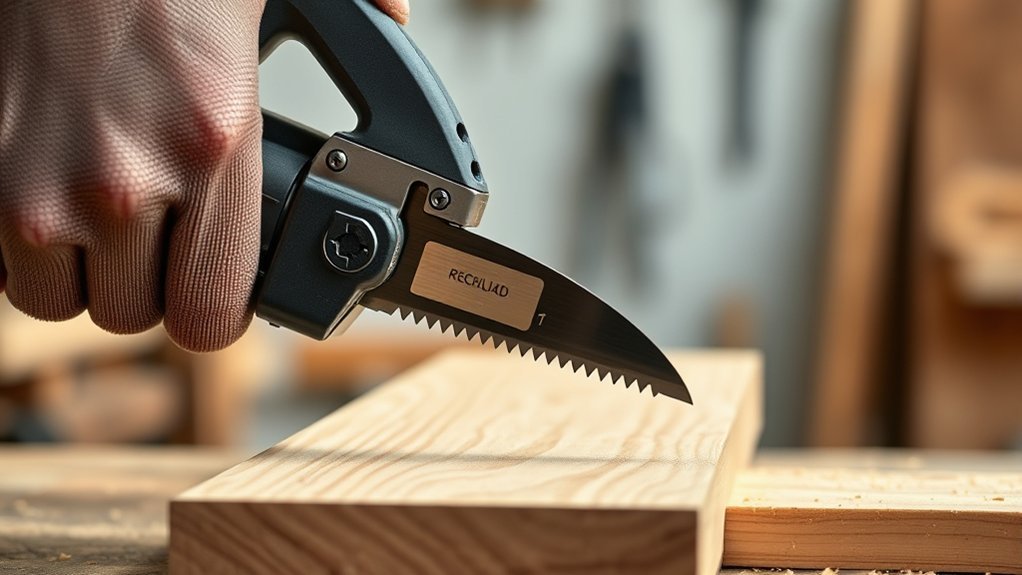
To achieve cleaner cuts with your reciprocating saw, you need to maintain steady control over the tool’s movement and speed. Start by firmly gripping the handle, ensuring your dominant hand guides the saw while your other hand stabilizes the front for balanced saw control.
Use smooth, deliberate cutting techniques. Avoid forcing the blade, which can cause rough edges or blade deflection. Adjust the saw’s speed to match the material; slower speeds help with precision on delicate surfaces.
Position the blade perpendicular to the cut line to minimize wandering. Also, plan your cuts to reduce vibration, which compromises accuracy. By combining consistent pressure, proper blade angle, and controlled speed, you’ll enhance cut quality and extend blade life while achieving precise, cleaner cuts on various materials.
Maintain and Troubleshoot Your Reciprocating Saw
Because regular maintenance directly impacts performance and safety, you’ll want to establish a routine for inspecting and servicing your reciprocating saw. Start with blade maintenance: check for dullness, cracks, or bending, and replace blades promptly to guarantee maximum cutting efficiency.
Use troubleshooting techniques to identify common issues like motor stalling, excessive vibration, or unusual noises. These often stem from worn brushes, loose components, or debris buildup.
To keep your saw in peak condition:
- Clean the blade clamp and lubricate moving parts regularly
- Inspect power cords and switches for damage or wear
- Test the motor and replace carbon brushes if performance drops
Consistent care and targeted troubleshooting will extend tool life and maintain cutting precision.
Essential Safety Gear for Using a Reciprocating Saw
Maintaining your reciprocating saw’s components is only part of working safely and effectively. Wearing the right safety gear protects you from debris, noise, and injury risks. Always use safety goggles to shield your eyes from flying particles, and hearing protection to prevent damage from prolonged exposure to loud noise.
Gloves improve grip and protect your hands, while a dust mask guards your respiratory system from harmful dust.
| Safety Gear | Purpose |
|---|---|
| Safety Goggles | Protect eyes from debris |
| Hearing Protection | Reduce risk of hearing loss |
| Gloves | Enhance grip and hand protection |
| Dust Mask | Prevent inhalation of dust particles |
Use this gear consistently to guarantee maximum safety during operation.
Frequently Asked Questions
Can a Reciprocating Saw Be Used Underwater?
You can use a reciprocating saw underwater, but prioritize underwater safety by ensuring proper insulation and waterproofing. Select blades designed for wet conditions to prevent corrosion and maintain cutting efficiency.
Always follow manufacturer guidelines for safe operation.
How Loud Is a Reciprocating Saw During Operation?
The noise level of a reciprocating saw can feel like a jet engine in your hands. Without sound dampening, it’s loud, typically around 90-100 dB. Wear hearing protection for safe, precise operation.
What Is the Average Lifespan of a Reciprocating Saw Blade?
You can expect a reciprocating saw blade’s lifespan to vary from a few hours to several days of cutting, depending on blade material and cutting efficiency. High-quality bi-metal blades typically last longer in tough applications.
Are Cordless Reciprocating Saws Less Powerful Than Corded Ones?
Think of cordless saws as electric cars, slightly less powerful than gas engines due to battery performance limits. However, their tool advantages include portability and convenience, making them ideal for tasks where mobility outweighs raw power.
Can a Reciprocating Saw Be Used for Pruning Trees?
Yes, you can use a reciprocating saw for tree trimming, especially thicker branches. Employ proper pruning techniques by cutting at the branch collar to promote healthy growth and reduce damage to the tree during pruning.
Conclusion
Now that you’ve got the basics down, using your reciprocating saw will be like second nature—a well-oiled machine ready for any cut. Remember, choosing the right blade and maintaining control are key to precision and safety. Keep your gear sharp and your safety gear on, so you cut efficiently without a hitch.
With practice and care, your saw will become an extension of your skill, tackling wood, metal, or drywall with confidence and ease. Mastering how to use a reciprocating saw ensures you can handle a variety of projects safely and effectively every time.