If your table saw blade is stuck, the first step is to unplug the saw to ensure your safety.
Secure the blade using a blade lock or wedge to prevent any movement while you work on it.
Next, try loosening the arbor nut by turning it counterclockwise. If the nut is too tight, apply penetrating oil and wait a few minutes to let it soak in.
Clean off any rust or debris from the arbor and the blade mounting hole to make the removal process easier.
Keep your workspace clear and always wear safety gear.
There are additional tips available to help prevent this frustrating issue in the future.
Step-by-Step: Remove a Stuck Table Saw Blade
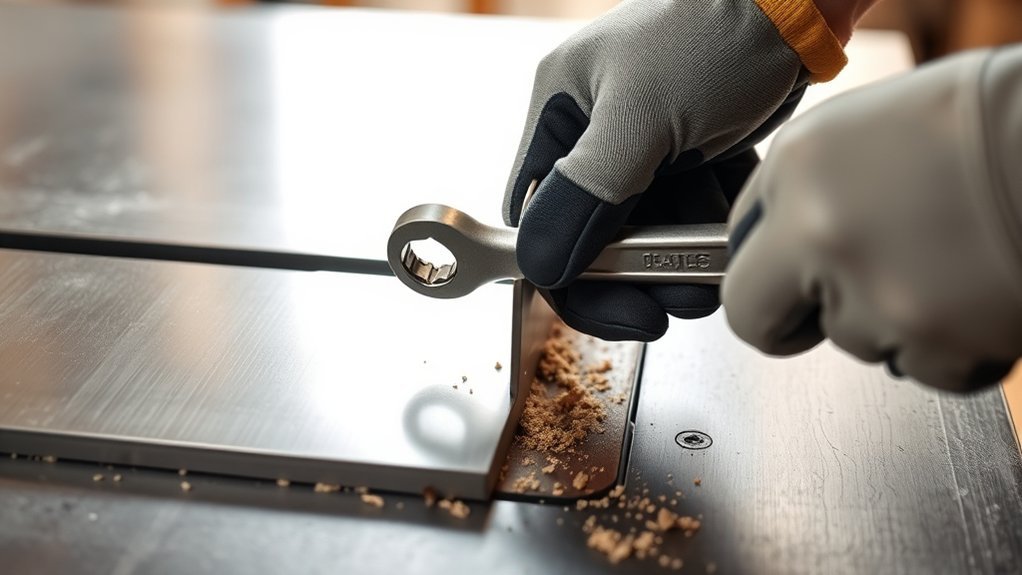
To remove a stuck table saw blade, you’ll need to follow a clear sequence of steps to guarantee safety and effectiveness. First, unplug the saw to prevent accidental starts.
Identify your blade type, as different designs may require specific wrenches or removal techniques. Use the blade lock or a wedge to prevent the blade from turning.
Loosen the arbor nut by turning it counterclockwise. Apply steady pressure, avoiding sudden force that might damage the arbor.
If the blade remains stuck, apply a penetrating lubricant and let it sit for a few minutes before trying again.
Once removed, inspect the blade and arbor for damage. Regular saw maintenance, including cleaning and lubrication, helps prevent blades from sticking in the future.
Reassemble carefully, ensuring all parts are secure before use.
Prepare Your Workspace and Safety Gear
Before you start, clear your work area to avoid any tripping hazards or distractions. Make sure you wear protective gear like gloves and safety glasses to shield yourself from sharp edges and debris.
Taking these precautions will help keep the process safe and efficient.
Clear Work Area
Several key steps will help you clear your work area effectively before tackling the stuck table saw blade. Start by removing any clutter, scrap wood, or debris from around the saw. This improves workspace organization and reduces trip hazards.
Next, confirm you have enough room to move freely, which is essential when working with sharp tools. Arrange your necessary tools within easy reach to maximize tool accessibility. Keep wrenches, screwdrivers, and pliers nearby but out of the way to prevent accidental knocks.
Finally, check that the saw is unplugged or powered off to avoid unexpected startup. A tidy, well-organized workspace helps you focus, speeds up the blade removal process, and keeps you safe throughout the job.
Use Protective Equipment
Although clearing your work area is essential, you shouldn’t overlook the importance of protective equipment when dealing with a stuck table saw blade. Always wear safety goggles to protect your eyes from flying debris or metal shards that might dislodge during removal.
Hearing protection is equally important, as unexpected noises can be loud and harmful. Gloves can also help protect your hands from sharp edges, but make sure they don’t get caught in any moving parts.
Before you start, double-check that the saw is unplugged or the power is switched off to prevent accidental startups. Taking these safety precautions seriously reduces your risk of injury and helps you focus on removing the blade safely and efficiently.
Your safety gear is your first line of defense. Never skip it.
Identify Why Your Table Saw Blade Is Stuck
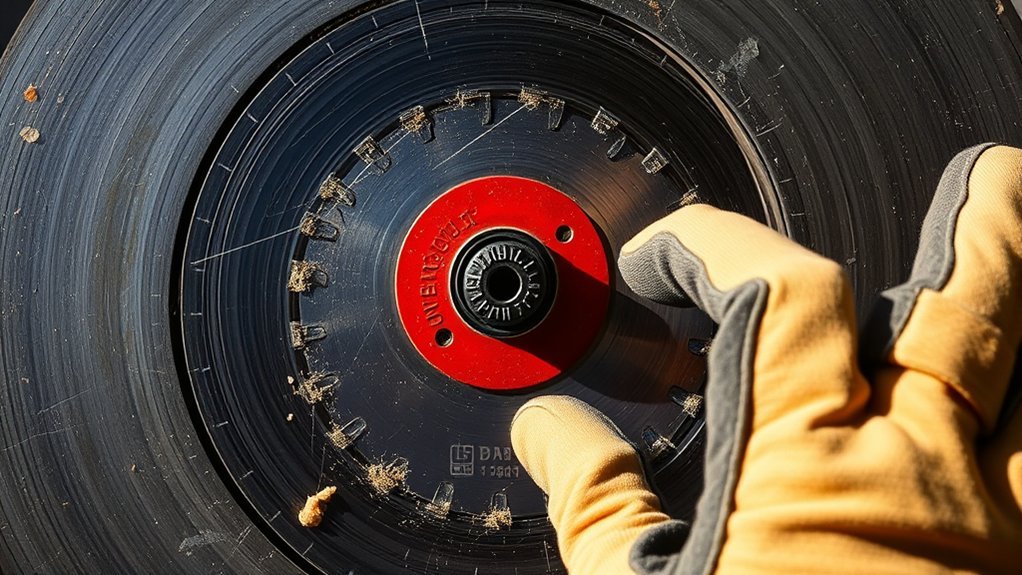
When your table saw blade gets stuck, it is crucial to pinpoint the cause to safely and effectively free it. Start by checking for blade alignment issues, as a misaligned blade can bind and jam during operation. Next, inspect the blade tension; excessive blade tension can cause the blade to grip the arbor too tightly, making removal difficult. Finally, look for any physical obstructions or damage that might be locking the blade in place.
- Confirm the blade is perfectly aligned with the miter slot and fence.
- Adjust blade tension to manufacturer specifications. Too tight or too loose causes problems.
- Examine the arbor and blade for dents, warping, or burrs that could cause sticking.
Identifying the root cause saves time and prevents damage as you proceed.
Remove Rust and Debris From a Stuck Table Saw Blade
If your table saw blade is stuck, rust and debris could be the culprits binding it to the arbor. Start by unplugging the saw for safety. Use a wire brush or steel wool to gently scrub the blade’s mounting hole and arbor shaft, focusing on rust removal.
For stubborn rust, apply a rust remover or penetrating oil, letting it sit for 10-15 minutes before scrubbing again. Next, clean away any debris, sawdust, pitch, or grime that might be wedged between the blade and arbor. Use a soft cloth or compressed air to clear out particles.
After cleaning, try to remove the blade again; it should loosen more easily now. Proper rust removal and debris cleaning can free your stuck blade without damage or excessive force.
How to Prevent Your Table Saw Blade From Getting Stuck
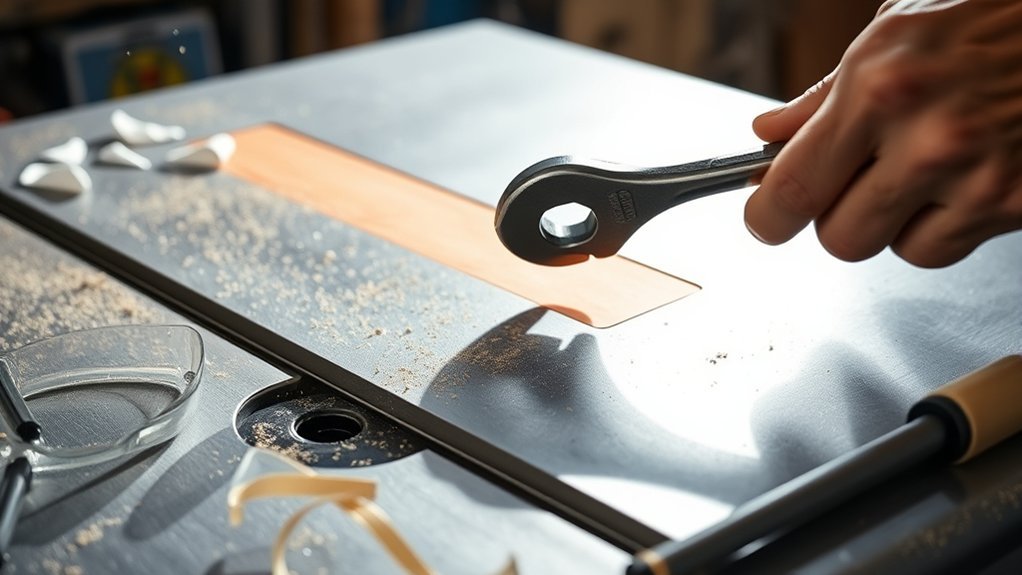
To keep your table saw blade from getting stuck, choose the right blade for the material you’re cutting. Stick to a regular maintenance routine to clean and inspect your blade and saw.
Also, use correct cutting techniques to prevent binding and reduce strain on the blade.
Proper Blade Selection
Although choosing the right blade might seem straightforward, picking one that matches the material and cut type is crucial to preventing your table saw blade from getting stuck. Different blade types are designed for specific cutting materials, so using the wrong one increases friction and binding risks.
To select the proper blade:
- Match blade teeth count to your material. Use fewer teeth for rough cuts on softwood and more for fine cuts on hardwood or plywood.
- Choose blade tooth design based on cut type. Use flat-top for ripping and alternate top bevel for crosscutting.
- Confirm blade diameter and arbor size fit your saw to avoid wobbling or uneven cuts.
Regular Maintenance Routine
Since regular maintenance keeps your table saw running smoothly, you should develop a routine that includes cleaning, lubrication, and inspection. Start by setting up a maintenance schedule, weekly for heavy use or monthly for occasional use.
Clean the blade and surrounding parts to remove sawdust and resin buildup, which can cause the blade to stick. Apply blade lubrication sparingly to reduce friction but avoid excess, which attracts debris.
Inspect the arbor and blade mounting area for damage or wear, ensuring everything fits securely. Tighten any loose components and replace worn parts promptly.
Following this maintenance schedule prevents buildup and mechanical issues, reducing the risk of your blade getting stuck. Consistency in these steps keeps your table saw safe and efficient, saving you time and frustration.
Correct Cutting Techniques
Master proper cutting techniques to keep your table saw blade from getting stuck and guarantee smooth, safe operation. You need to focus on how you approach each cut, considering cutting angles and blade speed carefully.
- Maintain consistent cutting angles: Always feed the wood at a steady angle relative to the blade. Avoid sudden shifts that can bind the blade.
- Control blade speed: Use the right blade speed for the material. Too slow causes friction; too fast risks kickback.
- Apply steady pressure: Push the wood evenly through the blade without forcing it. Let the saw do the work to prevent pinching.
When to Call a Professional for Stuck Blade Removal
If you’ve tried basic removal techniques and the blade still won’t budge, it’s time to contemplate calling a professional. Attempting further removal without the right tools or knowledge can damage your table saw or cause injury.
Professional services have the expertise and equipment to handle stuck blades safely and efficiently. They can also provide expert advice on preventing future issues, such as proper maintenance and blade installation.
If you notice unusual resistance, stripped parts, or if the blade is fused due to rust or debris, don’t hesitate to seek help. Calling a professional guarantees your saw is restored correctly, saving you time and potential repair costs.
Knowing when to get expert assistance is key to maintaining your tool’s performance and your safety.
Frequently Asked Questions
What Type of Blade Is Best for Cutting Hardwood?
You’ll want hardwood blades made from carbide-tipped steel for durability and sharpness. These blade materials stay sharp longer and cut cleanly through dense wood, making your cuts smoother and more precise every time you work with hardwood.
How Often Should I Replace My Table Saw Blade?
You should replace your table saw blade when it dulls or causes burning. Blade replacement frequency depends on use.
Follow blade longevity tips like proper cleaning and avoiding cutting nails to extend its life.
Can I Use a Table Saw Blade for Metal Cutting?
Cutting metal with a wood blade is like fitting a square peg in a round hole. You’ll need a blade designed for metal cutting to guarantee blade compatibility. Always pick the right blade to avoid damage and guarantee safety.
What Are the Signs of a Dull Table Saw Blade?
You’ll notice dull blade symptoms like burning wood, increased feed pressure, and rough cuts. Performance degradation also shows as slower cutting speeds and excessive noise.
Replace or sharpen your blade to maintain efficient, safe operation.
How Do I Choose the Right Blade Size for My Table Saw?
Choosing your blade’s size isn’t rocket science. Match the blade diameter and thickness to your table saw’s specifications. Check the manual or existing blade. Using the right dimensions guarantees safe, efficient cuts every time you work.
Conclusion
Removing a stuck table saw blade is like freeing a bird caught in a net—it takes patience, the right tools, and careful attention. Start by preparing your workspace and ensuring the saw is unplugged for safety.
Next, address any rust or debris that might be causing the blade to stick. Use penetrating oil and let it sit for a while to loosen the blade. Gently tap and wiggle the blade to help free it without forcing it.
If the blade remains stuck, don’t hesitate to seek professional help to avoid damage or injury. Remember, regular maintenance is the key to keeping your saw running freely.
By following these steps, you’ll restore smooth motion and safety to your work. Keeping a clean, well-maintained saw blade ensures your projects move forward without interruption. Removing a stuck table saw blade properly is essential for safe and efficient woodworking.