What Size Drill Bit for Pinewood Derby Axles can make a significant difference in your car’s performance. Did you know that a drill bit just 0.01 inches off in diameter can reduce your Pinewood Derby car’s speed by several percent?
Choosing the right size for your axle holes is more than a detail; it directly affects friction and wheel alignment.
Most racers settle on a 7/64-inch bit, but the ideal choice depends on precise axle measurements and wood density.
Understanding these factors could be the key to shaving vital milliseconds off your time.
Standard Pinewood Derby Axle Diameter
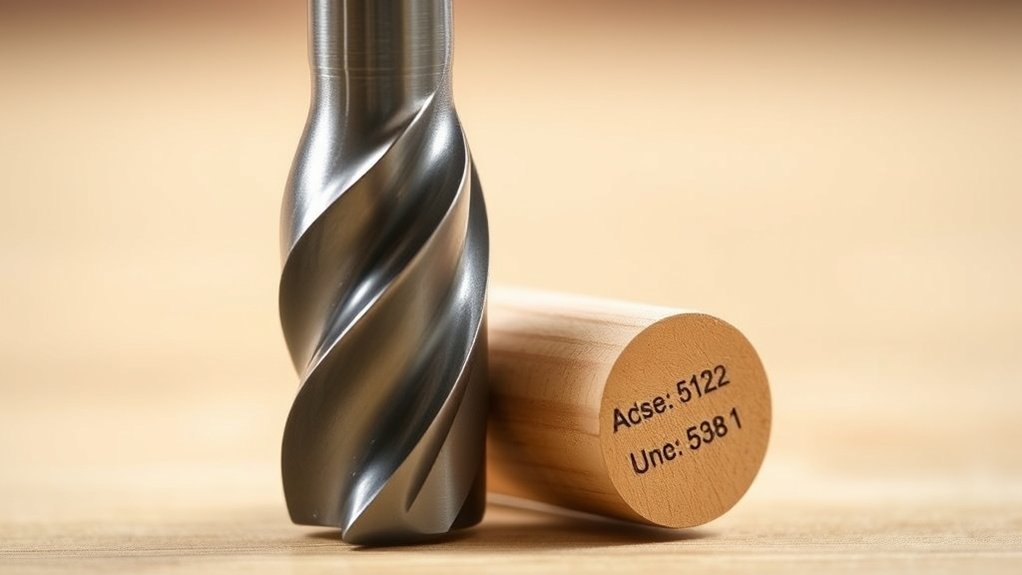
The standard diameter for Pinewood Derby axles is typically 0.098 inches, which corresponds to the size of common finishing nails used in most kits. This axle diameter is critical because it dictates the drill bit size you’ll need to create precise wheel slots.
When selecting a drill bit, you must match it closely to this diameter to guarantee a snug fit without excess play, which can cause wheel wobble and reduce speed. Using a drill bit that’s too large compromises alignment, while one that’s too small can damage the axle or wood during installation.
In your preparation, measure the axle diameter accurately with calipers and choose a drill bit that provides a tight tolerance, optimizing both stability and performance in your Pinewood Derby car assembly.
Why the Right Drill Bit Size Boosts Pinewood Derby Speed
Because your drill bit size directly affects axle fit and wheel alignment, choosing the correct diameter is essential for maximizing Pinewood Derby speed. If the hole is too tight, friction increases; too loose, and your wheels wobble, both slowing you down.
Drill bit materials like high-speed steel or carbide guarantee precision and durability during axle hole preparation, maintaining consistent diameter and smoothness. Properly sized holes allow axles to spin freely while keeping wheels aligned, reducing drag.
Meticulous axle hole preparation minimizes irregularities that cause imbalance or binding. By selecting drill bits that match your axle diameter precisely and using high-quality materials, you optimize fit and alignment. This technical control over your car’s mechanics directly translates to faster, more consistent performance on race day.
Best Drill Bit Sizes for Smooth Axle Holes
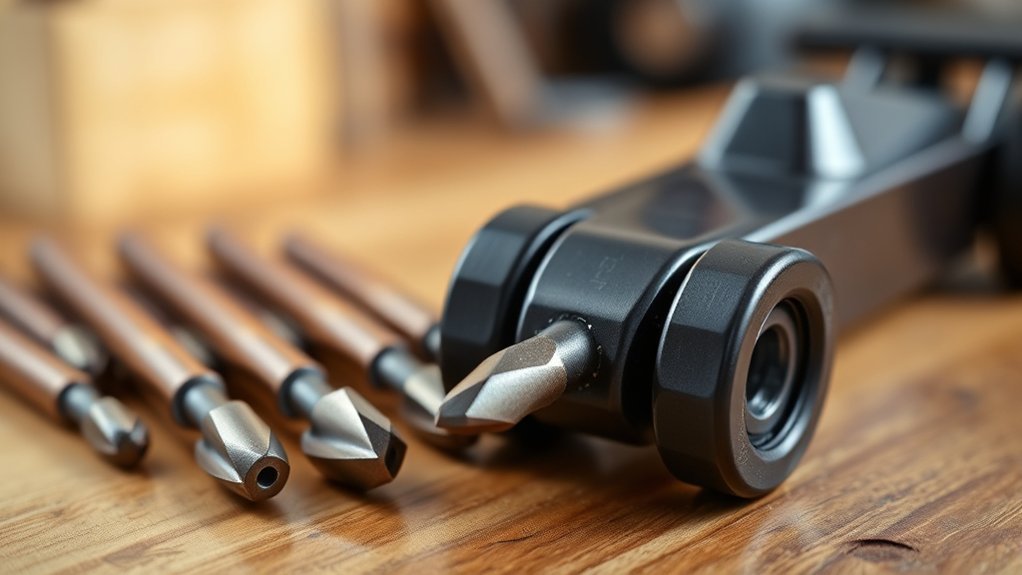
Selecting drill bit sizes that match your axle diameter guarantees smooth, consistent holes critical for ideal wheel performance. For standard Pinewood Derby axles, typically 0.098 inches in diameter, a drill bit size of 7/64 inches (0.1094 inches) provides a precise clearance fit.
This slight oversize assures minimal friction while maintaining axle alignment, preventing lateral play that could cause wobbling. Your drill bit selection should prioritize tolerance accuracy; too tight, and the wheel binds, too loose, and you risk misalignment.
Use high-quality bits with sharp cutting edges to achieve clean holes without tear-out. Maintaining perpendicular drilling is essential to preserve axle alignment, which directly impacts wheel rotation efficiency and overall speed.
How to Measure Pinewood Derby Axles Accurately
When you measure Pinewood Derby axles accurately, you guarantee peak fit and alignment within the wheel hubs. Start by using a digital caliper to measure the axle length precisely, confirming it matches your car design specifications. Measure from the flat head to the tip, avoiding any bent or damaged sections that could skew results.
Next, verify wheel alignment by checking the axle’s straightness; place the axle on a flat surface and observe any deviation. Even minor bends affect wheel rotation and speed. Accurate axle length measurement confirms the drill bit size matches the axle diameter for a snug fit, preventing wobble.
Maintaining straight axles supports ideal wheel alignment, which reduces friction and improves performance. Meticulous measurement is critical for consistent Pinewood Derby success.
Tips for Drilling Clean, Straight Axle Holes
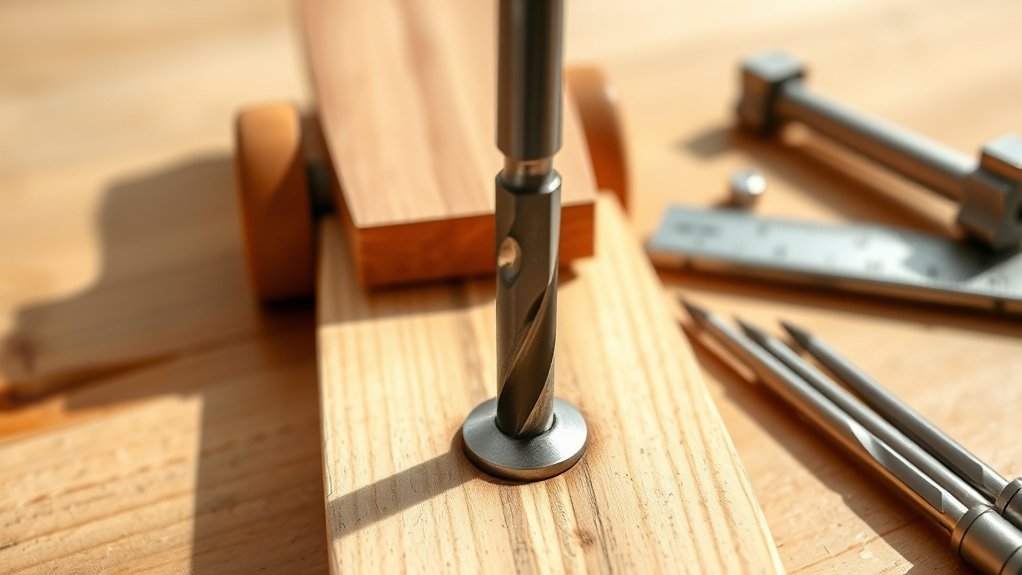
Accurate axle measurements set the foundation for drilling precise holes that guarantee proper wheel alignment. To ascertain clean, straight holes, you must use steady drilling techniques and secure the block firmly.
Align the drill perpendicular to the wood surface to maintain axle alignment. Start with a pilot hole to minimize wood splitting and guide the larger drill bit accurately.
| Step | Key Consideration |
|---|---|
| Secure the Block | Prevent movement during drilling |
| Drill Positioning | Maintain 90° angle for axle alignment |
| Drill Speed & Pressure | Use moderate speed to avoid splintering |
Following these steps reduces deviation and guarantees consistent axle alignment, essential for ideal wheel performance in your Pinewood Derby car.
What Happens If You Use a Drill Bit That’s Too Large or Small?
Using a drill bit that’s either too large or too small for your Pinewood Derby axles can compromise the wheel’s fit and performance. If the drill bit is too large, the axle hole will be loose, causing excessive play that leads to wheel wobble and reduced stability.
This poor axle fit increases friction and negatively impacts your car’s speed. Conversely, selecting a drill bit that’s too small results in a tight hole, making it difficult to insert the axle without damaging the wood or bending the axle. This tight fit can cause binding, increasing resistance during rotation.
Proper drill bit selection guarantees the axle fits snugly without excessive force, optimizing wheel alignment and minimizing mechanical losses, which are critical for achieving maximum efficiency in your Pinewood Derby car.
Preventing Wheel Wobble by Matching Drill Bit to Axle Diameter
You need to measure your axle diameter precisely to select the correct drill bit size and avoid wheel wobble. Using a drill bit that matches the axle diameter guarantees a tight, stable fit, minimizing common causes of wobble like uneven holes or too much play.
Follow a reliable drill bit size guide to maintain alignment and optimize wheel performance.
Accurate Axle Measurement
Although it may seem minor, measuring your Pinewood Derby axles with exact precision is vital to prevent wheel wobble. Begin by using a calibrated micrometer or digital caliper to determine the axle diameter accurately.
This precision guarantees the drill bit matches the axle size, important for maintaining proper axle alignment. Any deviation can cause misalignment, increasing friction and resulting in instability.
Additionally, monitor drill depth carefully; too deep can compromise structural integrity, while too shallow may not seat the axle firmly, both affecting wheel performance. Consistent measurement and controlled drilling maintain the alignment axis, reducing lateral play.
Drill Bit Size Guide
Selecting the correct drill bit size is essential for guaranteeing a snug fit between the axle and the Pinewood Derby car body, directly impacting wheel alignment and performance. To prevent wheel wobble, choose a drill bit diameter matching the axle’s measured size, typically around 0.098 to 0.099 inches for standard axles.
Using high-quality drill bit materials, such as cobalt or carbide, guarantees precise holes and durability during axle installation. Avoid oversized bits that create loose fits, causing instability, or undersized bits that force axles in, risking damage.
When drilling, maintain steady pressure and perpendicular alignment to achieve consistent hole depth and diameter. Properly matching drill bit size to axle diameter optimizes the axle installation process, leading to improved wheel alignment and faster, more stable Pinewood Derby cars.
Common Wheel Wobble Causes
Three primary causes lead to wheel wobble in Pinewood Derby cars, with one of the most critical being a mismatch between the drill bit size and the axle diameter. If the drilled hole is too large, the axle lacks proper support, compromising axle stability and causing uneven rotation.
Conversely, too tight a fit can deform the axle or wood, affecting wheel alignment. Additionally, inconsistent drilling angles introduce lateral forces, further destabilizing the axle.
To prevent wobble, select a drill bit that matches your axle diameter precisely, guaranteeing a snug, uniform fit. Maintain perpendicular drilling to preserve consistent wheel alignment.
Proper axle stability reduces friction and vibration, optimizing speed and control. By addressing these factors, you guarantee your Pinewood Derby wheels spin smoothly without wobble, enhancing overall performance.
Best Drill Bit Types for Pinewood Derby Wood
When you work with pinewood derby wood, choosing the right drill bit type directly impacts the accuracy and smoothness of your axle holes. You want drill bits made from high-speed steel (HSS) or cobalt alloys because these materials maintain sharpness and resist heat buildup during drilling.
Carbide-tipped bits offer durability but may be excessive for soft pinewood. A brad-point bit is ideal; its sharp center point prevents wandering, guaranteeing precise axle installation. Twist bits can work but may cause splintering at the hole edges, compromising fit and alignment.
Selecting the proper drill bit materials reduces tearing and provides clean, straight holes, critical for smooth axle rotation. Using the best drill bit type guarantees your pinewood derby car performs consistently by minimizing friction and wobble caused by poorly drilled axle slots.
Adjusting Drill Bit Size for Wood Density
Although pinewood is generally soft, variations in density require you to adjust your drill bit size slightly to confirm ideal fit and performance. Denser wood demands a marginally smaller drill bit to avoid excessive friction or splitting when inserting axles.
Conversely, lower-density wood may need a slightly larger drill bit to prevent a loose fit, which compromises stability. To accurately accommodate wood density, measure the specific gravity or perform a test drill on a scrap piece.
Select a drill bit size that guarantees a snug fit without forcing the axle, maintaining optimal alignment and minimizing wobble. By calibrating your drill bit according to wood density, you enhance the structural integrity and speed efficiency of your pinewood derby car, achieving precise axle-hole compatibility essential for competitive performance.
Conclusion
Choosing the right drill bit size—typically 7/64 inches—is key to getting your Pinewood Derby axles to run smoothly.
If your bit is off, you risk wheel wobble or excess friction, which can slow you down. Remember, precision is where the rubber meets the road; a snug, clean hole guarantees ideal alignment and speed.
So, take your time measuring and drilling carefully to give your car the best shot at victory. Using the correct size drill bit for Pinewood Derby axles ensures optimal performance and a competitive edge.