Picking the right drill bit is like choosing the perfect key to open a door smoothly. Knowing which drill bit for which material is essential to avoid frustration, damage, or wasted time.
If you’re working with wood, metal, concrete, or plastic, using the wrong bit can ruin your project. You’ll want to understand which bit matches each material’s demands to get clean, precise holes every time.
Let’s explore how to match your drill bits to the task at hand for the best results.
Key Factors in Choosing Drill Bits for Different Materials
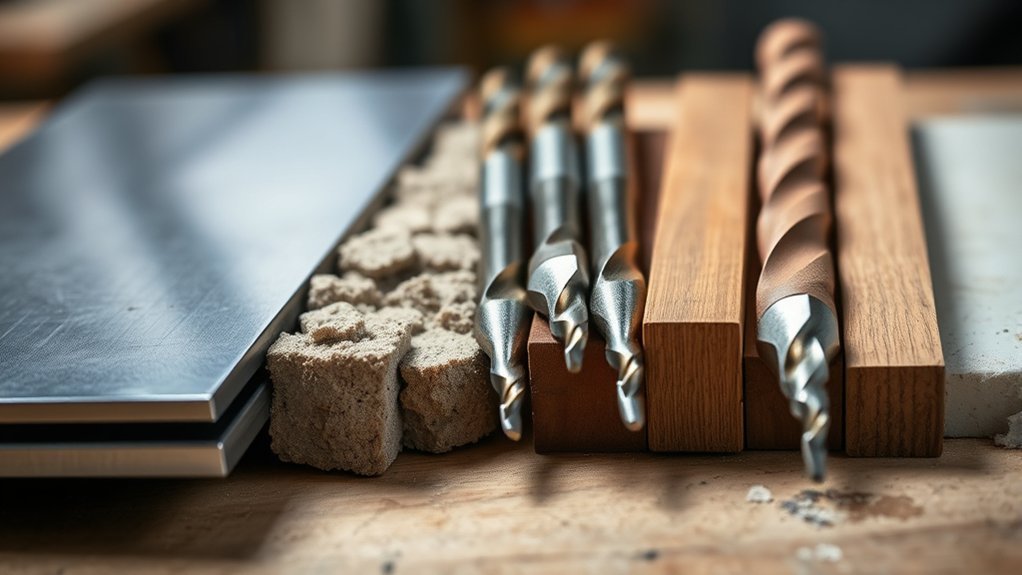
When selecting drill bits for different materials, you need to take into account factors like hardness, heat resistance, and the material’s composition. Material hardness directly influences the type of drill bit you should use; harder materials require tougher, more durable bits.
Choosing drill bits depends on hardness, heat resistance, and material composition for optimal performance.
Additionally, consider the drill bit coating, which enhances performance by reducing friction and heat buildup. Coatings like titanium nitride or black oxide increase bit lifespan and efficiency, especially when drilling metals.
You should also evaluate the material’s brittleness and density to prevent bit damage or poor results. By carefully matching your drill bit’s properties, such as coating and hardness rating, to the material, you guarantee cleaner holes, longer tool life, and safer operation.
This practical approach optimizes your drilling tasks across various materials.
Best Drill Bits for Wood
Selecting the right drill bits for wood guarantees clean, accurate holes without splintering or damaging the material. When choosing bits, consider the wood types you’re working with. Softwoods like pine require less aggressive bits, while hardwoods like oak demand sturdier, sharper bits.
Brad point bits are excellent for precision, as their pointed tip prevents wandering. They are ideal for pilot holes that match your screw sizes perfectly. For larger holes, spade bits or Forstner bits offer clean cuts without excessive tear-out.
Always match the drill bit diameter to your screw sizes; pilot holes should be slightly smaller than the screw shaft for maximum grip. Using appropriate bits tailored to both wood type and screw size guarantees efficient, professional results every time.
Best Drill Bits for Metal
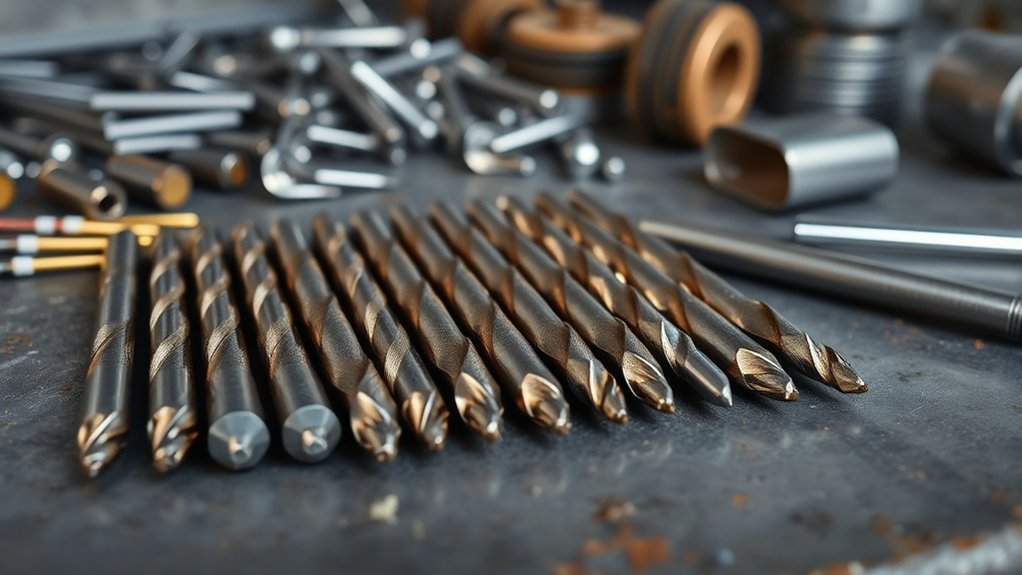
Choosing the right drill bits for metal guarantees clean, accurate holes while protecting both the material and your tools from damage. When drilling metal, you’ll want bits designed specifically for metal drilling techniques to secure efficiency and durability.
Selecting the proper drill bits for metal ensures precise holes and protects your tools and materials.
Here are four top choices:
- High-Speed Steel (HSS) Bits – Ideal for soft metals and general use.
- Cobalt Bits – Perfect for harder metals; resist heat better than HSS.
- Titanium Drill Bits – Coated to reduce friction and extend bit life, great for tough metals.
- Carbide-Tipped Bits – Best for extremely hard metals but more brittle.
Using the right bit with proper metal drilling techniques prevents bit wear and secures precision in your projects.
Choosing Masonry Drill Bits for Concrete and Brick
Although drilling into concrete and brick demands different techniques than metal, using the right masonry drill bits guarantees clean holes and prevents damage to both your tools and materials. You’ll want to choose from common masonry bit types like carbide-tipped bits for brick and SDS bits for tougher concrete.
These bits are designed to withstand the abrasive nature of masonry without dulling quickly. When drilling, apply steady pressure but avoid forcing the bit, allowing the bit’s tip to do the work. Employ proper concrete drilling techniques such as using a hammer drill mode when available, which combines rotation with a hammering action to break up the material efficiently.
Drill Bits for Plastic and Soft Materials
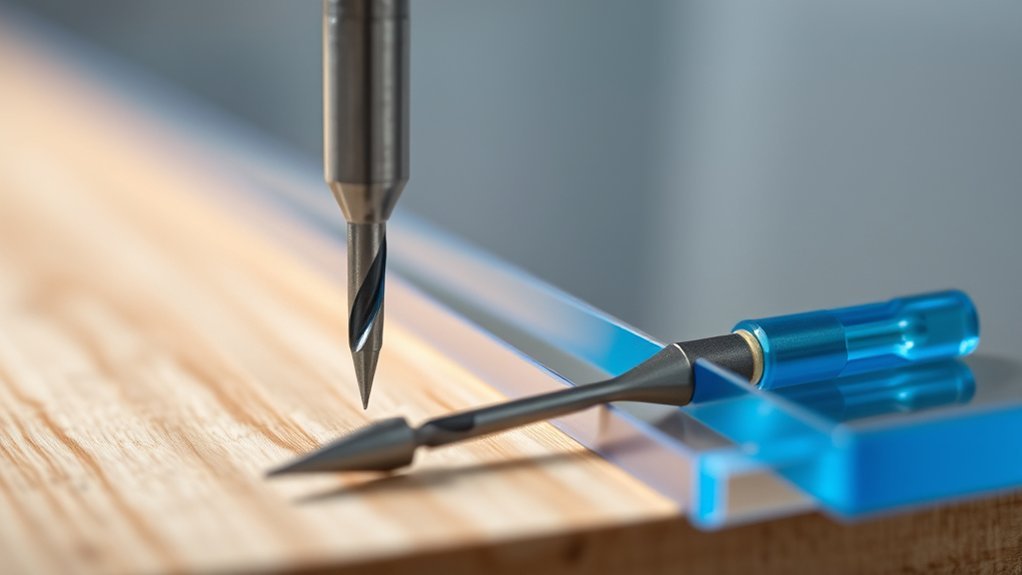
When you work with plastic or other soft materials, using drill bits designed specifically for these substrates guarantees clean, precise holes without cracking or melting. Selecting the right drill bit types and applying proper drilling techniques is essential to avoid damage.
Using drill bits made for plastic ensures precise, clean holes without cracking or melting.
- Brad Point Bits Their sharp points and spurs create clean entries, preventing chipping.
- Step Drill Bits Ideal for thin plastics, they gradually enlarge holes without stress.
- Twist Drill Bits with Polished Flutes Reduce heat buildup, minimizing melting.
- Specialized Plastic Drill Bits Designed with low cutting angles to reduce friction.
Use slow speeds and steady pressure to maintain control and prevent deformation. Understanding these drill bit types and drilling techniques guarantees professional results on soft materials every time.
Conclusion
To drill wood cleanly, choose sharp brad point bits; for metal, rely on high-speed steel or cobalt bits. When tackling masonry, pick carbide-tipped or SDS bits. For plastic, use specialized bits to prevent cracking.
Matching your drill bit to the material guarantees precision, efficiency, and tool longevity. By understanding these key differences, you’ll work smarter, save time, and achieve professional results every time you pick up your drill. Selecting the right drill bit for which material is essential for the best outcome.