Choosing the right size drill bit for drywall anchor is crucial to ensure a secure and stable hold.
Using the wrong drill bit size can turn a simple task into a frustrating mess, but picking the right one guarantees a secure hold every time.
You might think any bit will do, yet the difference between a snug fit and a loose anchor depends on precise measurement.
Before you start drilling, it’s worth understanding how to match your bit to the anchor type—this little step can save you from costly mistakes.
How to Choose the Right Drill Bit Size for Drywall Anchors
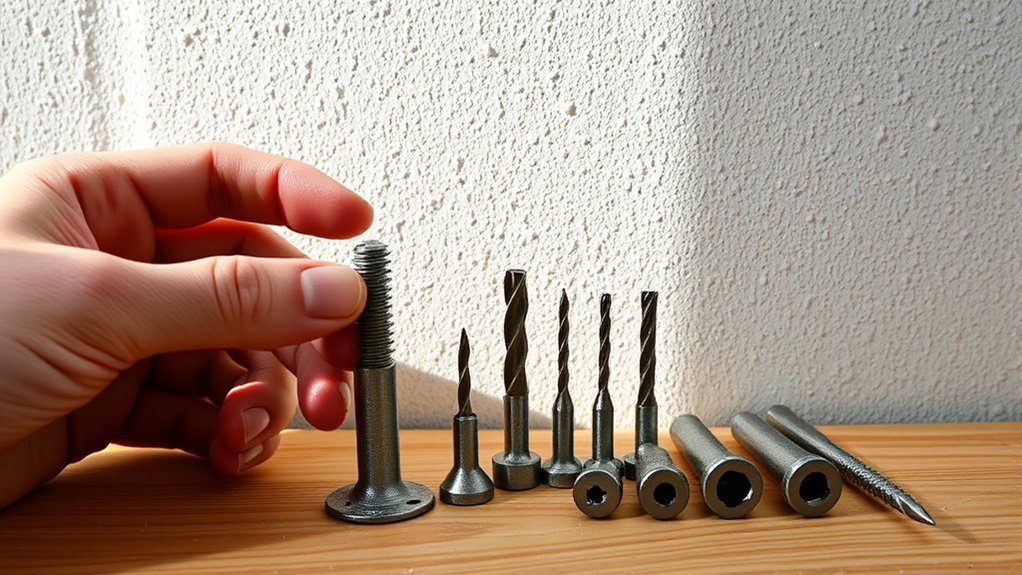
Choosing the right drill bit size for your drywall anchor is essential to guarantee a secure fit and avoid damaging the wall. When preparing for anchor installation, start by checking the anchor’s packaging for recommended drill bit sizes. This guidance makes certain the hole matches the anchor’s diameter perfectly.
You’ll encounter various drill bit types, such as twist bits and spade bits, each suited for different tasks, but for drywall, a standard twist bit works best. Measure the anchor’s body, not the threads, to determine the appropriate drill bit size.
Using a bit that’s too large can cause a loose anchor, while a bit too small risks cracking the drywall. Taking these steps makes certain your anchor installation is both sturdy and efficient.
Drill Bit Sizes for Different Types of Drywall Anchors
Different types of drywall anchors require specific drill bit sizes to guarantee a secure fit and proper support. For plastic expansion anchors, use a drill bit diameter matching the anchor’s outer width to ascertain snug drill bit compatibility.
Toggle bolts need a larger hole, so pick a drill bit size that matches the folded toggle wings’ width. Self-drilling anchors don’t require pre-drilling; however, if you do, use a small pilot hole drill bit.
Molly bolts call for a drill bit size equal to the bolt’s diameter to allow smooth insertion without excess play. Always check the packaging or manufacturer’s instructions for recommended drill bit sizes to match your anchor types.
This ascertains you pick the right drill bit for ideal anchor performance and safety.
Why the Correct Drill Bit Size Makes Your Anchors Stronger
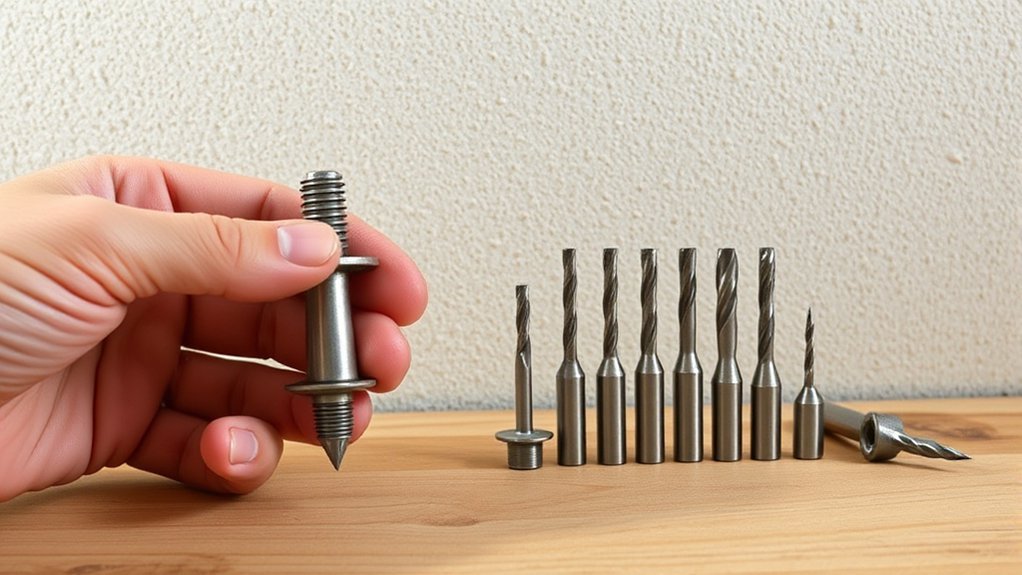
When you use the correct drill bit size, your drywall anchors hold more securely because they fit snugly in the wall without wobbling or slipping. This precise drill bit compatibility guarantees the anchor expands properly, maximizing anchor strength.
If the hole is too large, the anchor won’t grip tightly, reducing its load capacity and risking failure. Conversely, a hole that’s too small can cause the anchor to deform or break during insertion, compromising stability.
By matching your drill bit size to the anchor’s specifications, you create a firm bond between the anchor and drywall. This careful fit distributes weight evenly and prevents loosening over time, giving you confidence that your mounted items stay safely in place.
Always check packaging or manufacturer guidelines to verify drill bit compatibility.
Tips for Drilling Clean Holes in Drywall Without Damage
Drilling clean holes in drywall requires the right technique and tools to avoid cracking or crumbling the surface. To master clean drilling techniques and focus on avoiding drywall damage, start by preparing your workspace and equipment carefully. Use a sharp drill bit sized correctly for your anchor to guarantee precision.
Keep your drill steady and drill at a slow speed to prevent tearing the drywall paper. Support the drywall from behind if possible to reduce stress on the hole edges.
Remember these tips for clean drilling techniques:
- Mark the spot clearly with a pencil for accuracy.
- Hold the drill perpendicular to the wall for a straight hole.
- Pause occasionally to clear debris and check progress.
These steps help you create neat, strong holes without damage.
What to Do When Your Drill Bit Size Doesn’t Match Your Anchor?
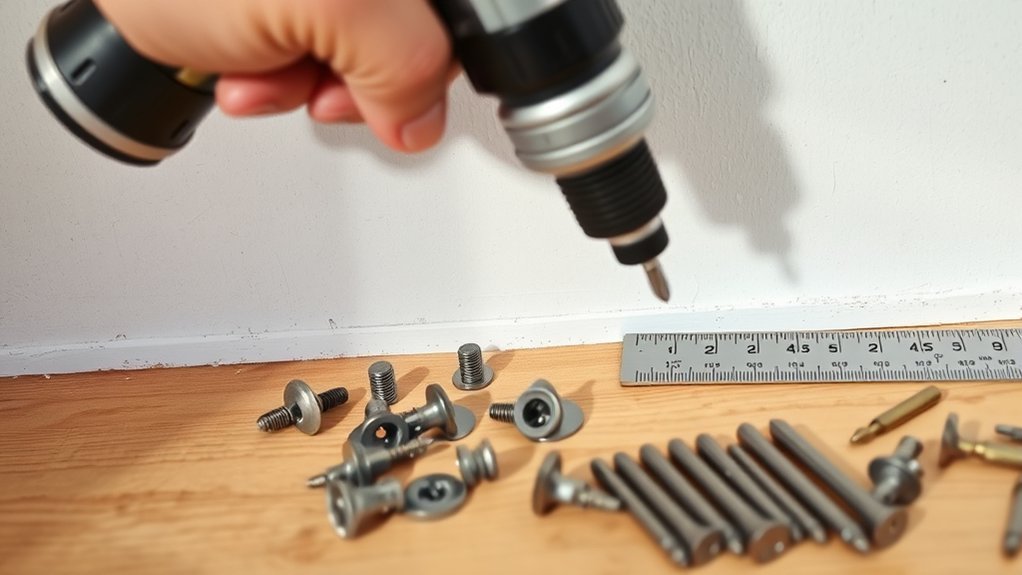
If your drill bit size doesn’t match your drywall anchor, don’t worry. There are simple solutions to guarantee a secure fit. First, check the anchor compatibility by reading the packaging or manufacturer’s instructions to confirm the recommended hole size.
If you lack the exact drill bit, consider drill bit alternatives like slightly smaller or larger bits but be cautious. A bit too small may prevent the anchor from fitting, while one too large can compromise stability.
To adjust, you can gently widen the hole with a utility knife or use a manual hand drill for better control. Always test the anchor in the hole before fastening. This way, you assure a snug, secure fit without damaging the drywall or weakening the anchor’s hold.
Conclusion
Choosing the right drill bit size for your drywall anchor is like finding the perfect key for a lock—it guarantees a snug fit and strong hold. Always check the anchor packaging first, and match the bit to the anchor’s diameter for the best results.
Using the correct size prevents wobbling and boosts load capacity, making your project sturdy and safe. With these tips, you’ll drill clean, damage-free holes every time.
Remember, selecting the proper size drill bit for drywall anchor ensures a secure installation and long-lasting support.