Choosing the wrong drill bit size for a #8 screw can feel like trying to fit a square peg in a round hole—it’s frustrating and can ruin your project.
When it comes to the question, “What size drill bit for #8 screw?” it’s important to get it right. You might think any bit close in size will do, but that small detail makes a big difference in preventing wood splits and ensuring a tight fit.
Let’s break down exactly which sizes work best for different materials, so you get it right the first time.
Drill Bit Size Guide for #8 Screw Pilot Holes
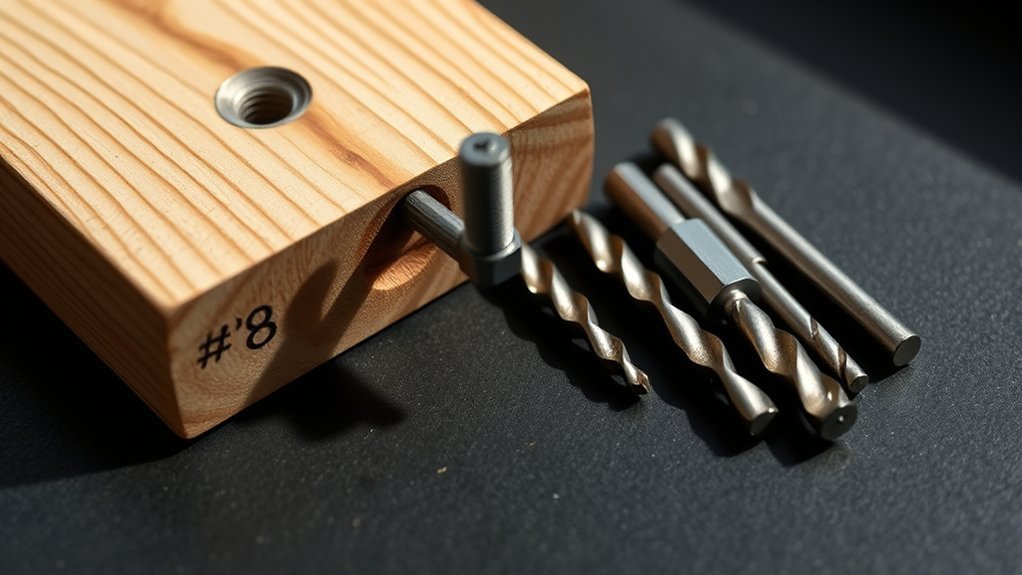
When you’re preparing to drive a #8 screw, choosing the right drill bit size for the pilot hole is essential to confirm a secure fit and prevent wood splitting. Use a drill bit that matches the minor diameter of the screw, typically around 7/64 inch for softwood and 1/8 inch for hardwood.
This allows the screw threading to engage firmly with the material while the pilot hole accommodates the screw’s core. Confirm the pilot hole depth matches the length of the screw to avoid resistance during insertion. Drilling too shallow can cause splitting, while too deep reduces holding strength.
Why Pilot Holes Matter for #8 Screws
You need pilot holes to stop the wood from splitting when driving in #8 screws. They also help the screw grip properly by guiding it straight and reducing resistance.
Skipping pilot holes can weaken your project and make screws harder to insert.
Preventing Wood Splitting
Although driving a #8 screw directly into wood might seem straightforward, it often leads to splitting, especially near edges or ends. Wood grain runs directionally, and forcing a screw without a pilot hole pushes the fibers apart, causing cracks.
To prevent this, drill a pilot hole that matches the screw’s core diameter, allowing the screw to enter smoothly without forcing the wood apart. Also, consider screw depth; drilling a hole slightly deeper than the screw length helps reduce pressure on the wood.
Paying attention to the wood grain direction and screw depth guarantees the wood remains intact, preserving strength and appearance. Taking these simple steps saves you from costly repairs and improves your project’s durability.
Ensuring Screw Grip
Two key factors determine a #8 screw’s grip: proper pilot hole size and depth. If the pilot hole is too large, the screw won’t bite into the wood, weakening the screw grip. Too small, and you risk splitting the wood or stripping the screw head.
You should adjust the drill bit size based on the wood density. Hardwoods need slightly larger pilot holes than softwoods to accommodate denser fibers, ensuring the screw threads engage properly without excessive force.
Also, drill the hole deep enough to match the screw’s length, allowing full thread engagement. By dialing in the right pilot hole size and depth for your wood type, you’ll maximize the #8 screw’s holding power, preventing loosening and maintaining structural integrity.
Clearance Vs Pilot Holes for #8 Screws
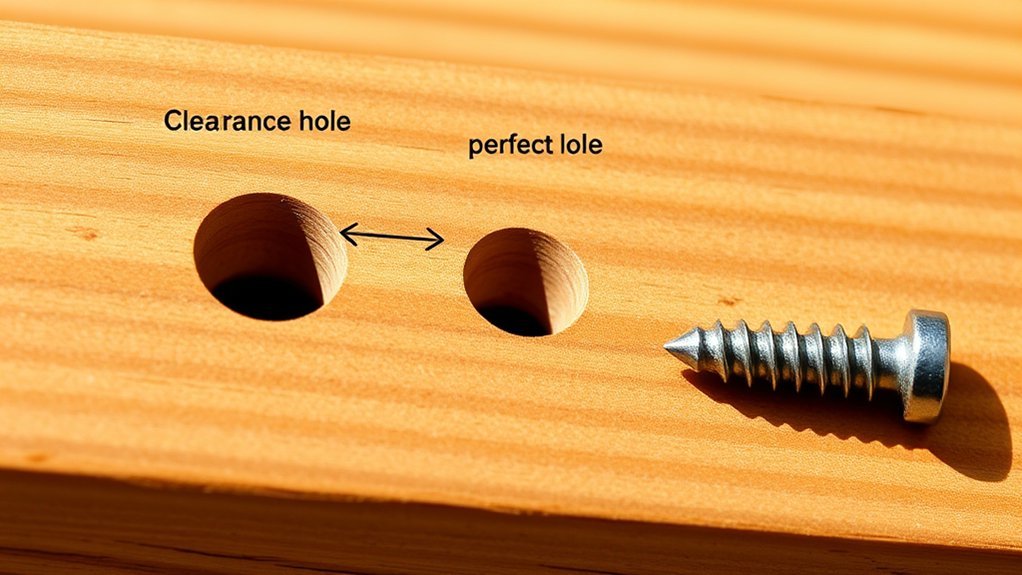
When driving a #8 screw, understanding the difference between clearance and pilot holes can save your project from splitting or misalignment. Clearance holes are slightly larger than the screw’s outer diameter, allowing the screw to pass freely through the top piece of wood without biting into it.
This prevents the wood from binding and guarantees the screw pulls the pieces tightly together. On the other hand, pilot holes are smaller holes drilled into the bottom piece, matching the screw’s core diameter.
The pilot hole importance lies in guiding the screw, reducing wood splitting, and providing better grip. By drilling both clearance and pilot holes correctly, you’ll guarantee a secure, neat, and damage-free assembly with #8 screws every time.
Choosing Drill Bits for Wood: What Type Matters
Knowing the right drill bit size for your #8 screw helps, but choosing the correct type of drill bit can make all the difference in your woodwork. When working with wood, you want a bit designed specifically for wood drilling, like spade bits, brad-point bits, or auger bits.
These bits handle wood density effectively, providing clean holes that match your screw type. For softwoods, a standard brad-point bit usually works well, while hardwoods might require an auger bit for better control and less splitting.
Matching the drill bit type to both the wood density and the screw type guarantees the screw drives in smoothly without damaging the material. This precision prevents splitting and improves the holding strength of your #8 screw in wood projects.
Selecting Drill Bits for Metal and Plastic
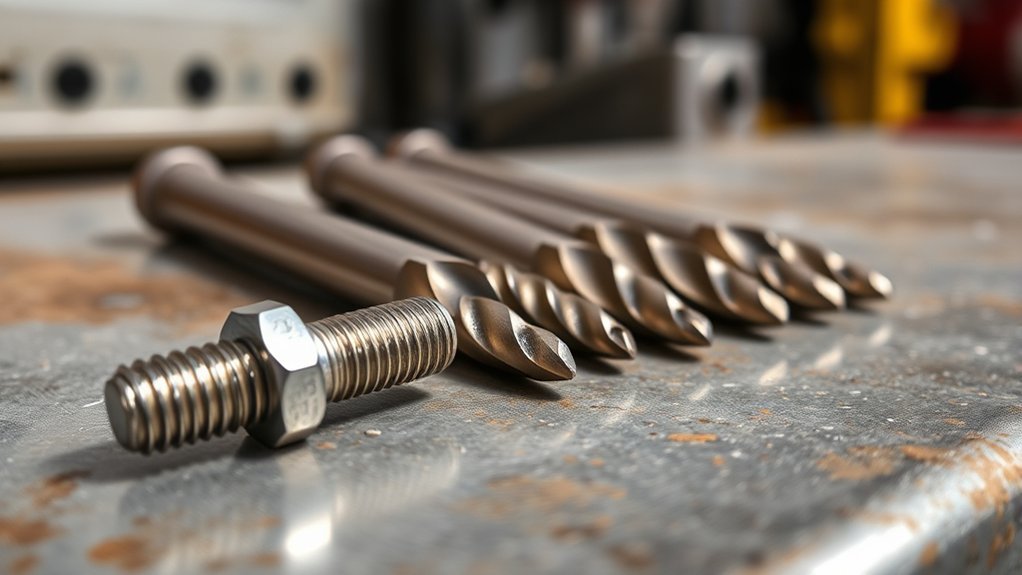
When working with metal or plastic, you’ll need drill bits designed for those materials, like cobalt or carbide for metal and high-speed steel for plastic.
Choosing the right size is essential since metal often requires slightly smaller pilot holes to prevent splitting or cracking. Make certain to match the drill bit size carefully to your #8 screw to guarantee a secure fit without damaging the material.
Drill Bit Types
Although selecting the right drill bit might seem straightforward, choosing the correct type for metal and plastic is essential to guarantee clean holes and prevent damage. You need to evaluate drill bit materials first: high-speed steel (HSS) bits work well for both metals and plastics due to their durability and heat resistance. For harder metals, cobalt bits provide extra strength.
Next, drill bit shapes matter. Twist bits, with their spiraled flutes, are versatile and effective for most applications. Brad point bits, however, offer precise positioning on plastic, reducing slippage. Also, split point bits reduce walking on metal surfaces. By matching drill bit materials and drill bit shapes to your project, you promote clean, accurate holes while extending tool life and avoiding material damage.
Material-Specific Sizes
Because metal and plastic have different densities and properties, you’ll need to choose drill bit sizes tailored to each material to guarantee clean holes and prevent cracking or deformation. For metal, select a drill bit slightly smaller than the screw’s core diameter to ascertain a tight fit, taking into account the screw length to avoid splitting or stripping.
When drilling plastic, opt for a bit equal to or slightly larger than the screw’s minor diameter, as plastic’s lower density allows for some expansion without cracking. Unlike wood, where wood density is a major factor in pilot hole size, metal and plastic require more precise sizing to balance grip and material integrity.
Adjust your drill bit choice accordingly to ascertain secure fastening without damaging the material.
Matching Drill Bit Sizes to #8 Screws
To guarantee a secure fit for your #8 screw, you’ll need to select the correct drill bit size that matches the screw’s diameter. Typically, a #8 screw has a major diameter of about 0.164 inches, so choosing a drill bit close to this size guarantees proper threading engagement without splitting the material.
Selecting a drill bit matching the #8 screw diameter ensures secure fit and prevents material splitting.
Consider these key points when matching drill bits to #8 screws:
- Use a 7/64-inch drill bit for pilot holes in hardwoods to accommodate screw threading.
- For softwoods, a slightly smaller bit like 1/8-inch can suffice.
- Match drill bit materials (e.g., high-speed steel) to your project’s demands for durability.
- When drilling clearance holes, opt for a bit slightly larger than the screw’s major diameter.
This approach guarantees ideal grip and prevents damage during installation.
Tips for Drilling Clean Holes Without Splitting Wood
When you drill holes for screws, you want to avoid splitting the wood, which can weaken your project and ruin the finish. Start by selecting the right drill bit size based on the wood types you’re working with. Hardwoods often require a slightly larger pilot hole than softwoods.
Control the drill depth carefully; use a depth stop or tape on the bit to prevent over-drilling. Drill slowly and steadily to minimize stress on the material. For delicate or thin wood, consider drilling a shallow starter hole before going deeper.
Also, backing the wood with a scrap piece reduces tear-out on exit. These steps guarantee clean holes, preserve wood integrity, and provide a secure grip for your #8 screws without risking splits or cracks.
Common Mistakes When Drilling for #8 Screws
Although drilling holes for #8 screws seems straightforward, many people make errors that compromise the hold and damage the material. Proper drill bit selection is essential to avoid these common drilling errors. Using a bit too small can cause wood to split or screws to strip, while too large a hole weakens the grip.
Here are frequent mistakes to watch out for:
- Skipping pilot holes or using incorrect pilot hole sizes
- Applying excessive pressure, leading to torn or uneven holes
- Drilling too fast, which overheats the bit and damages the material
- Ignoring the screw type and material, affecting drill bit choice
Avoiding these pitfalls guarantees a strong, clean connection and preserves your workpiece’s integrity.
Recommended Drill Bit Sizes for Different Materials and Uses
Since different materials respond uniquely to screws, choosing the right drill bit size for #8 screws depends on what you’re working with. For softwoods, use a 7/64″ bit to create pilot holes that prevent splitting while ensuring a tight fit.
Hardwoods require slightly larger pilot holes, around 1/8″, to reduce screw stress and avoid material cracking. When working with metals, select drill bit materials like cobalt or titanium for durability, and use a 1/8″ bit for clearance holes.
For plastics, a 3/32″ bit works well to avoid cracking. Remember, pilot hole techniques vary: in dense materials, drill a pilot hole matching the screw’s minor diameter; in softer materials, slightly smaller. Adjusting your drill bit size according to material and pilot hole technique guarantees secure fastening without damage.
Conclusion
Choosing the right drill bit for your #8 screw is like setting the perfect stage for a performance—everything must fit just right. Use a 7/64 inch bit for softwood, 1/8 inch for hardwood, and 3/32 inch for plastic to avoid splitting and guarantee a tight grip.
With the right pilot hole, your project will hold strong and look professional. Remember, precision now saves you time and frustration later.
For the best results, selecting the correct size drill bit for #8 screw is essential to ensure a secure and lasting fit.